DbcultAccessing Vault...
6.7/10
Senior Film Conservator
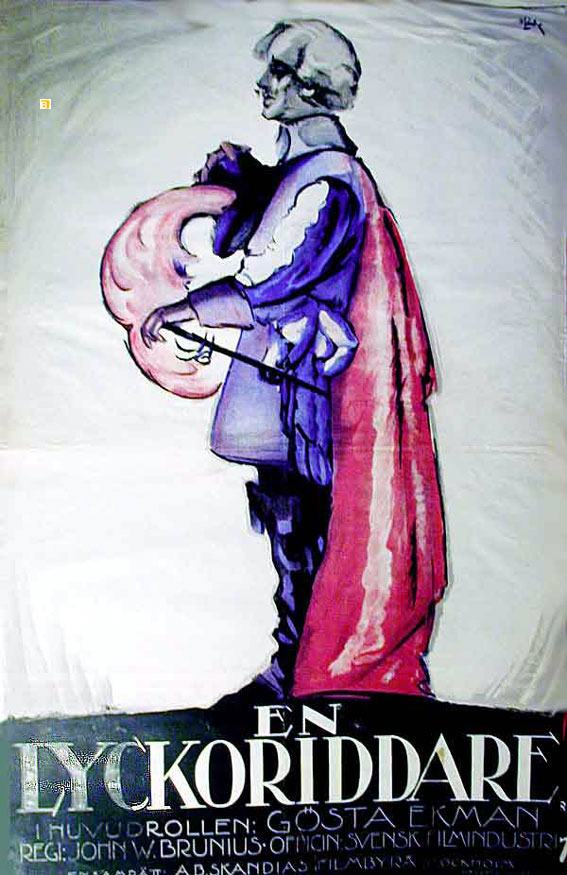
A definitive 6.7/10 rating for a film that redefined the boundaries of cult cinema. En lyckoriddare remains a cornerstone of transgressive art.
Stepping back into the annals of early Swedish cinema, one often unearths treasures that, despite the passage of time and the advent of sound, retain a remarkable potency. Among these luminous finds is John W. Brunius’s 1921 historical drama, En lyckoriddare, or A Lucky Knight. More than just a period piece, this film stands as a testament to the evocative power of silent storytelling, bolstered by an exceptional cast and a narrative that deftly navigates the complexities of love, class, and destiny. It’s a film that demands to be seen not merely as an artifact, but as a vibrant, living work of art that continues to resonate with its themes of unconventional romance and the audacious spirit of its protagonist.
At the very core of En lyckoriddare lies the magnetic performance of Gösta Ekman, an actor whose name is synonymous with the golden age of Swedish cinema. Here, he embodies the dashing rogue, a character type that, in less capable hands, might devolve into caricature. Yet, Ekman imbues his role with an irresistible blend of charm, vulnerability, and a hint of devil-may-care bravado. He is the quintessential 'lucky knight,' a man who seems to glide through life’s tribulations on sheer wit and charisma, his eyes sparkling with an almost impish intelligence. His presence dominates the screen, a whirlwind of energy and emotional depth that anchors the entire production.
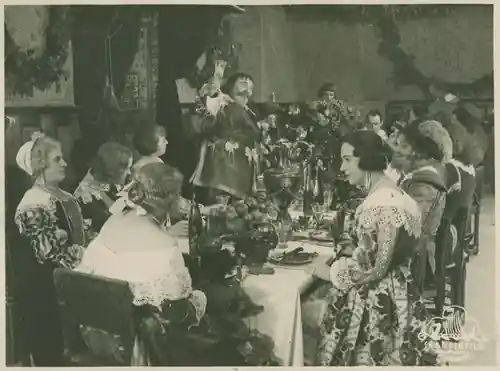
Opposite Ekman, we find Mary Johnson, an actress whose ethereal beauty and understated grace provide the perfect foil to Ekman’s more flamboyant portrayal. Johnson, with her luminous gaze and delicate expressions, portrays a woman of profound inner strength, despite her seemingly fragile exterior. Her character is the object of the rogue’s affections, a figure of purity and societal expectation whose world is irrevocably altered by his audacious intrusion. The chemistry between Ekman and Johnson is palpable, a silent dialogue of longing and unspoken desires that transcends the limitations of the medium. Their scenes together are charged with an emotional intensity that draws the viewer deep into their unfolding romance, making their eventual entanglement feel not just inevitable, but utterly compelling.
John W. Brunius, as director, orchestrates this historical drama with a masterful hand. Known for his meticulous attention to detail and his ability to elicit nuanced performances, Brunius transforms the period setting into a living, breathing entity. The film’s visual aesthetic is lavish, with sumptuous costumes and elaborate sets that transport the audience directly into the heart of the era. The cinematography, while perhaps not as overtly experimental as some of its contemporaries, is consistently elegant, framing the actors and their surroundings with a classical beauty that enhances the narrative’s romantic sweep.
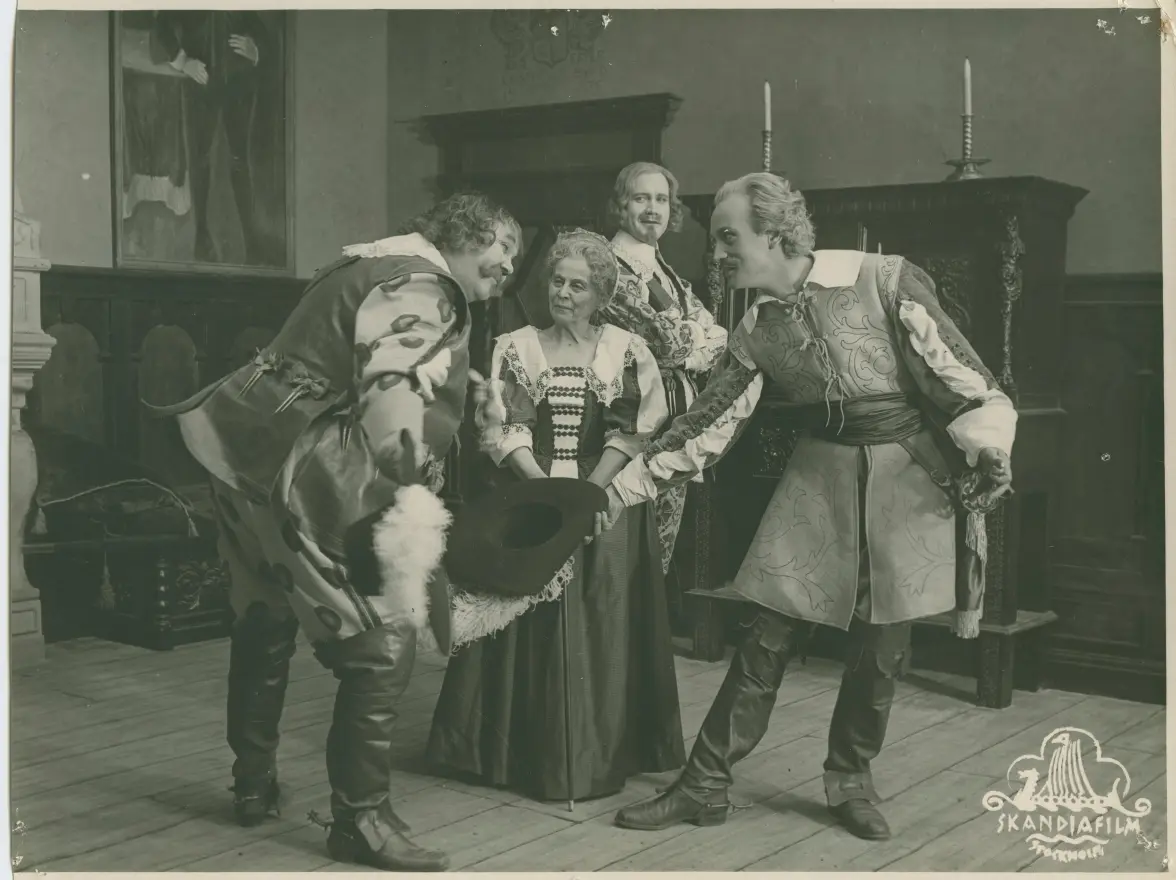
The screenplay, a collaborative effort by John W. Brunius himself, Harald Molander, and Sam Ask, is remarkably well-structured. It weaves a tale rich in incident and character development, ensuring that the emotional beats land with precision. The dialogue, conveyed through intertitles, is concise yet impactful, serving to advance the plot and reveal character without ever feeling verbose. This economy of storytelling is a hallmark of effective silent film writing, and En lyckoriddare executes it with finesse. The writers clearly understood the power of visual narration, allowing the actors' expressions and body language to carry much of the story's weight, a testament to their keen understanding of the medium's unique demands.
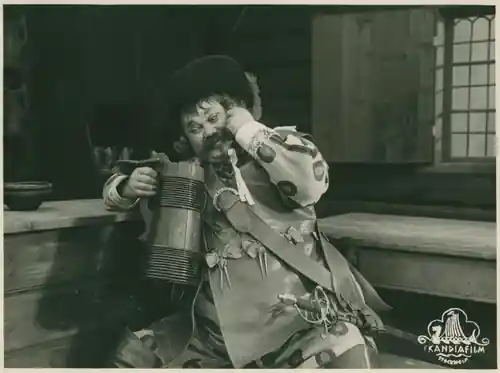
While Ekman and Johnson undoubtedly command the spotlight, the supporting cast of En lyckoriddare is a formidable array of talent that contributes significantly to the film’s rich tapestry. Vilhelm Bryde, Axel Ringvall, and Gull Natorp deliver performances that are both robust and finely tuned, providing the necessary dramatic weight and occasional comedic relief that rounds out the narrative. Gösta Cederlund, Hilda Forsslund, and Alva Garbo (sister to the legendary Greta Garbo, who also makes an early appearance in the film) each carve out distinct presences, their characters often serving as crucial cogs in the intricate societal machinery that our protagonists must navigate. The film also features notable turns from Carlo Keil-Möller, Anna-Lisa Baude, Arthur Natorp, Nils Lundell, Semmy Friedmann, and Alfred Lundberg, each bringing their own unique flavour to the period’s grand canvas. It's truly a showcase of the depth of acting talent available in early 20th-century Swedish cinema.
It is particularly fascinating to note the presence of Greta Garbo in an early role. Though not a central figure here, her nascent star power is already discernible, a tantalizing glimpse of the icon she would soon become. Her inclusion, however brief, adds another layer of historical interest to an already compelling film, allowing viewers to trace the very beginnings of a legendary career. Her understated performance, even in a minor capacity, hints at the profound emotional depth she would later master, making her future works like The Great Moment all the more impactful when viewed in retrospective.
En lyckoriddare delves deeply into universal themes that transcend its historical setting. The central conflict between personal desire and societal expectation is handled with considerable nuance. Ekman’s character, a man of lesser social standing yet immense personal charm, challenges the rigid class structures of the time. His pursuit of Johnson’s character, who represents the pinnacle of aristocratic grace, is not just a romantic quest but a subtle rebellion against the established order. This narrative choice resonates with the spirit of many silent dramas that explored similar societal divides, such as the social commentary often found in films like Traffic in Souls, though En lyckoriddare frames it within a romantic, rather than purely reformist, context.
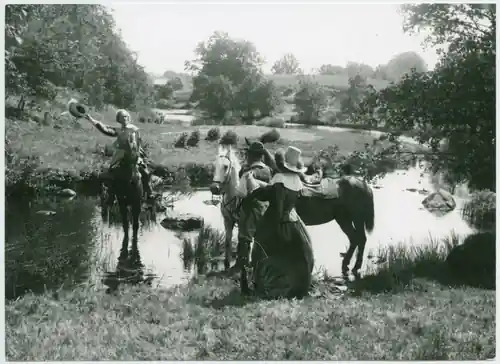
The film also explores the concept of 'luck' and destiny. Is Ekman's character truly 'lucky,' or does he simply possess an indomitable will and an uncanny ability to turn circumstances to his advantage? This question hovers over the narrative, adding a layer of philosophical inquiry to the romantic drama. His audacious spirit, a quality often celebrated in romantic heroes, is contrasted with the more constrained lives of other characters, highlighting the film’s subtle commentary on individual agency versus predetermined paths. This theme of human will against larger forces can be seen in other contemporary works, albeit with different tones, such as the dramatic tension in The Death-Bell, where characters grapple with their fate.
En lyckoriddare, while perhaps not as widely known internationally as some of its more sensationally themed silent counterparts, holds a significant place in Swedish cinematic history. It showcases the sophisticated storytelling and production values prevalent in the country during this period. The film's ability to create a believable and engaging historical world, coupled with its strong characterizations, speaks volumes about the talent behind and in front of the camera.
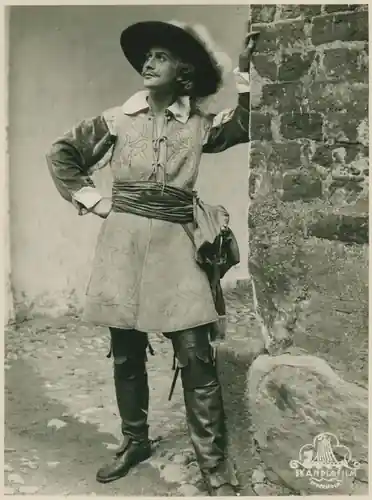
The film’s historical accuracy, or at least its convincing portrayal of the period, is another strong point. The costumes are not merely elaborate; they are integral to establishing character and social standing. The sets, whether grand ballrooms or intimate chambers, feel authentic, lending credibility to the unfolding drama. This commitment to verisimilitude in historical settings was a hallmark of many European silent productions, distinguishing them from some of the more fantastical or stylized American films of the time. It echoes the careful world-building seen in other period pieces such as The Grandee's Ring, where the setting is almost a character in itself.
Furthermore, En lyckoriddare demonstrates the sophistication of Swedish narrative cinema in the early 20th century. It’s a film that doesn’t shy away from moral ambiguity, presenting characters with flaws and virtues in equal measure. The 'lucky knight' is not a flawless hero, but a complex individual whose actions, though often driven by good intentions, sometimes skirt the edges of propriety. This complexity adds a layer of realism to the romance, making the characters more relatable and their journey more compelling. This departure from purely black-and-white morality can also be observed in films like The Woman Who Dared, which similarly explores the grey areas of human conduct.
What makes En lyckoriddare continue to captivate audiences, even a century after its initial release? Part of its enduring appeal lies in its timeless story of love against the odds. The forbidden romance, the societal barriers, the hero’s valiant efforts to win his beloved – these are narrative staples that resonate across generations and cultures. But it is also the sheer artistry of the filmmaking that elevates it beyond mere genre fare. Brunius’s direction is assured, the writing is sharp, and the performances are uniformly excellent, particularly the incandescent pairing of Ekman and Johnson.
The film serves as an important historical document, offering a glimpse into the cultural sensibilities and aesthetic preferences of its time. For film historians and enthusiasts, it provides valuable insight into the evolution of cinematic language and the development of national cinemas. For the casual viewer, it offers a deeply satisfying and emotionally resonant experience. It reminds us that powerful storytelling does not require elaborate special effects or booming soundtracks; sometimes, all it takes is a compelling narrative, expressive faces, and a director’s vision to transport us to another world and touch our hearts.
In an era where films like Clutch of the Law and The Zeppelin's Last Raid were exploring different facets of human drama and adventure, En lyckoriddare carved its own niche with its blend of sophisticated historical romance and compelling character study. It stands proudly alongside other significant works of its time, a testament to the diverse and rich output of early cinema. Its narrative finesse, combined with the stellar performances, ensures its place as a classic that continues to reward repeat viewings. One might even draw parallels between its charming protagonist and the adventurous spirit found in films such as Der Yoghi or Bobby als Filmschauspieler, albeit in vastly different contexts, underscoring a universal appeal for resourceful characters.
Ultimately, En lyckoriddare is more than just a historical drama; it’s a captivating romance, a showcase of early cinematic artistry, and a vital piece of film heritage. Its ability to transport viewers to another time, to make them care deeply about its characters, and to reflect on enduring human dilemmas is a testament to its quality. It’s a film that deserves to be rediscovered and celebrated, not just for its historical significance, but for its sheer entertainment value and its lasting emotional impact. If you have an appreciation for the silent era, for compelling narratives, and for performances that transcend the limitations of their time, then En lyckoriddare is an absolute must-see. It’s a film that reminds us that true artistry, like true love, knows no boundaries of time or medium, continuing to shine brightly through the decades. It holds its own against other romantic dramas of the period, such as Heart's Desire or the more dramatic The Sting of Victory, by offering a unique blend of historical grandeur and intimate emotional depth. Even lighthearted films like Lili or the character-driven The Five Dollar Plate, while different in tone, share a common thread of focusing on individual journeys, a strength that En lyckoriddare masterfully employs.
IMDb 6.1
1926
Community
Log in to comment.