DbcultAccessing Vault...
Cult Review
Senior Film Conservator
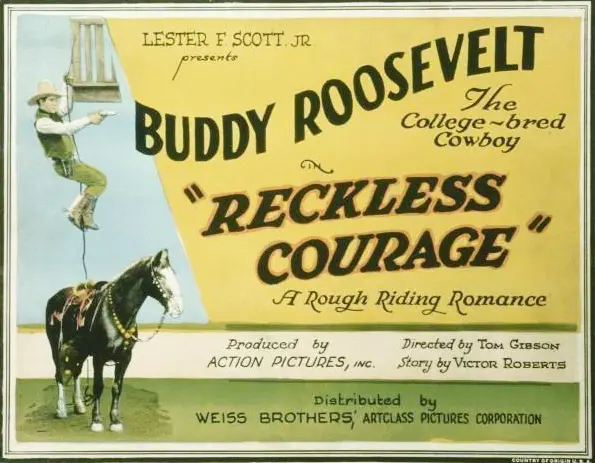
Is Reckless Courage, a relic from the early sound era, worth revisiting today? Short answer: yes, but with significant caveats. This 1930 Western adventure offers a fascinating, if sometimes clumsy, glimpse into early Hollywood's attempts to blend high-stakes drama with the nascent technology of synchronized sound. It’s a film best suited for dedicated cinephiles, historians of the Western genre, and those with a deep appreciation for the foundational pieces of cinematic storytelling. Conversely, it is decidedly not for audiences expecting modern pacing, sophisticated character development, or seamless production values.
This film works because of its audacious plot, which throws its characters into genuinely perilous situations with a relentless, almost breathless, energy. It fails because its technical limitations and often simplistic characterizations prevent it from achieving a deeper emotional resonance. You should watch it if you are curious about the evolutionary steps of the Western genre, appreciate the raw ambition of early talkies, and can forgive a certain degree of narrative and performance quaintness.
Reckless Courage, penned by Victor Roberts and Betty Burbridge, wastes no time in establishing its breakneck pace. We are introduced to Doris Bayne, entrusted by her wealthy father with the perilous task of delivering a diamond necklace by air. The narrative immediately ratchets up the tension with a mid-flight robbery – a rather audacious setup for its time. Doris's quick, if desperate, decision to jettison the necklace from the open cockpit sets the entire convoluted plot in motion, a pivotal moment that feels both contrived and thrillingly spontaneous.
The necklace’s improbable landing at the feet of Bud Keenan, an honest ranch foreman, is the kind of narrative serendipity that defines this era of filmmaking. It’s less about meticulous plotting and more about creating immediate dramatic friction. Doris’s subsequent parachute jump and confrontation with Bud – pistol drawn, no less – establishes their dynamic as one born of necessity and mutual suspicion, rather than organic connection.
The film then pivots into a classic Western formula: abduction, rescue, and a showdown. Bud’s escape from Doris’s initial binding, followed by his heroic rescue of her after she tumbles down an embankment, quickly solidifies his role as the quintessential rugged hero. Their retreat to his ranch offers a brief, almost pastoral interlude before the arrival of Scar Degan, the menacing gang leader, shatters any illusion of safety. Degan’s demand for the necklace, which Doris had cleverly entrusted to a Native American woman, adds another layer of intrigue and, importantly, introduces a cultural element, however superficially explored.
The climax, involving Degan’s abduction of Doris and Bud’s subsequent mission to retrieve the necklace for her freedom, is boilerplate Western fare, but executed with a certain unpretentious charm. The final battle, leaving the gang vanquished and the necklace returned, provides the expected catharsis. It’s a story that prioritizes action and clear-cut morality over complex motivations, a common trait of films designed to entertain rather than provoke deep thought.
The direction in Reckless Courage, while uncredited in some records, navigates the choppy waters of early sound filmmaking with a commendable, if at times clunky, energy. The era itself was a challenging one for directors, who grappled with bulky cameras, stationary microphones, and the nascent art of editing for dialogue. Despite these constraints, the film manages to maintain a propulsive narrative drive. The opening sequence, with the airborne robbery and Doris's desperate throw, is surprisingly effective, showcasing an ambition to transcend the stage-bound limitations often seen in early talkies.
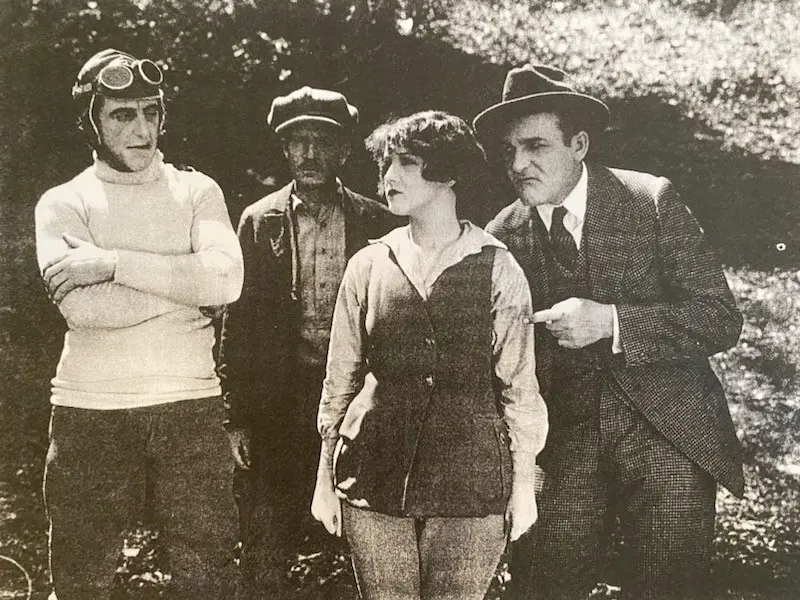
There's a raw, almost documentary-like quality to some of the exterior shots, particularly those involving horses and the rugged Western landscape. While not visually stunning by modern standards, these moments ground the fantastical plot in a tangible reality. The camera, often static, finds its dynamism in the movement of the actors within the frame, a common technique of the time. For instance, the scene where Doris, having parachuted, confronts Bud with a pistol, utilizes the open expanse of the setting to emphasize their isolation and the immediate threat, even if the shot itself is fairly straightforward.
The pacing is relentlessly swift, almost to a fault. Events unfold with a directness that leaves little room for contemplation or character introspection. This serves the adventure aspect well, keeping the audience engaged in the unfolding predicament, but it also means that many emotional beats are glossed over. The fight sequences, while choreographed simply, convey a sense of genuine struggle, a testament to the stunt work and the director’s focus on clear action rather than elaborate artistry. The final shootout, for example, is a flurry of quick cuts and close-ups, designed to maximize impact within the technical limitations.
One surprising observation is the film's willingness to embrace physical comedy and broad melodrama almost simultaneously. Doris's fall down the embankment, for instance, could easily have been played for pure slapstick, yet it's treated as a genuine peril that necessitates Bud's heroism. This tonal oscillation is a hallmark of early cinema, where genres were less rigidly defined, and filmmakers often threw everything at the screen to see what would stick.
The cast of Reckless Courage delivers performances that are largely consistent with the acting styles prevalent in early sound films – often theatrical, sometimes over-the-top, but always committed to the dramatic moment. William McIllwain, as the honest ranch foreman Bud Keenan, embodies the stoic, capable Western hero with a straightforward charm. His performance is less about nuanced emotion and more about conveying strength, integrity, and decisive action. When he rescues Doris from the embankment, his expressions are less about fear and more about resolute determination, a clear signal to the audience of his heroic intent.
Helen Foster, as Doris Bayne, is tasked with playing the plucky, resourceful, yet ultimately vulnerable heroine. She navigates the demands of being both the instigator of chaos (throwing the necklace) and the damsel in distress (abducted by Degan). Her portrayal, while occasionally leaning into melodramatic flourishes, effectively conveys Doris's predicament. There's a particular scene where she entrusts the necklace to the Native American woman; her furtive glances and hushed tones communicate the gravity of her decision without relying on extensive dialogue, a smart choice given the era’s sound recording challenges.
Merrill McCormick, as the villainous Scar Degan, chews the scenery with relish. He is the archetypal mustache-twirling outlaw, menacing and utterly without remorse. His presence on screen immediately elevates the stakes, providing a clear and tangible threat. His sneering demands and physical intimidation are crucial to driving the conflict, and McCormick embraces the role with gusto. While perhaps lacking the psychological depth of later Western villains, Degan serves his purpose admirably, providing a compelling antagonist for Bud Keenan’s heroism.
The supporting cast, including the Native American woman played by Neola May (credited simply as 'Indian Girl'), largely fulfills functional roles within the narrative. Their performances, while brief, contribute to the overall tapestry of the frontier setting. It’s worth noting that the depiction of indigenous characters, while a common trope of the era, is handled here with a degree of utility rather than overt caricature, serving primarily as a plot device for safekeeping the necklace. This is a debatable point, as it still reduces a culture to a narrative convenience, but in the context of 1930s cinema, it's a relatively neutral, if uninspired, approach.
The pacing of Reckless Courage is arguably its most defining characteristic. From the opening aerial heist to the final shootout, the film operates at a nearly breakneck speed. There’s little time for lingering shots or extended dialogue scenes; instead, the narrative propels itself forward through a rapid succession of events. This relentless momentum is both a strength and a weakness. It keeps the audience engaged, ensuring there’s never a

IMDb 5.6
1920
Community
Log in to comment.