DbcultAccessing Vault...
Cult Review
Senior Film Conservator
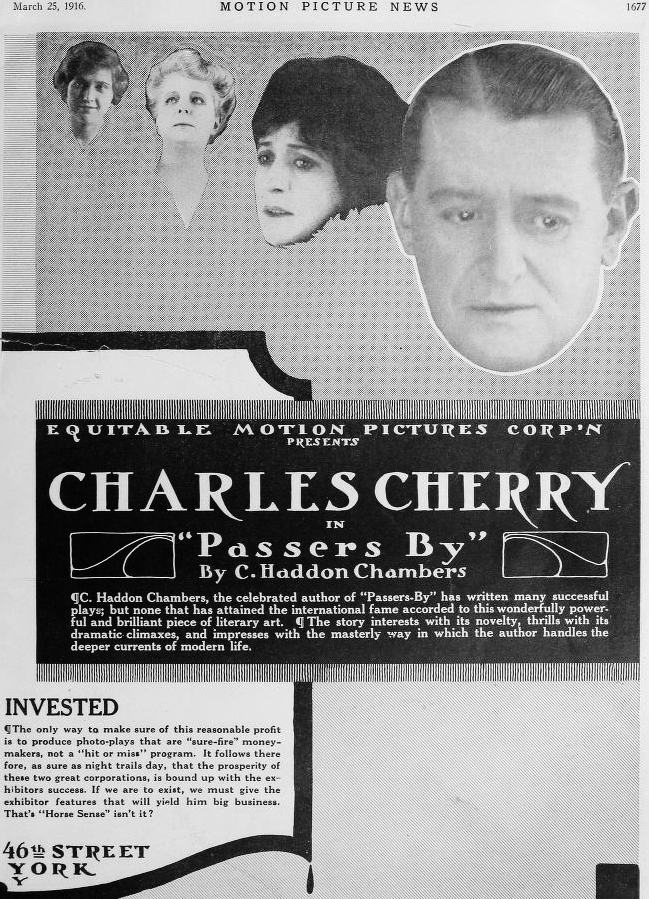
Imagine a London where the fog itself keeps receipts. Every hansom wheel clop, every silk skirt hiss across mahogany is logged in some karmic ledger that will, sooner or later, demand settlement. Passers By—released in the blood-rinsed spring of 1916 while Europe re-enacted its own apocalypse—understands that the most savage battlefield is often a drawing-room where nobody raises their voice.
On the surface we inherit the oldest of triangles: Peter—Charles Cherry in a performance so repressed his pupils appear to tremble—must choose between Beatrice Dainton’s gilded future and Margaret Summers’ resurrected past. Yet the film’s genius lies in how it scrapes that surface to reveal older, crueller geometries. Margaret, played by Mary Charleson with the wary poise of a woman who has learned that survival often means standing perfectly still, is no fragile ex-flame. She is the returning repressed, carrying not a torch but a mirror.
When she ‘accidentally’ brushes Peter on Regent Street, the camera—via a clandestine dolly achieved by mounting the Bell & Howell on a baby carriage—pushes past passers-by until only the adult lovers’ torsos fill the frame. Their coat buttons almost touch; the metropolis becomes a blur of indifferent shoulders. In that moment the street is both literal and metaphorical: a conveyor belt of urban anonymity willing to ghost any scandal if the price is right.
Kate Sergeantson essays Lady Hurley as a woman who weaponises respectability the way other people wield umbrellas against hail. Watch her in the conservatory scene: she offers Margaret a rose while simultaneously sliding a letter—Peter’s forged farewell—across the silver tea service. The rose’s perfume masks the stench of betrayal; the porcelain clink conceals the slam of a trapdoor. Silent-era critics missed this duplicity, calling her ‘a loving if misguided sister’; modern eyes recognise a proto-Beatrix Fairfax manipulator, minus the pulp glamour.
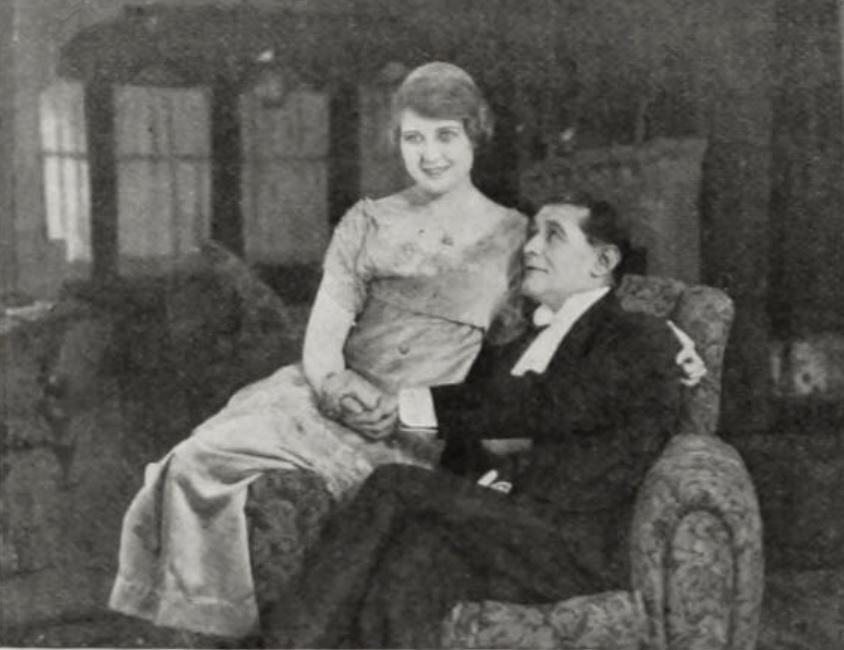
The unnamed boy—Donald Kite with a fringe that refuses to stay slicked—is more than walking proof of Peter’s premarital trespass. He is the film’s moral Geiger counter. Each time the child enters a room, the adult dialogue—conveyed via intertitles—grows terse, as though language itself fears contamination. In one bravura shot, the camera hovers at his eye-level while the adults above argue in pantomime. Their mouths move; no intertitles intrude. We are forced, like the child, to piece together catastrophe from gestures alone.
Historians often trace film noir to Weimar shadows or wartime American angst. Yet here, in a British production shot when Verdun still burned, we find all the genre’s embryonic markers: a man haunted by a past misdeed, a femme fatale who is also the moral centre, chiaroscuro lighting courtesy of London’s pea-soup fogs, and an ending that punishes without restoring order. If you double-bill Passers By with Temptation (1915) you can witness the continental drift of melodrama toward something harder, more fissured.
Early nitrate stocks tinted certain sequences: amber for interiors, cerulean for exteriors, rose for romantic nostalgia. The restoration available via Eye Filmmuseum replicates these tints digitally. Note how Margaret’s flashbacks—triggered by Peter’s re-gifted locket—bleed into a sickly sea-blue, the same hue that tinges the Thames at dusk. Colour becomes a moral barometer: when Beatrice finally confronts Peter, the frame flushes dark orange, the shade of a wound clotting before it scars.
Charles Cherry’s Peter has the stiff spine of a man who fears that relaxing might tip him into an abyss. Watch his hands: they start the film clasped behind his back, a barricade; by the final reel they hang useless at his sides, fingers twitching as if still searching for a child’s grip that will no longer be offered. Compare to If My Country Should Call where Cherry played a patriotic cadet; here the uniform is replaced by morning coat, but the rigidity remains—a commentary on masculine codes across classes.
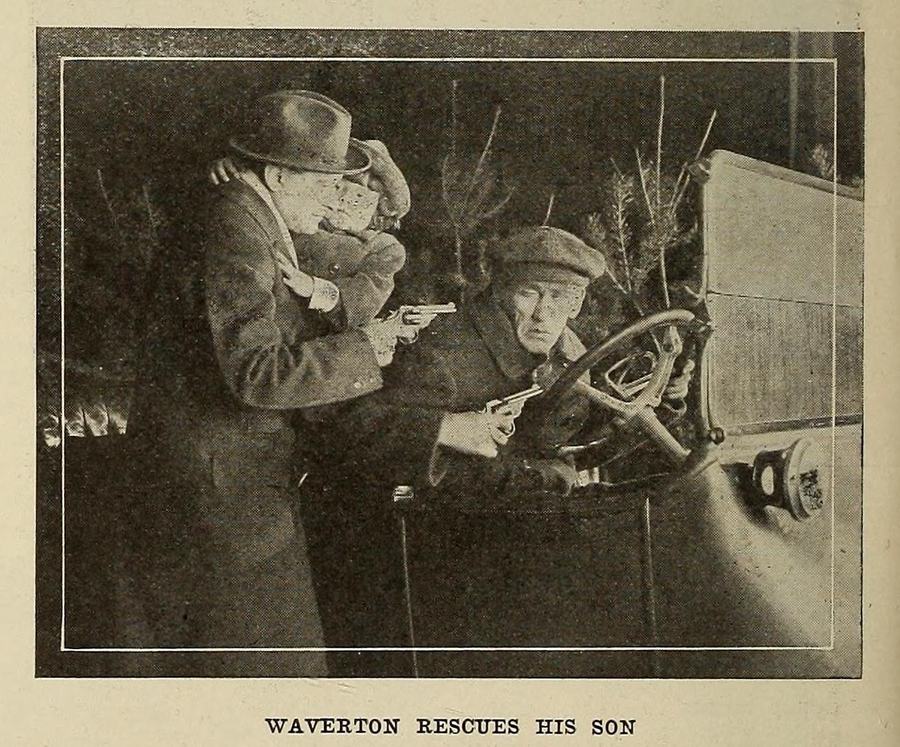
C. Haddon Chambers, Australian émigré and boulevardier, specialised in society dramas where a single epigram could unsheath a whole character. Stanner E.V. Taylor, a Midwesterner who churned out scenarios like a locomotive, brought narrative propulsion. Their collaboration is less a marriage than a knife-fight: Chambers wants to linger over paradoxes of honour; Taylor wants the next plot turn before the previous reel ends. The tension electrifies the film, generating scenes that feel both padded and breathless, like a corset worn during a sprint.
The film maps London as a series of thresholds. The Waverton townhouse—staircases wide enough for servants to vanish sideways. The Hyde Park footpath where Margaret first recognises Peter—benches placed so lovers must negotiate oncoming strangers. The registry office—its doorway flanked by Doric columns that resemble prison bars garlanded in ivy. Each locale is staged to suggest that privacy is a purchasable illusion, and the city itself is an accomplice to whoever can afford the higher bribe.
Beatrice, essayed by Marguerite Skirvin with porcelain composure that slowly crazes, begins as the observed object: her engagement portrait is sketched by a hired artist while Peter watches from the periphery. By the finale she commandeers the gaze, staring down both Peter and the camera. The intertitle reads: ‘I will not be the final paragraph in a story you never bothered to read.’ It is a line so modern it could slot into an indie drama at Sundance without a hiccup.
Though released without synchronized dialogue, the film’s exhibitors often commissioned live musical accompaniment. Trade papers suggest a preference for Schumann’s Kinderszenen, its lullaby motifs twisted into minor keys to underscore the lost childhood of Peter and Margaret’s secret son. Contemporary audiences can replicate the effect by pairing the restored print with Max Richter’s recompositions; the anachronism weirdly fits, like inserting a neon sign into a Dickensian alley.
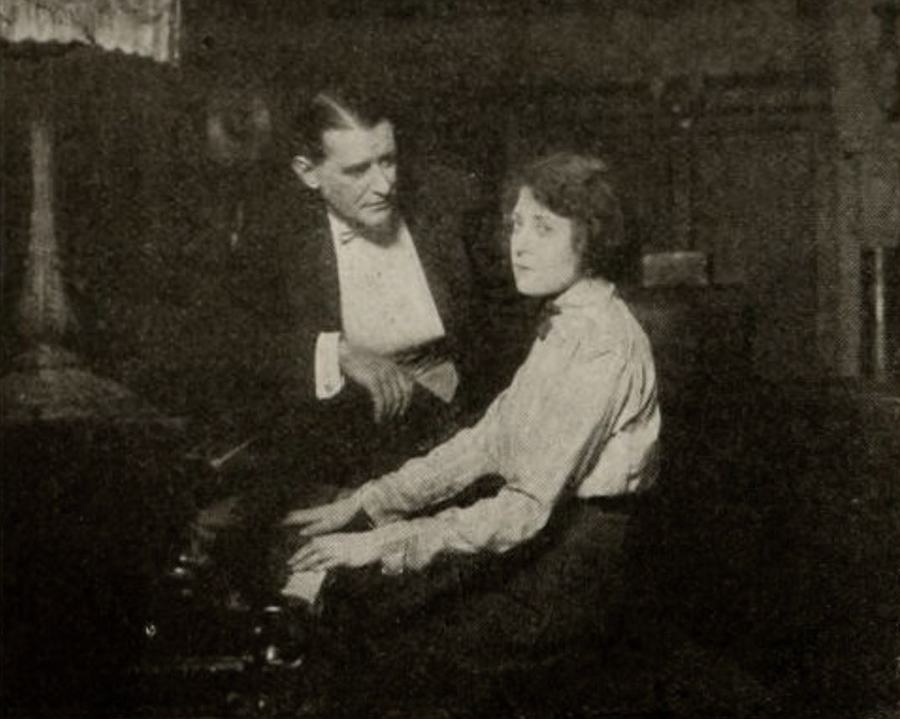
Viewed beside The Pursuing Shadow (1915), another tale of sins tailing their perpetrator, Passers By feels less deterministic, more merciful in its ambiguity. Stack it against Escaped from Siberia and you notice a shared obsession with geography as moral witness: snow or fog, exile or anonymity—landscapes that swallow reputations whole.
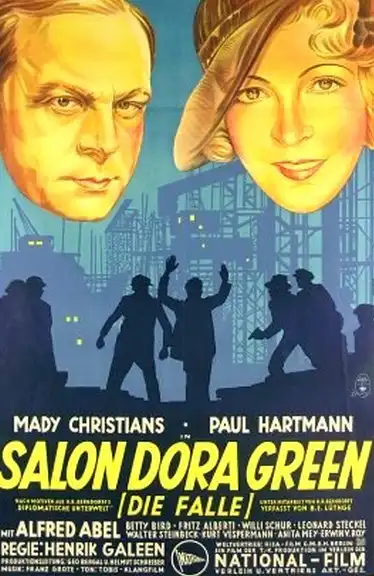
For decades the film slumbered in archives, misfiled under ‘Domestic Melodrama’. Then a 2018 MoMI retrospective paired it with The Frame-Up, revealing its proto-noir DNA. Suddenly journals spoke of ‘British proto-Chabrol’ and ‘gaslight Rossellini’. The lesson: reputations in cinema, like in the film itself, are hostage to the accidents of rediscovery.
The last shot is not of Peter’s tear—he is too English for that indulgence—but of the child’s shoe descending a marble step. The camera tilts up to the revolving door, where London’s anonymous multitudes swallow the trio whole. Beatrice’s carriage departs screen left; Margaret’s umbrella recedes right; Peter remains centre, a man split by destiny into two directions he can no longer travel. Fade to black, but not to closure. The city continues to pass by, and somewhere inside it, a ledger remains open, waiting for the next instalment of debt.
—review by CinephileNyx
IMDb 6.5
1933
Community
Log in to comment.