DbcultAccessing Vault...
Cult Review
Senior Film Conservator
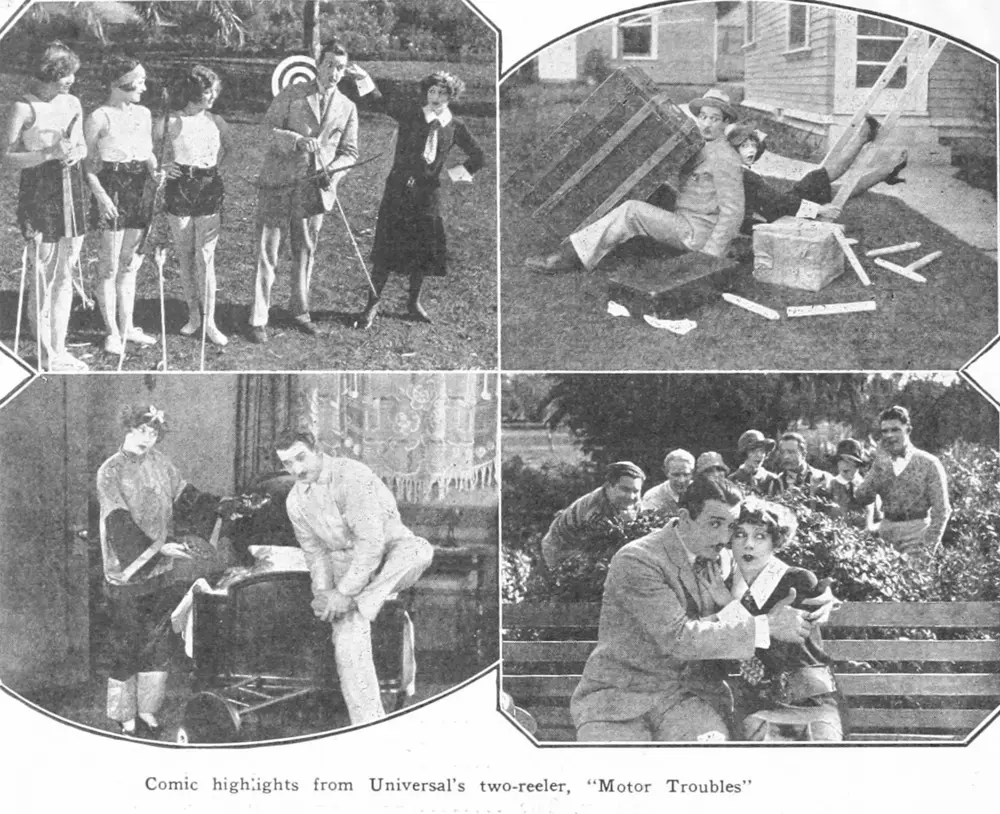
Is Motor Trouble a forgotten gem of the silent era or a relic that should have stayed lost? Short answer: No, it is not a must-watch for everyone, but it serves as a fascinating, if frustrating, time capsule for those obsessed with the mechanics of early 20th-century slapstick.
This film is for the cinematic archaeologist who wants to see the raw, unpolished roots of the 'fake it until you make it' trope. It is absolutely not for modern audiences who demand tight pacing or a protagonist who isn't fundamentally irritating.
1) This film works because it leans into the genuine social anxiety of the 1920s working class, specifically the fear of being exposed as a fraud in an increasingly technical world.
2) This film fails because its central gag—a man who cannot drive attempting to pilot a massive vehicle—is repeated until the kinetic energy completely dissipates.
3) You should watch it if you have already exhausted the filmographies of Keaton and Lloyd and want to see how second-tier comedies of the era handled similar themes.
The opening of Motor Trouble is surprisingly bleak. Charley and his bride are starving in a house they clearly cannot afford. This isn't the whimsical poverty of a Chaplin film; it feels abrasive and desperate.
When Charley tries to steal milk from the neighbor, the failure isn't just a gag; it’s a character beat. He is incompetent at even the most basic level of survival. This sets a tone that is harder to stomach than many of its contemporaries, such as The Applicant, which handles social climbing with a bit more grace.
Charles King plays Charley with a frantic, nervous energy. He lacks the physical poetry of his peers. He doesn't move with the grace of a dancer; he moves like a man who is constantly about to trip over his own feet, which I suppose is the point, but it makes for a jarring viewing experience.
The decision to have him take a job as a chauffeur despite having zero experience is the film's strongest narrative hook. It taps into that universal fear of the 'new job' jitters, amplified to a lethal degree because he’s behind the wheel of a multi-ton machine.
The reveal that his employer, Mrs. Armstrong Butt, is his mother-in-law is a plot twist you can see coming from a mile away. However, it’s executed with a certain level of dread that elevates the film slightly above standard farce.
Mrs. Armstrong Butt is presented as an immovable object. She is the personification of the domestic authority Charley is trying to escape. By becoming her driver, he literally places his life—and hers—in his own incompetent hands.
This dynamic is far more interesting than the car stunts themselves. It mirrors the tension found in Eve's Lover, where domestic secrets threaten to upend social standing. In Motor Trouble, the stakes are lower but the physical consequences are much louder.
The film uses the car as a metaphor for Charley's life: out of control, heading toward a crash, and fueled by a series of lies. It’s a simple metaphor, but in 1920, it was likely quite effective for an audience still adjusting to the presence of automobiles on their streets.
Visually, the film is utilitarian. The cinematography doesn't take the risks seen in The Tornado. Instead, it relies on wide shots to capture the scale of the vehicular chaos.
The pacing is where the film truly struggles. Slapstick requires a rhythmic escalation. You start with a small mistake, and it snowballs into a catastrophe. Motor Trouble starts at a high level of panic and stays there, which becomes exhausting rather than exhilarating.
There is a specific scene where Charley is trying to start the car that goes on for at least two minutes too long. We get it: he doesn't know how the crank works. We don't need to see him struggle with it from five different angles.
Compare this to the tight editing in Tire Trouble, and you see the difference between a masterclass in timing and a film that is merely filling its runtime. Motor Trouble feels like it was written on the fly, with gags extended simply because they had the location for the day.
If you are looking for a laugh-out-loud comedy that stands the test of time, the answer is no. Motor Trouble is a difficult sit for anyone used to the polished narratives of modern cinema or even the high-tier silent classics.
However, if you are a student of film history, it is worth a look. It shows the 'B-movie' side of the silent era. It’s messy, it’s a bit mean-spirited, and it lacks a coherent moral center. It works. But it’s flawed.
The film provides a window into the anxieties of the time—specifically the fear of the 'new woman' (represented by the mother-in-law) and the 'new technology' (the car). In that sense, it is a valuable cultural document, even if it’s a mediocre comedy.
When placed alongside other films of the period like Just Cowboys or High Power, Motor Trouble feels decidedly middle-of-the-road. It doesn't have the rugged charm of a western or the dramatic weight of a social drama like Madonnas and Men.
It exists in that strange space of early studio shorts that were produced quickly to meet the insatiable demand of nickelodeons and early movie palaces. It is a product, not a passion project.
One surprising observation: the film is strangely modern in its portrayal of the 'gig economy.' Charley taking a job he is unqualified for because he has zero dollars in his bank account is a sentiment that resonates quite loudly today. It’s just a shame the film doesn't do more with that thematic potential.
"Motor Trouble is a loud, rattling engine of a film that occasionally blows a gasket but never quite reaches its destination."
Motor Trouble is a loud, exhausting, and occasionally interesting failure. It captures the frantic energy of a world in transition, but it lacks the directorial hand to turn that energy into art. Charles King gives it his all, but his all is mostly just falling down and looking panicked. If you're bored and have twenty minutes to spare for a history lesson, give it a go. Otherwise, stick to the masters.
IMDb —
1925
Community
Log in to comment.