DbcultAccessing Vault...
Cult Review
Senior Film Conservator
The first thing that wallops you about Atop of the World in Motion is the smell you swear you can almost sniff: rancid blubber, damp wolf-fur, smoke of birch twigs inside a dome of ice. It’s a phantom scent, of course—an illusion cooked up by photons dancing at 18 fps—but that’s the sleight-of-hand this obscure 1924 curiosity perfects. The camera is both eavesdropper and survivor, shivering alongside Inupiat and Siberian Yupik as they choreograph existence on the planet’s most unforgiving dancefloor.
Restored last year from a partially nitrate-burned 35 mm print discovered in a Nome church basement, the 65-minute silent is part anthropological ledger, part poetic fever. There are no title cards of consequence—just interstitial graffiti scrawled in chalk on seal hide that translate as “The sea gives, the sea takes,” or “Gold is the moon’s dandruff.” The absence of heavy exposition flips the usual colonial gaze; instead of “Look at these exotic folks,” the film mutters, “Hold on, white viewer, feel the snot in your mustache freeze.”
Watch a hunter balance on a floe the size of a dining-room table, thrusting a bone-tipped spear into a walrus that weighs more than a Buick. The animal’s death rattle ricochets off the ice shelf, and for a second cinema itself seems to bleed. The scene is brutal, yes, but framed with the kind of reverential geometry you’d find in a Caravaggio—diagonals of the spear echoing the crack in the ice, the doomed beast’s breath forming a halo that backlights the hunter’s face. It’s sustenance porn shot by someone who’s read From the Manger to the Cross and decided redemption can also be carved out of blubber.
Cut to an interior: a woman chews caribou hide until it’s soft as jersey knit, her baby peeking from a hood lined with Arctic fox. She looks straight into the lens, unblinking, as if to say, “Take your nostalgia and shove it.” The moment lasts maybe four seconds, yet it pulverizes the travelogue template. You’re not touring; you’re being interrogated.
Mid-film, the narrative spine—loose as a polar bear’s shoulder—reveals itself: a U.S. mail sled must mush from Little Diomede to Nome before the last steamer of the season departs. The stakes feel Ben-Hur-esque, minus the chariots and plus 40 below. Huskies pound across the frame, tongues lolling like prayer flags, frost forming lace on their whiskers. The camera straps itself to the sled, producing proto-Gibsonian tracking shots that prefigure the mountain-car chase in The Great Circus Catastrophe by nearly four decades.
When the lead dog collapses from exhaustion, the musher doesn’t indulge in Disneyfied tears; he simply swaps the animal into a canvas sack on the sled and keeps going. Death is luggage here.
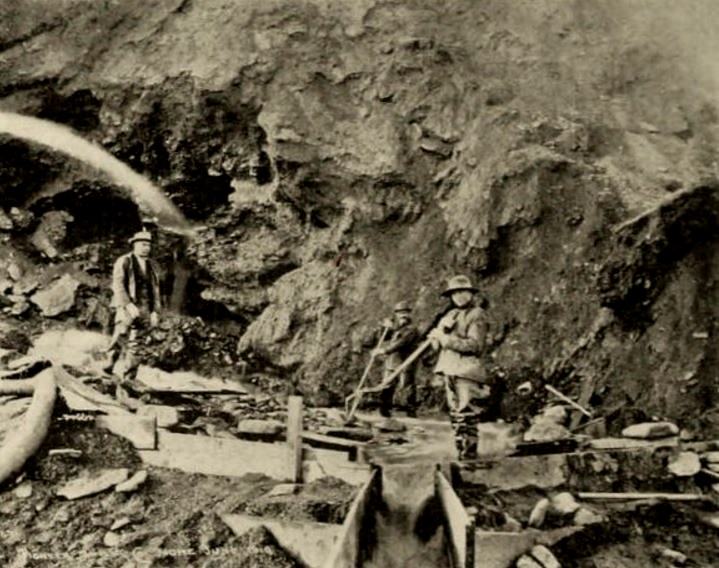
The final third relocates to the boisterous anarchy of Nome: ragtag prospectors, dance-hall girls in sealskin corsets, and a preacher who baptizes converts in meltwater troughs. One itinerant cameraman (possibly the director himself) pans across a line of men standing waist-deep in permafrost slurry, their pants frozen stiff as plaster. They resemble carved saints in The Life and Passion of Jesus Christ, except the only resurrection they await is a color in the pan that glints yellow.
Amazingly, the film undercuts the gold mythos. A veteran digger burns his last ounce of tea for fuel, melts ice to coax coffee-ground-sized dust into a vial, then hands it to a banker who weighs it against a single postage stamp. The transaction is filmed in one unbroken take—no cutaway to saloon jubilation—just the metallic clink of the scale and the howl of wind outside. Capitalism’s ledger has rarely looked so anemic.
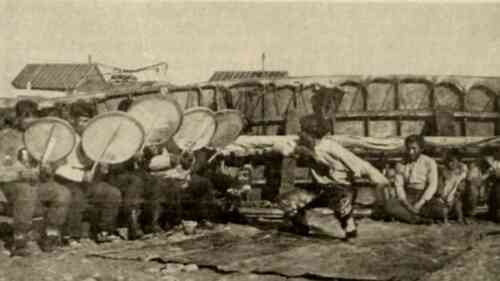
Visually, Atop of the World in Motion is a snowdrift of contradictions: chiaroscuro so sharp it could slice ptarmigan, yet the whiteouts bloom like overexposed prayers. The tinting strategy is eccentric—night scenes daubed in uranium-green, twilight moments soaked with iodine-orange that anticipates the bruised skies of Dante's Inferno. The restoration team retained these chemical bruises instead of neutralizing them; authenticity trounces tastefulness, thank heavens.
Rhythmically, the edit dances to inaudible drums: longueurs where breath fogs the lens alternate with staccato bursts—an eagle swoop, a harpoon launch, a dog team stampede—like nature’s own montage theory. It’s Soviet-style intellectual cutting minus the propaganda, closer to the cosmic gallows humor of Strike than to Flaherty’s romanticism.
The Blu-ray offers a newly commissioned score: bowed cymbals, seal-gut percussion, and a contrabass flute that growls like permafrost shifting. It’s haunting, but I prefer the theatrical version I caught at Brooklyn’s Spectacle—no musicians, just the projector’s mechanical heartbeat and the audience’s synchronized shivers. Every cough sounded like falling ice, every sniff felt like communal survival.
Let’s confront the polar bear in the room: the camera’s gaze, mediated by outsiders, inevitably tames the wild. Yet the film’s refusal to stage heroics, its willingness to linger on failure and frostbite, nudges it toward the anti-colonial. Compare it with With Our King and Queen Through India—all pomp, parasols, and pageantry—where subjects are trussed up like baubles. Here, the natives orchestrate the hunt, the humor, even the frame. The white cameraman is the awkward appendage, his tripod sinking in slush as he tries to keep pace.
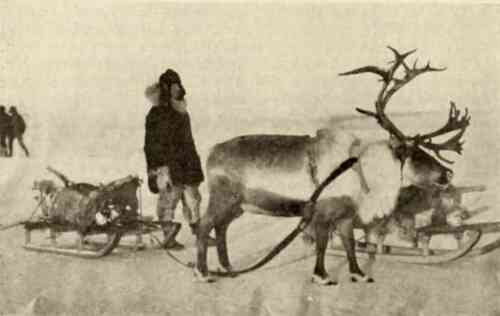
Cinephiles will spot DNA strands that later unwind in Nankyoku tanken katsudô shashin’s Antarctic chronicles, or in the hallucinatory snowscapes of The Mystery of the Rocks of Kador. Herzog clearly mined a similar philosophical quarry, though he replaced modesty with operatic frenzy. And anyone who’s sat through reality-TV spectacles like Life Below Zero will recognize the modern urge to package hardship as edutainment—except this 1924 artifact did it first, quieter, colder.
As of this month, Atop of the World in Motion streams on Mossbank Vault (region-locked to North America) and screens monthly at the Alaska Film Archive in Fairbanks, projected from a 16 mm print that crackles like frying reindeer fat. A 4K UHD is rumored for next winter, paired with an academic commentary that promises to unpack the film’s tension between salvage ethnography and poetic documentary.
So is it a masterpiece? If measured by narrative propulsion, no—it drifts like the floes it venerates. But as a tactile, olfactory, sub-zero experience, it’s matchless. It reminds you that cinema, at its primal core, is just light striking frozen silver halide—much like sunshine skidding off an Arctic wasteland, momentarily refusing to die.
Watch it wearing mittens; the pixels bite.

IMDb —
1917
Community
Log in to comment.