DbcultAccessing Vault...
6.6/10
Senior Film Conservator
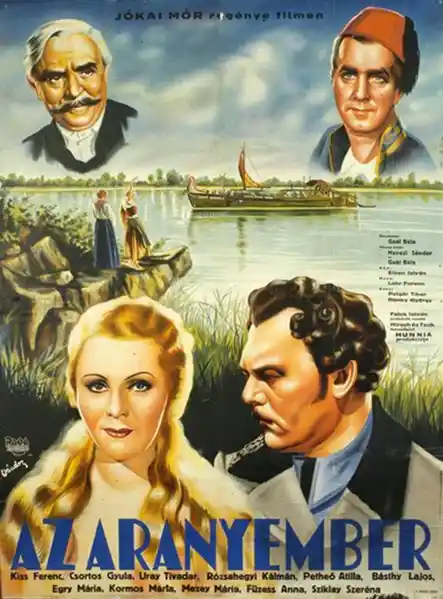
A definitive 6.6/10 rating for a film that redefined the boundaries of cult cinema. Az aranyember remains a cornerstone of transgressive art.
If you have a soft spot for dusty 1930s European dramas with crackly audio and actors who look like they are about to cry at any second, you should watch this. It is a slow, wet melodrama that feels like a time capsule. If you only like fast movies with clean digital cameras, you will probably fall asleep in ten minutes flat. 🥱
I found a copy with pretty rough subtitles, but honestly, you do not need to understand every word to get what is going on. The main guy, Mihály, starts out as a sweaty captain on a creaky cargo boat pushing wheat up the Danube river.
Through some very lucky (and slightly shady) events involving a dead Turkish guy and a bag of wet grain, he finds a hoard of gold. He becomes the richest man around, but *man*, he is miserable.
This movie really reminded me of The Sorrows of Satan with how much it warns you that money will rot your soul. Mihály gets the big fancy house and the pretty wife, but she does not love him because he basically bought her from her ruined family.
The actor playing Mihály has this incredibly heavy face that looks like it is melting under the weight of his own guilt. There is a scene where he sits at a giant dining table, completely alone, just staring at a silver plate like it insulted his mother. It goes on for so long, and it is just great.
"What good is a golden touch if your hands are always cold?"
Eventually, he finds this secret, unregistered island on the Danube where a young girl and her mother live in total isolation. This is where the movie gets super weird and dreamy.
My favorite part of the whole thing is just the water. The old black-and-white film stock makes the Danube river look like thick, flowing grey soup. It has this heavy, humid atmosphere that you can almost smell through the screen.
It is not a perfect film, and some of the transitions are so abrupt it feels like the projectionist accidentally skipped a reel. For instance, Mihály goes from being a humble sailor to a high-society gentleman in the blink of an eye, with almost no transition. It reminds me of the rushed pacing in old silent-era dramas like Destruction, where characters change their entire lives between two scenes.
But the island scenes have a quietness to them that really stuck with me. When he is there, the movie forgets about the plot for a bit and just watches the wind blow through the reeds. It is a very nice break from all the shouting and crying back in the city.
If you can tolerate the hiss of the optical audio track, it is a lovely little trip to the past. Just do not expect a happy, clean resolution where everyone gets what they deserve. 🍂

IMDb —
1924
Community
Log in to comment.