DbcultAccessing Vault...
Cult Review
Senior Film Conservator
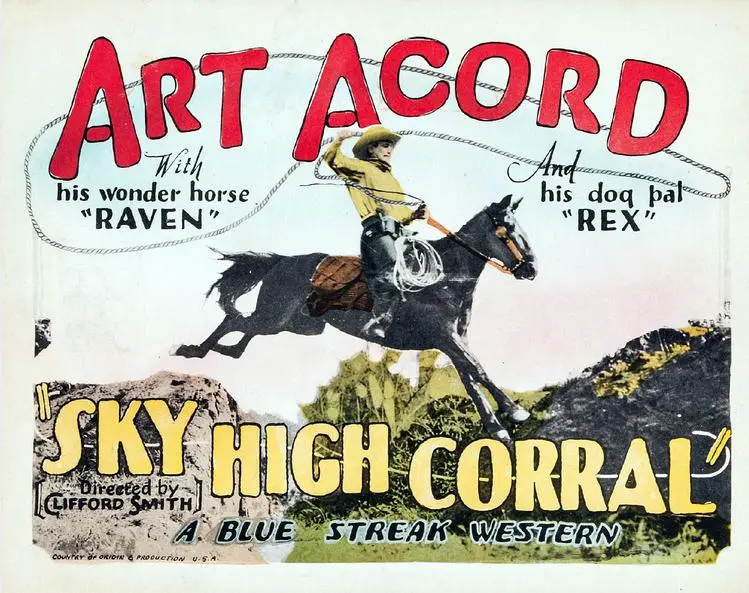
Should you invest your time in a viewing of Sky High Corral today? Short answer: yes, but only if you appreciate the raw, unpolished athleticism of the silent era’s greatest stuntmen. This film is a definitive pick for historians of the Western genre and fans of Art Acord’s physical screen presence, but it will likely frustrate those who require a fast-paced, modern narrative structure.
This film works because Art Acord brings a genuine, unforced ruggedness that modern actors struggle to mimic. This film fails because the middle act relies on a cattle-rustling frame-up that feels tired even by 1926 standards. You should watch it if you want to see how early cinema handled the tension between federal expansion and private property rights.
Sky High Corral is not your typical 'outlaw versus sheriff' story. Instead, it introduces a villain that is much harder to shoot: the federal government. The setup involves Bill Hayden, played with a weary dignity by Tom Lingham, being told his land no longer belongs to him. This isn't because of a gambling debt or a crooked banker—motifs we see in films like Sold at Auction—but because of environmental preservation. It’s a surprisingly modern conflict for a film nearly a century old.
Director Clifford Smith uses the vast, open spaces to emphasize Hayden’s isolation. When Jack McCabe (Art Acord) arrives to serve the eviction notice, the camera lingers on the physical distance between the characters. There is no warmth here. The law is a cold, immovable force. Acord’s performance in these early scenes is remarkably restrained. He doesn't play the hero immediately; he plays a man doing a job he clearly hates. It works. But it’s flawed by the suddenness of his romantic interest in Shasta.
Art Acord was a real-life rodeo champion, and it shows in every frame of Sky High Corral. Unlike the more theatrical performances found in Camille, Acord’s movements are economical and purposeful. When he mounts a horse, it isn't for show; it’s a display of professional competence. His chemistry with Marguerite Clayton is serviceable, though Clayton is given little to do beyond looking distressed in a variety of well-composed shots. She lacks the comedic spark found in The Show-Off, but she grounds the emotional stakes of the Hayden ranch.
However, the real stars might be Rex the Dog and Raven the Horse. In the 1920s, animal actors were often given as much narrative weight as their human counterparts. Rex, in particular, provides a level of reactive acting that bridges the gap between the audience and the stoic Jack. There is a specific moment during the cattle theft sequence where Rex’s alertness does more to build tension than the actual editing. It’s a testament to the training and the director’s willingness to let the animals lead the scene.
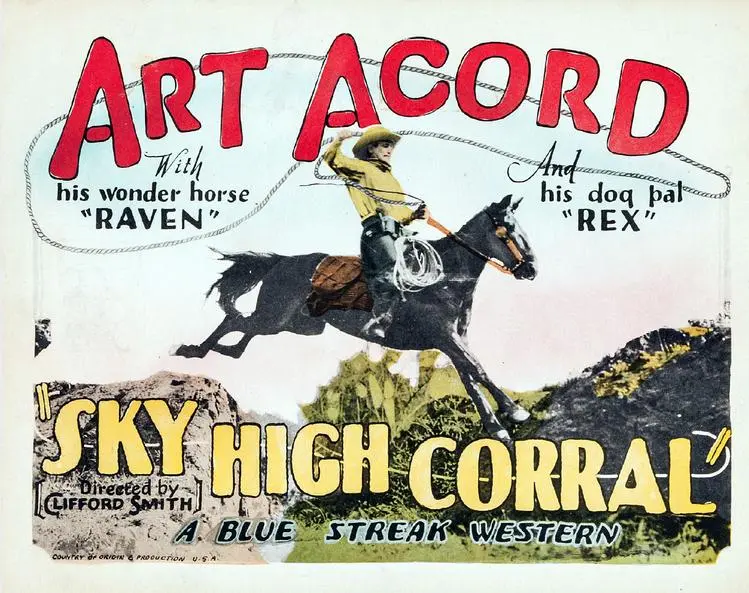
Clifford Smith’s direction is utilitarian but effective. He understands that the audience is there for the stunts and the scenery. The cinematography doesn't attempt the avant-garde shadows of Der lebende Leichnam, but it captures the dust and the grit of the ranch with startling clarity. The sequence where Whitey Durk (Duke R. Lee) steals the cattle is a masterclass in silent action choreography. You can almost feel the heat and the panic of the herd.
The pacing, however, is where the film stumbles. The transition from the legal drama of the first act to the action-adventure of the second feels jarring. We spend a significant amount of time on the eviction process, only to have the entire legal conflict resolved by a convenient repeal of the law at the very end. It’s a lazy resolution. A deus ex machina that undermines the tension built up during Jack’s framing and subsequent rescue mission. It’s as if the writers, Ralph Cummins and Clifford Smith, realized they had painted their hero into a legal corner they couldn't write him out of logically.
Is Sky High Corral a essential viewing for the casual moviegoer? No. But for those interested in the evolution of the Western hero, it is a fascinating case study. It sits in a strange middle ground between the morality plays of the early 1910s and the more polished, heroic epics of the 1930s. It lacks the thematic depth of The Lone Wolf, yet it possesses a physical vitality that is hard to ignore.
The film’s portrayal of the Forest Ranger as a protagonist is also noteworthy. In many films of this era, like The Pinch Hitter, the hero is an underdog or a social outcast. Here, Jack is an agent of the state who must find his own moral compass. This internal conflict is the film’s strongest asset, even if it is eventually overshadowed by the more traditional 'rescue the girl' finale. It’s a sturdy genre piece that delivers exactly what it promises: horses, hills, and a hero who can take a punch.
Pros:
The location shooting is spectacular, capturing the scale of the American West without the need for studio sets. Art Acord’s physicality makes the action scenes feel genuinely dangerous. The inclusion of Rex the Dog adds a layer of charm that balances the otherwise stern tone of the film.
Cons:
The plot is highly predictable, following the 'framed hero' trope to the letter. The female lead, Shasta, is given almost no agency, serving only as a prize for the hero. The pacing in the second act drags as the film waits for the final confrontation.
Sky High Corral is a workmanlike Western that succeeds on the strength of its lead actor and its commitment to physical realism. While the script is thin and the resolution is far too convenient, the film remains a compelling artifact of a time when movie stars did their own stunts and the West was still being won on celluloid. It’s not a masterpiece. It’s a rough-hewn piece of entertainment that knows its audience. If you go in expecting a gritty, straightforward adventure, you won't be disappointed. Just don't expect the legal logic to hold up under any modern scrutiny.
IMDb —
1924
Community
Log in to comment.