DbcultAccessing Vault...
Cult Review
Senior Film Conservator
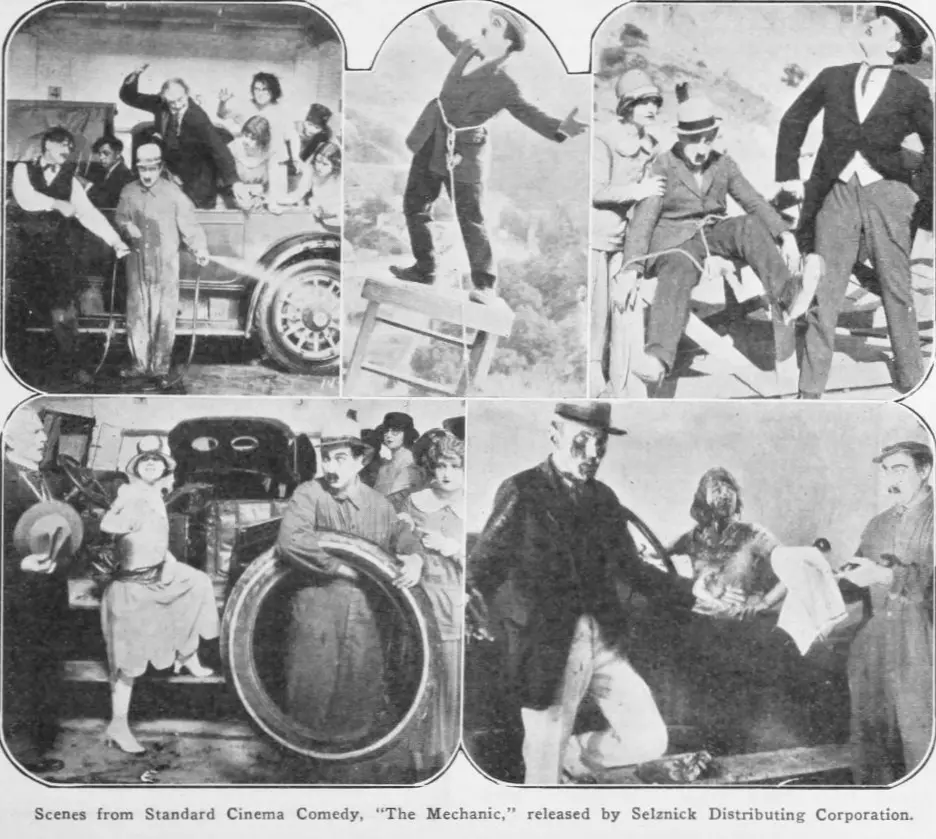
To witness The Mechanic is to engage with a form of cinema that has largely been swallowed by the digital gloss of the modern era. Jimmy Aubrey, a figure often overshadowed by the pantheon of Chaplin, Keaton, and Lloyd, presents here a performance of such visceral immediacy that it demands a re-evaluation of his contribution to the silent canon. Unlike the refined pathos of The White Sister, which sought to elevate the medium through religious and romantic grandeur, Aubrey’s work remains rooted in the muck and oil of the everyday. He is the poet of the peripheral, the master of the minor catastrophe.
The film operates on a logic of escalation. What begins as a simple task of maintenance rapidly devolves into a structural breakdown of reality itself. Aubrey’s movements are not merely comedic; they are a form of physical geometry. He navigates the cramped confines of the mechanical shop with the grace of a drunken tightrope walker, utilizing his entire frame to convey a sense of mounting desperation. This isn't the high-stakes drama found in The Eleventh Hour, but rather a localized apocalypse of stripped screws and tangled belts.
The 1920s were a decade obsessed with the friction between man and machine. While The Spitfire might have focused on the speed and glamor of the age, The Mechanic focuses on the grit. There is a profound sense of class consciousness embedded in Aubrey’s soot-covered face. He represents the labor force that the grand narratives of progress often ignore. His struggle is not against a villain in the traditional sense, but against the inherent unreliability of the physical world. The tools he uses become extensions of his own clumsiness, turning the act of repair into an act of accidental sabotage.
The pacing of the film is relentless. It shares a certain rhythmic DNA with Up or Down?, where the verticality of the gags creates a sense of perpetual motion. Aubrey understands that in silent comedy, silence is not an absence of sound but a presence of rhythm. The way he waits for a spinning wheel to catch his sleeve, or the split-second delay before a bucket falls on his head, reveals a meticulous understanding of comic timing that rivaled the best of his contemporaries. It is a performance of high lexical diversity in movement—each gesture a word, each fall a sentence.
When we look at the landscape of 1924, we see a medium in transition. On one hand, you have the emotional gravitas of The Heart of Youth, and on the other, the gritty realism of Marooned Hearts. The Mechanic carves out a middle ground by using realism as a springboard for the surreal. The garage is a real place, with real dirt and real hazards, yet under Aubrey’s stewardship, it becomes a theater of the absurd. This is a far cry from the exoticism of La gitana blanca or the mystery of The Reed Case. Here, the mystery is simply whether the protagonist will survive the afternoon without losing a finger.
The cinematography, though functional, serves the physicality of the lead. The camera remains mostly static, allowing the frame to act as a proscenium arch. This allows the audience to fully appreciate the scale of the chaos. In one sequence, Aubrey’s interaction with a malfunctioning engine reminds one of the hypnotic, almost trance-like state found in Kärlek och hypnotism, though the result here is far more explosive. The visual language is direct, unpretentious, and devastatingly effective.
It is easy to dismiss Aubrey’s character as a simple caricature, but there is a layer of stoicism here that is genuinely moving. Much like the protagonist in The High Horse, Aubrey’s mechanic is a man of singular focus, even if that focus is entirely misplaced. He does not complain; he does not despair. He simply continues to turn the wrench, even as the world collapses around him. This resilience is the core of the film's appeal. It is the human spirit refusing to be defeated by the inanimate.
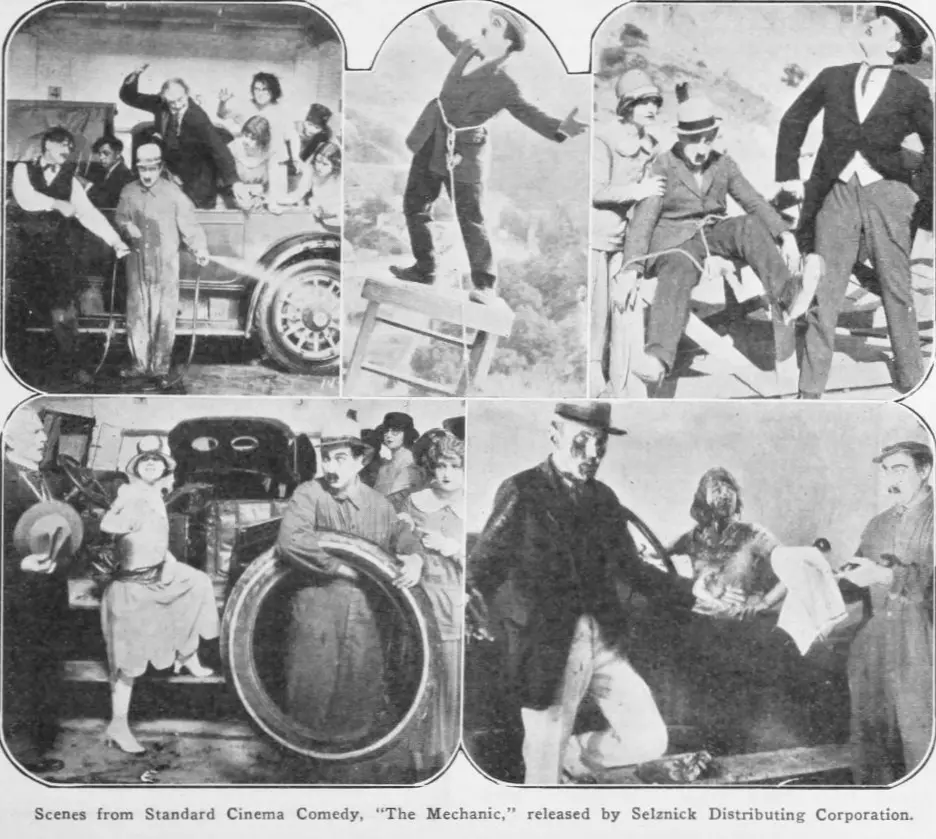
Consider the technical execution of the stunts. In an era before sophisticated safety protocols, the risks taken by performers like Aubrey were substantial. There is a palpable sense of danger that gives the comedy a sharp edge. It lacks the safety net of modern CGI, making every near-miss feel authentic. This authenticity is what separates The Mechanic from the more staged feel of The Night Hawk. In Aubrey’s world, the gravity is real, the metal is heavy, and the pain—though played for laughs—is believable.
The editing of the film deserves particular praise. The cutting between Aubrey’s reactions and the escalating mechanical failures creates a mounting tension that is almost Hitchcockian in its precision. While it may not have the narrative complexity of Die Jagd nach dem Tode - 4. Teil: Die Goldmine von Sar-Khin, it possesses a purity of purpose. Every shot is designed to elicit a specific physiological response—a gasp, a laugh, a cringe of sympathy.
The use of props in the film is nothing short of masterful. Every object in the garage is a potential weapon or a potential punchline. Aubrey treats a simple oil can with the same reverence a priest might treat a chalice, only to have it betray him in the most undignified manner possible. This transformation of the mundane into the malevolent is a hallmark of the best silent comedy. It’s a thematic cousin to the symbolic weight found in Pieces of Silver: A Story of Hearts and Souls, where objects carry the burden of the narrative.
Watching The Mechanic in the 21st century provides a fascinating window into the anxieties of the past. We are currently living through a digital revolution that mirrors the industrial revolution of Aubrey’s time. Our "machines" are now algorithms and interfaces, but the feeling of being overwhelmed by systems we don't fully understand remains identical. Aubrey’s struggle with a stubborn engine is our struggle with a frozen computer screen. The film remains relevant because the frustration of the "user" is a universal human experience.
Furthermore, the film’s lack of pretension is refreshing. In a cinematic landscape often dominated by "elevated" genre pieces, there is something profoundly honest about a man getting hit with a pipe. It is a reminder that cinema, at its most basic level, is an art of movement. It captures the fleeting moments of physical existence. It is as ephemeral and as vital as a day spent Fishing for Tarpon—a simple task, performed with varying degrees of success, but full of life nonetheless.
While Byl první máj might offer a more lyrical exploration of the human condition, The Mechanic offers a more visceral one. Jimmy Aubrey may not have the name recognition of his peers, but his work in this film proves he was a formidable talent. He understood the dark comedy of the machine age, the humor in the breakdown, and the dignity in the disaster. This film is a frantic, messy, and utterly delightful artifact of a time when the world was changing faster than we could fix it.
In the end, The Mechanic is more than just a series of gags. It is a tribute to the resilience of the common man in the face of an increasingly complex world. Aubrey’s soot-streaked grin at the end of the film is not a sign of victory, but a sign of survival. And in the chaotic machinery of life, perhaps survival is the greatest comedy of all. It is a work that deserves its place in the archives, not just as a historical curiosity, but as a living piece of kinetic art that still has the power to provoke laughter and reflection in equal measure.
Reviewer's Note: For those interested in the evolution of the slapstick genre, this film provides a crucial link between the early Vitagraph shorts and the more polished features of the late 1920s. It is a raw, unvarnished look at a master at work.

IMDb —
1917
Community
Log in to comment.