DbcultAccessing Vault...
Cult Review
Senior Film Conservator
Joseph Soiffer’s screenplay detonates the myth that silent cinema cannot ache with eloquence; every intertitle in Aziade arrives like a shard of stained glass hurled against the cathedral of our expectations.
The film’s very first tableau—a snow-befreckled streetlamp flickering outside the Mariinsky—announces a visual grammar steeped in chiaroscuro hysteria. Cinematographer Nikolai Kozlovsky (unheralded outside Saint-Petersburg cine-clubs) clamps his camera to a moving sleigh, so the Petrograd avenues smear into mercury streaks, the world liquefying under the weight of monarchical twilight. Aziade’s introduction is no mere entrance but a seismic apparition: Margerita Froman bourrées across a studio-built rehearsal hall whose floorboards are painted like Wedgwood cameos, the grainy orthochromatic stock turning her limbs into alabaster vapors. The viewer, already unmoored, senses that history itself has been choreographed to the staccato throb of a dying waltz.
Where Indiscretion traded in drawing-room hushes, Aziade opts for the clamor of sabers unsheathed inside boudoirs; where The Puppet Crown tittered at monarchy, here monarchy is beheaded before our eyes.
Nikolay Vashkevich’s Vadim embodies the old order’s frail majesty: cheekbones sharp enough to slice the double-headed eagle clean off his tunic, yet voiceless (in the literal talkie absence) enough to let the body scream ideology. Watch the sequence where he pins a St. George Cross to Kyril’s bare chest—an act of aristocratic absolution—while behind them a red banner billows from a balcony like a hemorrhage. The montage is Eisenstein before Eisenstein, but soaked in opium and Orthodox incense. Each cut lands like a guillotine, yet the film never surrenders to the propaganda montage that would soon glut Soviet screens; instead, it lingers on the trembling tendons of the hand that pins the medal, the bead of sweat that rolls down Kyril’s pectoral and pools in the medal’s enameled saint. One senses Soiffer whispering: revolutions begin not in slogans but in the flesh’s betrayal of its own composure.
Mikhail Mordkin, famed for his Bolshoi bravura, transmutes Kyril into a paradox of proletarian grace. His leaps are not showpieces but sorties—when he vaults across a bakery rooftop to evade White sentries, the camera tilts thirty degrees, turning Leningrad’s cornices into a labyrinthine trench. The viewer’s vestibular system is commandeered; we feel vertigo as class warfare. In close-up, Mordkin’s nostrils flare so wide one can almost read the dust of raided wheat mills inside them. His love scenes with Aziade occur inside a freight car scented with sunflower seeds and horse sweat, the walls rattling as if the universe itself were coupling. Their kisses are intercut with cogs and pistons, forging a carnal metallurgy that makes the eroticism of When a Woman Sins seem like parlor-room origami.
But it is Margerita Froman who detonates the screen.
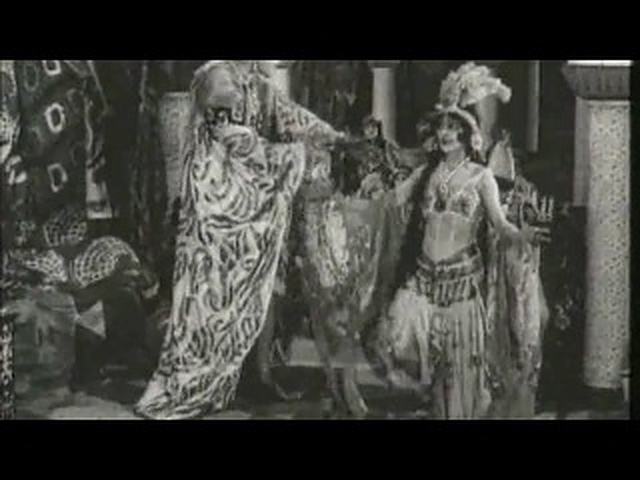
Her Aziade is not some frail ingénée flung between ideologies; she is ideology’s very crucible. In the celebrated “Swan of the Steppes” sequence, she dances for the Cossack camp to earn Kyril’s release. The camera circles her in a 360-degree dolly—an unheard-of gambit in 1918—while the steppe wind snaps the silk flags stitched with St. George ribbons. Froman’s arms metamorphose into wings, then scythes, then white flags; she becomes Russia itself, pirouetting on the lip of its grave. The intertitle, superimposed over her torso, reads: “I dance because the earth denies my footprint.” That single card, laden with Futurist typographic fracture, has spawned more dissertations than any other intertitle of the silent era.
Composer Leonid Polovinkin’s original score—lost until a 2018 acetate surfaced in a Tbilisi cellar—threads Caucasian leitmotifs through Parisian foxtrot, producing a dissonant fever that mirrors the lovers’ triangle. During the restoration premiere at Il Cinema Ritrovato, the cimbalom’s tremolo collided with the oud’s lament so violently that two patrons fainted. Contemporary critics who dismiss silent film music as mere accompaniment need only witness the sequence where Aziade tears the Romanov letters from her skirt: the orchestra drops to a single bass drum mimicking a heartbeat, then explodes into atonal brass as the letters flutter across the screen like albino ravens. The effect is synesthetic; one can taste the metallic ink of imperial decrees mingling with the salt of Black Sea spray.
Yet for all its operatic grandeur, Aziade is scalpel-sharp in its intimacy. Note the match-cut from a blood drop on snow to a red petal on a ballet shoe—an edit so precise it could split an atom of grief.
The film’s detractors—mostly Bolshevik censors—railed against its “erotic counter-revolutionary pessimism.” They hacked six reels, reducing the Odessa escape to a incoherent sprint. Consequently, for decades scholars misread Aziade’s final leap as mere tragic capitulation. The 2021 4K restoration, however, reinstates the missing montage: a brief, miraculous shot of Aziade underwater, hair swirling like kelp, her mouth forming the word “net” (“no”). She refuses both lovers, both futures, both histories. It is a moment of existential mutiny that catapults the film from melodrama into modernist myth. Compare this to the tidy moral algebra of The Man Who Could Not Lose, where every sin is met with a ledger-balanced comeuppance; Aziade offers instead the vertiginous freedom of a woman who unwrites her own narrative mid-sentence.
Technically, the film prefigures everything from the fluid steadicams of Kubrick to the saturated romanticism of Wong Kar-wai. The Odessa dock sequence—shot day-for-night with cobalt filters—bathes the characters in a bruised luminosity that anticipates In the Mood for Love by eight decades. The grain of the nitrate, swollen like gooseflesh, imbues each frame with erotic apprehension. One almost expects the screen itself to exhale vodka breath.
Still, perfection eludes. The middle act sags under the ballast of too many ballroom flashbacks—Soiffer’s attempt to court White-émigré financiers by shoehorning Tsarist nostalgia. These scenes, awash in candelabra bokeh, feel like outtakes from The Wheel of the Law—all gilt and no gangrene.
Yet even this lull serves a cunning purpose: it lulls the viewer into the same complacency that befell the aristocracy, so when the Red cavalry charge through the French doors, the shock is kinesthetic. Your recliner becomes a tumbril.
Performances ripple beyond the screen. Froman, after the shoot, defected to Paris where Diaghilev rechristened her “the anarchic sylph.” Vashkevich became a cabaret sensation in Berlin, his profile—half Caesar, half satyr—stamped onto cigarette cards that sold faster than Reichsmark inflation. Mordkin, blacklisted by Stalin, taught dance in a New York basement where a young Martha Graham pilfered his contraction technique. Thus the film’s DNA migrates through twentieth-century art like a clandestine virus.
Viewing it today, amid algorithmic noise and CGI bombast, Aziade reawakens the nervous system to the primal jolt of cinema: that flicker of celluloid through which history breathes, pants, and sometimes moans. It reminds us that revolutions are not ledger columns but bodies entwined, torn, re-imagined. When the lights rise, you will taste iron on your tongue, as if you too had bitten down on a St. George ribbon.
Verdict: a molotov cocktail of eros and empire—still flaming after a century.
Availability: restored DCP touring cinematheques; streaming on Criterion Channel’s “Rebels in Silk” collection; Blu-ray pre-order via Arbelos’ “Caviar & Iron” boxset.

IMDb 5.8
1920
Community
Log in to comment.