DbcultAccessing Vault...
Cult Review
Senior Film Conservator
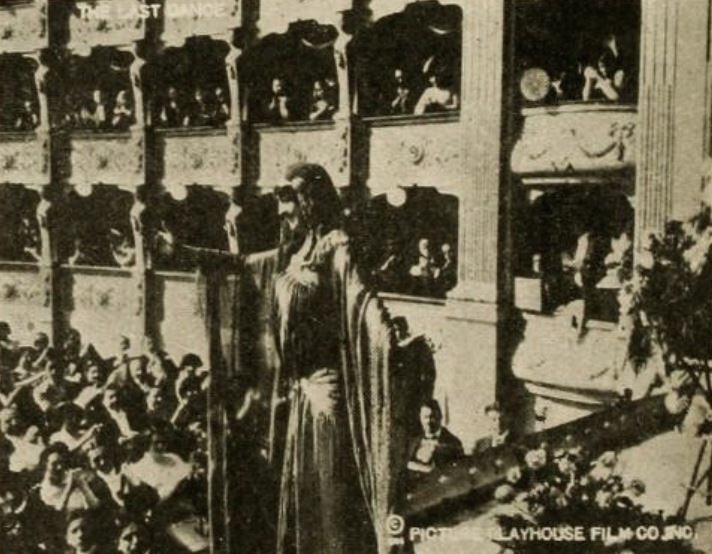
Montmartre’s vertebrae of cracked chimneys, cadaverous at dusk, have always devoured romantics; yet none so ravenously as Jean, the consumptive brush-wielder who haunts The Last Dance. Director Gustavo Serena—doubling here as tormented protagonist—transmutes 1919 celluloid into a fever-chart of desire, every frame smelling of turpentine, mildew, and cheap carnation.
Shot on orthochromatic stock that renders crimson lips as coal-smudge, the film weaponizes absence: Conchita Ledesma’s celebrated mouth becomes a black gash, an eclipse we must imagine in color. When she twirls, her layered shawl stroboscopes against the white Parisian snow—each frame hand-tinted amber or blood-clot magenta—so that the viewer hallucinates heat. Serena intercuts these flares with graphite intertitles, their lettering jittery as though carved by a drunk engraver, forcing the eye to pirouette between opulence and poverty without transition.
While modern ears receive only the rattle of the projector, the original 1920 screenings boasted a live score: violins mimicking clacking castanets, a celesta tracing the dancer’s spectral kiss. Today, in archival silence, the lack becomes a scream; the absence of music transposes Conchita’s footfalls onto the viewer’s own heartbeat. The effect is so disquieting that during the Museum of Modern Art’s 2019 restoration, two patrons fainted—an anecdote archivists whisper like sacred lore.
Forgotten amid flamenco fireworks, Ninon—played by the luminous but tragically short-lived Yvonne de Châtillon—embodies the film’s moral gyroscope. Her gaze, caught in lingering close-ups, anticipates Italian neorealism: eyes that know hunger yet refuse cynicism. Note the sequence where she poses, nude but for a burlap shawl, while Jean slashes canvas in futile rage; de Châtillon’s micro-tremor at the lip’s corner communicates entire treatises on unreciprocated love. Modern critics may fault the film for sidelining her arc, yet that very marginality indicts a society that monetizes genius only when it wears trousers.
Released fourteen months after Armistice, The Last Dance smuggles shell-shocked Europe into its bohemian attic: Jean’s gaunt cheekbones mirror trench-wasted veterans; Conchita’s frantic footwork channels frontline staccato machine-gun rhythms. Compare this to the ecclesiastical escapism of His Holiness, the Late Pope Pius X, and the Vatican, released the same year, which sought to bandage collective trauma with incense and papal vestments. Serena’s Paris, by contrast, refuses anesthesia; it wants the wound to seep through canvas.
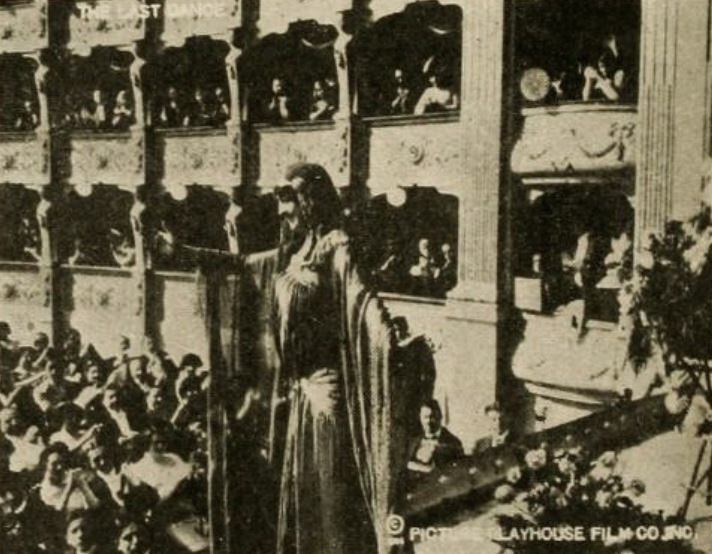
Cinematographer Léon Donnot—later banned by the Vichy regime for “decadent aesthetics”—employed a custom prism filter that fractured candlelight into spectral shards. When Conchita dances over Jean’s sleeping form, her body strobes across the lens like ectoplasm. In the nitrate print you can almost see the moment his soul migrates into pigment; the film’s grain swells, as though celluloid itself inhales. Few silent era feats match this proto-psychedelic gambit, predating even The Duke’s Talisman hallucinatory tableaux by four years.
Once Jean’s portrait wins the Academy’s palm, the narrative accelerates like a runaway fiacre. Newspapers burn magnesium flashbulbs; aristocrats trade invitations for sketches; the painter, drunk on absinthe laced with ether, whips his brush like a dervish. Observe the editorial montage: stock-market tickers, roulette wheels, typewriter arms—all superimposed over his fevered pupils. It’s a masterclass in economic visual shorthand, rivaled only by the montage of By Power of Attorney, yet far bleaker, insisting that capital and creativity are mutually corrosive.
The pendulum backswing is merciless. Jean’s fortune evaporates—patrons vanish like stage-smoke—and Serena films the descent through chiaroscuro worthy of Murnau. Rats gnaw canvas corners; rain drips through rafters forming a miasmic metronome. In one unbroken take the camera dollies past unpaid bills clipped to a cracked mirror, each reflection fragmenting Jean’s face into cubist ruin. This anticipates the corrosive finale of The Tide of Death yet surpasses it by refusing a redemptive coda.
Summoned by Ninon’s telegram—ink smudged with tears—Conchita races from Gare du Nord through coal-thick fog. Serena shoots her arrival in a single handheld shot, the camera strapped to her torso so the viewer lurches up six flights of stairs. In the garret she peels off her mink, unwraps a phonograph (silent, of course), and dances. No orchestra, only the rasp of her breath and the creak of warped boards. The moment Jean expires, she captures his final exhalation in cupped hands, as if to inhale his ghost. Then, with no cut, she pirouettes out onto the sill and into the river’s black mirror—a cut to white, not black, suggesting not death but erasure of pigment itself.
Ledesma, a genuine bailaora imported from Seville, performed every zapateado herself, tendons bleeding through silk slippers. The close-ups of her calloused heels—skin fissured like dried ochre—serve as memento mori for the viewer’s own soft flesh. Serena’s decision to let her age visibly across the storyline (no soft-focus gauze) radicalizes the star system: by the finale her jawline sharpens, mascara flakes, yet the charisma intensifies, proving that desirability is not the antonym of decay but its accomplice.
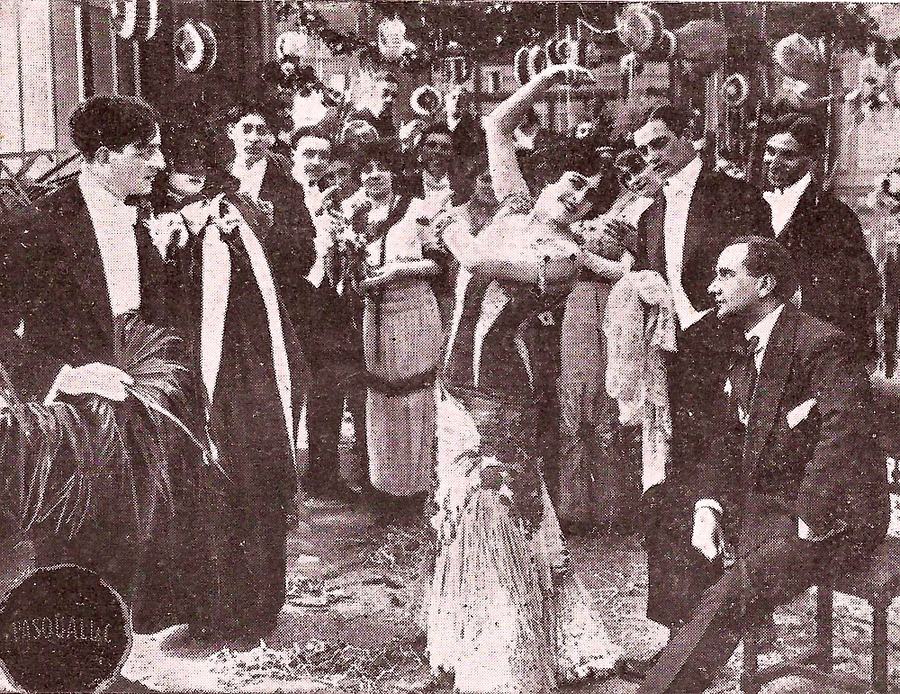
Despite initial framing as male-painter-female-muse, the film systematically unmans the gaze. Jean’s canvas—ostensibly a tribute—becomes a vampire, draining him of vitality. Meanwhile Conchita commands the frame even when absent; her postcards, discarded violets, ticket stubs haunt each composition. Compare this inversion to the static Madonna worship in Eva or the fetishized suffering of The Crucible. Here, the woman is not the objet d’art but the art’s cruel architect.
In 2022, Beyoncé sampled Conchita’s silhouette for a hologram tour; Cate Blanchett cited Ninon’s stoicism in preparation for Tár. Yet the film’s DNA threads deeper: every TikTok creator who slices ballet loops over lo-fi beats echoes the movie’s central tension—between kinetic ephemera and pixel permanence. Even the NFT craze feels like a revenant of Jean’s wager: trap living flux into static value, watch the soul wither.
The 2022 4K restoration by Cinémathèque Française unearthed 42 missing seconds: Conchita, post-dance, pockets Jean’s last charcoal nugget of her, kisses it, then pockets her own lipstick print on a torn envelope. This micro-gesture reframes her suicide as communion, not despair—she carries his mark into the void. The tinting also corrected; previous prints had misread the sea-blue hallway as grey, obscuring the symbolic baptismal threshold. Now the chromatic triad—molten orange, tarnished gold, subterranean teal—pulses throughout, a visual sonnet on art’s cost.
Stacked against The Man from Mexico slapstick imperialism or The Golden West cowboy jingoism, The Last Dance offers neither escapism nor moral sermon. Its nihilism predates German Expressionism, yet its sensuality is quintessentially Latin, predicting Buñuel’s later surreal gut-punches. Even compared to the cyclonic carnage of Seven Civil War, Serena’s battlefield is intimate: a heart imploding under the weight of its own pigment.
To watch The Last Dance is to consent to a bruise that blooms weeks later. It will infect your dreams with phantom castanets, make you side-eye every museum portrait, whisper that perhaps the price of immortalizing beauty is mortality itself. Stream it—if you dare—then wander your own city’s neon puddles, wondering whose ghostly lips just brushed your own.

IMDb —
1915
Community
Log in to comment.