DbcultAccessing Vault...
Cult Review
Senior Film Conservator
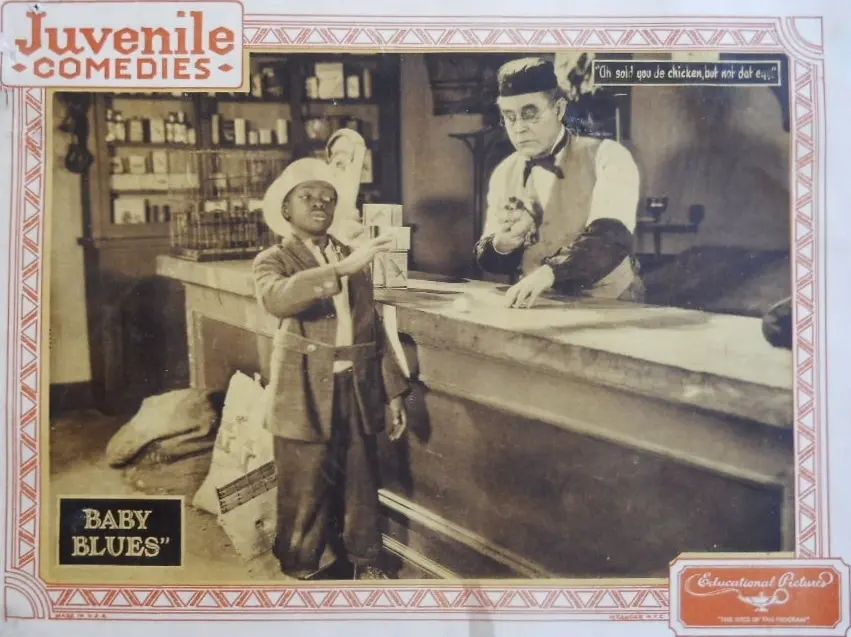
In the annals of early cinema, where the nascent art form was still discovering its voice, 'Baby Blues' emerges as a peculiar, yet utterly captivating, comedic gem. It’s a film that, with a deceptively simple premise, manages to weave a tapestry of slapstick, social commentary, and outright absurdity that remains surprisingly potent even today. This isn't just a story about a man in a pickle; it's a wonderfully bizarre exploration of identity, escape, and the lengths to which one might go to evade a rather mundane, yet immediate, threat. The film, starring the versatile Mickey Bennett as its beleaguered protagonist, Mickey, alongside a spirited ensemble including James Berry and Malcolm Sebastian, crafts a narrative that is as whimsical as it is insightful, offering a window into the comedic sensibilities of its era.
The initial catalyst for Mickey’s extraordinary escapade is disarmingly ordinary: a run-in with the village's resident 'tough kid.' This isn't a grand, epic conflict, but rather the kind of petty squabble that could happen on any street corner, in any town. Yet, it’s precisely this mundane genesis that elevates the ensuing absurdity. Mickey, rather than confronting his tormentor head-on or seeking conventional refuge, opts for a flight of pure, unadulterated fantasy. His desperate search for sanctuary leads him not to a church, a barn, or a friend’s house, but to the most unlikely of havens: a baby show. This instantaneous leap from street brawl to infant pageant is where 'Baby Blues' truly begins to sparkle, laying the groundwork for a comedic journey that defies all expectation.
Mickey Bennett's portrayal of the titular Mickey is nothing short of a physical comedy masterclass. The decision to disguise himself as an infant isn't merely a plot device; it's a profound, albeit hilarious, act of regression. Bennett expertly navigates the delicate balance between adult awareness and infantile mimicry. We witness the subtle shifts in his posture, the exaggerated waddling, the wide-eyed innocence that belies his true age and predicament. It's a performance that demands not just comedic timing but a nuanced understanding of human vulnerability and the sheer absurdity of the situation. The humor springs from this palpable tension: the audience is privy to Mickey’s secret, making every near-miss and every convincing gurgle a moment of pure delight.
The ingenuity of the disguise itself is a central pillar of the film's comedic success. How does a grown man convincingly pass as a baby? The film revels in the practical challenges and the visual gags inherent in this premise. From oversized bonnets to tightly swaddled blankets that restrict his adult movements, every element of Mickey’s costume contributes to the hilarity. This kind of elaborate, situational comedy, where the protagonist is placed in an inherently ridiculous predicament and must navigate it with a straight face, finds echoes in other silent era classics. One might draw parallels to the intricate physical performances in films like King of the Circus, where characters often found themselves in precarious or absurd situations demanding exceptional bodily control and expressive pantomime. The beauty of 'Baby Blues' lies in its commitment to this single, audacious conceit, extracting every possible laugh from Mickey's precarious masquerade.
While Mickey Bennett carries the bulk of the comedic heavy lifting, the supporting cast plays an indispensable role in selling the illusion. James Berry, Malcolm Sebastian, Jack McHugh, John Rand, and Ford West, though their specific roles might be brief, contribute to the tapestry of reactions that make Mickey's disguise so effective. The judges, often portrayed with a mixture of earnestness and slight bewilderment, are crucial to the film’s humor. Their serious contemplation of Mickey, the 'baby,' as a legitimate contender, underscores the sheer audacity of his scheme. The other parents, fussing over their genuine infants, provide a stark and humorous contrast to Mickey's calculated charade. Their innocent obliviousness amplifies the comedic tension, making the audience complicit in Mickey's secret and rooting for his improbable success.
The film excels at portraying a village community that, for all its potential for conflict (as seen with the 'tough kid'), also possesses a charming naiveté. This allows the outrageous premise of a grown man winning a baby show to flourish without entirely breaking the suspension of disbelief. It’s a testament to the era’s comedic style, which often relied on exaggerated scenarios and broad characterizations to elicit laughter. The reactions of the crowd, the subtle glances, the genuine smiles or confused frowns – all these elements, expertly directed through silent film techniques, build a credible (within its own comedic logic) world where such an event could plausibly unfold. One might compare this creation of a believable, if slightly heightened, reality to the world-building in films like The Colleen Bawn, albeit in a vastly different genre, where the surrounding characters and environment lend weight to the central narrative, no matter how dramatic or farcical.
'Baby Blues' is not merely a one-off gag; it taps into a rich vein of comedic tradition: the comedy of disguise and mistaken identity. This trope, deeply rooted in theatre and literature, finds a vibrant expression in early cinema. The humor derived from a character assuming a false identity, often to escape a predicament or achieve a goal, is universally resonant. Mickey’s transformation into a baby is perhaps one of the most extreme and ludicrous examples, pushing the boundaries of what is believable for maximum comedic effect. This theme of identity subversion can be seen across various silent comedies, from the gender-bending antics that might be hinted at in a film like As a Woman Sows (though its plot suggests drama, the title itself hints at role-playing) to more overt examples of characters adopting new personas for comedic or strategic purposes.
The film implicitly, perhaps even accidentally, touches upon societal expectations of masculinity. Mickey's initial conflict with the 'tough kid' places him in a traditional masculine challenge. His response, however, is to completely abandon this paradigm, regressing to a state of utter helplessness and innocence. This subversive act, choosing vulnerability and disguise over confrontation, offers a fascinating, if unintentional, commentary on how men might navigate conflict and societal pressures. It suggests that sometimes, the most audacious form of resistance is not to fight fire with fire, but to embrace the unexpected, to become something entirely other. In a way, it’s a whimsical precursor to later comedies that explore the fluidity of identity, albeit with a unique, silent-era charm. Consider the subtle social critiques often embedded in films like Don't Tell Everything, where secrets and hidden identities drive much of the narrative tension and humor.
Without dialogue, silent films relied heavily on visual storytelling, exaggerated expressions, and physical comedy – slapstick – to convey narrative and emotion. 'Baby Blues' is a prime example of this artistry. Every movement, every facial contortion from Mickey Bennett, is meticulously crafted to communicate his internal struggle and external deception. The pacing of the film, from the initial frantic dash to the slow, deliberate movements of a 'baby' being judged, is expertly controlled to maximize comedic impact. The use of intertitles, though minimal, serves to punctuate key moments, adding another layer to the narrative without detracting from the visual spectacle.
The camera work, while perhaps not groundbreaking by today's standards, is effective in framing the gags and highlighting the reactions of the various characters. Close-ups would emphasize Mickey’s wide, innocent eyes or his barely concealed grimace of discomfort, drawing the audience deeper into his predicament. The wider shots would capture the full scope of the baby show, allowing us to appreciate the visual contrast between Mickey and the genuine infants. This careful composition and editing are vital in building the comedic rhythm, ensuring that each punchline lands with precision. The physical comedy here is not merely about pratfalls; it’s about the sustained effort of maintaining a deceptive persona, the constant fear of exposure, and the sheer audacity of the entire endeavor. This intricate dance of physical performance and visual cues is reminiscent of the elaborate staging seen in many films of the era, showcasing the innovation required to tell compelling stories without spoken words.
The climax of 'Baby Blues,' the moment Mickey wins the prize, is a triumph of absurdist humor. It's not just a victory for Mickey; it's a victory for audaciousness, for ingenuity in the face of adversity, and for the sheer, unadulterated joy of pulling off an elaborate prank. The film doesn't delve into the potential consequences of his deception – the inevitable revelation, the possible embarrassment. Instead, it revels in the immediate gratification of his success, leaving the audience with a hearty laugh and a sense of delighted disbelief. The prize itself, likely something trivial, becomes symbolic of a much larger victory: the triumph of wit over brute force, of imagination over mundane reality.
This resolution, while simple, carries a deeper resonance. It suggests that sometimes, the most effective way to overcome life's petty tyrannies is not through direct confrontation, but through a creative sidestep, a clever evasion that disarms the aggressor through sheer unexpectedness. Mickey's victory is a testament to the idea that humor can be a powerful weapon, capable of transforming a potentially humiliating situation into a moment of personal triumph. It’s a narrative arc that, despite its farcical nature, offers a surprisingly uplifting message about resilience and resourcefulness, albeit through the lens of pure comedy. The sheer glee of the payoff, after the sustained tension of his disguise, is a testament to effective comedic pacing, a skill often perfected in films like In the Knicker Time, which similarly relied on building up an elaborate scenario for a satisfying, humorous conclusion.
'Baby Blues' may not be as widely known as the works of Chaplin or Keaton, but it embodies the spirit of early silent comedy with its inventive premise and delightful execution. It reminds us of an era when filmmakers were constantly experimenting, pushing the boundaries of what was possible with the nascent medium. The film's charm lies in its unpretentious commitment to a single, fantastic idea, and its ability to wring every ounce of humor from it. It's a testament to the timeless appeal of physical comedy, the universal delight in watching a character navigate an impossible situation, and the sheer joy of a well-executed prank.
In an age saturated with complex narratives and high-concept storytelling, 'Baby Blues' offers a refreshing simplicity. Its enduring appeal lies in its ability to elicit genuine laughter through visual gags and a beautifully absurd premise. It’s a film that, despite its age, speaks to the inner child in all of us, the part that delights in mischievousness and the unexpected triumph of the underdog, especially when that underdog is disguised as a giant baby. It’s a delightful historical artifact, yes, but more importantly, it’s a genuinely funny piece of cinema that continues to charm and amuse, proving that some comedic ideas are truly timeless, transcending the technological limitations of their birth. It stands alongside other delightful, if lesser-known, silent comedies, reminding us of the rich tapestry of early filmmaking, much like the diverse narratives found in films such as Youth's Endearing Charm or even the dramatic tension of The Infamous Miss Revell, showcasing the breadth of storytelling from that pivotal era. The film is a joyous reminder that sometimes, the simplest, most outlandish ideas yield the most memorable cinematic experiences, a true testament to the inventive spirit of early Hollywood and its unsung heroes.
IMDb 4.1
1914
Community
Log in to comment.