DbcultAccessing Vault...
7/10
Senior Film Conservator
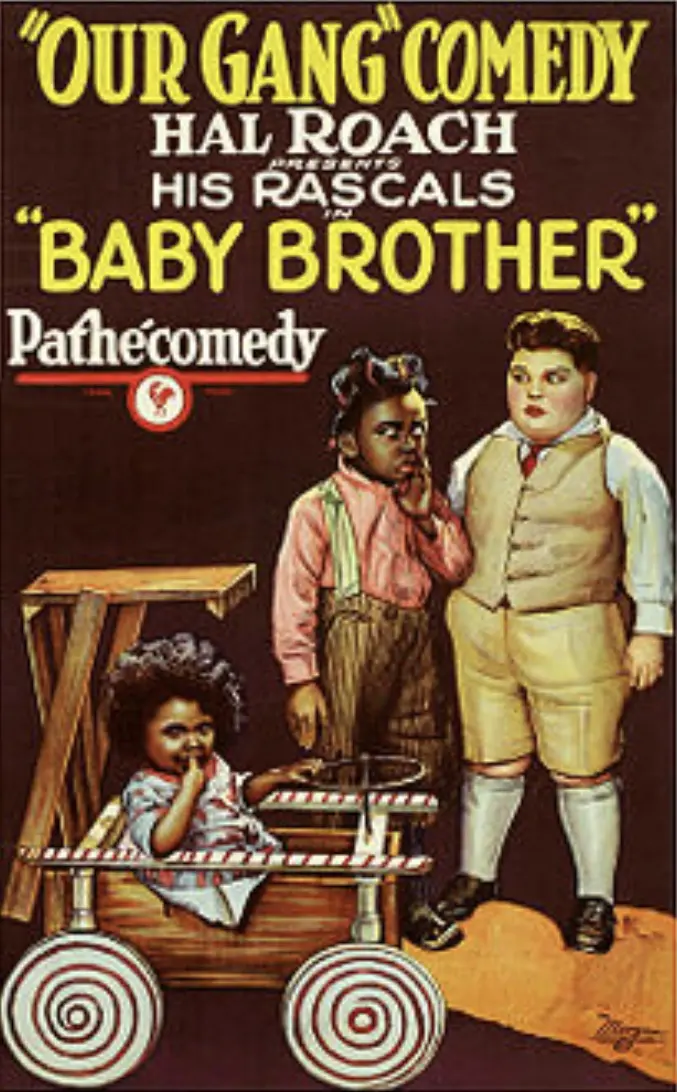
A definitive 7/10 rating for a film that redefined the boundaries of cult cinema. Baby Brother remains a cornerstone of transgressive art.
Is Hal Roach's 'Baby Brother' worth watching today? Short answer: yes, but with the understanding that you're stepping into a specific corner of cinematic history. This film is an absolute delight for those who appreciate the foundational elements of slapstick comedy, silent-era charm, and the unvarnished performances of child actors from a bygone era. Conversely, it might not resonate with viewers seeking modern pacing, complex narratives, or politically correct sensibilities.
It's a historical artifact that, despite its age, still delivers genuine laughs and a surprising amount of heart, making it a valuable watch for enthusiasts of classic cinema and the 'Our Gang' series.
At its core, 'Baby Brother' is a testament to the simple, yet powerful, desires of childhood. Joe Cobb's portrayal of a lonely rich kid with a single-minded quest for a sibling is genuinely affecting. It's a premise that, even today, taps into a universal longing for connection, albeit presented through the exaggerated, often absurd, lens of early 20th-century comedy.
The film works because it brilliantly captures the anarchic spirit of children left to their own devices, transforming a simple wish into a grand, if misguided, adventure. It fails, however, in its occasional reliance on tropes that, while common for its time, can feel dated or even uncomfortable to a contemporary audience, particularly regarding the portrayal of certain characters.
You should watch it if you're curious about the origins of ensemble child comedy, appreciate the raw energy of silent film performances, and can overlook some of the era's less refined comedic sensibilities. It's a window into a different world, both cinematically and socially.
Hal Roach, a titan of early Hollywood comedy, demonstrates his signature touch in 'Baby Brother.' His direction is characterized by a kinetic energy, perfectly suited to the boisterous antics of the 'Our Gang' kids. Roach understood that the charm of these films lay in allowing the children to be, well, children – messy, impulsive, and hilariously earnest.
The pacing of 'Baby Brother' is remarkably brisk for a silent film, a testament to Roach's innate understanding of comedic timing. There's little wasted motion; gags build quickly, often overlapping, creating a sense of escalating chaos that keeps the viewer engaged. Consider the scene where Joe and Farina attempt to 'borrow' a baby from a pram – the rapid succession of near-misses and desperate evasions is a masterclass in physical comedy, executed with surprising precision by the young cast.
Roach's ability to orchestrate such complex sequences with a cast of predominantly non-professional child actors is nothing short of remarkable. He didn't just point a camera; he crafted scenarios that allowed their natural personalities to shine, making the humor feel organic rather than forced.
The heart of 'Baby Brother' lies in its performances, particularly from its lead children. Joe Cobb, with his earnest, somewhat melancholic demeanor, grounds the film's central quest. His longing for a sibling feels genuine, providing an emotional anchor amidst the silliness. It's a surprisingly nuanced performance for a child in a silent comedy, conveying a depth of feeling through expression and body language alone.
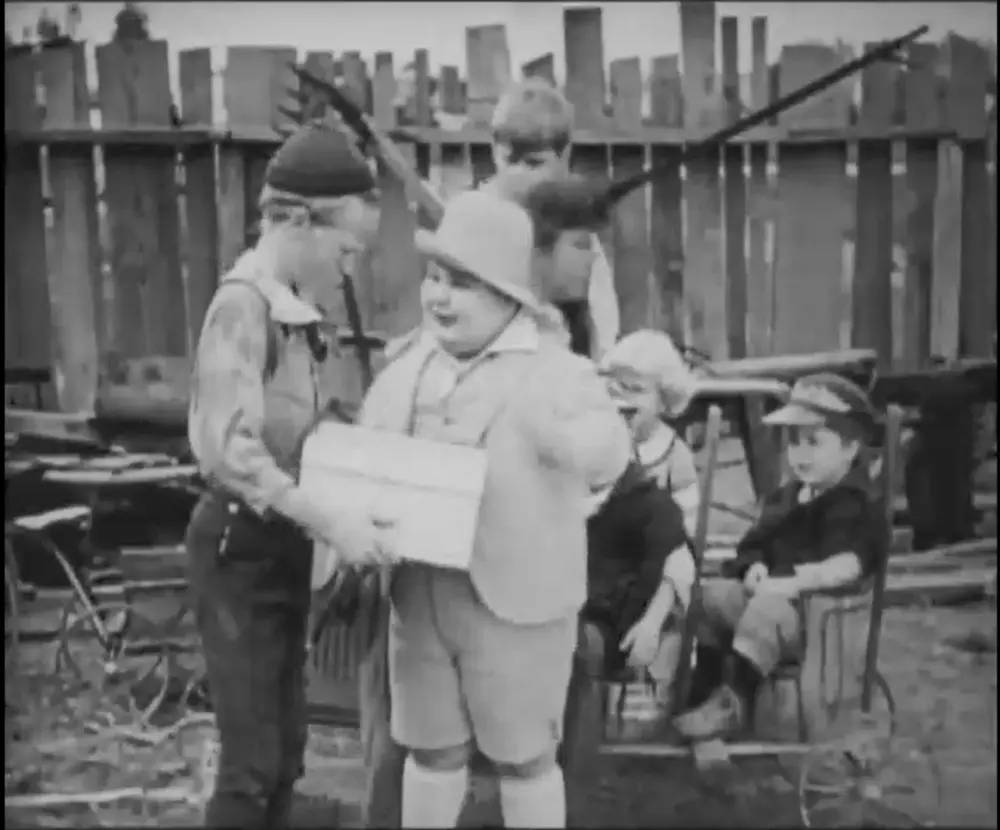
Allen 'Farina' Hoskins, a cornerstone of the 'Our Gang' series, is a force of nature. His quick wit, boundless energy, and street-smart resourcefulness are on full display as he acts as Joe's loyal, if sometimes misguided, co-conspirator. Farina's improvisational feel, even in a scripted short, is evident in his reactions and physical comedy, such as his attempts to distract passersby during a 'baby acquisition' attempt.
It's also fascinating to spot early appearances from other notable figures. Oliver Hardy, before his legendary partnership with Stan Laurel, makes a fleeting but memorable appearance. His gravitas, even in a bit part, foreshadows the comedic genius that would define his career. Observing these nascent talents in their early stages adds a layer of historical appreciation to the viewing experience.
The entire ensemble, including Jackie Condon, Bobby 'Wheezer' Hutchins, and Mildred Kornman, contributes to the film's vibrant atmosphere. They create a believable world of childhood enterprise, whether it's the main quest or the parallel storyline of the 'baby parking' scheme. The naturalism of their interactions, often unpolished by modern standards, is precisely what gives the film its unique charm.
The cinematography, while rudimentary by today's standards, effectively serves the film's comedic purpose. Shot largely outdoors, it benefits from natural light, giving the proceedings a bright, almost documentary-like feel. The camera is often static, allowing the action to unfold within the frame, a common practice for the era. However, there are moments of clever framing that highlight the children's expressions or the absurdity of their situations, such as a low-angle shot emphasizing the height difference between the children and the adults they're trying to outwit.
The tone is overwhelmingly lighthearted and mischievous, a hallmark of the 'Our Gang' series. It celebrates the innocent anarchy of childhood, where rules are suggestions and imagination reigns supreme. Yet, beneath the surface, there's a subtle, almost melancholic thread concerning Joe's loneliness, which elevates the film beyond mere slapstick. It’s this unexpected emotional undercurrent that makes 'Baby Brother' more than just a series of gags; it gives purpose to the children's wild schemes.
One unconventional observation is how 'Baby Brother' inadvertently highlights the surprisingly pragmatic, almost capitalist, instincts of children. The 'parking space for babies' subplot, while played for laughs, is a fascinating early cinematic depiction of child entrepreneurship. It’s a surprisingly sharp commentary on resourcefulness, even if it's meant to be purely comedic. It's a brutal, simple, and surprisingly insightful look into how kids make their own rules.
While the film's humor is largely innocent, it occasionally veers into territory that might raise eyebrows today, particularly in its casual depiction of child endangerment (albeit in a comedic context) and its somewhat simplistic portrayal of social dynamics. This isn't a flaw, per se, but rather a reflection of the era in which it was made, offering a valuable historical lens.
Absolutely, 'Baby Brother' is worth watching, especially for film historians, comedy aficionados, and anyone with a soft spot for the 'Our Gang' shorts. It serves as an excellent entry point into the world of Hal Roach and the silent era's unique brand of humor. It showcases the raw talent of its young stars and the foundational comedic structures that would influence generations of filmmakers.
However, approach it with an open mind and an appreciation for its historical context. Don't expect the polished narratives or sophisticated character arcs of modern cinema. Instead, embrace its charming simplicity, its energetic performances, and its genuine ability to elicit laughter through timeless physical comedy. It’s a delightful, if slightly dated, romp.
'Baby Brother' is more than just a relic; it's a vibrant, funny, and surprisingly poignant piece of cinematic history. While it demands a degree of historical understanding from its audience, its genuine humor, the undeniable charisma of its young cast, and Hal Roach’s expert direction ensure its enduring appeal. It's a charming, if imperfect, journey into the heart of childhood desire and mischievous ingenuity. See it not just as a film, but as a lively, boisterous snapshot of where cinematic comedy began. For more early cinema gems, consider exploring Theodora or Into the Primitive, but for pure, unadulterated 'Our Gang' fun, 'Baby Brother' is hard to beat. It works. But it’s flawed.
IMDb 7.4
1931
Community
Log in to comment.