DbcultAccessing Vault...
Cult Review
Senior Film Conservator
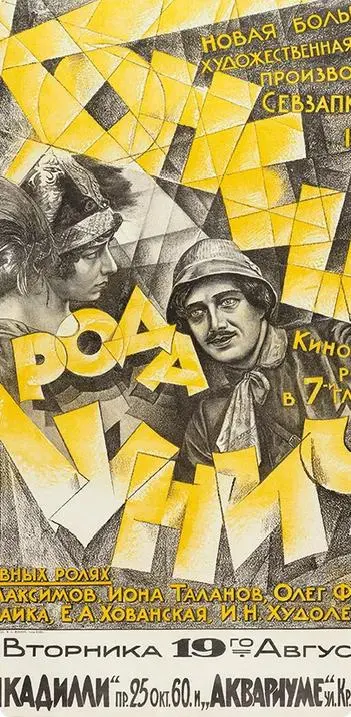
There are films that merely tell a story, and then there are those that etch themselves onto the very fabric of one's consciousness, leaving an indelible imprint. 'Konets roda Lunich', a cinematic lament on the demise of an old world, belongs unequivocally to the latter category. It is a work of profound gravitas, a searing, elegiac portrayal of a noble family's final, agonizing descent into oblivion. The title itself, 'The End of the Lunich Lineage', serves as both a prophecy and a eulogy, setting a somber, inescapable tone that permeates every frame of this Russian cinematic gem. From its opening moments, the film establishes a mood of impending doom, an atmosphere thick with the dust of decaying opulence and the scent of an era drawing its last, ragged breath.
Lev Nikulin’s masterful screenplay delves deep into the psychological and sociological ramifications of radical societal transformation. The Lunich family, once pillars of their community, now find themselves adrift in a turbulent sea of change, their inherited privileges rendered meaningless, their ancestral estate a mausoleum of forgotten glories. The film doesn't merely depict their downfall; it meticulously dissects the mechanisms of their undoing, exploring how pride, stubborn adherence to tradition, and a tragic inability to adapt become their most formidable enemies. This isn't just a tale of wealth squandered, but of identity shattered, of a class struggling to reconcile its past grandeur with a present that offers only scorn and obsolescence. The thematic tapestry woven here is rich, exploring the cyclical nature of power, the corrosive influence of unaddressed moral decay, and the profound human cost of revolution, whether political or industrial.
The narrative is less concerned with grand historical events than with their intimate, devastating impact on individual lives. We witness the erosion of personal values, the desperate attempts to cling to a phantom dignity, and the painful realization that the world has moved on, leaving the Lunich family stranded on the shores of a bygone epoch. It’s a powerful commentary on the fragility of social constructs and the enduring human struggle against forces far greater than any single family. The film's brilliance lies in its refusal to offer easy answers or simplistic villainy; instead, it presents a nuanced, often heartbreaking, exploration of flawed characters caught in the inexorable grind of history. The sense of foreboding is palpable, almost a character in itself, whispering of the inevitable end from the very first scene.
The ensemble cast of 'Konets roda Lunich' delivers performances that are nothing short of monumental. Olga Bystritskaya, as the spirited yet pragmatic Anya Lunich, is the film's beating heart. Her portrayal of a young woman caught between the suffocating loyalty to her family's dying legacy and a nascent desire for a new, independent life is utterly compelling. Bystritskaya imbues Anya with a quiet strength and a profound vulnerability, making her a beacon of resilience amidst the encroaching gloom. Her nuanced expressions convey volumes – the flicker of hope, the weight of despair, the dawning realization of her family’s inescapable fate. It is through her eyes that much of the tragedy unfolds, and her performance anchors the entire production with an unwavering emotional core.
Ivan Khudoleyev, often cast in roles demanding a certain gravitas, excels as the eldest Lunich son, a man consumed by the ghost of past glory. His performance is a masterclass in portraying a character trapped by his own pride and inability to adapt. Khudoleyev conveys the character's internal conflict with remarkable subtlety, showcasing the tragic hubris that ultimately seals his doom. His descent from a figure of authority to a desperate, pathetic shadow is rendered with chilling precision. Similarly, Oleg Frelikh brings a complex villainy to his role, not as a mustache-twirling antagonist, but as a chilling embodiment of the new order's ruthless efficiency or perhaps the internal rot that preys on weakness. His interactions with Bystritskaya are particularly charged, highlighting the clash between the old world's fading morality and the pragmatic, often brutal, realities of the emergent one.
Elena Chajka, in a role that could easily have been reduced to a caricature of the fading aristocracy, instead crafts a figure of immense pathos and misguided strength. Her performance as the Matriarch is formidable, a woman who clings to her shattered dignity with a desperation that is both admirable and tragically self-destructive. She is the embodiment of the old order, unyielding even as it crumbles around her. And Vladimir Maksimov, though perhaps in a more supporting capacity, provides crucial depth, often serving as a moral compass or a voice of reason drowned out by the cacophony of despair. Each actor contributes an indispensable thread to this intricate human tapestry, making the Lunich family’s tragedy feel deeply personal and universally resonant.
The directorial vision, presumably guided by Lev Nikulin's narrative framework, is nothing short of breathtaking. The cinematography utilizes stark contrasts of light and shadow, mirroring the moral ambiguities and the stark divide between past and present. The decaying grandeur of the Lunich estate is a character in itself, its peeling wallpaper and dust-laden chandeliers eloquently narrating the family's decline. Every shot is meticulously composed, evoking a sense of claustrophobia and the inescapable nature of their fate. The pacing, deliberate and measured, allows the emotional weight of each scene to fully settle, amplifying the tragic resonance. The film doesn't rush its audience; it invites them to dwell in the discomfort of a world teetering on the brink.
Nikulin's screenplay is a masterclass in character development and thematic exposition. The dialogue, sparse yet potent, reveals the internal struggles and external conflicts with remarkable efficiency. There are no wasted words, no superfluous scenes; every element serves to deepen our understanding of the Lunich family's plight. The narrative structure, while linear, frequently employs symbolic imagery and subtle foreshadowing that enrich the viewing experience, rewarding careful attention. It's a testament to Nikulin's genius that a story ostensibly about a specific family in a specific historical context transcends its particulars to become a universal meditation on loss, change, and the human spirit's often futile resistance against the inevitable.
In its profound exploration of a woman's struggle against societal constraints and an unyielding fate, 'Konets roda Lunich' finds a compelling cinematic cousin in Tess of the D'Urbervilles (1924). Both films meticulously chart the tragic trajectory of their protagonists, born into circumstances that dictate their suffering, their aspirations crushed under the weight of class, morality, and an unforgiving world. While Tess battles the strictures of Victorian England, Anya Lunich contends with the collapse of her entire social order, yet the underlying themes of innocence lost, resilience tested, and the relentless march of destiny remain strikingly similar. The visual language, too, often mirrors the somber, almost fatalistic aesthetic employed in adaptations of Hardy's work, using landscapes and interiors to reflect the characters' inner turmoil.
The film's unflinching gaze at moral decay and the consequences of inherited vice brings to mind the bold, often controversial narratives seen in works like Damaged Goods (1918) or the German film Die Verführten. While those films often tackled issues of venereal disease or sexual transgression, 'Konets roda Lunich' focuses on a more societal 'damage' – the moral rot that festers within a privileged class unwilling to confront its own obsolescence. The insidious nature of their self-deception and the eventual unraveling of their ethical framework resonate deeply with the cautionary tales embedded in those earlier, provocative works. The Lunich family's decline is not merely economic; it is a profound moral and spiritual collapse, depicted with a stark realism that challenges the audience to look beyond the surface.
Furthermore, the desperate clinging to a past that no longer exists, and the inherent danger in such nostalgia, echoes themes present in films that explore the consequences of rigid adherence to outdated ideals. The sense of an inescapable, predatory force looming over the protagonists can be subtly compared to the metaphorical 'vultures' of Havsgamar, where external pressures or internal failings conspire to bring about ruin. Here, the 'vultures' are often the changing times themselves, societal judgment, and the Lunich family's own inability to adapt, picking apart their once-grand legacy piece by agonizing piece. The film also shares a certain psychological intensity with works that explore the intricacies of human suffering and the breakdown of identity, drawing parallels to the complex character studies found in less conventional narratives like El rompecabezas de Juanillo, albeit in a dramatically different cultural context. Both films, in their unique ways, delve into the fragmented nature of the human experience when faced with overwhelming challenges.
What makes 'Konets roda Lunich' particularly compelling is its enduring relevance. While rooted in a specific historical context, its exploration of identity, class, and the individual's struggle against overwhelming societal forces remains profoundly universal. The film serves as a potent reminder that history is not merely a sequence of dates and events, but a relentless, often brutal, sculptor of human destiny. It cautions against the dangers of complacency, the folly of clinging to outmoded traditions, and the tragic consequences of a failure to adapt.
The film's artistic merit is undeniable. It is a work of exceptional craft, from its meticulous set design and evocative cinematography to its powerful performances and nuanced screenplay. It doesn't shy away from depicting the ugliness of human nature or the harsh realities of societal upheaval, yet it does so with a profound sense of empathy for its characters, even those whose actions are ultimately self-destructive. It challenges viewers to consider the cyclical nature of power and the ever-present tension between individual agency and historical inevitability.
In an era where rapid change is a constant, the themes explored in 'Konets roda Lunich' resonate with renewed urgency. It’s a film that demands to be seen, discussed, and remembered, not just as a historical artifact, but as a timeless piece of art that speaks to the very core of the human condition. Its poignant conclusion, far from offering cheap sentimentality, delivers a devastating yet cathartic sense of closure, cementing its status as a masterful cinematic achievement. It reminds us that even in the face of utter destruction, there is a certain dignity in witnessing the final, defiant stand against the inevitable, even if that stand is ultimately futile. The Lunich family may have met its end, but the film bearing its name lives on, a powerful testament to the artistry of its creators and the enduring power of profound storytelling.

IMDb —
1927
Community
Log in to comment.