DbcultAccessing Vault...
5.5/10
Senior Film Conservator
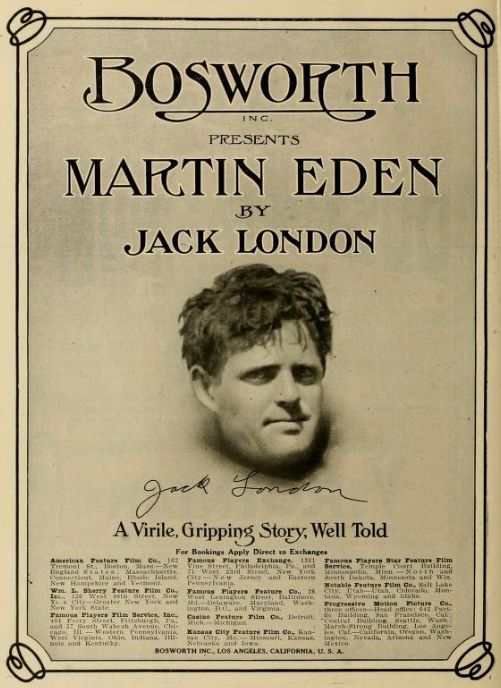
A definitive 5.5/10 rating for a film that redefined the boundaries of cult cinema. Martin Eden remains a cornerstone of transgressive art.
Stepping back into the nascent days of cinema, we encounter a profound and often unsettling narrative in the 1914 adaptation of Jack London's 'Martin Eden.' This isn't merely a film; it's a raw, pulsating exploration of ambition, class, and the crushing disillusionment that can accompany hard-won success. As a critic, I find myself drawn to its stark portrayal of a man's relentless ascent, only to discover the summit barren and the journey’s cost immeasurable. It’s a testament to the power of early filmmaking that such complex themes could be conveyed with such emotional weight, even in the absence of spoken dialogue.
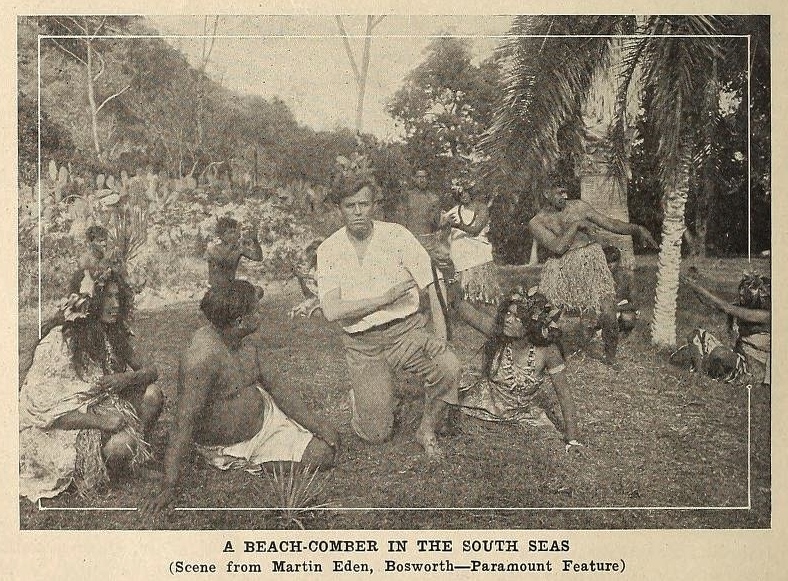
The film plunges us into the tumultuous life of Martin Eden, a character hewn from the harsh realities of early 20th-century American society. We meet him not as a refined intellectual, but as a brawler, a leader of a hoodlum gang in Oakland, California, a transient beach-comber, and a laborer in the suffocating inferno of a ship's stokehole. This visceral introduction immediately establishes his roots in a world of physical toil and primal survival. His journey is a dramatic repudiation of his origins, driven by an almost feral hunger for something more, something beyond the confines of his station. This indomitable spirit, so vividly portrayed even in the silent era's visual language, forms the bedrock of the narrative. It's a spirit that resonates with the struggles depicted in films like The Jungle, which similarly cast a harsh light on the working class's plight, albeit with a focus on industrial exploitation rather than individual intellectual striving.
The turning point, a moment of serendipitous fate, arrives with his encounter with Arthur Morse, a man from a world utterly alien to Martin's. Through Arthur, Martin meets Ruth, a woman who embodies the grace, education, and social standing he instinctively craves. Her world, steeped in literature and polite society, becomes both his inspiration and his ultimate undoing. This initial spark ignites an intellectual awakening that is breathtaking in its intensity. He devours books, struggles with grammar, and dedicates himself to writing, believing that mastery of the pen will grant him entry into Ruth's esteemed circles and, by extension, a life of meaning and respect. The film captures this arduous self-education with a quiet intensity, highlighting the sheer force of will required to overcome such a monumental lack of formal schooling. The odds against him—ridicule, grinding poverty, and his own profound ignorance—are formidable, yet his resolve remains unshaken for a significant portion of his journey.
Central to Martin's narrative is his passionate, yet ultimately tragic, love for Ruth. She is the catalyst for his transformation, the idealized vision of beauty and intellect that propels him forward. However, their love story is a poignant exploration of class divides and the limitations of societal expectations. Ruth, despite her initial fascination with Martin's raw power and burgeoning intellect, cannot fully transcend the strictures of her own upbringing. Her faith in him wavers under the strain of his poverty, his unconventional ideas (especially after his association with socialists), and the constant societal pressure. This fracture in their relationship is agonizing to witness, a slow erosion of hope that underscores the film's critique of rigid social stratification. It's a theme that echoes the societal barriers faced by characters in other period dramas, though perhaps less overtly political than the class struggles in Les Misérables, it is no less devastating on a personal level.
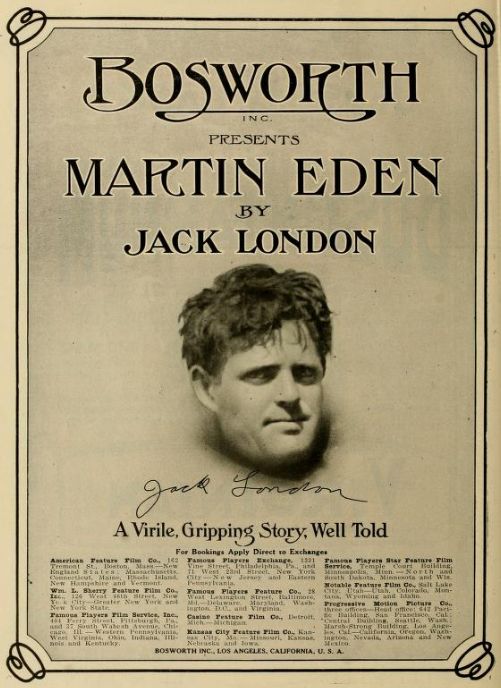
Beyond Ruth, two other figures offer Martin different forms of connection. Russ Brissenden, a poet, becomes his intellectual confidant and spiritual ally. Brissenden sees Martin's genius, encourages his writing, and introduces him to socialist ideals, which, while intellectually stimulating, have unfortunate consequences for Martin's public image. This friendship is a beacon of understanding in Martin's otherwise isolated intellectual quest, highlighting the importance of shared vision. Then there is Maria, his warm-hearted Portuguese landlady, whose simple, earnest dreams of a better life for her children ('hoe all da roun' for da kids') provide a grounding, human counterpoint to Martin's lofty aspirations. Her unwavering kindness offers a stark contrast to the conditional acceptance he receives from Ruth's family. Finally, the wistful Lizzie Connelly represents the unrequited love that Martin cannot return. She loves him for who he is, not for who he strives to be, a poignant reflection on the nature of genuine affection versus aspirational desire. Her quiet devotion serves as a subtle, yet powerful, commentary on the sacrifices Martin makes in his pursuit of an ideal.
The narrative masterfully builds to a precipice of despair before the tide dramatically turns. Martin finds himself at his lowest ebb: penniless, starving, without warmth, his manuscripts rejected, Brissenden dead, and Ruth having broken their engagement. This period of intense suffering is crucial, forging the very resilience that enables his eventual success. It is precisely at this nadir that the film delivers its most crushing irony. Suddenly, publishers clamor for his work; fame and fortune are thrust upon him. But the victory rings hollow. The very tension that sustained him, the relentless struggle against adversity, was the fuel for his creative fire and the anchor of his identity. With the external battle won, the internal edifice crumbles.
This profound disillusionment is the film's most potent message. The goal he so desperately sought, once attained, reveals itself to be a mirage. The world that once scorned him now embraces him, but this embrace feels insincere, superficial. Even Ruth, repentant and finally recognizing his worth, finds her love knocking at a door that is no longer capable of opening. The man she once knew, the man who fought so valiantly for her and for recognition, has been irrevocably altered by the struggle. This tragic realization—that the prize is meaningless once the capacity to enjoy it has been lost—is conveyed with a heartbreaking poignancy, a silent scream of the soul. It makes one reflect on other cinematic journeys of relentless pursuit, like the ambition in The Student of Prague, where the protagonist's Faustian bargain ultimately leads to a similar sense of existential emptiness.
In a silent film, the burden of conveying complex emotions falls squarely on the actors' shoulders, relying heavily on exaggerated gestures, facial expressions, and physical presence. The cast, including Lawrence Peyton as Martin Eden, Ray Myers, Elmer Clifton, Hobart Bosworth, Myrtle Stedman, Joe Ray, Herbert Rawlinson, Rhea Haines, Ann Ivers, and Viola Barry, would have navigated this challenge with the theatricality characteristic of the era. Lawrence Peyton, as Martin, must have embodied the character's journey from raw brute force to intellectual refinement, and then to profound weariness. His physical transformation, from the vigorous sailor to the gaunt, driven writer, and finally to the hollowed celebrity, would have been key. Myrtle Stedman as Ruth would have needed to convey both her initial allure and her subsequent vacillation, making her eventual repentance feel earned, if tragically late. The supporting cast, particularly Joe Ray as Russ Brissenden and Rhea Haines as Maria, would have provided crucial emotional anchors, their performances serving as counterpoints to Martin's tumultuous inner world.
The direction, likely by Hobart Bosworth (who also wrote the adaptation with Jack London), would have focused on clear storytelling through visual means. The use of intertitles would have been critical for conveying London's rich prose and Martin's internal monologues, guiding the audience through his intellectual and emotional evolution. The juxtaposition of Martin's squalid living conditions with the opulence of Ruth's world, the stark contrast between his days of struggle and his sudden, overwhelming fame, would have been visually emphasized to underscore the film's central themes of class and societal critique. The very essence of Jack London's socialist leanings and his critique of the American Dream are embedded deeply within this cinematic interpretation, making it more than just a personal tragedy, but a broader commentary on the societal structures of his time. This critical lens on society, common in early 20th-century literature and film, finds parallels in other adaptations of the era, such as Oliver Twist, which also exposes the harsh realities faced by the lower classes.
The film's conclusion is an indelible image of profound despair. Martin, having achieved everything he once desired, finds no solace in wealth or recognition. The zest for life, the raw, vital energy that fueled his extraordinary journey, has been extinguished. In a final, desperate act of seeking meaning, he sails for the South Seas, hoping to reclaim a lost sense of self, a connection to the simpler, more authentic existence he abandoned. This return to the sea, his original domain, is not a triumphant homecoming but a poignant admission of defeat. It signifies the ultimate failure of his grand experiment with society and intellect. The silence of the ocean mirrors the emptiness within him, a tragic echo of the 'too late' that defines his fate. This is not a story of a hero conquering all, but of a man consumed by his own ambition, left adrift in the wake of his triumphs.
The power of 'Martin Eden' lies not just in its narrative sweep, but in its unflinching portrayal of the human cost of striving against immense odds. It challenges the simplistic notion of success as an ultimate good, revealing its potential to corrode the soul. For a film from 1914, its thematic complexity and psychological depth are remarkable, offering a timeless meditation on identity, class, and the elusive nature of happiness. It serves as a potent reminder that sometimes, the greatest victories are also the most devastating losses. Its resonance, even today, speaks volumes about the enduring relevance of London's vision and the early filmmakers' ability to translate such profound ideas onto the screen, leaving audiences with a lingering sense of melancholy and contemplation.
Considering 'Martin Eden' within the broader context of early 20th-century cinema offers fascinating insights. This period was a crucible for narrative techniques, where filmmakers were still discovering the grammar of the moving image. Without synchronized sound, every visual cue, every intertitle, and every actor's gesture had to carry immense narrative and emotional weight. The adaptation of a complex literary work like London's novel into this nascent medium was a significant undertaking. It required distilling profound philosophical ideas and intricate character psychology into a visually comprehensible form. The film's ability to convey Martin's intellectual awakening, his social alienation, and his ultimate spiritual exhaustion, largely through performance and visual metaphor, speaks to the ingenuity of its creators. This era, which also saw ambitious historical epics like The Last Days of Pompeii and grand literary adaptations such as David Copperfield, showcased cinema's burgeoning capacity for serious storytelling. 'Martin Eden' stands as a compelling example of how early film could tackle weighty themes with both ambition and a surprising degree of nuance.
The film’s portrayal of the intellectual journey is particularly striking. Martin's self-education is not depicted as a smooth, linear progression but as a strenuous, often frustrating battle against his own limitations and the prejudices of others. The montage of him poring over books, struggling with concepts, and tirelessly writing, would have been a powerful visual shorthand for his dedication. This commitment to intellectual growth, even when it alienates him from his social peers and alienates him from Ruth, highlights a core message: true knowledge and self-improvement often come at a steep personal price. The film subtly critiques the superficiality of the intellectual elite, who, despite their education, often lack Martin's raw insight and authentic understanding of life's deeper truths. His socialist leanings, encouraged by Brissenden, further underscore his alienation from the bourgeois world, making him an outsider not just by birth, but by ideology.
Ultimately, 'Martin Eden' is a tragedy of the human spirit, a cautionary tale about the pursuit of external validation at the expense of internal peace. The film doesn't offer easy answers or a triumphant resolution. Instead, it leaves us with the unsettling image of a man adrift, having achieved the world but lost himself in the process. This profound sense of loss, intensified by the silent medium's reliance on visual pathos, resonates deeply. It's a testament to Jack London's enduring literary power and the early filmmakers' ability to capture its essence. The story of Martin Eden, an unlearned sailor who conquers the world only to find it wanting, remains a powerful and melancholic reflection on the American Dream and the often-unseen costs of social and intellectual ascent. His final, solitary voyage to the South Seas is not an escape, but a desperate, perhaps futile, search for the 'old-time zest for life' that was irrevocably sacrificed on the altar of ambition. This film, though a product of its time, holds up a mirror to the timeless struggle between aspiration and the often-bitter reality of its attainment, cementing its place as an important, if sobering, piece of cinematic history.
IMDb —
1928
Community
Log in to comment.