Domestic Warfare & Whisk Rebellion: Reclaiming a Silent Farce
Edwardian kitchens transform into anarchic battlegrounds in Eddie Lyons' criminally overlooked 1916 two-reeler Back to the Kitchen. What begins as bourgeois marital discord evolves into pure surreal pandemonium—a place where rolling pins become weapons, aspic quivers with malicious intent, and a ginger cat operates as tactical commander. Forget your preconceptions of quaint silent comedies; this is culinary warfare conducted at breakneck velocity.
"Armstrong doesn't merely pratfall—he deconstructs gravity itself, turning collapsed soufflés into existential commentary."
The Physics of Farce
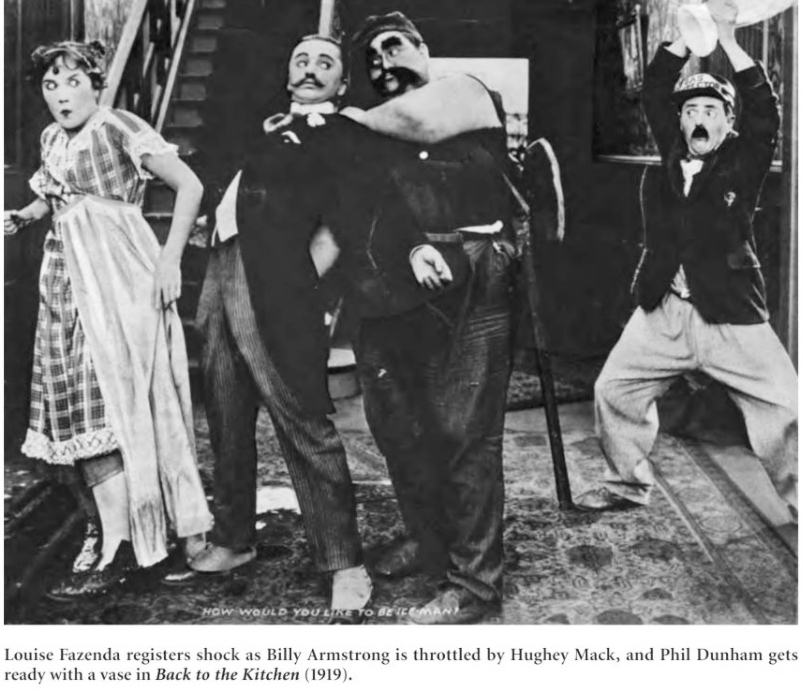
Billy Armstrong's Chauncey Van Der Snoot performs domestic incompetence as high art. Witness how his gangly limbs become catastrophic pendulums—elbows smashing through pastry displays, knees buckling beneath collapsing trifles. Unlike the Artie, the Millionaire Kid's charming mischief, Armstrong weaponizes clumsiness. His battle with an anthropomorphic icebox (a proto-Gigerian nightmare of chrome and menace) transcends slapstick, evolving into Darwinian struggle. When he wrestles a live lobster using fireplace tongs and a napkin ring shield, we're witnessing survivalist theater.
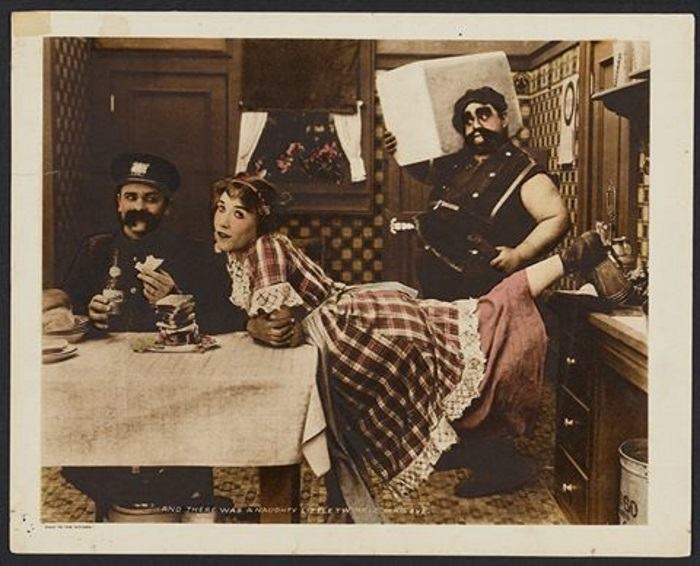
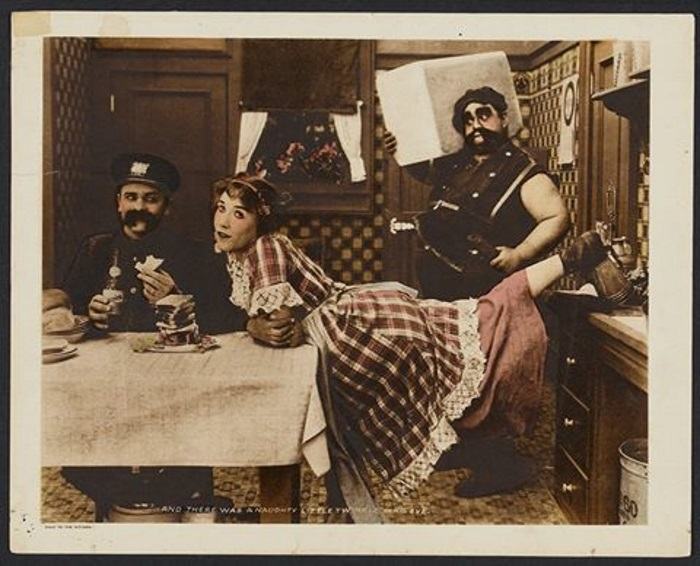
Louise Fazenda's Hortense deploys glacial elegance as psychological artillery. Her exit—adjusting gloves while stepping over Chauncey's flour-caked form—communicates spousal contempt more effectively than intertitles ever could. Their dynamic predates The Hostage's romantic tension, substituting bullets for bread dough.
Culinary Expressionism
Cinematographer Joseph Belmont transforms the kitchen into German Expressionist hellscape. Dutch angles exaggerate looming stoves, while extreme close-ups on bubbling vats of lard evoke Die Ratte's claustrophobia. Note the chiaroscuro lighting as Chauncey descends into the coal cellar—a Rembrandt painting reimagined with soot smudges. Unlike Les amours de la reine Élisabeth's stately compositions, Belmont's camera lunges and whirls like a drunken saucier.
The production design remains revolutionary: copper pots dangle like executioner's tools, a mountain of unpeeled potatoes becomes Sisyphean metaphor, and that sentient roast chicken (operated by three puppeteers off-camera) anticipates Jan Švankmajer's food nightmares. When Chauncey hallucinates dancing cutlery after inhaling nutmeg, we enter pure Dadaist territory—a sequence more psychologically unsettling than The Spirit of the Poppy's opium den.
Furry Strategists & Canine Commandos
Pepper the Cat emerges as silent cinema's most ingenious scene-stealer. This feline Buster Keaton executes elaborate set pieces with deadpan brilliance: using fish skeletons to distract the sous-chef, short-circuiting appliances by urinating on wiring, orchestrating Teddy the Dog's sausage heist. Their synchronized assault on the larder—a ballet of snatched hams and redirected spillage—demonstrates animal coordination surpassing The Triumph of an Emperor's cavalry charges.
Hughie Mack's cameo as the gelatin-wielding pastry chef deserves doctoral analysis. His quivering tower of blancmange becomes architectural terrorism, collapsing with the seismic impact of Ashes of Embers' volcanic finale. Every tremor of his jowls telegraphs impending dessert-based doom.
Gender Subversion in Aprons
Beneath the flying pie crusts simmers radical gender critique. Chauncey's forced domestication exposes male entitlement—his attempts to maintain patriarchal authority while wearing a frilly apron become tragicomic commentary. Contrast this with Poor Little Peppina's victimized heroine; here, matriarchy triumphs through strategic absence. The film's notorious "rolling pin duel" between Chauncey and maid Myrtle Lind isn't mere slapstick—it's cast-iron suffrage allegory.
Eddie Gribbon's villainous chauffeur provides unexpected pathos. His longing glances at Hortense's discarded opera gloves suggest proletarian yearning far deeper than Her Father's Gold's melodramatic contrivances. Watch how he caresses the limousine's steering wheel—a surrogate for unattainable desires.
The Culinary Apocalypse Sequence
The climactic eight-minute kitchen meltdown remains unparalleled in anarchic invention. It begins with Teddy the Dog's catastrophic entanglement in sausage links—a domino effect triggering cascading disasters: flour avalanches, a mechanized egg-beater gone feral, Kalla Pasha's explosive vinegar-and-baking-soda experiment. Lyons stages this like a military campaign, with Pepper coordinating assaults from atop the refrigerator. The geography of chaos stays miraculously coherent, unlike From Broadway to a Throne's disordered spectacles.
Special mention to Harry Gribbon's berserk gas range—a shuddering, flame-belching mechanoid requiring four stagehands to operate. Its final eruption coats Chauncey in symbolic yolk, a baptism into domestic enlightenment.
Lost Language of Physicality
Modern comedies rely on verbal sparring; Back to the Kitchen communicates through textures. The slapstick isn't punishment but discourse: the wet slap of dough against cheek, the crunch of shattered china, the sickening schlorp of boots suctioned in custard. Armstrong's genius lies in making physics emotionally legible—watch how his spine seems to liquefy when slipping on duck fat, a collapse conveying marital despair more profoundly than any soliloquy in Joseph in the Land of Egypt.
"What is a kitchen but humanity's first laboratory? And what is comedy but controlled catastrophe? Lyons understood both truths."
The Final Tableau
The resolution subverts expectations. Rather than restoring patriarchal order, Hortense assumes command wearing chef's whites like military regalia. Chauncey—now competent but traumatized—prepares consommé with thousand-yard-stare precision. Their silent supper unfolds with Bergmanesque gravity, punctuated by Pepper stealing a sole meunière. This delicate power renegotiation feels more revolutionary than Vengeance Is Mine!'s bloody retribution.
Phil Dunham's score deserves resurrection. His "Culinary Rhapsody" juxtaposes frantic piano for chaos sequences with theremin-like theremin (achieved via violin harmonics) for surreal moments. The lobster duel's staccato pizzicato remains a masterclass in musical slapstick.
Legacy in Crumbs
We trace Back to the Kitchen's DNA through Jacques Tati's controlled destruction, the food fights of Animal House, even Pixar's Ratatouille. Yet none capture its existential absurdity. Contemporary restorations reveal astonishing details: the hieroglyphic stains on Chauncey's waistcoat, Louise Fazenda's barely suppressed smirk during a collapsing cake disaster, Pepper's tail conducting the mayhem like a furry metronome.
In an era obsessed with The Law of Nature's grand narratives, this kitchen-sink epic dared to find universality in burnt toast and scrambled eggs. Its message endures: true equality begins when both partners know how to deglaze a pan. Chauncey's journey from clueless aristocrat to shell-shocked saucier remains cinema's most delicious metamorphosis.
Find the restored print. Witness the moment when Teddy the Dog somersaults into a vat of rising dough—a Shakespearean fool in fur. Marvel at Armstrong's pratfall into an open oven, emerging as a human biscotti. This isn't just comedy; it's culinary catharsis. The kitchen may be destroyed, but from its ruins rises something nourishing and profound. Pass the gravy boat.