DbcultAccessing Vault...
Cult Review
Senior Film Conservator
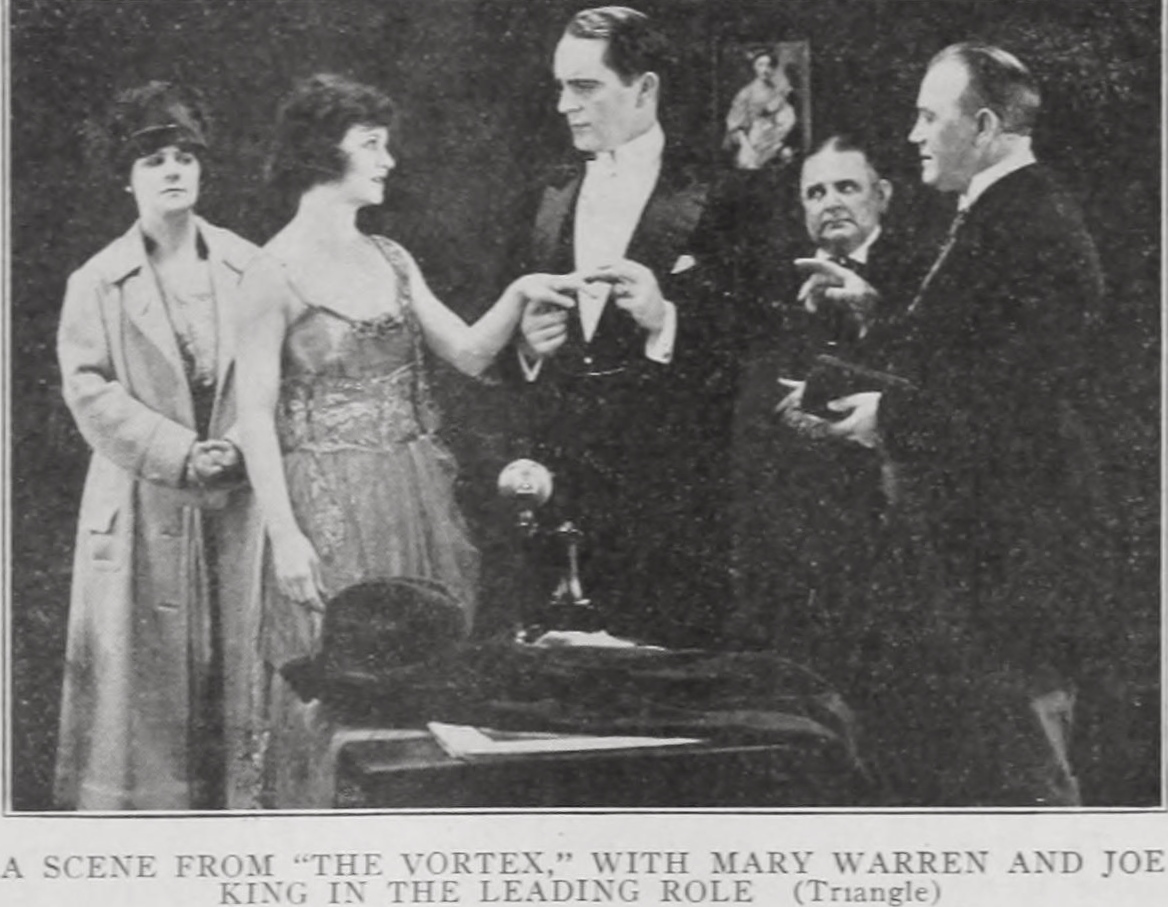
The year 1918 remains an enigmatic pivot point in the evolution of American cinema, a time when the visual language of the medium was shedding its theatrical chrysalis to embrace something more fluid and psychologically resonant. The Vortex, directed with a keen eye for the spatial dynamics of tension, stands as a testament to this transition. It is not merely a story of lovers and cuckolds; it is a surgical examination of how wealth and reputation act as both armor and cage. Unlike the broader strokes found in The Matrimonial Martyr, this film opts for a suffocating intimacy, drawing the viewer into a whirlpool of misinterpretation that justifies its evocative title.
The narrative architecture of The Vortex is built upon the precariousness of the gaze. We see characters constantly observing, misconstruing, and reacting to shadows of truth. George Hernandez, as the affluent Lorimer Van Cleefe, provides a performance that is surprisingly restrained for the era. His Lorimer is not the typical silent film protagonist driven by grand gestures, but rather by a quiet, brooding vulnerability. When he gazes upon Joan Meredith, played with a luminous but frantic energy by Mary Warren, we perceive a man whose financial security has not insulated him from the visceral fear of emotional abandonment. This thematic preoccupation with social standing and the 'polite' facade of the elite echoes the narrative beats of Social Quicksands, yet The Vortex feels more urgent, more grounded in the immediate threat of violence.
The catalyst for the film's descent into chaos is the perceived affair between Lorimer and Hilda Herford. Myrtle Rishell’s portrayal of Hilda is nuanced; she is not a villainess in the traditional sense, but a woman trapped in the gravitational pull of a failing marriage, seeking solace in the company of a friend. The tragedy of the film lies in the fact that every character acts on incomplete data. Joan’s decision to elope with Albert Dunning (Joe King) is an act of retaliatory despair. It is a fascinating subversion of the romantic elopement trope—here, the flight toward 'freedom' is actually a plunge into a different kind of servitude with a man whose heart is as empty as his pockets.
The middle act of the film shifts the locale to a country inn, a common trope in early 20th-century drama that serves as a 'neutral' ground where social masks are dropped. However, in The Vortex, the inn becomes a pressure cooker. The cinematography here is particularly striking for 1918, utilizing deep shadows and tight framing to emphasize the characters' entrapment. When Albert discovers that Joan’s father has lost his fortune, his transformation from a doting suitor to a cold opportunist is chilling. Joe King plays this shift with a subtle hardening of the features that feels remarkably modern. This exploration of the pecuniary motivations behind romance is a stark contrast to the more idealistic depictions of love found in An Innocent Magdalene.
The arrival of Lew Herford, Hilda’s husband, introduces a lethal element to the melodrama. The film flirts with the aesthetics of the crime thriller, as Lew’s intent to kill Lorimer heightens the stakes from social ruin to physical mortality. The tension is palpable, and the director manages to juggle these disparate narrative threads—the broken elopement, the vengeful husband, and the misunderstood friendship—with a dexterity that keeps the viewer anchored in the emotional reality of the scene. The film avoids the sprawling, often disjointed pacing of historical epics like Attila, the Scourge of God, focusing instead on the intense, localized storm of the inn.
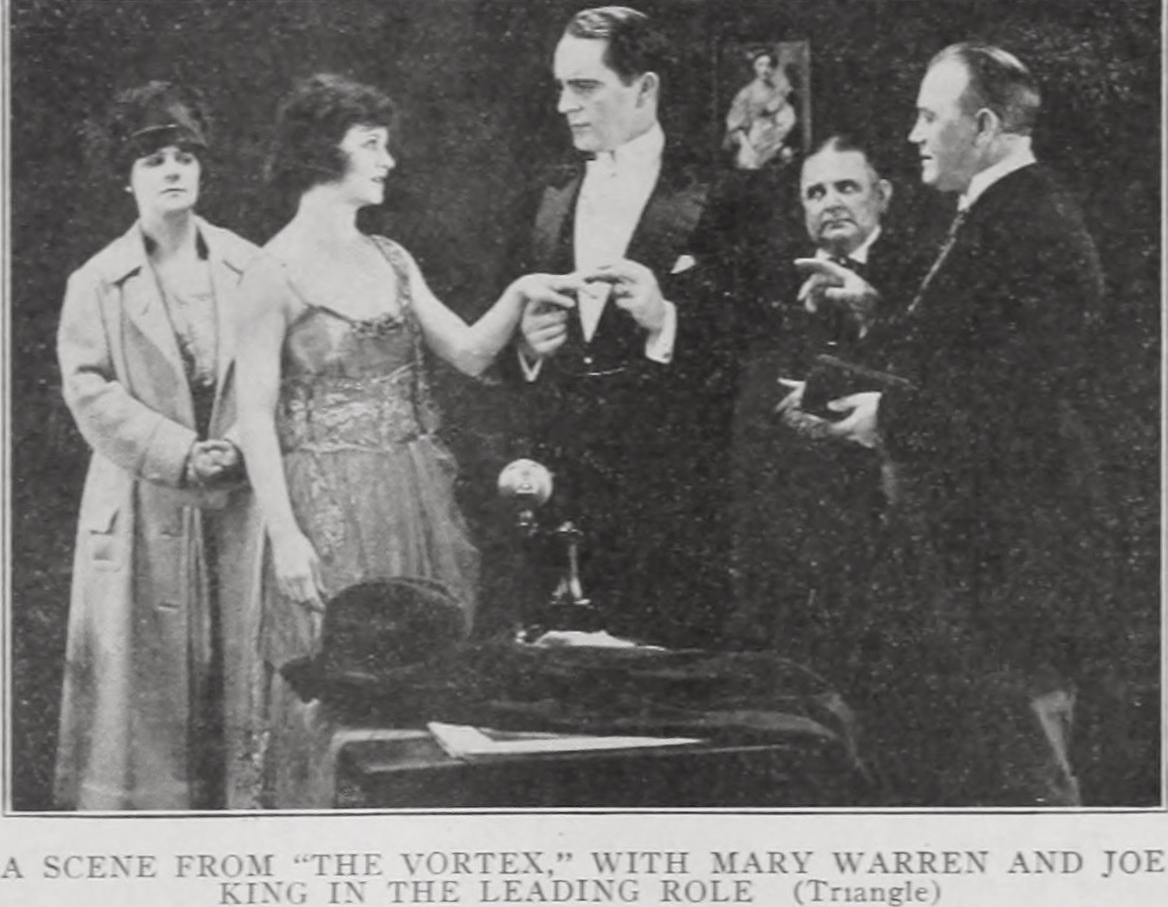
One of the most compelling sequences involves Joan’s decision to sacrifice her own reputation to save Lorimer’s life. By claiming she was the one with Lorimer at the roadhouse, she chooses social death to prevent his physical demise. This is a moment of profound agency for a female character in 1918 cinema. She is no longer a pawn in the games of men; she is the architect of her own salvation, even if that salvation looks like ruin. The film explores the concept of 'honor' not as an abstract virtue, but as a currency that can be spent or traded. This thematic depth elevates the film above standard fare like The Lamb, which, while charming, lacks the psychological grit present here.
The resolution, facilitated by a telephone call from the minister, is a fascinating artifact of early 20th-century technology serving as a narrative pivot. The telephone—a symbol of modernity—becomes the instrument of truth, cutting through the fog of Victorian-era misunderstandings. It is a literal 'voice from above' that restores the moral order. While some modern viewers might find this resolution too convenient, it serves a vital thematic purpose: it demonstrates that in the modern world, the truth is no longer a matter of hearsay or reputation, but of verifiable fact. This transition from the 'word of a gentleman' to the 'proof of the wire' marks a significant shift in the cultural zeitgeist of the time.
Looking back at The Vortex through a contemporary lens, one is struck by how much it anticipates the noir sensibilities of later decades. The cynical view of marriage, the focus on financial ruin, and the 'inn' as a site of moral ambiguity all prefigure the tropes of the 1940s. The writers, Norman Sherbrook and George Elwood Jenks, crafted a script that is remarkably dense. Every character motivation is clearly delineated, and the stakes are consistently raised without resorting to the absurd pyrotechnics of some of their contemporaries. Even minor characters, such as Joan’s father, contribute to the sense of a world where the floor can drop out from under one’s feet at any moment, a theme also explored with varying degrees of success in The Closing Net.
The performances remain the film's strongest asset. Mary Warren’s Joan is a study in emotional volatility; her face conveys the whiplash of transitioning from a hopeful bride to a discarded woman to a sacrificial lamb in the span of a few reels. Wilbur Higby and Eugene Burr provide solid support, grounding the more melodramatic elements in a sense of lived-in reality. The film’s ability to balance these high-octane emotional beats with quiet moments of reflection is what sets it apart from the more frantic pacing of Lieutenant Danny, U.S.A..
In the final analysis, The Vortex is a film about the gravity of our choices. It suggests that while we may be caught in the 'vortex' of social expectation and accidental circumstance, it is our willingness to speak the truth—and to sacrifice for it—that eventually pulls us back to the surface. It is a sophisticated piece of work that deserves a more prominent place in the conversation about silent cinema. It lacks the pastoral simplicity of Wee Lady Betty, opting instead for a darker, more complex palette that resonates with the anxieties of its era and, surprisingly, our own. The restoration of such films is vital, for they provide the DNA of our modern cinematic language, reminding us that the human heart has been navigating these same treacherous waters for over a century.
As the screen fades to black and Joan and Lorimer find their uneasy peace, the viewer is left with a lingering sense of the fragility of the social contract. The Vortex doesn't offer easy answers, but it offers a compelling, visually arresting journey through the complexities of the human condition. It is a film that demands to be watched, not just as a historical curiosity, but as a vibrant, breathing piece of art that still has the power to provoke, to challenge, and to move.
IMDb —
1921
Community
Log in to comment.