DbcultAccessing Vault...
6/10
Senior Film Conservator
A definitive 6/10 rating for a film that redefined the boundaries of cult cinema. One Arabian Night remains a cornerstone of transgressive art.
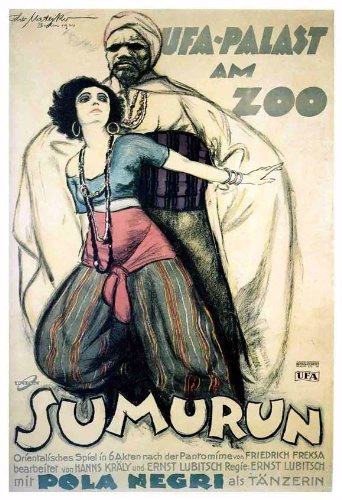
In the shimmering sands of early cinematic history, where the exotic and the melodramatic often intertwined, Ernst Lubitsch's One Arabian Night (originally titled Sumurun) emerges as a captivating spectacle. Released in 1920, this silent German epic, a product of the UFA studios, stands as a testament to Lubitsch's burgeoning genius, showcasing the early glimmers of the 'Lubitsch Touch' that would later define his illustrious Hollywood career. It’s a film that transports its audience to a fantastical, yet deeply human, Arabian world, brimming with intrigue, desire, and the intricate dance of power and passion. The tapestry woven by writers Ernst Lubitsch, Friedrich Freksa, Richard Rieß, and Hanns Kräly is rich with the kind of narrative complexity that elevates it beyond mere costume drama, plumbing the depths of unrequited love and dangerous liaisons.
At the narrative's core lies the tyrannical Sheik, portrayed with a menacing gravitas by Carl Clewing, whose absolute dominion extends not only over his sprawling kingdom but also, more intimately, over his vast harem. Among his many treasures is the exquisite Zuleika, brought to life with magnetic intensity by Pola Negri. Negri, already a star of considerable magnitude in European cinema, imbues Zuleika with a potent blend of vulnerability and defiance. She is the Sheik's favorite, a position that grants her certain privileges but also seals her fate within the gilded cage of his desire. Her life, for all its outward splendor, is one of gilded captivity, a perpetual performance for a single, demanding audience. Yet, even in this constrained existence, the human heart yearns for something more, something authentic and unburdened by the weight of ownership.
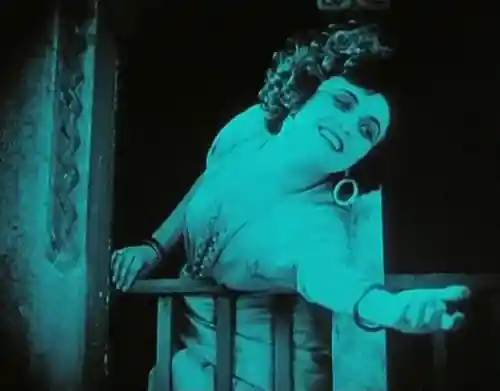
Enter Nur-al-Din, the handsome cloth merchant, played by Harry Liedtke. His introduction into Zuleika's cloistered world is a spark in the tinderbox of her unfulfilled desires. Their connection is immediate, palpable, a dangerous current that runs beneath the Sheik's watchful gaze. This forbidden romance forms the primary dramatic thrust of One Arabian Night, exploring the timeless theme of love blossoming in the most improbable and perilous circumstances. It’s a narrative trope that resonates deeply, recalling the desperate passions found in films like Mysteries of Paris, where societal strictures often dictate the tragic trajectory of love, or even the poignant yearning in The Lost Chord, where music becomes a metaphor for forbidden connection. The stakes here, however, are immediate and visceral: discovery means certain death, a brutal end to a nascent, defiant joy.
Lubitsch, never one to simplify human emotion, masterfully weaves a parallel narrative that deepens the film's emotional resonance. This secondary plot centers on Yeggar, the hunchbacked clown, a role remarkably undertaken by Lubitsch himself. It's a performance of profound pathos, a stark contrast to the director's later comedic persona. Yeggar is a figure of tragic irony: his profession demands laughter, yet his heart is heavy with unrequited love for a traveling dancer, Sumurun, played by Jenny Hasselqvist. Sumurun is a vision of exotic beauty and ambition, her eyes set not on the devoted, misshapen jester, but on the perceived glamour and security of the Sheik's harem. Her ambition echoes, in a twisted way, the very gilded cage that entraps Zuleika, highlighting the diverse motivations that drive individuals towards similar fates.

Yeggar's love for Sumurun is a silent agony, a testament to the crushing weight of unspoken affection. He watches her, adores her, yet knows his physical deformity and social standing render him invisible to her aspirations. This storyline, while secondary, is arguably the emotional anchor of the film, providing a raw, unvarnished depiction of heartbreak. It draws parallels to the profound isolation and yearning seen in films like Ikeru Shikabane, where characters grapple with societal rejection and the burden of their circumstances. Lubitsch's portrayal of Yeggar is nuanced; he isn't merely a caricature but a fully realized character whose pain is palpable, offering a poignant counterpoint to the more overtly romantic, yet equally perilous, entanglement of Zuleika and Nur-al-Din.
Even in this early silent film, predating his Hollywood zenith, the distinctive 'Lubitsch Touch' is discernible. It's not yet the sophisticated, sparkling wit of his later comedies, but rather an innate understanding of human psychology, a flair for visual storytelling, and an ability to convey complex emotions with subtle gestures and evocative mise-en-scène. Lubitsch masterfully uses the opulent sets and elaborate costumes, not just for aesthetic grandeur, but to deepen the narrative and characterization. The Sheik's palace, for instance, is a character in itself – beautiful, yet suffocating, a symbol of both power and imprisonment. This meticulous attention to detail and ability to infuse setting with symbolic weight is a hallmark of his directorial style, a trait that would only grow more refined with time, much like the intricate world-building seen in films such as Maharadjahens yndlingshustru II, where exotic locales are central to the dramatic fabric.
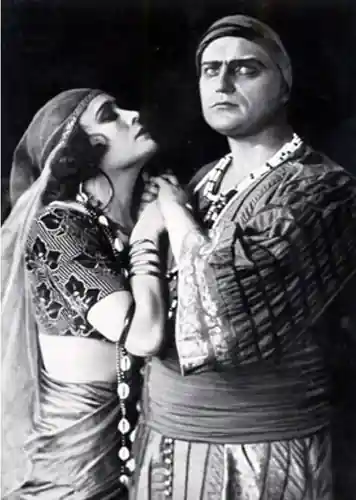
The pacing of One Arabian Night is deliberate, allowing moments of tension to build organically and emotional beats to fully resonate. Lubitsch demonstrates an impressive command of cinematic language, using close-ups to capture the nuances of his actors' expressions – a raised eyebrow from Negri, a haunted glance from Lubitsch's Yeggar – and wider shots to establish the grand scale of the Sheik's court. He understands the power of suggestion, often allowing the audience to infer rather than explicitly stating, a technique that engages the viewer more deeply in the unfolding drama. This sophisticated approach to narrative, even in a silent format, sets One Arabian Night apart from many of its contemporaries, showcasing a directorial vision far ahead of its time.
The ensemble cast of One Arabian Night delivers performances that are both grand and intimately human. Pola Negri, as Zuleika, is simply mesmerizing. Her ability to convey deep emotion through subtle facial expressions and gestures, without the aid of spoken dialogue, is a masterclass in silent film acting. She embodies the allure and the tragedy of her character with equal conviction, making her plight genuinely compelling. Her performance here solidifies her status as one of the era's most formidable screen presences, a star whose magnetism transcended national borders.

Ernst Lubitsch himself, in the role of Yeggar, is equally captivating. It's a testament to his versatility that he could direct such an ambitious production while simultaneously delivering such a heart-wrenching performance. His Yeggar is not just a figure of pity but one of profound dignity, his love a pure, if ultimately futile, force. His physical acting, constrained yet expressive, speaks volumes, echoing the quiet struggles of characters in films like That's Good, where inner turmoil often remains unspoken. Jenny Hasselqvist's portrayal of Sumurun is also notable, capturing the dancer's ambition and enigmatic charm, making her a believable object of Yeggar's devotion.
The supporting cast, including Margarete Kupfer, Jakob Tiedtke, Paul Biensfeldt, Max Kronert, Paul Graetz, Paul Wegener, and Aud Egede-Nissen, each contribute to the rich tapestry of this cinematic world. Their collective efforts create a believable, vibrant backdrop against which the central dramas unfold, providing a sense of community and the intricate web of relationships that define the Sheik's court. The interplay between these characters, from the conniving to the loyal, adds layers of intrigue and suspense to the plot, making the world feel fully realized.
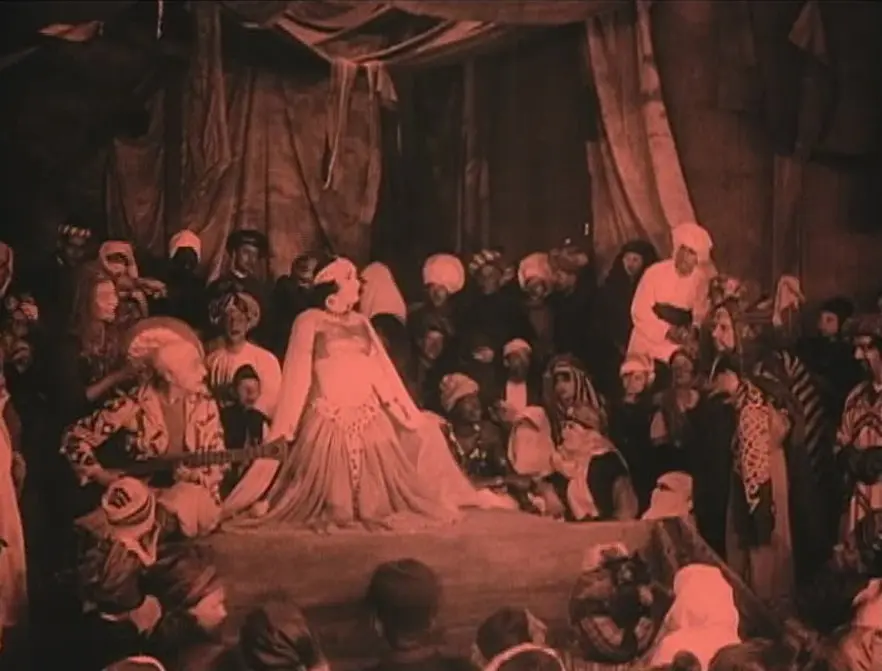
Visually, One Arabian Night is a feast for the eyes. The sets are lavish, designed with an eye for exotic detail that transports the audience directly into the heart of the Arabian Nights narrative. The costumes are equally exquisite, reflecting the wealth and extravagance of the Sheik's court, as well as the humble attire of the common folk. This visual richness is not merely decorative; it serves to immerse the viewer in the film's world, enhancing its thematic explorations of power, desire, and the clash between societal expectations and individual yearning. The cinematography, while constrained by the technology of the era, is often inventive, utilizing light and shadow to create mood and emphasize dramatic moments, a technique that would later be honed to perfection in German Expressionist cinema.
Thematically, the film grapples with profound questions about freedom and captivity, love and obsession. The Sheik's tyranny is a stark representation of unchecked power, while Zuleika and Nur-al-Din's love is a beacon of resistance. Yeggar's unrequited passion, meanwhile, speaks to the universal experience of yearning for that which is just out of reach, a sentiment that resonates with the quiet despair found in films like The Wager or the poignant longing in Little Miss Nobody. The film skillfully balances these grand, sweeping themes with intimate character moments, creating a narrative that is both epic in scope and deeply personal in its emotional impact. It's a sophisticated exploration of human nature, draped in the captivating garb of an ancient tale.
Ernst Lubitsch's One Arabian Night stands as a significant work in his early filmography and in the broader context of silent cinema. It demonstrates his remarkable ability to blend spectacle with psychological depth, to craft narratives that are both entertaining and thought-provoking. While it may not possess the lighthearted sophistication of his later American comedies, it showcases a director already in command of his craft, unafraid to tackle complex emotions and grand themes. It's a film that demands to be seen, not just for its historical importance, but for its enduring power to captivate and move an audience.
For anyone interested in the evolution of cinematic storytelling, the genesis of a directorial legend, or simply a mesmerizing tale of love and longing, One Arabian Night is an essential viewing experience. It's a vibrant, emotionally resonant journey into a world of forbidden desires and unfulfilled dreams, proving that even a century later, the magic of Lubitsch's touch, even in its nascent form, continues to enchant. Its legacy is not just in its visual splendor or dramatic narrative, but in its profound understanding of the human heart, beating fiercely even under the most oppressive of circumstances.
IMDb —
1926
Community
Log in to comment.