DbcultAccessing Vault...
4.3/10
Senior Film Conservator
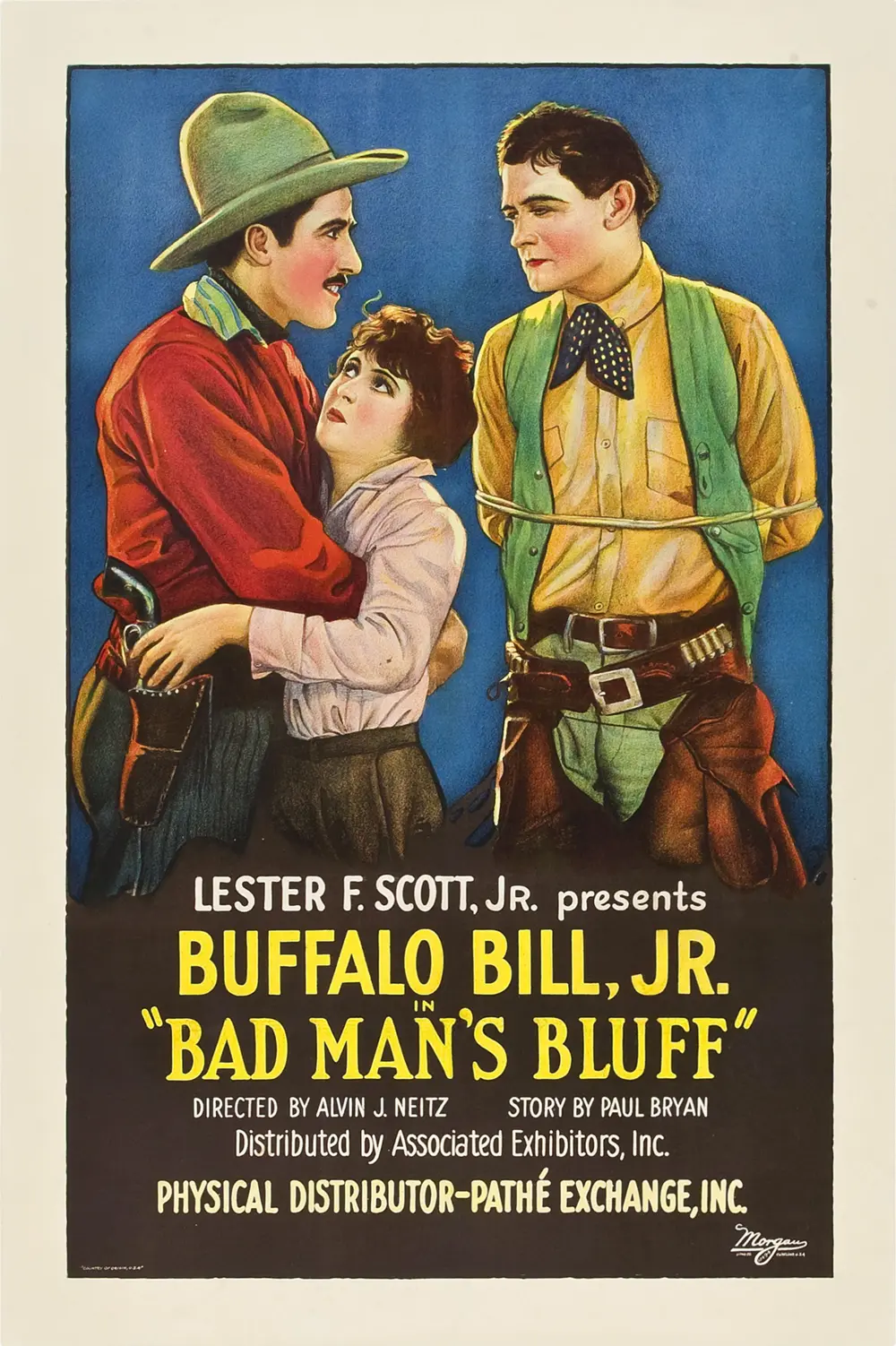
A definitive 4.3/10 rating for a film that redefined the boundaries of cult cinema. Bad Man's Bluff remains a cornerstone of transgressive art.
Short answer: yes, but with a significant asterisk. Bad Man's Bluff is a film that demands a certain appreciation for the foundational tropes of the Western genre, delivering a compelling, if somewhat predictable, narrative that still manages to echo with themes relevant to our own times.
This film is an absolute must-watch for aficionados of classic Westerns, those who appreciate stark moral landscapes, and anyone fascinated by the evolution of cinematic storytelling in the genre. It's decidedly not for viewers seeking modern pacing, complex moral ambiguities outside of its specific context, or those who find the visual language of early cinema too challenging.
Bad Man's Bluff is more than just a title; it’s a thematic declaration. The film, a quintessential Western from an era that defined the genre, unfolds like a meticulously arranged poker hand, where every character holds their cards close, and the stakes are life and death. It doesn’t reinvent the wheel, but it burnishes it to a gleam, presenting a narrative that is both familiar and profoundly resonant in its simplicity.
From the moment Frank Whitson’s Drifter rides into Redemption Gulch, the film establishes its tone: arid, tense, and pregnant with unspoken conflict. Whitson, with his lean frame and eyes that seem to hold a thousand secrets, embodies the classic Western archetype of the mysterious stranger. He’s not overtly heroic, nor is he overtly villainous; he simply is, a force of nature responding to the prevailing winds of injustice.
The plot, centered around the nefarious land-grabbing schemes of Silas Blackwood (Robert McKenzie), provides a clear moral compass. Blackwood is a villain painted in broad, menacing strokes, a necessary counterpoint to the Drifter’s quiet intensity. Their conflict isn't just about land; it’s about the soul of a community, a battle for the very idea of justice in a world where might often makes right.
What truly elevates Bad Man's Bluff beyond a mere genre exercise is its focus on the psychological interplay between its characters, particularly in the lead-up to the titular 'bluff'. It’s not just about who draws first, but who can outwit, outmaneuver, and ultimately, outlast the other through sheer force of will and a calculated gamble.
The cast of Bad Man's Bluff, a collection of stalwarts from the era, delivers performances that are both understated and impactful. Frank Whitson, as the enigmatic Drifter, carries the film with a quiet intensity. His performance isn't about grand speeches or flamboyant heroics; it’s in the way he holds a gaze, the subtle shift of his weight before a confrontation, the almost imperceptible flicker of emotion that betrays a deeper past. You get a sense that every movement is deliberate, every word weighed. It’s a masterclass in restrained masculinity, a character who speaks volumes without saying much at all.
Robert McKenzie, as the antagonist Silas Blackwood, is the perfect foil. McKenzie leans into the villainy, portraying Blackwood as a man consumed by greed and a chilling sense of entitlement. His sneering smile and booming threats in the saloon scenes—a classic Western setting—are not just theatrical; they serve to underline the immediate, palpable threat he poses to the townspeople. While some might find McKenzie's portrayal almost theatrical, I argue it serves a crucial purpose in highlighting the stark moral lines of the era, making the conflict clear and visceral for the audience.
Molly Malone, as the film's primary female lead, brings a much-needed layer of emotional depth. Her character, often caught between the escalating tensions, provides a human anchor to the escalating violence. Her interactions with Whitson are particularly noteworthy; they are charged with an unspoken understanding, a connection built on mutual respect and perhaps a shared weariness of the frontier's harsh realities. There's a particular scene where she confronts Blackwood in his office, her voice trembling but her resolve unwavering, that stands out as a powerful moment of defiance against overwhelming odds. It echoes the quiet strength found in films like The Woman Gives, where female characters, though often secondary, provide the narrative's emotional core.
Even the supporting cast, including Wilbur McGaugh and the brief but impactful appearances by Gary Cooper and Jay Wilsey, contribute significantly. Cooper, even in a minor role, projects that unmistakable star quality, hinting at the legendary career to come. His presence, however fleeting, adds a layer of authenticity and gravitas, reminding us of the talent pool that was shaping early Hollywood.
The direction in Bad Man's Bluff, while not revolutionary by modern standards, is incredibly effective for its time and genre. The pacing is deliberate, allowing the tension to slowly simmer rather than explode prematurely. This slow burn builds anticipation, drawing the audience into the dusty, sun-baked world of Redemption Gulch. The director understands the power of silence and wide-open spaces, using them to emphasize the isolation and the ever-present danger of the frontier.
Cinematography plays a crucial role in establishing the film's atmosphere. The use of natural light, the stark contrasts between sun-drenched exteriors and dimly lit interiors, all contribute to a sense of authenticity. The wide shots of the sprawling, indifferent landscape not only anchor the film geographically but also metaphorically, reminding us of the smallness of human conflicts against the backdrop of an untamed wilderness. There's a particular shot of the Drifter silhouetted against a setting sun, riding towards the town, that is as iconic as any image from In the Last Stride or Out Yonder. It’s simple. It’s powerful. It works.
The action sequences, while less frenetic than contemporary films, are staged with a clear understanding of impact. The final showdown, a tense sequence in the town square, is less about bullet counts and more about the psychological warfare preceding the inevitable trigger pull. Every movement, every glance, is loaded with meaning. The camera holds steady, letting the actors and the environment tell the story, a testament to the director's confidence in his material.
The tone of Bad Man's Bluff is consistently serious, almost somber, punctuated by moments of stark confrontation. It's a film that takes its themes seriously: justice, the corruption of power, the resilience of community, and the ever-present question of whether one can truly escape their past. The 'bluff' isn't just a plot device; it’s a metaphor for the masks people wear, the identities they project, and the courage it takes to reveal one's true self, or to risk everything on a gamble.
One unconventional observation is how the film, despite its clear good-vs-evil narrative, subtly critiques the very notion of 'law' in the frontier. Blackwood operates within the letter, if not the spirit, of the law, using legal loopholes and intimidation. The Drifter, on the other hand, often operates outside it, suggesting that true justice sometimes requires stepping beyond conventional boundaries. This moral ambiguity, though not as pronounced as in later revisionist Westerns, is surprisingly progressive for its time.
The film’s exploration of community resilience is particularly affecting. The townspeople of Redemption Gulch are not merely passive victims; they are a collective entity struggling to survive. Their fear is palpable, but so too is their underlying strength, fueled by the hope that someone, anyone, will stand up to the injustice. This collective spirit, often overlooked in analyses focusing solely on the hero, is a crucial element that gives the film its enduring emotional weight.
The pacing of “Bad Man's Bluff” is undeniably deliberate. It's a slow burn, meticulously building its world and its conflicts brick by dusty brick. This isn't a film designed for instant gratification; it rewards patience. Each scene feels necessary, each interaction a layer added to the escalating tension.
This methodical approach allows for character development, even within the confines of established archetypes. We see the Drifter not just as a gunfighter, but as a man burdened by his past, slowly deciding whether to engage with the present. We see the fear and then the growing defiance in the townspeople. This slow, steady build-up makes the eventual confrontations all the more impactful, like the breaking of a dam after a long, heavy rain. It’s effective. But it’s flawed for modern tastes.
While some contemporary viewers might find the pace sluggish, it’s essential to view it through the lens of its era. Films of this period often relied on longer takes and less rapid-fire editing, trusting the audience to immerse themselves in the unfolding drama. It’s a testament to the film's enduring quality that even with its slower pace, the narrative never truly sags, always propelling towards its inevitable, high-stakes conclusion.
Bad Man's Bluff stands as a foundational piece of Western cinema, a testament to the genre's enduring appeal and its ability to tell powerful stories with simple, yet resonant, strokes. While it may not offer the intricate plotting or moral ambiguities of a modern epic like High Life or the visual spectacle of something like Deck Sports in the Celebes Sea, its strength lies in its confident execution of classic tropes. It’s a film that demands to be seen by anyone serious about understanding the lineage of the American Western. It’s not just a historical curiosity; it’s a living, breathing example of how storytelling, even in its earliest forms, could captivate and resonate. Go in with an open mind, ready to appreciate its deliberate rhythm and the stark beauty of its frontier morality, and you’ll find Bad Man's Bluff to be a surprisingly rewarding experience. It's a strong watch, even today, for those willing to meet it on its own terms.
IMDb —
1918
Community
Log in to comment.