DbcultAccessing Vault...
5.8/10
Senior Film Conservator
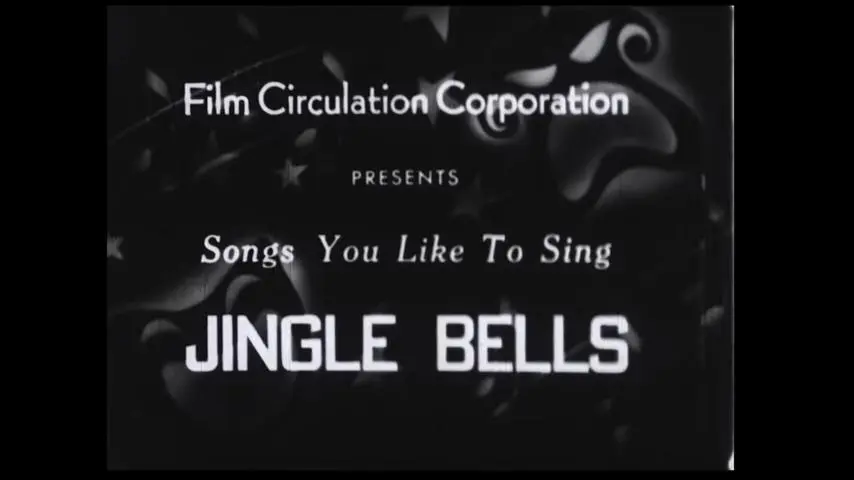
A definitive 5.8/10 rating for a film that redefined the boundaries of cult cinema. Jingle Bells remains a cornerstone of transgressive art.
Should you carve out time for Dave Fleischer's Jingle Bells in an age of CGI spectacles and intricate narratives? Short answer: yes, but with significant caveats. This isn't a film in the conventional sense, but rather a charming, if rudimentary, piece of animation history that offers a unique window into the early days of sound cartoons and the burgeoning Fleischer Studios style.
This short is absolutely for animation historians, enthusiasts of early cinema, and those with a deep appreciation for the foundational pieces of popular culture. It is decidedly not for viewers seeking a compelling plot, complex character development, or sophisticated visual effects; those expecting a modern animated experience will find its simplicity jarring and its runtime, though brief, potentially tedious.
Dave Fleischer’s 1933 animated short, Jingle Bells, exists in a peculiar space within cinematic history. It’s not a narrative masterpiece like Anna Karenina (1920), nor a complex character study. It’s a two-minute sing-along, a visual accompaniment to one of the most recognizable holiday tunes ever composed. To critique it through a modern lens of storytelling or character arcs would be missing the point entirely. This is less a film and more a communal experience, a technological novelty designed for pure, unadulterated festive engagement.
At its core, Jingle Bells is a testament to the ingenuity and limitations of early animation. It belongs to an era where the medium itself was the star, where the magic lay in seeing drawings move and sing in sync with sound. Fleischer Studios, often overshadowed by the burgeoning Disney empire, carved its own niche with a distinct, often surreal, aesthetic. While Jingle Bells is far from surreal, it carries the studio’s characteristic simplicity and charm.
This film works because it perfectly understands its purpose: to facilitate a shared musical moment. It is direct, unpretentious, and leverages the immense cultural familiarity of its source material. This film fails because, by modern standards, it offers almost nothing in terms of narrative depth or visual spectacle beyond its historical curiosity. You should watch it if you are fascinated by the origins of animation, appreciate historical artifacts, or simply wish to understand the roots of the sing-along cartoon format that would later become a staple of children's programming.
The direction by Dave Fleischer, while minimalist, is effective for its intended purpose. There's no grand cinematic vision at play here, nor is there a complex mise-en-scène akin to more ambitious live-action features of the era, such as North of 36. Instead, Fleischer focuses on clarity and synchronization. The animation itself, characteristic of the Fleischer Studios' early output, leans heavily into the 'rubber hose' style – characters are fluid, almost boneless, their movements exaggerated and cartoonish. This was a common approach in the 1930s, prioritizing motion and expressiveness over anatomical accuracy.
The visual design is straightforward. We see a sleigh, a horse, and a few generic carolers, all rendered in simple black and white. The background elements are sparse, ensuring that the focus remains squarely on the text and the bouncing ball. This simplicity, far from being a flaw, was a necessity. Early animation was incredibly labor-intensive, and every frame counted. Complex, detailed backgrounds or intricate character designs would have been prohibitively expensive and time-consuming for such a short, functional piece.
Pacing is dictated entirely by the song itself. Each line of the carol is presented on screen, with the iconic bouncing ball hopping from word to word, guiding the viewer (or singer) along. This mechanism, while rudimentary, was revolutionary for its time. It transformed a passive viewing experience into an active, participatory one, predating karaoke by several decades. The tone is, predictably, joyful and festive, devoid of any narrative tension or dramatic shifts. It is pure, unadulterated holiday cheer, captured in simple lines and movements.
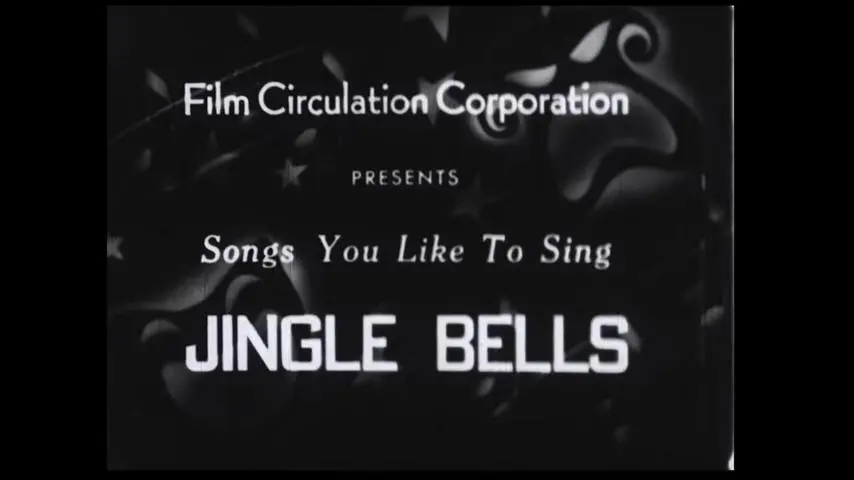
One could argue that the true 'acting' here isn't in the animated figures, but in the implied performance of the audience singing along. The cartoon is merely the stage.
The use of sound in Jingle Bells is its most crucial element. This was an era where synchronized sound was still a relatively new marvel in animation, having only truly taken hold a few years prior. The ability to precisely match animation to a musical track was a technical triumph. The song itself, performed in a classic, somewhat tinny style typical of early recordings, is the backbone of the entire experience. There are no complex sound effects or intricate voice performances; the melody and lyrics are everything.
The 'cinematography,' if we can even apply such a term to this short, is functional. Shots are static, framing the text and the animated elements clearly. There are no sweeping camera movements or dynamic angles designed to evoke emotion or emphasize action. The goal is legibility and synchronization, and in that, it succeeds perfectly. It's a stark contrast to the experimental camera work we might see in a contemporary narrative like The Mysteries of Myra, which, despite being a serial, aimed for a more immersive visual storytelling.
The enduring appeal of Jingle Bells, both the song and this animated short, lies in its universality. The song itself is a cultural touchstone, ingrained in the collective consciousness of many Western societies. The cartoon taps directly into this pre-existing affection, offering a visual accompaniment that reinforces the festive spirit. For many, this short is a nostalgic artifact, a remnant of a simpler time when entertainment was often more direct and participatory.
It also highlights the early commercialization of popular music through visual media. Before music videos, before elaborate concert films, there were shorts like this, designed to enhance the experience of a song. It paved the way for countless sing-along segments in children's television and films, proving the power of combining familiar tunes with engaging, if basic, visuals.
However, one must temper nostalgia with critical perspective. While charming, the short offers little beyond its primary function. It's not a narrative achievement, nor a showcase of groundbreaking animation techniques, save for its pioneering use of the bouncing ball. Its historical value far outweighs its artistic innovation, a truth many early shorts share.
Absolutely. But approach it as an archaeological find, not a blockbuster. This isn't a film you 'watch' in the modern sense; it's a piece of history you observe and, ideally, participate in. It’s a foundational text for understanding the evolution of animation and the role of music in early visual media.
For those who appreciate the historical context of cinema, studying Jingle Bells offers insights into the Fleischer style, the technical hurdles of early sound synchronization, and the cultural landscape that embraced such simple pleasures. It’s a testament to the fact that sometimes, the most basic ideas can have the most lasting impact, even if that impact is primarily nostalgic or academic.
Dave Fleischer's Jingle Bells is not a film to be judged by the metrics of narrative cinema. It is an animated fragment, a cultural touchstone rendered in black and white, serving as both a festive diversion and a historical document. It works. But it’s flawed when held to contemporary expectations. Its true value lies not in its artistic grandeur, but in its charming simplicity and its role as a foundational piece of animation. It’s a delightful reminder of where it all began, a testament to the fact that sometimes, all you need is a familiar tune and a bouncing ball to create something memorable. Essential for anyone studying animation history, and a pleasant, albeit brief, trip down memory lane for casual viewers seeking a glimpse into cinema’s past. It’s worth the two minutes, if only to appreciate the journey animation has taken.
IMDb 6.9
1933
Community
Log in to comment.