DbcultAccessing Vault...
Cult Review
Senior Film Conservator
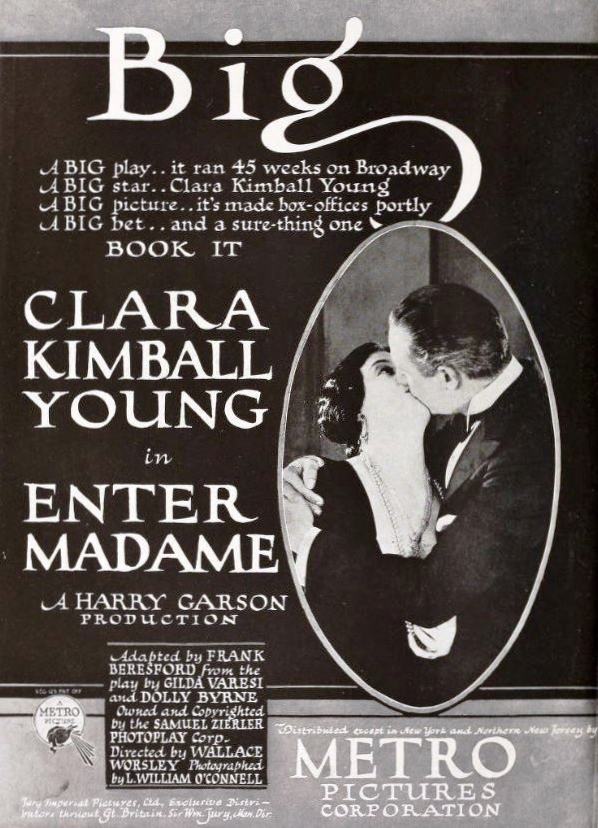
Cinema in 1922 was a medium grappling with its own burgeoning sophistication, a period where the primitive energy of early shorts gave way to the nuanced psychological architectures of feature-length dramas. Enter Madame, directed by Wallace Worsley and adapted from the stage play by Gilda Varesi Archibald and Dorothea Donn-Byrne, stands as a fascinating specimen of this evolution. It is a film that navigates the precarious boundary between high-society satire and genuine domestic pathos, anchored by a performance from Clara Kimball Young that remains, even a century later, a masterclass in screen presence. Unlike the visceral survivalism found in The Island of Regeneration, Enter Madame operates within the claustrophobic confines of the drawing room, proving that the battles fought over a dinner table can be just as harrowing as those in the wild.
The character of Lisa is not merely a role; she is a force of nature that demands the entire frame. Clara Kimball Young portrays her with a kinetic energy that suggests a woman who has spent her life being watched and has perfected the art of the gaze. In the silent era, where the absence of voice required a more emphatic physical vocabulary, Young manages to avoid the trap of caricature. She captures the exhaustion behind the exuberance, the calculated precision of her 'temperament.' When Gerald, played with a weary, stolid dignity by Elliott Dexter, expresses his desire for a divorce, Lisa’s reaction is the film’s first great subversion. We expect the operatic explosion, the shattering of crystal, the fainting spell. Instead, we receive a terrifyingly calm acceptance. This shift in power dynamics is handled with a subtlety that rivals the complex social hierarchies seen in Luise Millerin.
Lisa’s return from her tour is treated by the camera as a royal homecoming, yet there is an underlying melancholy. She realizes that her career, while fulfilling her artistic needs, has created a vacuum in her personal life—a vacuum that Gerald has filled with a woman who is her polar opposite. This 'other woman' represents the mundane safety that Gerald thinks he craves. It is a classic conflict of the era: the allure of the extraordinary versus the comfort of the ordinary. The film cleverly positions Lisa as a woman fighting not just for a man, but for the validity of her own spectacular identity.
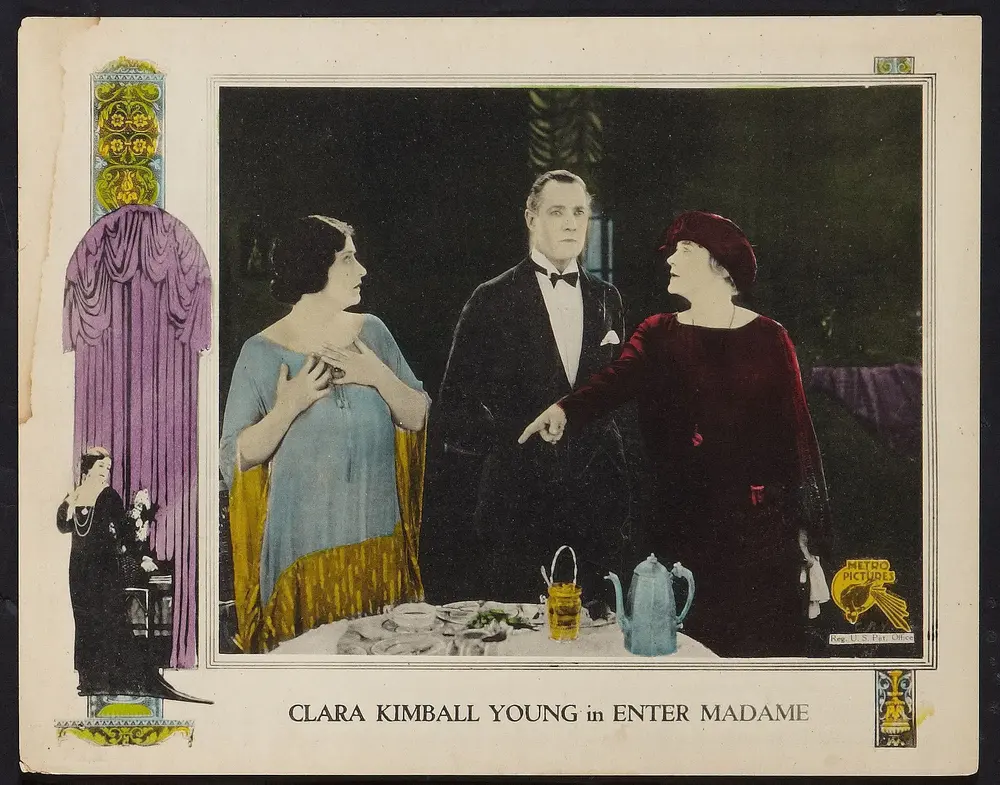
The concept of divorce in 1922 carried a weight of scandal and social upheaval that is difficult to fully appreciate today. In Enter Madame, the legalistic pursuit of a separation is treated with a mixture of dread and pragmatism. Gerald is not a villain; he is a man suffocated by the very brilliance he once admired. His fatigue is palpable. He represents a bourgeois desire for stability that often clashes with the erratic nature of genius. This thematic thread of financial and social stability being at odds with personal passion is a recurring motif in silent cinema, often explored with more tragic overtones in films like The Money Mill or the fiscal ruin depicted in The Spendthrift.
However, Enter Madame chooses the path of the sophisticated comedy of manners. The script, co-written by Frank S. Beresford, understands that the most effective way to dismantle a rival is not through confrontation, but through comparison. By agreeing to the divorce, Lisa strips Gerald of his rebellion. She removes the friction that was fueling his desire for escape. It is a brilliant psychological gambit. She becomes the supportive, understanding wife—a role she has never played—thereby making the 'other woman' appear redundant and, eventually, intrusive.
The centerpiece of the film is undoubtedly the dinner party. Here, the mise-en-scène becomes a narrative tool. The lighting, the placement of the guests, and the rhythmic editing create a sense of impending disaster that Lisa navigates with the precision of a fencer. She invites Gerald and his new flame into her domain, effectively staging a play within a play. Every gesture, from the way she pours wine to the way she engages in trivial conversation, is designed to highlight the drabness of her successor. It is a sequence that rivals the tense social gatherings in Milestones, where the passage of time and the shifting of affections are laid bare over the course of a single evening.
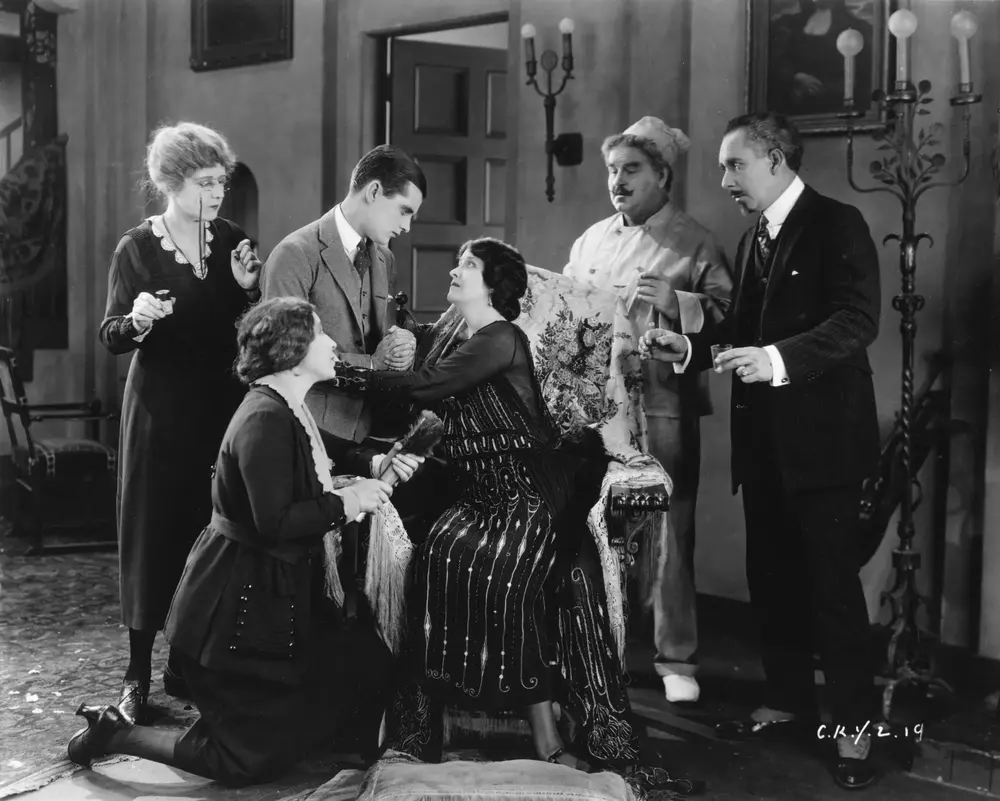
During this sequence, the film explores the idea of 'woman's wiles' not as a derogatory cliché, but as a form of emotional intelligence. Lisa uses her understanding of Gerald’s vanity and his subconscious nostalgia to her advantage. She doesn't fight the other woman; she simply outshines her. The contrast is stark. The other woman is a still life; Lisa is a motion picture. The sea blue (#0E7490) depth of the cinematography in these interior scenes—metaphorically speaking, as we imagine the richness of the original tints—emphasizes the cool, calculating nature of Lisa’s charm.
When examining Enter Madame alongside its contemporaries, one notices a distinct lack of the moralizing tone that often plagued early 20th-century cinema. While Hidden Charms or Die Tochter des Mehemed might lean into exoticism or overt melodrama, Worsley’s film remains grounded in the psychological reality of its characters. Even the more eccentric elements, like the presence of the devoted servants (including the notable George Kuwa), serve to flesh out the world of the diva rather than acting as mere comic relief. There is a sense of professional urgency in the household that mirrors the frantic pace of Rush Orders, yet it is tempered by the elegance of the upper class.
The film also touches upon the peril of the 'public' versus the 'private' self. Lisa is a woman who belongs to the world, yet she is fighting for the one thing that is hers alone. This tension is a precursor to the suspense found in The Hand of Peril or the chilling atmosphere of The Frozen Warning, though the threat here is emotional rather than physical. The 'warning' in Enter Madame is for the husband who forgets that the fire that burns most brightly is also the one that provides the most warmth.
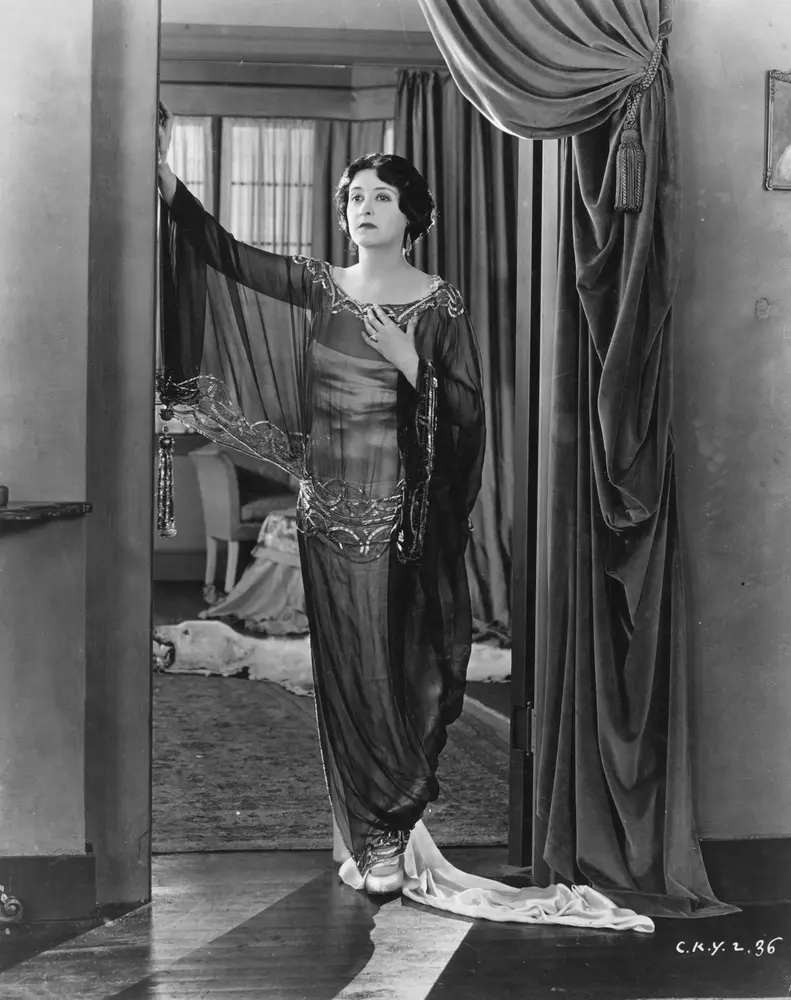
As the film reaches its denouement, the victory is not won through a grand declaration of love, but through the re-establishment of a shared history. Lisa reminds Gerald of who they were before the world intervened. The 'subtle method' she adopts is an appeal to the senses—the taste of the food, the sound of her laughter, the visual splendor of her presence. It is a seduction of the mind. This thematic resolution feels far more modern than the revenge-driven plots of Balleteusens hævn or the tragic inevitability of Falling Waters.
The final result—the winning back of the husband—is presented not as a return to the status quo, but as a new beginning based on mutual recognition. Gerald sees Lisa for the first time in years, not as a demanding prima donna, but as a woman of profound strategic depth and genuine affection. The sunset of their discord, much like the Triste crepúsculo, gives way to a new dawn of understanding. The 'mystery' of their marriage is solved, not through the external investigation one might find in The House of Mystery, but through internal revelation.
Wallace Worsley’s direction is characterized by a restrained elegance. He allows the actors space to inhabit their characters, using medium shots to capture the interplay between the cast members. The editing by Frank S. Beresford is sharp, particularly during the dinner party where the reaction shots are as vital as the primary action. The production design reflects the opulence of the era without becoming distracting, providing a lush backdrop for the human drama. It is interesting to compare this to the Hungarian production Zoárd mester, which also deals with themes of social standing and identity, though with a different cultural lens.
The lighting deserves special mention. In the scenes where Lisa is plotting her 'wiles,' the shadows are used to accentuate the sharpness of her features and the intelligence in her eyes. It is a proto-noir sensibility that adds a layer of intrigue to the domestic setting. The film understands that the home can be a site of both sanctuary and theater, a place where roles are performed and masks are occasionally dropped.
Enter Madame is a testament to the power of the silent screen to convey complex emotional states without the aid of dialogue. It is a film that values intelligence, wit, and the transformative power of performance. Clara Kimball Young’s Lisa is a character for the ages—a woman who refuses to be sidelined in her own life and who uses the very tools that make her 'difficult' to secure her happiness. It is a sophisticated, charming, and deeply human story that transcends its 1922 origins.
In a landscape often dominated by slapstick or heavy-handed morality plays, this film offers a refreshing look at the intricacies of adult relationships. It reminds us that love is often a performance, and that the best performers are the ones who know exactly when to drop the act and when to take a final, triumphant bow. For any student of early cinema or lover of well-crafted drama, Enter Madame is an essential viewing experience, a sea blue (#0E7490) jewel in the crown of the silent era.

IMDb 5.7
1917
Community
Log in to comment.