DbcultAccessing Vault...
Cult Review
Senior Film Conservator
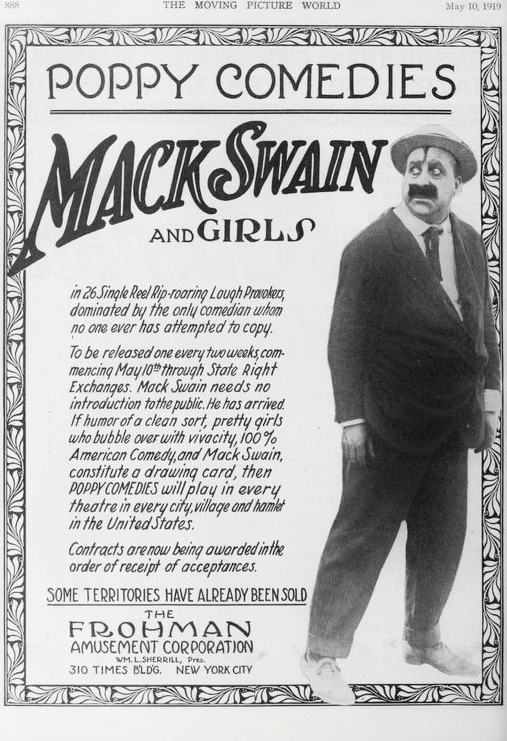
To witness Baffled Ambrose is to engage with the raw, unrefined id of early cinematic comedy. In 1916, the medium was shedding its theatrical chrysalis, and Mack Swain, an actor of monumental physical presence, stood at the epicenter of this seismic shift. While contemporary audiences might gravitate toward the refined pathos of Chaplin, Swain offered something more primal, more chaotic—a brand of humor that found its zenith in the L-KO (Lehrman Knock-Out) Kompany. This film isn't merely a series of gags; it is a structuralist deconstruction of the 'common man' facing an increasingly mechanized and unforgiving world.
Swain’s Ambrose is not a hero of intellect, but a hero of endurance. His face, a landscape of twitching mustachios and wide-eyed terror, mirrors the frantic pacing of the era's short-form comedies. When compared to the more polished narratives found in Beauty-Proof, Baffled Ambrose feels almost avant-garde in its commitment to pure, unadulterated motion. There is a specific syntax to Swain's movement—a heavy-set grace that allows him to pivot from stillness to frantic flight with a fluidity that belies his stature.
Henry 'Pathe' Lehrman, the mastermind behind L-KO, was famously at odds with Mack Sennett’s more 'refined' slapstick. Lehrman’s philosophy was one of total kinetic destruction. In this film, the environment itself is sentient and hostile. We see shadows of the serial-style tension found in Patria, but instead of global espionage, the stakes are localized within the domestic or immediate social sphere. The 'bafflement' mentioned in the title is not merely a plot point; it is the fundamental state of being for the character. Ambrose exists in a state of perpetual ontological crisis, never quite understanding why the world conspires against his peace.
The cinematography, while primitive by modern standards, utilizes the flat, bright lighting of the period to emphasize the depth of the frame during chase sequences. Unlike the dramatic lighting found in Blodets röst, the visual palette here is designed for clarity of action. Every kick, every fall, and every collision is rendered with a sharp, unforgiving focus. The editing is staccato, a rhythmic pummeling that keeps the viewer in a state of breathless anticipation.
Why does Ambrose resonate where other silent clowns have faded into the mists of archival obscurity? The answer lies in Swain's ability to humanize the grotesque. He is a progenitor of the 'working man' archetype that would later be refined by the likes of Laurel and Hardy. There is a vulnerability in his confusion. When he is outmatched by his environment, we see a reflection of the 1916 audience’s own struggles with rapid urbanization and the encroaching complexities of the modern age. This isn't just 'funny'—it's a survival strategy.
Comparing this to the more dramatic sensibilities of Lombardi, Ltd., one can see how comedy served as the vital pressure valve for the era. While Fighting Bob dealt with more conventional tropes of conflict, Baffled Ambrose leans into the surreal. The physics of the film are rubbery; Ambrose can survive falls and blows that would kill a lesser man, making him a proto-superhero of the mundane. This resilience is the core of the character’s appeal.
The 'slapstick liturgy' of the film follows a precise pattern: the setup of a social expectation, the intrusion of a physical variable, and the inevitable descent into chaos. Whether Ambrose is attempting to navigate a simple doorway or engage in a polite conversation, the film systematically dismantles the decorum of the Edwardian era. We see similar thematic threads in international works like Die Tangokönigin, which also toys with social expectations, though through a more rhythmic, dance-oriented lens.
Swain’s performance is a masterclass in 'reactionary acting.' His best moments aren't when he is doing something, but when something is being done to him. The slow burn, the double-take, the gradual realization of impending doom—these are the tools of a comedic surgeon. He understands that the anticipation of the blow is often funnier than the blow itself. This nuance is often lost in the broader strokes of silent comedy history, but in Baffled Ambrose, it is on full display.
Finding high-quality prints of L-KO films is notoriously difficult, as the studio’s output was often seen as disposable 'programmers.' However, the surviving fragments of this film reveal a sophisticated understanding of screen space. The use of the deep background to stage secondary gags—a technique perfected by Keaton later—is already being experimented with here. It lacks the serialized mystery of Beatrice Fairfax Episode 15: Wristwatches, but it replaces narrative suspense with a rhythmic, percussive timing that is almost musical in its execution.
The film also serves as a fascinating companion piece to My Wife, the Movie Star, which also examines the intersection of public persona and private chaos. For Ambrose, there is no private life; his every moment is a public spectacle of failure. This lack of interiority is not a flaw, but a stylistic choice. He is a pure cinematic object, a figure of light and shadow designed for the sole purpose of being buffeted by the winds of fate.
As we look back from the vantage point of over a century, Baffled Ambrose remains a vital document of a lost world. It captures the frantic, breathless energy of an industry in its infancy. It doesn't possess the heavy-handed moralizing of For sin Dreng or the gritty realism of The Sheriff. Instead, it offers a pure, unadulterated escape into a world where the only consequence for failure is another pratfall. It is a testament to Mack Swain's enduring charisma that even in the most nonsensical sequences, we remain tethered to his plight.
In the broader context of 1916, a year that saw the release of heavy hitters like Kick In or the socio-political weight of A Soul for Sale, Baffled Ambrose might seem like a lightweight entry. However, its influence on the grammar of comedy cannot be overstated. The 'baffled' archetype—the man who simply cannot win against the universe—is a thread that runs through the history of cinema, from Swain to Buster Keaton, and into the modern era of the 'cringe' comedy.
Ultimately, the film is a celebration of the human spirit’s ability to get back up. No matter how many times Ambrose is knocked down, no matter how many times he is thwarted by a door, a wife, or a rival, he returns for the next frame. It is this tenacity, wrapped in the guise of a bumbling giant, that makes Mack Swain’s work so eternally watchable. Whether he's navigating the forest like Cavanaugh of the Forest Rangers or simply trying to sit in a chair, Swain brings a level of commitment to the bit that is nothing short of heroic. Even the raw brutality of the Nelson-Wolgast Fight seems less physically demanding than the sustained caloric output of an Ambrose chase sequence.
For the serious student of silent cinema, Baffled Ambrose is not optional viewing; it is a fundamental text in the study of early American slapstick, a riotous explosion of color (even in black and white) and movement that defines an era of pure, unbridled imagination.
IMDb 6.7
1936
Community
Log in to comment.