DbcultAccessing Vault...
Cult Review
Senior Film Conservator
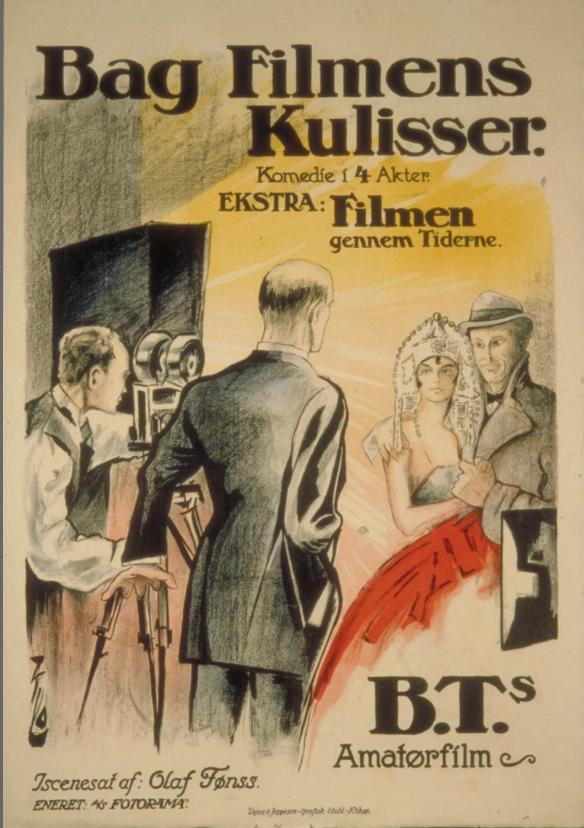
In the annals of early cinema, certain films emerge not just as historical artifacts, but as resonant echoes of nascent storytelling, capturing the very spirit of an era grappling with modernity and tradition. Bag Filmens Kulisser (Danish for 'Behind the Scenes of the Film') is precisely such a work, a fascinating glimpse into the social mores, romantic entanglements, and burgeoning dreams of a young woman poised on the precipice of a new century. Penned by A.V. Olsen, the narrative, while seemingly straightforward, unravels a compelling tapestry of ambition, familial duty, and the intoxicating allure of a world beyond the provincial. It’s a film that speaks volumes about the societal pressures exerted upon young women, the rigid expectations of marriage, and the revolutionary escapism offered by the nascent art form of cinema itself.
At its core, the film presents us with Clara, portrayed with a delicate yet determined grace by Anna Hansen, a young woman whose heart beats solely for Peter, the charming son of her family's neighbors. Their connection is palpable, a tender blossom amidst the otherwise austere landscape of her life. However, this burgeoning romance is met with staunch disapproval from Clara’s parents, figures of patriarchal authority who embody the era's rigid adherence to social and economic pragmatism. Their vision for Clara’s future is devoid of romantic idealism, instead fixated on a union with Master Pingel, an individual depicted with an almost farcical lack of grace or intellect, yet possessing the all-important attribute of financial stability. This insistence on a pragmatic, rather than passionate, alliance immediately establishes the central conflict: the clash between individual desire and societal dictate, a theme that reverberates through many early cinematic endeavors, much like the social commentary often subtly woven into works such as Glumov's Diary, which similarly explores the machinations of ambition and performance in a restrictive world.
Master Pingel, brought to life by the commendable Zun Zimmermann, isn't merely an obstacle; he’s a symbol. His 'foolishness' isn't just a character quirk but a damning indictment of the values held by Clara's parents. They prioritize economic security and social standing over genuine affection or intellectual compatibility, painting a stark picture of the transactional nature of marriage in certain strata of society at the time. The very notion of Clara being tethered to such an individual underscores the suffocating lack of agency afforded to women, whose destinies were often charted by familial decree rather than personal inclination. This stark reality makes Clara’s secret yearning for the silver screen all the more poignant. It's not just a childish fantasy; it's a profound manifestation of her soul's rebellion against the suffocating strictures of her domestic sphere. The flickering images on the screen represent a portal to an existence unbound by the tedious expectations of arranged marriages and provincial life, a canvas upon which she might paint a destiny of her own choosing, free from the shadow of Master Pingel's insipid presence.
The film’s brilliance lies in how it frames this longing for stardom. It’s not merely a desire for fame, but a yearning for self-expression, for a life where her inner world can find an external manifestation beyond the confines of a pre-ordained domesticity. The cinema, in its nascent form, offered this unprecedented avenue for escape and transformation. For many, it was a dream factory, a place where ordinary lives could be momentarily forgotten, or, in Clara’s case, perhaps even transformed. When the 'chance' suddenly arises, it's not just a plot device; it's a deus ex machina that embodies the era's burgeoning sense of possibility, where new technologies and art forms promised to shatter old molds. This sudden opportunity, however, is fraught with its own set of complexities, hinting at the potential for disillusionment or exploitation inherent in the burgeoning film industry, a theme explored with greater psychological depth in later works like Warning Shadows, which delves into the illusions and realities of perception.
The performances, typical of early silent cinema, are often characterized by a heightened theatricality, necessitated by the absence of spoken dialogue. Actors like Grethe Lembcke, Hr. Westergaard, Jacobi Warnich, Mary Langreuter, Erik Clausen, Svend Andersen, Rolf Dünn, and Aage Frandsen, along with the aforementioned leads, relied on exaggerated facial expressions, sweeping gestures, and precise body language to convey emotion and drive the narrative. Anna Hansen’s Clara, in particular, manages to imbue her character with a compelling blend of innocence and burgeoning strength, making her transformation from a constrained young woman to a hopeful aspiring actress believable and deeply sympathetic. Her eyes, often downcast in the face of parental disapproval, light up with an almost incandescent glow at the mere mention of the silver screen, a testament to her profound inner life that transcends the limitations of silent performance.
A.V. Olsen's screenplay, while adhering to the dramatic conventions of the period, manages to infuse the story with a surprising degree of emotional resonance. The pacing, characteristic of early films, might feel deliberate by today's standards, yet it allows for a careful unfolding of Clara's internal struggle and the external pressures she faces. The visual storytelling, often relying on tableaux and intertitles, is remarkably effective in conveying complex emotional states and narrative developments. One can almost feel the weight of expectation upon Clara's shoulders, the stifling atmosphere of her home, and the liberating rush of possibility that accompanies her foray into the cinematic world. This narrative structure, focusing on individual ambition against a backdrop of rigid social norms, finds echoes in stories like Store forventninger (Great Expectations), where societal climbing and personal desires often collide with harsh realities.
The film’s historical context is also crucial for a comprehensive understanding. Danish cinema in the early 20th century was a vibrant, innovative landscape, often pushing boundaries in narrative and technical execution. While Bag Filmens Kulisser may not boast the same avant-garde experimentation as some of its contemporaries, it’s a robust example of popular storytelling, designed to captivate audiences with relatable human drama. The very premise—a young woman seeking fame in the burgeoning film industry—would have resonated deeply with audiences of the time, many of whom were equally enchanted by the magic of the movies and perhaps harbored similar secret dreams of escaping their mundane lives. It speaks to the democratic allure of cinema, where for a brief moment, anyone could imagine themselves on the silver screen, or at least witness the fantastical lives of others.
The visual language of the film, while simple by contemporary standards, is rich with symbolism. The contrast between the dark, ornate interiors of Clara’s home and the potentially brighter, more dynamic world of the film set is subtly conveyed. The costumes, the set design, and the often-static camera work all contribute to a sense of authenticity for the period, transporting the viewer back to a time when cinema was still finding its voice. The use of natural light, where possible, or the dramatic chiaroscuro effects common in early cinematography, would have added to the emotional intensity of key scenes. One can envision the director carefully orchestrating each tableau, each significant glance, to convey the story's emotional undercurrents without the aid of dialogue. This meticulous attention to visual detail is a hallmark of the silent era, where every frame had to speak volumes.
The thematic exploration of escapism versus reality is particularly compelling. Clara’s dream of becoming a movie star is, in essence, a desire to escape the harsh reality of her arranged marriage. But the film subtly questions whether the world of cinema offers genuine liberation or merely a different kind of performance, a new set of expectations and constraints. Is the public gaze of the silver screen truly freedom, or just a more glamorous form of scrutiny? This nuance elevates Bag Filmens Kulisser beyond a simple romantic melodrama, infusing it with a thoughtful commentary on the nature of ambition and the often-illusory promises of fame. It touches on themes explored in other romantic dramas of the era, such as The Heart of Romance, which also grappled with the complexities of love and societal expectations.
Furthermore, the film subtly touches upon the burgeoning power of media and its influence on individual lives. The cinema was a relatively new phenomenon, rapidly gaining popularity and shaping cultural narratives. For Clara, it represents not just a personal dream but a cultural phenomenon that offers an alternative to a life dictated by tradition. Her parents, rooted in their conservative values, likely view this new art form with suspicion, seeing it as frivolous or even dangerous, a force that could potentially lead their daughter astray. This generational clash, played out against the backdrop of a rapidly changing world, adds another layer of depth to the narrative, making it relevant even today as new forms of media continue to challenge established norms and reshape aspirations.
The film’s legacy, while perhaps not as widely known as some of the more canonical works of the silent era, lies in its honest portrayal of a universal human dilemma. It captures the essence of youthful yearning, the pain of parental disapproval, and the intoxicating pull of a dream. Its charm lies in its simplicity and its sincerity, offering a window into the emotional landscape of its time. For enthusiasts of early cinema, Bag Filmens Kulisser serves as a valuable document, showcasing the evolving craft of filmmaking and the enduring power of a well-told story. It reminds us that even in the absence of spoken words, the human heart's desires and struggles can be conveyed with profound clarity and emotional impact.
Ultimately, Bag Filmens Kulisser is more than just a historical curiosity; it is a compelling human drama that resonates with timeless themes. It is a testament to the power of dreams, the courage required to pursue them against formidable odds, and the complex interplay between love, duty, and self-actualization. The film invites us to reflect on the choices we make, the paths we forge, and the indelible mark left by those fleeting moments when opportunity beckons, promising either salvation or a different kind of captivity. It’s a quiet triumph of early Danish filmmaking, a narrative that, despite its age, continues to speak to the enduring human quest for freedom and fulfillment.

IMDb 5.3
1920
Community
Log in to comment.