DbcultAccessing Vault...
Cult Review
Senior Film Conservator
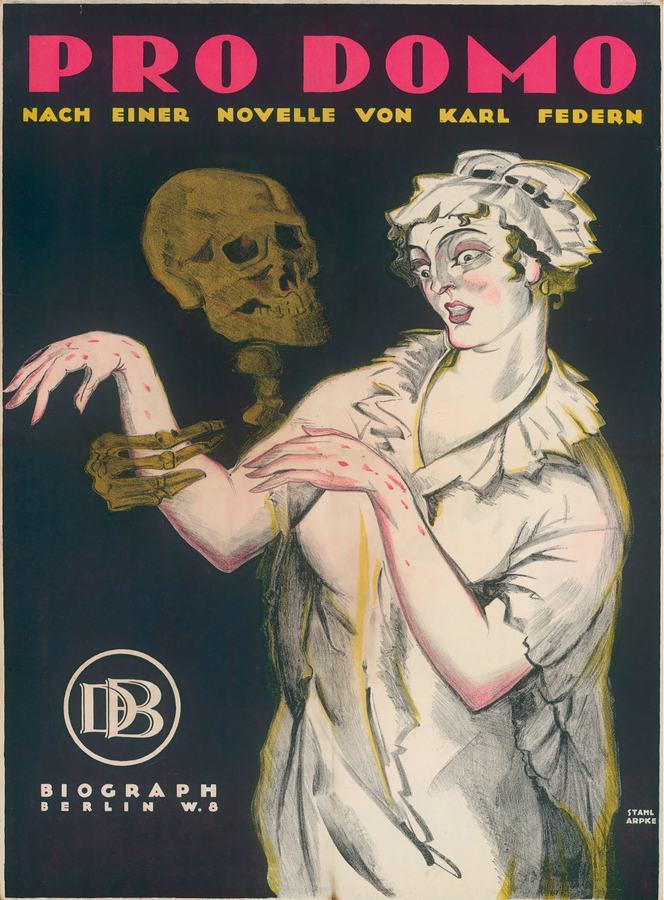
There's an undeniable allure to the silent era, a period where narrative gravitas and emotional resonance were conveyed through the sheer artistry of gesture, expression, and the meticulous crafting of visual metaphor. "Pro domo, das Geheimnis einer Nacht" stands as a towering testament to this epoch, a cinematic endeavor that delves deep into the labyrinthine corridors of human deception and the corrosive power of secrets. It’s a film that, even a century removed from its original exhibition, resonates with a profound psychological insight, dissecting the fragile façade of societal respectability with surgical precision. The very title, "For the House, the Secret of a Night," is a harbinger of the domestic turmoil that unfurls, hinting at the desperate measures undertaken to preserve an illusion.
From its opening frames, the film establishes a palpable atmosphere of tension and impending revelation. We are introduced to the grand, yet subtly decaying, estate of the Baron von Falkenberg, a setting that mirrors the spiritual erosion within its inhabitants. Max Laurence, in his portrayal of the Baron, delivers a performance of chilling restraint. His Baron is not a caricature of villainy but a man suffocated by the weight of expectations and the relentless march of modernity, his rigid posture and piercing gaze betraying a soul in quiet torment. Laurence embodies the archetype of the old guard, a man whose desperate attempts to cling to a bygone era ultimately precipitate his downfall. His performance is not merely a depiction of a character; it is a profound study of a dying social class, grappling with its obsolescence. The Baron's every gesture, from the imperious tilt of his head to the almost imperceptible tremor in his hand, conveys a narrative of profound loss and desperate clinging to power. It’s a nuanced portrayal that elevates the film beyond melodrama, placing it firmly in the realm of social commentary. The narrative, a meticulously woven tapestry of intrigue, hinges on a single, fateful night – a crucible where long-buried truths are forced into the harsh light of dawn.
Olga Engl, as Baroness Helga, is nothing short of mesmerizing. Her performance is a masterclass in understated pathos. Helga is a woman trapped, her elegant demeanor barely concealing a maelstrom of fear and resignation. Engl conveys volumes with a single glance, a trembling hand, or a subtle shift in posture. Her character's discovery of the Baron’s devastating financial ruin, and the darker implications of a past transgression – perhaps a fraudulent enterprise or a fatal indiscretion – is the film's beating heart. It’s a moment of quiet horror, devoid of histrionics, yet profoundly impactful, reminiscent of the slow-burn psychological dread found in films like The Bride of Fear, where domestic bliss is merely a fragile veil over simmering anxieties. Helga’s internal struggle—between loyalty to her husband and the moral imperative of truth—forms the emotional core, making her a figure of tragic nobility. Her Helga is a woman of immense inner strength, yet utterly broken by the weight of her circumstances. The scene where she unearths the incriminating documents, perhaps a ledger detailing fraudulent transactions or letters hinting at a scandalous liaison, is a masterclass in silent acting. The slow realization dawning on her face, the quiet gasp, the way her body seems to shrink under the revelation – these are moments of pure cinematic power that resonate deeply, showcasing a woman's fight for her own sanity and moral compass, much like the thematic undertones in A Woman's Fight.
The younger generation, represented by Claire Selo's vibrant Countess Eleonora and Friedrich Feher's earnest Dr. Erich Hartmann, serves as a poignant counterpoint to the decaying world of the elder Falkenbergs. Selo imbues Eleonora with a fiery spirit and a defiant grace, a young woman yearning for autonomy and genuine affection in a world dictated by social contracts and inherited burdens. Her clandestine romance with Erich, a man of intellect and modern sensibilities but lacking the requisite societal standing, is painted with a tender urgency. Feher, as Hartmann, brings a compelling mix of idealism and quiet determination. His youthful vigor and progressive outlook clash dramatically with the Baron’s antiquated values, creating a powerful generational conflict that mirrors the broader societal shifts occurring in post-war Germany. Their love story, though central, is never saccharine; it's a desperate plea for authenticity against a backdrop of deceit, echoing the thematic struggles seen in films like The Love Cheat, albeit with a far more profound sense of tragic consequence. Their chemistry, conveyed through subtle glances and shared vulnerabilities, becomes a beacon of hope in the film's otherwise somber landscape. They embody a quiet heroism, challenging the rigid structures of their society, much like the unconventional protagonists in The Hero of the Hour, though their battle is fought in drawing rooms rather than on battlefields.
The tension between Eleonora and her father is masterfully orchestrated, a silent battle of wills played out in drawing rooms and shadowy corridors. The visual language of the film excels here, using stark contrasts of light and shadow to emphasize their emotional distance and the oppressive atmosphere of the household. The cinematography, while typical of German silent cinema, transcends mere documentation, becoming an active participant in the storytelling. Shadows stretch long and menacingly, engulfing characters as they grapple with their moral quandaries, while fleeting moments of illumination hint at the elusive nature of truth. This visual style lends an almost expressionistic quality to the domestic drama, elevating it beyond a simple melodrama into something more akin to psychological horror, similar in its atmospheric dread to Beware!, where the environment itself seems to conspire against the characters. The meticulous set design, too, plays a crucial role, with heavy drapes and ornate, yet suffocating, furniture symbolizing the weight of tradition and the entrapment felt by the characters.
The "secret of a night" is not a singular event but a confluence of desperate acts and fateful discoveries. Rudolf Klein-Rhoden's Herr Schmidt, an enigmatic and opportunistic lawyer, embodies the creeping threat to the Falkenberg's fragile stability. His presence is a constant, unsettling undercurrent, whether he is vying for Eleonora's hand or subtly maneuvering to exploit the Baron's vulnerabilities. Klein-Rhoden's performance is subtly menacing, his smiles never quite reaching his eyes, making him a figure of palpable distrust. The film skillfully builds suspense around his true intentions, adding another layer of intrigue to the already complex narrative. His interactions with the Baron are particularly charged, hinting at a shared history or a mutual entanglement in the web of deceit that defines the household. Schmidt's character serves as a catalyst for much of the film's external conflict, a shadowy manipulator akin to figures found in intricate dramas like The Yellow Pawn, where characters are moved like pieces on a chessboard.
The supporting cast, though given less screen time, contributes significantly to the film's immersive quality. Editha Seidel's portrayal of Frau Becker, the loyal housekeeper, is particularly noteworthy. She is the silent observer, the ubiquitous presence who sees all but speaks little. Her knowing glances and subtle reactions provide a vital emotional barometer for the audience, underscoring the pervasive tension and the unspoken truths that permeate the household. Her role is akin to a Greek chorus, a silent witness to the unfolding tragedy, much like the watchful eyes in The Soul Master, where hidden knowledge drives the narrative forward. Franz Grüder and Clemens Kaufung, in their roles, further populate this world of intrigue, each contributing to the mosaic of characters caught in the Baron's self-made trap, embodying the various pressures and judgments of the broader society. Fritz Richard's presence, though perhaps fleeting, adds another layer of gravitas to the ensemble, ensuring that even minor characters feel fully fleshed out within the confines of the narrative, each playing a crucial, if small, part in the grand unraveling.
Directorially, "Pro domo" is a triumph of atmospheric storytelling. The pacing is deliberate, allowing the psychological weight of each revelation to settle, rather than rushing through plot points. This measured approach enhances the sense of dread and inevitability. The use of close-ups is particularly effective, drawing the audience into the characters' internal worlds, allowing us to witness the subtle shifts in their emotions – a flicker of fear in Olga Engl's eyes, a tightening of Max Laurence's jaw, or the hopeful defiance in Claire Selo's gaze. These intimate moments are crucial in a silent film, where the absence of dialogue necessitates a heightened reliance on visual cues and the nuanced performances of the actors. The intricate interplay of light and shadow, characteristic of German Expressionist cinema, is employed not for mere aesthetic flourish, but to externalize the internal turmoil of the characters, creating a visual language that speaks volumes about their despair and entrapment. This visual poetry elevates the film from a mere narrative to an immersive psychological experience, echoing the profound internal struggles depicted in The Man Who Woke Up, where reality and perception are constantly at odds.
The film’s thematic explorations are remarkably sophisticated for its time. It’s not merely a tale of a family secret, but a commentary on the crumbling aristocratic order, the rise of a new social consciousness, and the moral compromises individuals make "pro domo"—for the sake of their house, their name, their perceived standing. The Baron’s desperate machinations, born out of a misguided sense of duty and pride, ultimately lead to his undoing, serving as a cautionary tale. This examination of societal pressures and the unraveling of a carefully constructed identity brings to mind the profound psychological dramas of films like The Man Who Woke Up, where personal truth becomes inextricably linked to public perception. The class distinctions are starkly drawn, with the old aristocracy clinging to its faded grandeur while the burgeoning middle class, represented by Erich, subtly challenges its authority. This social critique is delivered with an incisive gaze, making the film a valuable historical document as much as a compelling drama. It offers a stark contrast to the lighter social commentaries found in films like Ruggles of Red Gap, revealing the darker, more tragic side of societal upheaval.
The climax of "Pro domo" is both devastating and cathartic. As the night's secrets are finally dragged into the unforgiving light of day, the consequences are profound. The Baron’s empire, built on sand, collapses, and the fragile peace of the household is shattered beyond repair. Yet, amidst the ruins, there is a glimmer of hope for Eleonora and Erich, a chance for them to forge a new path, free from the suffocating traditions and moral decay of the past. It’s a resolution that acknowledges the destructive power of deceit while affirming the enduring strength of love and truth, even if hard-won. The film doesn't shy away from the tragic implications of its narrative, much like the poignant conclusion of The Chalice of Sorrow, but it also suggests a future, however uncertain, for those who dare to break free. The emotional impact of this ending is considerable, leaving the viewer to ponder the true cost of maintaining appearances and the redemptive power of honesty.
In an era defined by rapid technological advancements and societal upheaval, "Pro domo, das Geheimnis einer Nacht" stands as a compelling artifact, a window into the anxieties and aspirations of a bygone world. Its enduring power lies in its universal themes: the struggle between appearance and reality, the weight of family legacy, and the relentless pursuit of truth. The film’s masterful blend of psychological drama, social commentary, and understated romance makes it a truly exceptional piece of silent cinema. For aficionados of the genre, or indeed anyone interested in the profound storytelling capabilities of early film, this is an essential viewing experience. It reminds us that some secrets, no matter how deeply buried "pro domo," will always find their way to the surface, demanding a reckoning. The intricate dance of power and vulnerability, performed by an ensemble cast at the peak of their silent film prowess, remains captivating. From the stoic suffering of Olga Engl to the desperate machinations of Max Laurence, and the burgeoning hope embodied by Claire Selo and Friedrich Feher, every performance is finely tuned, contributing to the rich emotional landscape of the film. The subtle nuances of their expressions, the carefully choreographed movements, and the evocative intertitles all combine to create a deeply immersive experience. One might draw parallels to the intense, claustrophobic atmosphere of Angoisse, where psychological tension is paramount, or the intricate character studies found in Forget-Me-Not, where memory and hidden pasts dictate present fates. The film is a complex tapestry, each thread meticulously placed to reveal a larger, more tragic picture of human fallibility. Even the hints of destructive passion, akin to those explored in The Mad Lover, contribute to the intense emotional stakes.
Ultimately, "Pro domo, das Geheimnis einer Nacht" is more than just a historical curiosity; it is a timeless exploration of the human condition, rendered with an artistic sensibility that continues to inspire. Its dark orange, yellow, and sea blue hues, if one were to imagine a modern restoration, would perfectly complement the film's somber yet occasionally hopeful tone, reflecting the interplay of despair, revelation, and the faint glimmer of new beginnings. It is a film that demands close attention, rewarding the viewer with a narrative depth and emotional intensity rarely matched. It stands as a powerful reminder of the profound artistry that flourished in the silent era, proving that sometimes, the most resonant stories are told without a single spoken word. This masterful work, with its intricate plot and compelling performances, cements its place as a significant contribution to early German cinema, a poignant reflection of a society grappling with its own secrets in the aftermath of monumental change. The film's ability to convey such intricate emotional and social landscapes without dialogue is a testament to the power of pure cinematic expression, a lesson in storytelling that remains relevant even in our sound-saturated age. It’s a profound experience that underscores the universal nature of human drama, regardless of the technological limitations of its creation.
IMDb 5.3
1933
Community
Log in to comment.