DbcultAccessing Vault...
Cult Review
Senior Film Conservator
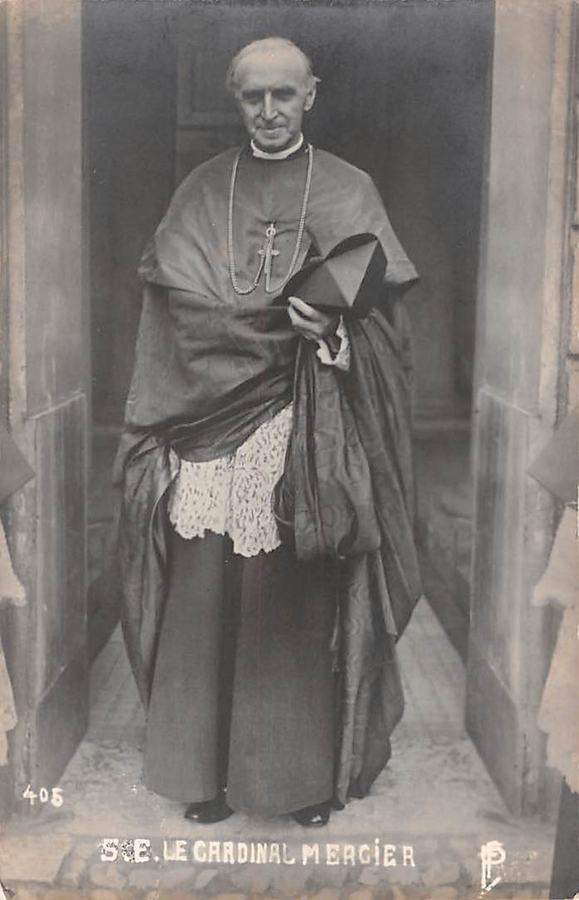
The cinematic landscape is replete with grand narratives, sweeping romances, and profound human dramas. Yet, sometimes, the most resonant echoes come from the quiet corners of history, from films that serve less as entertainment and more as unvarnished historical documents. Such is the case with *Baptême du Belgenland par S.E. le cardinal Mercier*, a title that, even in its descriptive literalness, hints at a profound historical moment. This isn't a film designed to thrill or to weave intricate plots; rather, it exists as a testament, a captured fragment of a nation's spirit and ambition during a pivotal era. It’s a work that demands a different kind of critical engagement, one that appreciates its intrinsic value as a time capsule.
The very genesis of this film, likely born from the early twentieth century's burgeoning fascination with moving images, speaks volumes. It’s a silent chronicle of the christening of the SS Belgenland, a magnificent ocean liner, by none other than His Eminence Cardinal Mercier. For contemporary audiences, the name 'Belgenland' might evoke little, but in the post-World War I landscape of Belgium, still reeling from occupation and devastation, the construction and launch of such a vessel was a powerful symbol of resilience, recovery, and renewed national pride. This wasn't just a ship; it was a floating emblem of Belgian industry and international aspiration. The film, therefore, transcends its simple premise to become a visual declaration of a nation's resurgence.
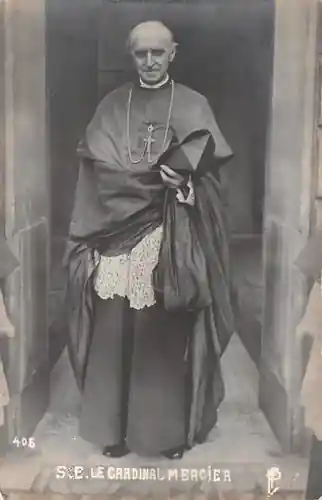
Cardinal Mercier’s involvement adds another layer of profound significance. A figure of immense moral and spiritual authority, particularly revered for his steadfastness during the German occupation of Belgium, his presence at the christening elevated the event from a mere industrial ceremony to a sacred national consecration. The film, in its silent observation, captures this gravitas. We imagine the hushed reverence, the solemnity of his blessing, the collective hope invested in his words and gestures. While the lack of sound means we can only infer the spoken prayers and pronouncements, the visual language of the film, even with early cinematic limitations, conveys the weight of the occasion. The camera becomes an extension of the public eye, bearing witness to a moment where faith, industry, and national identity converged.
Examining the film's 'cinematic' qualities, one must approach it through the lens of early documentary filmmaking. There are no elaborate tracking shots, no complex narrative arcs, no dramatic close-ups designed to reveal inner turmoil. Instead, we are presented with a series of static or minimally panned shots, characteristic of the period. Yet, within these constraints, there's an unassuming artistry. The framing often emphasizes the sheer scale of the Belgenland, dwarfing the figures gathered around it, thereby highlighting humanity's ingenuity against the vastness of the vessel. The crowd scenes, though perhaps less dynamic than later cinematic portrayals, convey a sense of genuine public engagement and celebration. One can almost feel the collective breath held as the champagne bottle swings, a universal symbol of good fortune at sea.
In an era when narrative films were still finding their footing, a film like *Baptême du Belgenland* existed alongside, and indeed informed, the burgeoning understanding of what cinema could be. It shares a certain observational purity with other early non-fiction pieces, documenting life as it unfolded. Unlike the dramatic, if somewhat melodramatic, social commentary found in something like Germinal; or, The Toll of Labor, which fictionalized the harsh realities of industrial life, *Baptême du Belgenland* presents the celebratory zenith of industrial achievement. It’s less about the toil and more about the triumph, a stark contrast that highlights the diverse ways early cinema captured the human condition and its endeavors.
The challenges of early filmmaking – cumbersome cameras, limited film stock, the absence of synchronized sound – paradoxically lend a certain authentic charm to the proceedings. The slightly jerky movements, the occasional imperfections in exposure, the raw, unfiltered quality of the image all contribute to its historical texture. It feels less like a manufactured spectacle and more like a direct window into the past. One can draw parallels to other early cinematic experiments. Consider a film like In the River, which likely sought to capture everyday life or a specific natural phenomenon with similar straightforwardness. While *In the River* might focus on environmental observation, *Baptême du Belgenland* centers on a human-orchestrated event of grand scale, yet both share that fundamental impulse to record and preserve reality.
The film's singular named cast member, Willy Druyts, if indeed his role was significant enough to merit mention, might have been a key organizer, a prominent official, or even a symbolic figure in the ceremony. Without further context, his presence remains an intriguing footnote, a reminder that even in documentary, individual contributions are part of the larger tapestry. It’s a film that, despite its apparent simplicity, invites deeper investigation into its historical context and the individuals who shaped the event. It stands in stark contrast to the highly stylized performances and deliberate character development seen in narrative features of the era, such as Anna Karenina, where emotional depth and intricate personal dramas are paramount. Here, the 'characters' are the ship itself, the Cardinal, and the collective Belgian populace.
The enduring value of *Baptême du Belgenland* lies not in its narrative sophistication, which is non-existent, but in its unfiltered testimony. It offers a tangible connection to a past era, allowing us to visualize the pageantry and the prevailing mood of a specific historical juncture. It’s a powerful reminder of how public events were staged and consumed before the age of mass media saturation. The careful choreography of the ceremony, the attire of the attendees, the sheer scale of the ship – all these details coalesce to paint a vivid picture of early 20th-century Belgian society. It's a film that quietly asserts its importance, not with bombast, but with the silent authority of recorded history.
Comparing this documentary approach to more fantastical or dramatic films of the period illuminates its unique position. Where Die Teufelskirche might explore supernatural themes or the darkest corners of human folklore, *Baptême du Belgenland* grounds itself firmly in the tangible, the celebratory, and the nationally significant. It’s a testament to the diverse directions early cinema was taking – from escapist fantasy to earnest historical record. The contrast is stark, yet both forms contribute to the rich mosaic of nascent cinematic expression.
The absence of a credited writer for *Baptême du Belgenland* is, in itself, telling. This isn't a film born from a script or a fictional premise; it's a direct capture of reality. The 'story' is the event itself, and the 'direction' is largely dictated by the logistical demands of filming a public ceremony. This uncredited, almost anonymous authorship further underscores its documentary nature. It's a collective endeavor, reflecting the communal significance of the event rather than an individual artistic vision. This stands apart from films like The Man Who, which would undoubtedly feature a defined narrative and a distinct authorial voice shaping its dramatic contours.
Such films also highlight the nascent relationship between cinema and publicity. The christening of a major ocean liner, especially one named 'Belgenland,' was a significant public relations event for the shipping company and for Belgium itself. Filming it ensured a wider reach and a more lasting record than mere newspaper accounts could provide. It projected an image of national vitality and industrial prowess to both domestic and international audiences. This early form of visual public relations prefigures the sophisticated media strategies of today, offering a fascinating glimpse into the origins of using film as a tool for image-building. It is far removed from the intimate, character-driven narratives of films like High Pockets, which would delve into individual lives rather than public spectacle.
The very act of preserving and rediscovering films like *Baptême du Belgenland* is crucial. They are fragile relics,
Community
Log in to comment.