DbcultAccessing Vault...
Cult Review
Senior Film Conservator
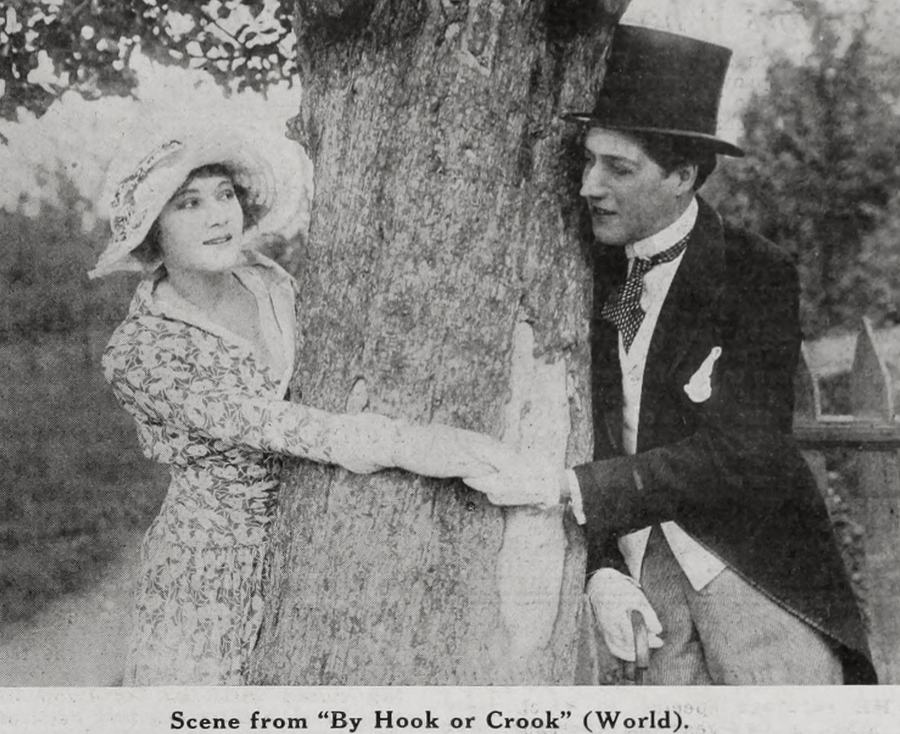
Stepping back into the early cinematic landscape, one encounters a particular charm in films that, despite their age, manage to convey universal truths and exhilarating narratives with an economy of expression unique to the silent era. 'By Hook or Crook,' a 1918 production featuring the suave Carlyle Blackwell, is precisely such a film. It’s a delightful caper, a romantic drama, and a surprising tale of personal metamorphosis, all wrapped into a compelling package that speaks volumes without uttering a single word. Penned by the formidable duo of Harry O. Hoyt and Clara Beranger, this picture isn't merely a historical artifact; it's a testament to the enduring power of storytelling.
At its heart, 'By Hook or Crook' is a classic narrative of a privileged individual forced to confront his own idleness. Frederic "Freddy" Pritchard, portrayed with a charming blend of initial insouciance and burgeoning resolve by Blackwell, is the quintessential man-about-town, accustomed to a life devoid of significant exertion. His father's ultimatum—work or face disinheritance—acts as the catalyst, a dramatic turning point that upends his comfortable existence. This trope, while familiar, is handled here with a light touch, evolving from a mere plot device into a genuine exploration of character. It’s not just about financial survival; it's about the very essence of self-worth and purpose. The film cleverly sets up Freddy's transformation, laying the groundwork for a journey that will test his mettle in ways he could never have imagined from the comfort of his inherited wealth. His initial reluctance is palpable, yet the script ensures that his eventual embrace of responsibility feels earned, not simply imposed. This character arc, from a pampered socialite to a resourceful hero, is a central pillar of the film's appeal, showcasing a timeless appeal that transcends the silent film medium.
The impetus for Freddy's radical career change from dilettante to safecracker isn't entirely self-serving. It's inextricably linked to his affections for Gloria Nevins, portrayed by the elegant Evelyn Greeley. Gloria's predicament is the true engine of the plot: her villainous uncle, a master manipulator, holds not only the family jewels as security but, more critically, the deciding proxy vote for the Nevins Motor Works. This industrial empire, a symbol of family legacy and economic power, hangs by a thread, threatened by the uncle's avarice. The film establishes these stakes with admirable clarity, making Gloria's vulnerability and the potential loss of the factory feel genuinely pressing. Here, the narrative deftly intertwines personal romance with high-stakes corporate espionage, a combination that keeps the audience thoroughly engaged. Freddy's decision to learn the illicit trade of safecracking is a direct response to Gloria's plight, transforming his personal challenge into a heroic quest. This transition is crucial, as it elevates the film beyond a mere comedy of errors into a genuine adventure. The writers, Hoyt and Beranger, demonstrate a keen understanding of how to build suspense through the intertwining of these two distinct plotlines, making the audience root not just for the lovers, but for the very soul of the Nevins enterprise. It's a clever move, giving the film a broader appeal than a simple romantic drama.
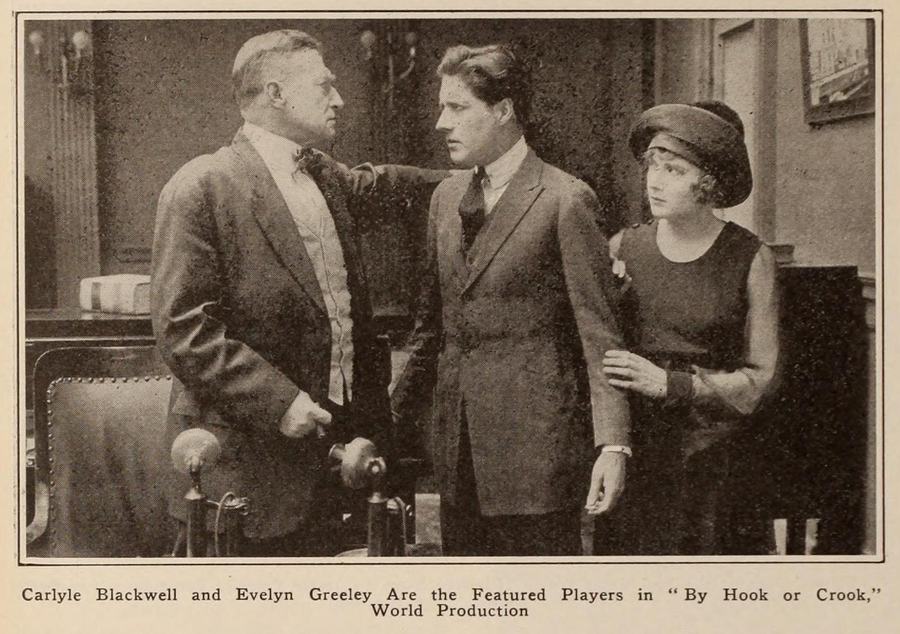
The central set piece of 'By Hook or Crook' is, undoubtedly, the safecracking sequence. This is where Freddy's newfound skills are put to the ultimate test, and the film truly shines in its depiction of suspense. With the invaluable assistance of his loyal valet, Smithson (a wonderfully understated performance by Frank Doane), Freddy executes the heist. The tension is palpable, conveyed through careful cinematography and the actors' expressive movements. The silent film medium, often reliant on visual storytelling, excels in moments like these. The audience is drawn into the meticulous process, the quiet intensity, and the ever-present threat of discovery. It’s a masterclass in building dramatic tension without dialogue, relying instead on the language of action and reaction. This particular sequence might, in its spirit, evoke a sense of daring similar to other films where characters must undertake perilous tasks for love or fortune, though few from this specific era match its particular blend of high society and low cunning. One might draw a very loose parallel to the audacious spirit seen in some adventure serials, or even the resourcefulness of the protagonist in a film like Nearly a King, where a character is thrust into an unfamiliar, challenging role. However, 'By Hook or Crook' maintains its unique flavor through its specific blend of romantic comedy and thriller elements.
Just when success seems within reach, the villainous uncle, a character of predictable but effective malice, thwarts Freddy's immediate plans. Recognizing the threat Freddy poses to his scheme, he orchestrates the protagonist's imprisonment in a warehouse, a classic move to prevent his attendance at the crucial stockholders' meeting. This moment ratchets up the stakes considerably. The ticking clock becomes a character in itself, emphasizing the urgency of Freddy's escape. The subsequent breakout sequence is a testament to Freddy's newfound grit and resourcefulness. It’s a thrilling display of cunning and determination, showcasing that his earlier transformation was not superficial. The climax, with Freddy's desperate dash to the meeting, is a textbook example of silent film suspense. The editing, the sense of speed, and the sheer visual drama of his race against time are expertly handled, culminating in a truly satisfying resolution. This race-against-time motif, while common in cinema, is executed here with a captivating urgency that holds the audience spellbound. The triumph, when it finally arrives, feels hard-won and entirely deserved, a perfect capstone to Freddy's journey.
Carlyle Blackwell, as Frederic Pritchard, anchors the film with a performance that matures alongside his character. He navigates the transition from privileged dandy to determined hero with admirable grace, his facial expressions and body language conveying a rich inner life. Evelyn Greeley, as Gloria Nevins, provides a compelling counterpart, embodying both vulnerability and strength, making her a character worth fighting for. The supporting cast, including Nora Cecil, Henry Warwick, and the aforementioned Frank Doane as Smithson, are all instrumental in crafting a believable world. Smithson, in particular, stands out as the loyal, understated aide, his quiet competence a perfect foil to Freddy's initial naiveté. The ensemble works in concert, each actor contributing to the film's overall vibrancy and emotional resonance. The power of silent acting lies in its ability to communicate complex emotions and intentions through gesture and gaze, and this cast demonstrates a mastery of that particular art form. One might consider the intricate ensemble work, even in a different genre, as seen in a film like The Three Musketeers (1921), where each character's distinct personality contributes to the overall narrative tapestry, though 'By Hook or Crook' operates on a more intimate scale of heroism.
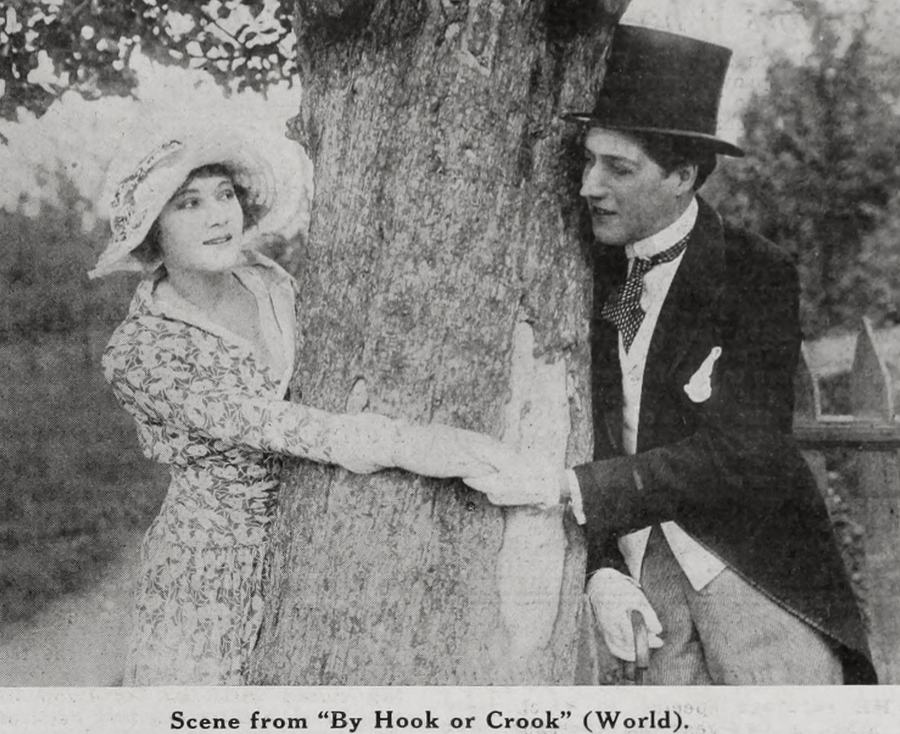
Beyond the thrilling plot, 'By Hook or Crook' delves into fascinating thematic territory. The most prominent is, of course, the theme of redemption and self-discovery. Freddy's journey is not just about saving a factory or winning a girl; it's about finding his own worth and proving his capabilities, not just to his father, but to himself. This narrative arc resonates deeply, touching upon the universal human desire for purpose and meaning. Furthermore, the film subtly explores themes of class and social expectation. Freddy, born into privilege, is challenged to move beyond the limitations of his social standing, demonstrating that true worth isn't inherited but earned. This idea of a character transcending their given circumstances through effort and moral fortitude is a powerful one, echoed in various forms across cinematic history. It’s a narrative that speaks to the American dream, albeit through the lens of a high-society caper. The film offers a glimpse into the societal values of its time, where industriousness and moral rectitude were highly prized, even for the upper echelons. This thematic depth elevates 'By Hook or Crook' from a simple entertainment piece to a more thoughtful commentary on character and societal roles. It's a testament to the writers that these deeper currents run beneath the surface of what is ostensibly a lighthearted adventure. The notion of a man proving his worth, often through arduous trials, is a recurring motif in cinema, seen perhaps in the grit of a character in A Man's Prerogative or the struggle for survival in A föld embere, though 'By Hook or Crook' wraps its message in a more glamorous, albeit precarious, package.
The direction of 'By Hook or Crook' (though the director isn't explicitly credited in the provided information, the film's execution speaks volumes) showcases a solid understanding of visual storytelling. The pacing is consistent, moving briskly through exposition to action, and the camera work, while perhaps not groundbreaking for its time, is effective in conveying emotion and advancing the plot. Close-ups are used judiciously to highlight crucial reactions, and wider shots establish the grandeur of the settings, from lavish homes to the industrial landscape of the factory. The intertitles, the textual inserts that provide dialogue and narration in silent films, are well-integrated, complementing the visual narrative rather than dominating it. They serve to clarify complex plot points and add touches of wit, enhancing the audience's understanding without breaking the immersion. The overall aesthetic is clean and crisp, allowing the performances and the narrative to take center stage. This film serves as a fantastic example of the craft of silent filmmaking, demonstrating how much could be communicated through purely visual means, aided by the succinct power of the intertitle. The visual clarity and narrative drive are particularly commendable, ensuring that even a modern audience can easily follow the intricate plot. The deliberate composition of scenes, whether for dramatic effect during the heist or for conveying emotional states, is a testament to the thoughtful approach behind the camera. It’s a reminder that even in the nascent years of cinema, filmmakers were already mastering the art of visual persuasion and narrative flow.
In conclusion, 'By Hook or Crook' is more than just a historical curiosity; it's a vibrant, engaging piece of cinema that holds up remarkably well. Its blend of romance, adventure, and personal growth makes it a compelling watch, even for those unfamiliar with the silent film era. The performances are earnest and effective, the plot is well-constructed, and the thematic undercurrents provide satisfying depth. It's a testament to the talents of Carlyle Blackwell, Evelyn Greeley, and the writers Harry O. Hoyt and Clara Beranger, that this film continues to entertain and resonate. It reminds us that fundamental human stories—of love, loyalty, and the quest for self-worth—are timeless, capable of captivating audiences regardless of technological advancements. For anyone interested in the evolution of cinema, or simply in a good old-fashioned tale of a hero rising to the occasion, 'By Hook or Crook' offers a delightful and surprisingly sophisticated experience. It's a film that proves that sometimes, the simplest narratives, told with conviction and skill, are the most enduring. The ingenuity required to tell such a detailed story without spoken dialogue is truly remarkable, making the film a valuable entry in the annals of early American cinema. It stands as a vibrant example of how narrative tension, character development, and emotional impact were achieved long before sound graced the silver screen. This film, in its quiet brilliance, ensures that its legacy is not merely one of historical significance, but of genuine artistic merit and captivating entertainment. Its ability to communicate so much with so little, relying on the universal language of human emotion and action, is a powerful demonstration of cinema's foundational strengths. The film's resolution, where love and industry are both saved, leaves the viewer with a sense of profound satisfaction, a feeling that good has indeed triumphed, and that even the most pampered among us can find their true calling when the stakes are high enough. It's a charming reminder that sometimes, the only way to truly find oneself is to be thrown, by hook or by crook, into the deep end.
IMDb 7
1930
Community
Log in to comment.