DbcultAccessing Vault...
Cult Review
Senior Film Conservator
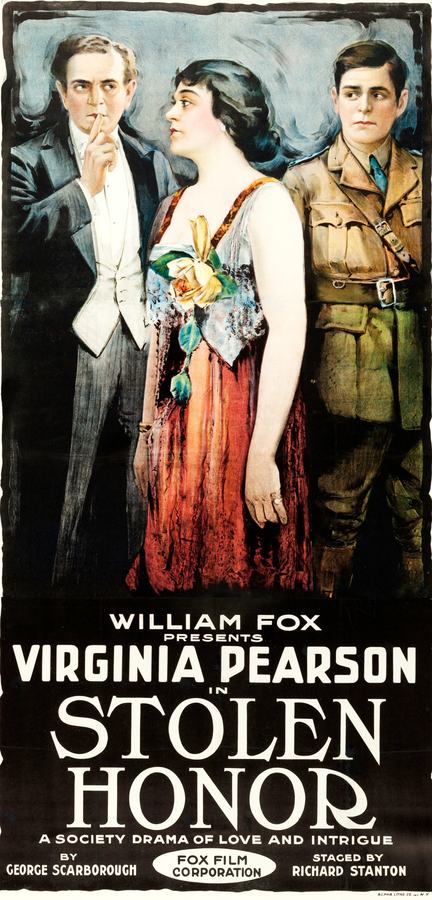
In the shadowed corridors of power and the gilded halls of privilege, Stolen Honor emerges as a hauntingly elegant exploration of the human psyche. Directed with a painter’s eye for composition and a playwright’s ear for subtext, the film transforms Virginia Lake’s journey from a reluctant muse to a defiant artist into a symphony of silent resilience. It’s a film where every glance, every gesture, carries the weight of unspoken truths, and where the canvas of the narrative is as meticulously crafted as Virginia’s own counterfeit masterpiece.
The film’s opening sequence—a close-up of Virginia’s brush gliding across a canvas, the light catching the bristles like whispers of ambition—sets the tone. Virginia, played with aching subtlety by Virginia Pearson, is not merely an artist but a woman in perpetual negotiation with her identity. Her relationship with Captain Robert Macklin (Clay Clement) is fraught with unspoken longing, a tension that mirrors the friction between her creative drive and the societal expectations imposed by her ward, Assistant Secretary Belfield. Here, the camera lingers on Virginia’s face, her eyes betraying a love she suppresses for the sake of her craft. It’s a performance that transcends the limitations of silent film, conveying the depth of her internal conflict without a single line of dialogue.
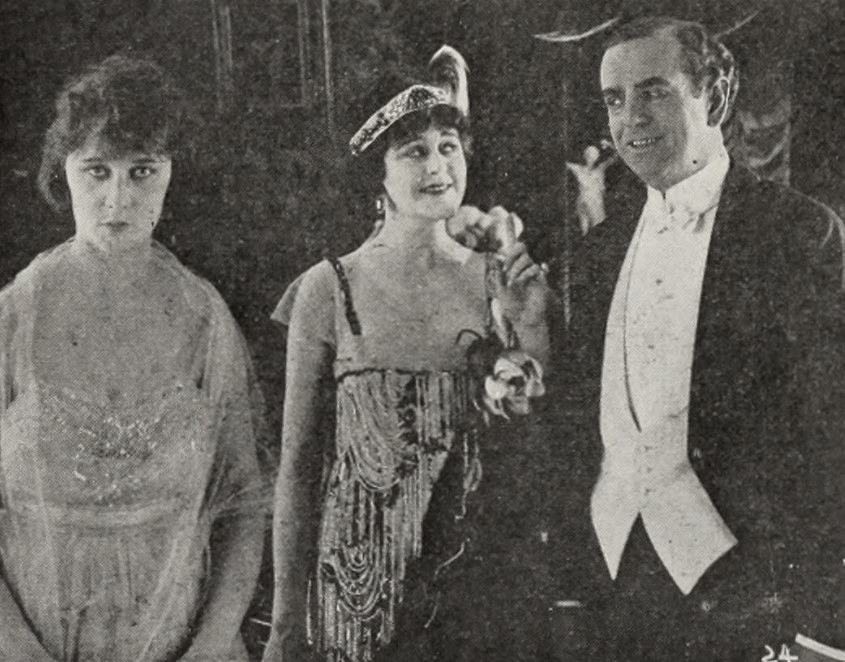
Enter the Countess Collona (Dorothy Rogers), a figure of aristocratic menace who embodies the film’s central theme: the corruption of art by power. Her alliance with Signor Conte to frame Virginia for the theft of a priceless Italian painting is not just a plot device but a metaphor for the exploitation of creativity by those in positions of authority. The Countess’s manipulations are rendered with chilling precision—her every movement calculated, her every smile a mask for malice. The theft itself, a pivotal turning point, is staged with the elegance of a heist film but the moral gravity of a tragedy. The replacement of the original painting with Virginia’s copy is a masterstroke, symbolizing the erasure of authenticity in the face of greed.
The subplot involving Virginia’s friend Betty (Ethel Hallor) and her ill-fated marriage to Belfield adds another layer of complexity. Betty’s flight with Paul Hollister and Virginia’s subsequent pursuit highlight the film’s exploration of loyalty and sacrifice. Virginia’s intervention, though driven by friendship, inadvertently entangles her further in the web of intrigue. This narrative thread, while secondary, enriches the film’s critique of the suffocating roles assigned to women in both domestic and professional spheres. The chemistry between Virginia and Betty is understated but potent, their bond a quiet counterpoint to the machinations of the Countess and Conte.
Technically, Stolen Honor is a marvel. The cinematography, led by George Majeroni, employs chiaroscuro to devastating effect, casting Virginia in shadow as she confronts the consequences of her silence. The use of mirrors and reflections—particularly in scenes where Virginia scrutinizes her own work—adds a meta-narrative layer, blurring the line between her art and her identity. The editing, though brisk for its era, maintains a rhythm that mirrors the ticking clock of Virginia’s impending downfall. Perhaps most striking is the score, a haunting blend of string arrangements that swell with the emotional crescendos, guiding the audience through the film’s moral quagmire.
The film’s climax, where Virginia traps the Countess and Conte into confessing their guilt, is a tour de force of silent storytelling. Without a word, Virginia’s eyes narrow, her hand tightening on a dagger-like brush as she dismantles the web of lies. The alibi involving Betty becomes a knife’s edge—Virginia’s decision to bear the blame is not an act of passivity but a calculated sacrifice. This moment, rendered in a single, unbroken take, showcases the director’s confidence in the actors and the audience’s ability to read between the lines. It is here that the film’s themes coalesce: the cost of truth in a world governed by appearances, and the redemptive power of art as both shield and weapon.
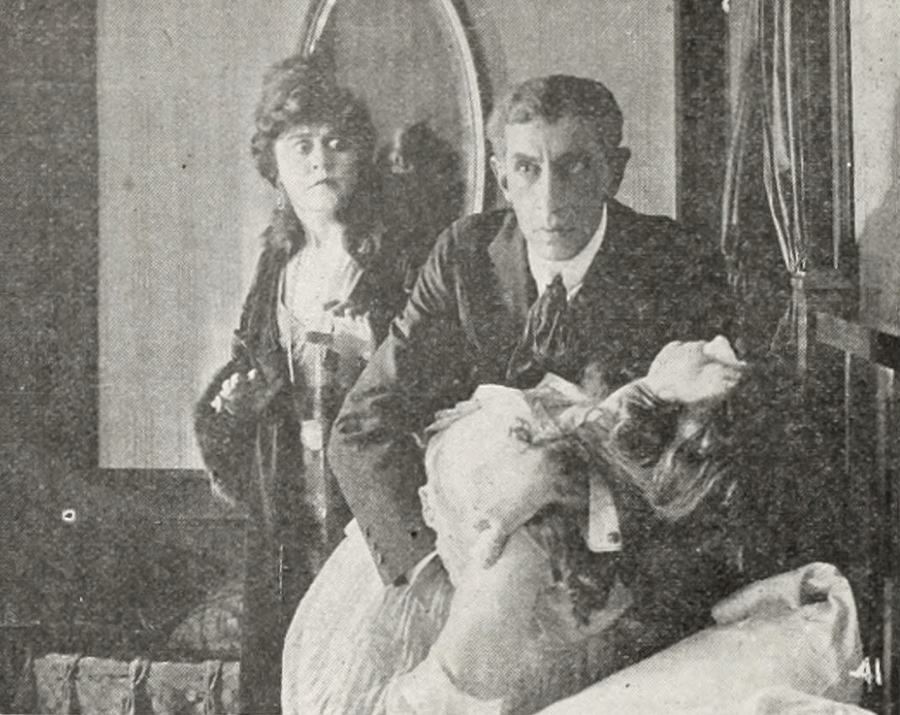
In the final act, Virginia’s acceptance of Robert’s love is not a resolution but a redefinition. The film resists the cliché of the triumphant heroine; instead, it offers a more nuanced conclusion where love is not a reward but a choice made in the aftermath of survival. The final shot, of Virginia painting Robert’s portrait while his hand rests on her shoulder, is a silent acknowledgment of their shared history—a future etched not in words but in the colors of their mutual understanding.
Comparisons to other films of the era are inevitable. The Brand of Cowardice shares similar themes of moral ambiguity, while His Wife's Good Name explores the societal constraints on women. Yet Stolen Honor distinguishes itself through its visual poetry and the depth of its psychological characterizations. It stands as a testament to the silent film’s ability to convey complex narratives without sacrificing emotional resonance.
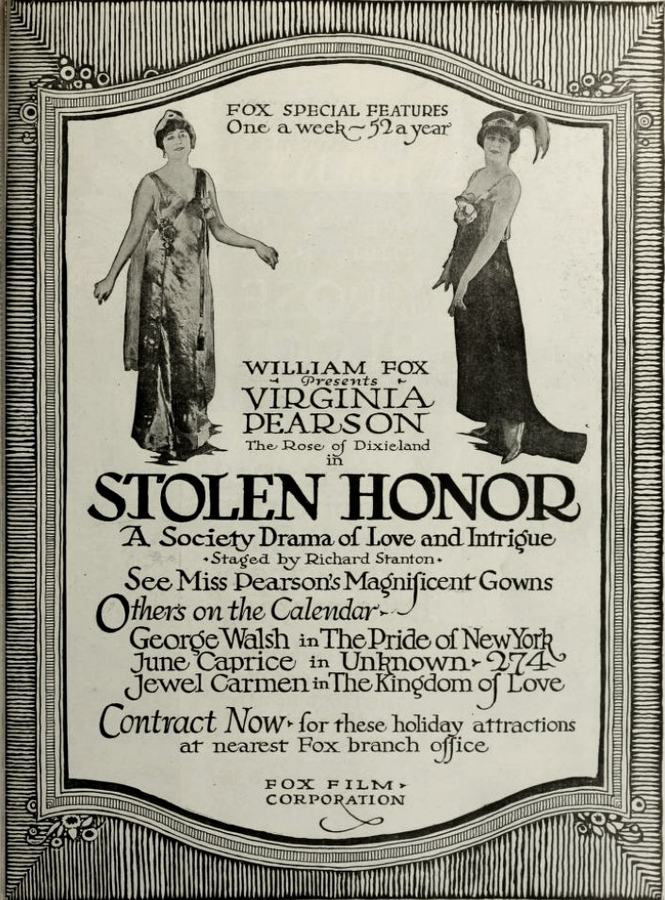
For modern audiences, Stolen Honor is a revelation. Its exploration of identity, art, and integrity remains startlingly relevant, a reminder that the struggle to be seen—and to see oneself—is as timeless as it is universal. The film’s legacy lies not in its historical context but in its enduring questions: Can art exist independently of power? Can love survive the weight of sacrifice? And in a world governed by appearances, what is the true cost of honor?
In the end, Stolen Honor is more than a film; it is a mirror held to the soul, asking us to look beyond the surface and consider what it truly means to create, to love, and to endure. It is a work that lingers, not because of its narrative twists, but because of the quiet strength of its characters—and the unyielding power of their stories.
IMDb 6.8
1921
Community
Log in to comment.