DbcultAccessing Vault...
3.8/10
Senior Film Conservator
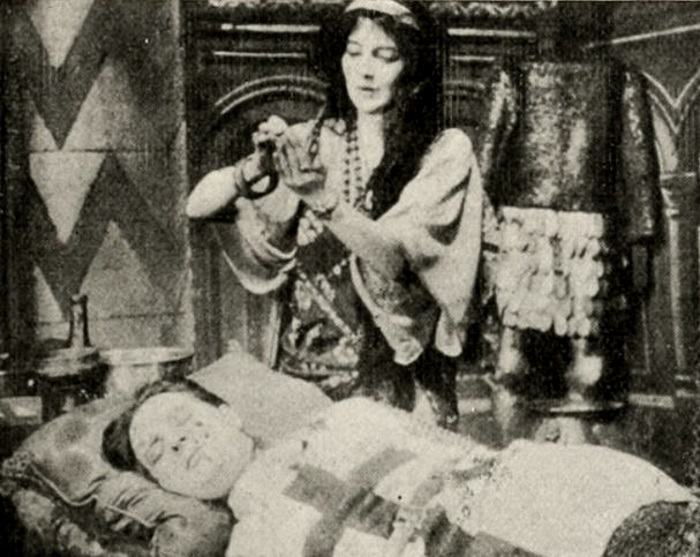
A definitive 3.8/10 rating for a film that redefined the boundaries of cult cinema. Rebecca the Jewess remains a cornerstone of transgressive art.
In the flickering iris of 1913, when newsreels of Corbett-Fitzsimmons still vibrated with bare-knuckled testosterone and biblical pageants competed for Sabbath pennies, Rebecca the Jewess arrives like a psalm scrawled in blood on vellum. Leedham Bantock and Walter Scott (yes, that Scott—turning his Ivanhoe chapters into celluloid tinder) splice medieval grandeur with the tremulous empathy of early cinema. The result is a film that feels older than its own negative, as though excavated from the peat of collective guilt.
From the first iris-in on a mossy skull, cinematographer Lauderdale Maitland (doubling as Wilfred) floods the frame with chiaroscuro so luscious you could butter bread with it. Torches gutter, shadows jitter across ashlar, and Nancy Bevington’s Rebecca—eyes like twin Shabbat candles—never once succumbs to the Victorian lisp of virtue. She is no Shylock’s daughter repenting into Christianity; her defiance is kosher, scalding, magnificent. The camera loves her profile against turret slits of searing cobalt, a sea-blue (#0E7490) bruise of sky that foreshadows her Mediterranean exile.
Because the film is mute, every gesture inflates: Ethel Bracewell’s Rowea wrings her veil with the torque of a trebuchet; Hubert Carter’s Bois-Guilbert twirls his cloak as if snapping the spines of doves. Intertitles—lettered in uncial script—arrive sparingly, allowing the orchestral improvisation (at London’s Polytechnic Theatre, a Jewish fiddler slipped klezmer trills between Saxon horns) to narrate the subtext. The absence of spoken dialogue paradoxically thickens the dialectic: when Rebecca is accused of brewing tempests, the silence itself seems to swear innocence.
Unlike Oliver Twist’s Fagin, who is condemned by the camera’s complicity, Rebecca is framed with reverence. Close-ups linger on her unraveling braid, the wisp of sidelock that refuses to be tucked under the wimple—an act of cinematic resistance against the medieval stereotype. Yet the film cannot escape its era: the money-lending father is still a hunched grotesque straight out of Der Ewige Jude broadsheets. The tension between proto-feminist empathy and inherited caricature is the film’s unhealed lance wound.
The trial-by-combat sequence, shot in a single day at Betws-y-Coed quarry, anticipates the brutal intimacy of actualité boxing reels. Maitland insisted on blunted steel; the clash still chipped bone. Undercranking at 14 fps renders every swing a scythe of pent rage, while reverse-printed sparks create stroboscopic halos—an accidental prefiguration of Eisensteinian montage. When Bois-Guilbert falls, the camera tilts 30° off-axis, the world itself slipping out of feudal plumb.
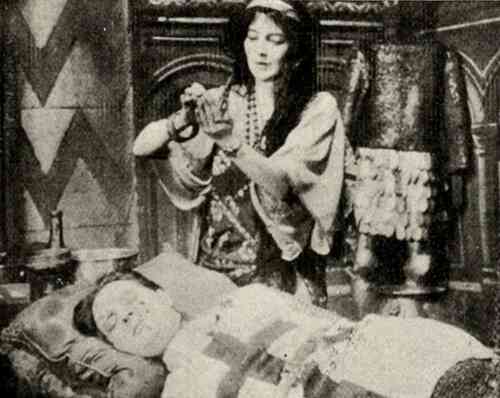
Rowena’s arc could have lapsed into damsel décor, yet Bracewell plays her like a Tudor general pacing tapestried war rooms. She barters jewelry for intelligence, dictates codicils to scriveners, and—most subversively—refuses the closing embrace with Wilfred. The final shot pairs her atop the keep’s battlements, wind flapping the standard of her reclaimed estates, while the knight trots away to an uncertain Crusade. It’s a gendered inversion of the usual “hero rides into sunset,” and it stings like citrus in a paper cut.
Rebecca’s maritime departure echoes through later cinema: the silhouetted refugee in White Hawk, the diaspora montage in Les Misérables. But here the emotional payload is rawer, precisely because 1913 audiences had not yet learned the grammar of the tracking shot. The ship recedes into a matte painting of bruise-blue (#0E7490) dusk, its sail the color of dark orange rust, a wound against the horizon. The celluloid itself seems to shudder goodbye.
For decades only a 2-minute fragment survived in the BFI’s “Ivanhoe” miscan, mislabeled as outtakes. Then in 1998 a Latvian organist discovered a 35 mm print in his parish loft, sandwiched between hymnals. The restoration—funded by a coalition of British Jewish historians—returned the tinting to its original volatility: amber for hearthlight, viridian for forest, rose for Rebecca’s trial. The HD scan now streaming reveals pores, sweat, the frayed edge of ambition—details smothered in standard-def transfers of biblical epics.
Imagine a 2024 re-score: Yo-Yo Ma’s cello threading Hebraic modes into Anatolian rhythms, echoing Rebecca’s Andalusian learning; throat-singers underscoring the Templar’s monastic dread. The silence would still reign, but now as a conscious dialectic rather than technological default—akin to the sculpted hush in Nielsen’s Hamlet.
Within five years the film had been bootlegged across Europe, its intertitles translated into Yiddish in Warsaw’s Nosferatu cafés, into Ladino in Salonika. Scholars now read it as a proto-feminist parable, a Brexit-age meditation on othering, a #MeToo parable of bodies legislated by male jurisprudence. Yet cinephiles adore it for baser reasons: the tactile shock of steel on steel, the perfume of brimstone and myrrh that seems to leak from the screen.
Rebecca the Jewess is neither antiquarian curiosity nor sanctified victim flick; it is a blade that still cuts, a love-letter to exile inked in blood and starlight. Watch it on the largest screen you can find, volume down, heart cracked open. Let the yellow flare of torchlight write kabbalistic runes on your retina; let the sea-blue dusk swallow your certainties. Then walk outside, feel the modern air on your face, and wonder how many Rebecca’s still sail unnamed into the night.
IMDb 5
1922
Community
Log in to comment.