DbcultAccessing Vault...
5.1/10
Senior Film Conservator
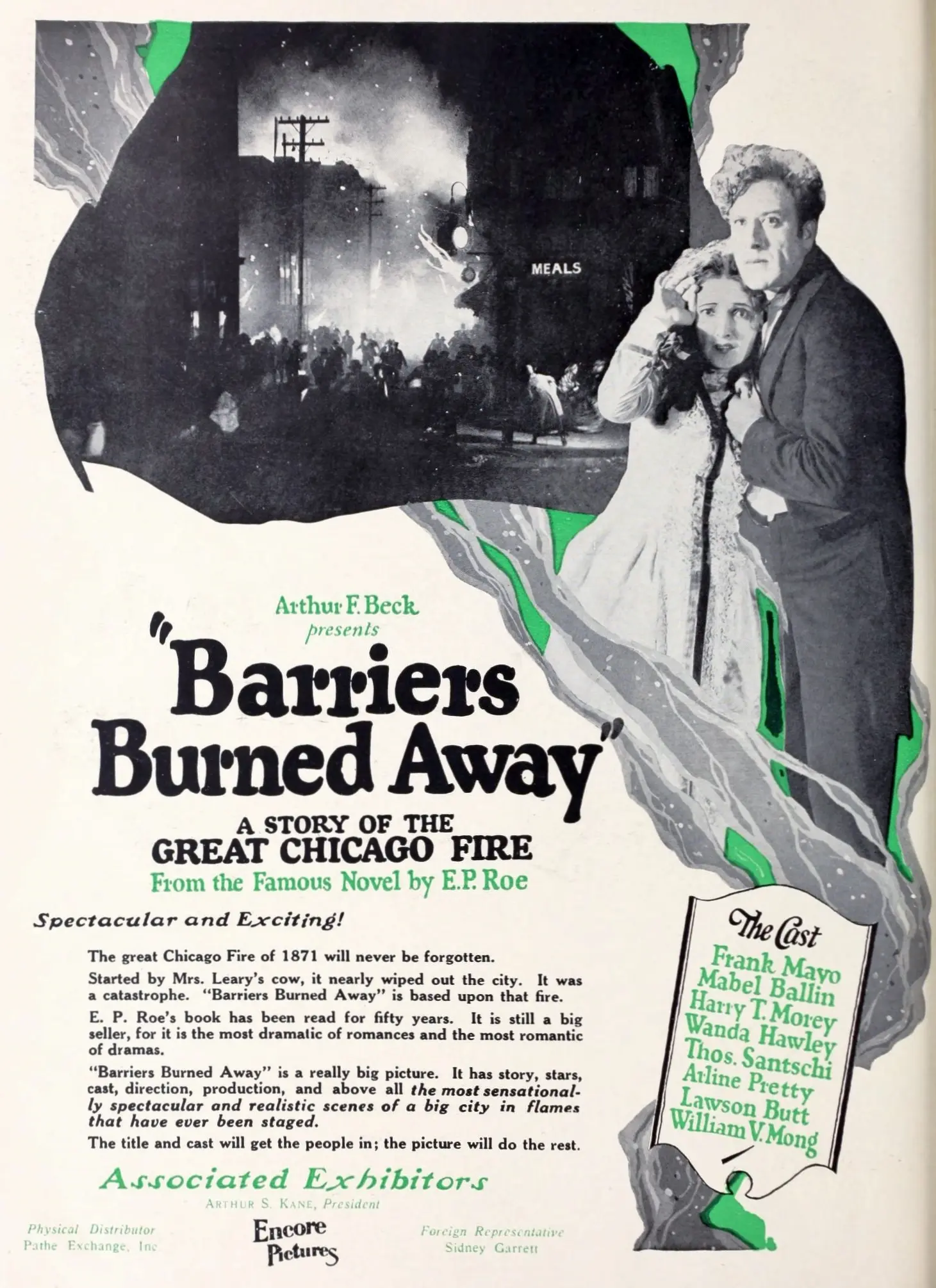
A definitive 5.1/10 rating for a film that redefined the boundaries of cult cinema. Barriers Burned Away remains a cornerstone of transgressive art.
Stepping into the world of Barriers Burned Away feels like unearthing a forgotten treasure, a cinematic relic that, despite its vintage, still pulsates with a raw, visceral energy. This 1925 production, penned by the talented duo Leah Baird and Edward Payson Roe, transports us directly to the tumultuous streets of 1871 Chicago, a city teetering on the brink of an unimaginable catastrophe. The narrative, rich with intrigue and human drama, centers on a classic noir setup: an undercover operative, a valuable stolen object, and an unexpected, complicating romance. Yet, it elevates these familiar tropes by embedding them within one of America's most iconic historical disasters, creating a tapestry that is both intimate and epic.
Our journey begins with a meticulous portrayal of the underworld, specifically a rather disreputable saloon that serves as the nexus for various illicit activities. It's here that our protagonist, an unnamed but undoubtedly resolute undercover detective, assumes the guise of a humble porter. His mission is singular: to infiltrate this den of thieves and recover a priceless painting, believed to be changing hands within its smoky confines. The tension is palpable from the outset, a silent hum beneath the surface noise of clinking glasses and hushed conversations. The film, even without spoken dialogue, masterfully conveys the precariousness of his situation, the constant threat of exposure lurking in every shadow. Lawson Butt, in the role of the detective, brings a quiet intensity to his performance, his eyes betraying a depth of purpose that belies his unassuming exterior. He navigates the treacherous landscape of the saloon with a calculated grace, blending in while meticulously observing, a silent predator in a den of vipers.
The plot thickens, as all good stories do, with the introduction of a complicating factor that transcends the professional. The detective, despite his unwavering focus on the mission, finds himself irresistibly drawn to the saloon owner's daughter. Mabel Ballin, as this pivotal character, imbues her with an earnest charm and an unwitting vulnerability. She sees him not as a cunning operative, but merely as a hardworking porter, a man struggling to make an honest living in a dishonest world. This disparity in perception forms the emotional core of the film, a delicate dance of deception and burgeoning affection. The audience is privy to the detective's internal conflict: the professional imperative clashing with a deeply personal yearning. This forbidden romance, blooming amidst the grit and danger, adds a layer of poignant vulnerability to the otherwise taut thriller. It reminds one of the profound, often tragic, romantic entanglements seen in films like The Italian, where social barriers and unforeseen circumstances conspire against blossoming love, or even the dramatic stakes of loyalty versus love in Dorothy Vernon of Haddon Hall, albeit with a far more perilous backdrop.
The ensemble cast surrounding Butt and Ballin contributes significantly to the film's immersive quality. Frank Mayo, Frankie Mann, Mrs. Charles Craig, Jim Mason, William V. Mong, Wanda Hawley, J.P. Lockney, Harry T. Morey, Wally Van, Pat Harmon, Arline Pretty, Tom Santschi, and Eric Mayne – each actor, even in what might seem like smaller roles, contributes to the vibrant, often menacing, atmosphere of 1871 Chicago. They portray a rogues' gallery of characters, from the hardened criminals to the ordinary patrons of the saloon, all of whom become unwitting players in a high-stakes game. The nuanced performances, particularly in a silent film era where exaggerated gestures could easily devolve into caricature, speak volumes about the directorial guidance and the actors' commitment to their craft. The film doesn't just present a story; it presents a living, breathing world, populated by individuals with their own motivations and secrets.
As the detective inches closer to uncovering the truth about the stolen painting, his undercover work inevitably escalates the danger, not just for himself, but for the innocent woman he has come to love. The criminals, realizing their lucrative fence is under threat, become increasingly desperate and ruthless. This portion of the film ratchets up the suspense, employing classic thriller techniques that keep the audience on the edge of their seats. The narrative tension is expertly managed, ensuring that every close call and every near-exposure feels genuinely perilous. The stakes are clear: his life, her safety, and the success of his mission all hang precariously in the balance. The psychological pressure on the detective is immense, as he must maintain his facade even as his emotional investment deepens.
But then, a force far more formidable than any human antagonist enters the narrative: the infamous Chicago Fire of 1871. This historical event, a cataclysmic inferno that reshaped an entire city, becomes a character in its own right, a relentless, destructive entity that dwarfs all human machinations. The film transitions seamlessly from a personal thriller to a sprawling disaster epic, demonstrating a remarkable ambition for its time. The fire serves as a powerful metaphor, not just for the destruction of the city, but for the burning away of the 'barriers' – the societal divisions, the personal deceptions, and the criminal underworld – that defined the earlier part of the story. The roaring flames, depicted with a terrifying realism for the era, consume everything in their path, forcing characters to confront their true selves and their deepest desires in the face of absolute annihilation. It's a testament to the film's vision that it manages to integrate such a monumental historical event so organically into its personal drama, much like how Gefangene Seele explores internal turmoil against a backdrop of external pressures, albeit without the physical grandeur of a city ablaze.
The visual storytelling, a cornerstone of silent cinema, is particularly striking here. The use of light and shadow to create mood, the dynamic camera work that captures the chaos of the fire, and the expressive performances of the actors all contribute to a deeply immersive experience. One can almost feel the heat, smell the smoke, and hear the desperate cries of a city in agony. The juxtaposition of the intimate human drama against the sprawling devastation of the fire is handled with remarkable dexterity. The fate of the stolen painting, which initially drove the plot, recedes into the background as the sheer struggle for survival takes precedence. This shift in focus is incredibly effective, highlighting the transient nature of material possessions when faced with existential threats. It underscores the film's deeper thematic concerns about resilience, sacrifice, and the indomitable human spirit.
The screenplay by Leah Baird and Edward Payson Roe is a masterclass in crafting a multi-layered narrative. They skillfully weave together elements of crime, romance, and historical drama, ensuring that each thread is given its due weight. The pacing is deliberate in the initial stages, allowing for character development and the slow burn of suspense, before accelerating into a breathless sprint as the fire engulfs the city. The dialogue, conveyed through intertitles, is spare yet impactful, delivering essential plot points and emotional beats without ever feeling redundant. This economy of language forces the visual elements to carry much of the narrative burden, a challenge the filmmakers meet with aplomb. Their ability to craft compelling characters and place them in such a grand, historical context is truly commendable, distinguishing Barriers Burned Away from many of its contemporaries, which often focused on simpler, more straightforward narratives like Pick Out Your Husband or Always in the Way. The ambition here is palpable.
The performances, particularly from Lawson Butt and Mabel Ballin, anchor the film's emotional resonance. Butt conveys the internal struggle of his character with remarkable subtlety, his expressions shifting from determined resolve to tender vulnerability. Ballin, on the other hand, embodies a fragile strength, a young woman caught in a maelstrom of events far beyond her control. Their chemistry, though largely unspoken, is undeniable, making their predicament all the more heartbreaking. The supporting cast, including the formidable presence of Frank Mayo and the nuanced portrayals by Wanda Hawley and Harry T. Morey, fleshes out the world, adding depth and authenticity to the various factions at play. The film understands that even amidst grand historical events, it's the personal stories that truly resonate, a lesson often forgotten in modern blockbusters. This focus on character-driven drama within a large-scale setting is a hallmark of truly exceptional storytelling, reminiscent of the emotional weight carried in films like The Unholy Three, where character depth is paramount to the unfolding drama.
One of the most compelling aspects of Barriers Burned Away is its exploration of class and societal divides. The saloon, a melting pot of the respectable and the reprobate, serves as a microcosm of 1871 Chicago. The detective, by assuming the role of a porter, effectively crosses these societal barriers, gaining access to a world he might otherwise never have understood. His love for the saloon owner's daughter further complicates these lines, forcing him to confront his own prejudices and the rigid social structures of the era. The fire, in its indiscriminate destruction, acts as a great equalizer, stripping away titles, wealth, and social standing, reducing everyone to their most basic human need: survival. This thematic depth elevates the film beyond a simple crime thriller, imbuing it with a social commentary that remains relevant even today. It subtly critiques the superficiality of societal distinctions when faced with genuine calamity, a theme that echoes the existential questions posed in more introspective films like Black Oxen or Gefangene Seele, though with a grander, more immediate threat.
The climax of the film, set against the backdrop of the raging inferno, is nothing short of spectacular. The visuals of the burning city, the desperate evacuations, and the sheer scale of the destruction are rendered with an impressive scope for the period. It's a testament to the technical prowess of the filmmakers that they could evoke such a powerful sense of chaos and impending doom without the aid of modern special effects. The personal stakes of the detective and the saloon owner's daughter become intertwined with the larger tragedy, their desperate flight for survival mirroring the city's struggle. The fire becomes a crucible, testing their love, their courage, and their will to live. It's in these moments of extreme peril that the 'barriers' of deception and class truly burn away, revealing the raw, unadorned humanity beneath. The film manages to make the audience genuinely care about the fate of these characters amidst the overwhelming spectacle, a difficult feat that speaks to the strength of its emotional core. This grand scale, intertwined with personal drama, sets it apart from more contained thrillers like Caught in the Act or Time Lock No. 776.
In conclusion, Barriers Burned Away is more than just a historical drama or a crime thriller; it is a profound exploration of human resilience in the face of both man-made and natural disasters. It masterfully blends genres, offering a compelling narrative that is both intellectually stimulating and emotionally resonant. The film's enduring appeal lies in its ability to transport viewers to a specific moment in history, to immerse them in the lives of its characters, and to deliver a powerful message about love, duty, and survival. It serves as a stark reminder of the destructive power of nature, but also of the indomitable spirit of humanity. For anyone with an appreciation for classic cinema, historical epics, or simply a well-told story, this film is an absolute must-see. It stands as a testament to the artistry of silent film, proving that even without sound, a film can speak volumes and leave an indelible mark on the viewer's imagination, much like the lasting impact of a powerful social commentary such as The Black Stork, though in a vastly different narrative context. Its themes of overcoming adversity and finding love amidst chaos are timeless, ensuring its place as a significant piece of cinematic history.

IMDb —
1919
Community
Log in to comment.