DbcultAccessing Vault...
Cult Review
Senior Film Conservator
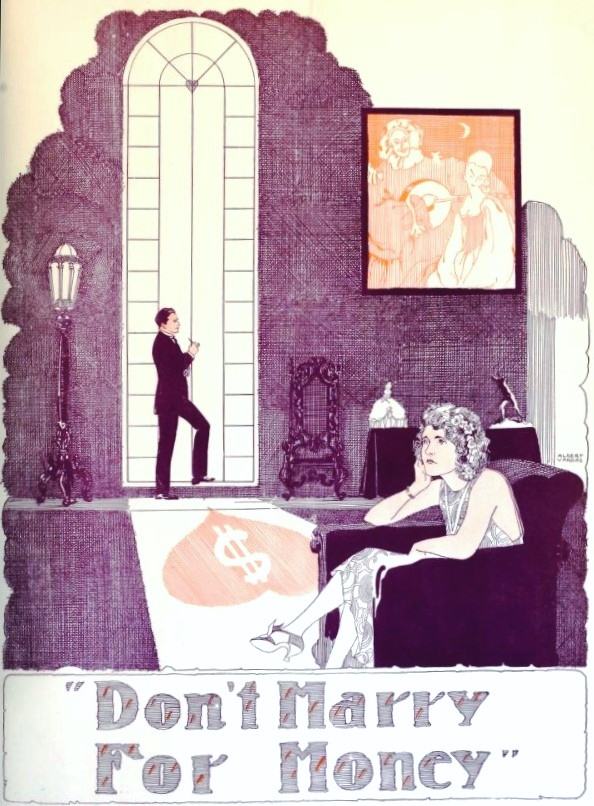
The silent film Don't Marry for Money unfolds like a meticulously stitched tapestry, each thread representing a facet of early twentieth‑century anxieties about wealth, fidelity, and agency. Director Louis D. Lighton and writer Hope Loring construct a narrative that is at once a cautionary tale and a subtle critique of the era’s gendered expectations. The story follows Marion Whitney, whose decision to marry the affluent Peter Smith is motivated less by love than by a pragmatic desire for security. This premise, though seemingly straightforward, becomes a fertile ground for exploring the psychological terrain of a woman caught between material comfort and emotional yearning.
From the opening tableau, the cinematography—rendered in stark chiaroscuro against a black backdrop—accentuates the dichotomy between opulence and emptiness. The lavish interiors of Peter’s mansion are bathed in a soft, amber glow, achieved through careful lighting that highlights the gilded décor while casting long, melancholic shadows across Marion’s face. This visual motif recurs whenever Marion contemplates her marriage, underscoring the paradox of wealth that illuminates yet isolates.
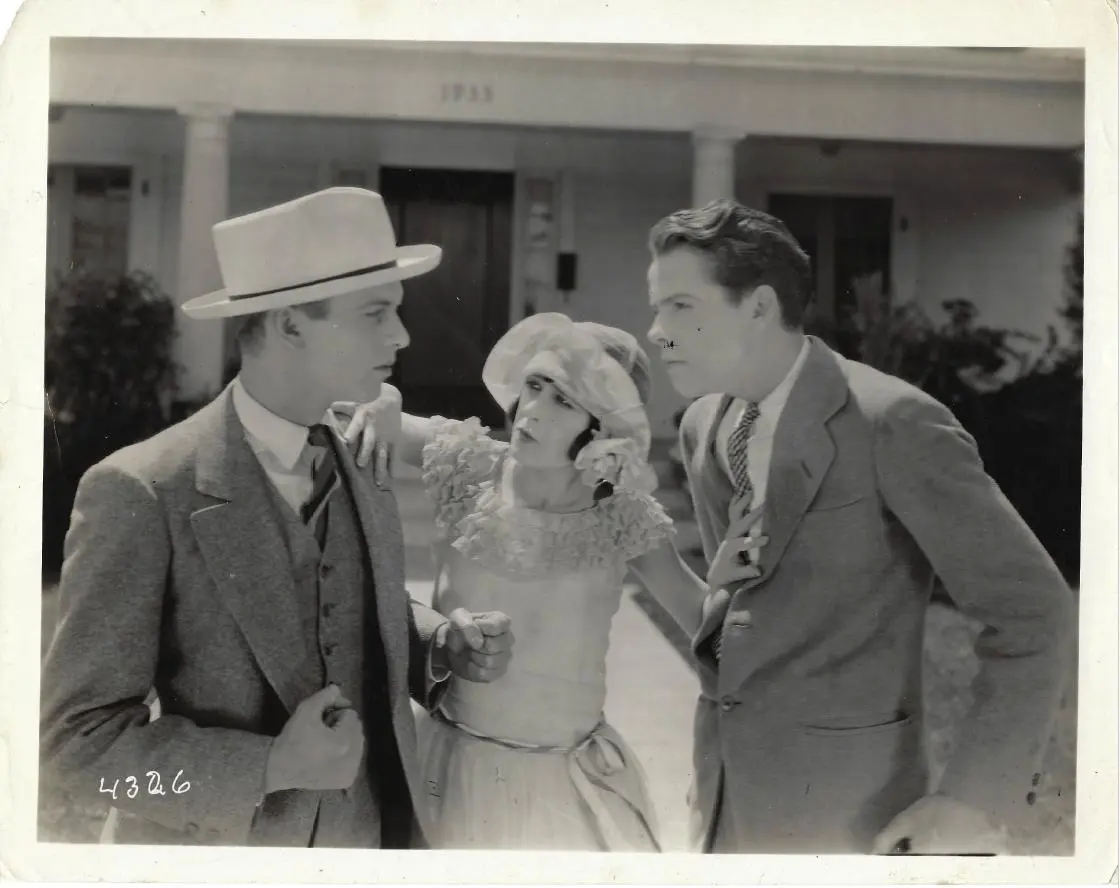
Enter Crane Martin, portrayed with a sinuous charisma by Hank Mann. Martin’s character is a masterclass in silent‑era villainy: his eyes flicker with mischief, his gestures are deliberately languid, and his wardrobe—always a crisp, sea‑blue suit (#0E7490)—signals both sophistication and danger. Martin’s modus operandi—compromising the wives of affluent men and then blackmailing them—mirrors the predatory capitalism of the Roaring Twenties, where fortunes were built on exploitation. The film does not merely present him as a one‑dimensional antagonist; instead, it offers glimpses of his own disillusionment, hinting at a backstory of lost love that fuels his cynical pursuits.
Marion’s flirtation with Martin is rendered with a delicate balance of intrigue and trepidation. The scenes in which she meets him in dimly lit jazz clubs are suffused with a smoky palette, the air thick with the scent of perfume and danger. The camera lingers on Marion’s hands—often clasped, then released—as she navigates the intoxicating pull of Martin’s promises. This visual language conveys her internal conflict without a single intertitle, a testament to the film’s reliance on expressive performance over dialogue.
Peter Smith, embodied by the dignified Cyril Chadwick, is the antithesis of Martin’s flamboyance. His demeanor is measured, his movements restrained, and his wardrobe—predominantly dark, almost austere—reflects a man whose wealth is a shield rather than a weapon. Peter’s quiet intelligence becomes evident when he discovers Martin’s scheme. Rather than confronting the villain head‑on, Peter opts for a strategic revelation, allowing Marion to witness Martin’s duplicity firsthand. This narrative choice underscores a thematic undercurrent: true power often lies in restraint and insight, not in overt aggression.
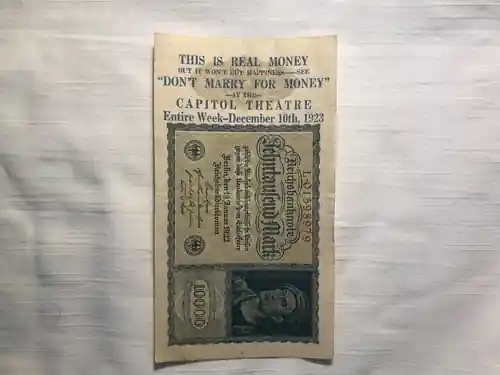
The supporting cast enriches the film’s texture. Christine Mayo delivers a nuanced performance as Marion, oscillating between vulnerability and resolve with a fluidity that keeps the audience perpetually guessing. Aileen Pringle and Rubye De Remer populate the social circles with a blend of elegance and subtle menace, their presence reminding viewers that the world of the affluent is rife with its own covert power struggles. House Peters and George Nichols provide comic relief in moments that could otherwise succumb to melodrama, their timing impeccable despite the absence of spoken jokes.
The film’s pacing is deliberate, allowing each character’s motivations to unfurl organically. The first act establishes Marion’s discontent through a series of lingering shots of her solitary figure in expansive, yet empty, rooms. The second act accelerates as Martin’s influence grows, punctuated by rapid cuts that mimic the frantic heartbeat of a woman teetering on the brink of scandal. The final act slows once more, granting space for Peter’s revelation to resonate. This rhythmic ebb and flow mirrors the emotional tides of the protagonists, a technique reminiscent of the narrative structure seen in Manhattan Madness, albeit with a more restrained tonal palette.
From a technical standpoint, the film’s editing is noteworthy. The intercutting of Marion’s private moments with Martin’s public manipulations creates a visual juxtaposition that heightens tension. The use of superimposition—particularly in the scene where Martin’s silhouette overlays Marion’s reflection in a mirror—serves as a metaphor for the invasive nature of his schemes. These visual tricks, while common in the silent era, are executed with a finesse that elevates the storytelling beyond mere spectacle.
The musical accompaniment, though not captured on the original print, is historically documented as a blend of jazz motifs and somber strings, a duality that mirrors the film’s thematic contrast between hedonistic temptation and moral rectitude. Modern screenings often pair the film with a live piano score that accentuates the emotional beats, reinforcing the timelessness of its core conflicts.
In terms of thematic resonance, Don't Marry for Money anticipates later cinematic explorations of marital disillusionment, such as those found in The Lady of the Photograph. The film interrogates the notion that financial security can substitute for emotional intimacy, a question that remains relevant in contemporary discourse. Moreover, the portrayal of a female protagonist who ultimately chooses agency—by rejecting Martin’s coercion and reaffirming her partnership with Peter—offers a progressive narrative thread for its time.
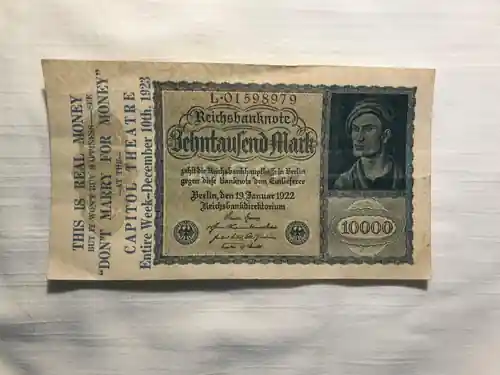
The film’s visual palette—anchored by the dark orange (#C2410C) of opulent furnishings, the bright yellow (#EAB308) of fleeting moments of passion, and the sea blue (#0E7490) of Martin’s sartorial choices—creates a chromatic language that guides the viewer’s emotional response. The background, presumed black, forces the white text of the intertitles and on‑screen captions to stand out, ensuring readability while preserving the atmospheric darkness that pervades the story.
Comparatively, while Caves and Coquettes offers a more whimsical take on romantic entanglements, Don't Marry for Money opts for a sober, almost clinical examination of its characters’ motives. The film’s restraint in melodrama distinguishes it from the overt sensationalism of Satanas, positioning it as a bridge between early silent melodramas and the more psychologically complex narratives of the late 1920s.
The climax—Peter’s quiet exposure of Martin’s blackmail—eschews the expected physical confrontation. Instead, the revelation unfolds through a series of meticulously staged tableaux: a ledger exposed, a hidden photograph revealed, and a whispered confession caught on a wind‑blown page. Marion’s reaction, a mixture of shock, shame, and eventual relief, is captured in a lingering close‑up that allows the audience to inhabit her emotional rebirth. This moment underscores the film’s central thesis: authenticity triumphs over artifice when truth is allowed to surface without force.
The denouement, though understated, provides a satisfying resolution. Marion’s return to Peter is not portrayed as a capitulation but as a conscious choice, a reclamation of agency after the disorienting allure of Martin’s world. The final scene—Marion and Peter walking hand‑in‑hand through a sun‑drenched garden, the camera pulling back to reveal the expanse of the estate—symbolizes a renewed partnership built on mutual respect rather than transactional convenience.
In assessing the film’s legacy, it is essential to recognize its influence on subsequent narratives that interrogate the intersection of wealth and love. The film’s nuanced portrayal of a woman navigating societal expectations prefigures later works such as When Fate Decides, where female protagonists grapple with similar dilemmas. Moreover, the film’s subtle critique of blackmail and exploitation resonates with modern thrillers that explore power dynamics within elite circles.
Overall, Don't Marry for Money stands as a testament to the silent era’s capacity for sophisticated storytelling. Its layered characters, deliberate pacing, and visual symbolism coalesce into a work that rewards repeated viewings. For cinephiles seeking a film that blends historical context with timeless emotional truths, this piece offers both aesthetic pleasure and intellectual stimulation. The interplay of dark orange, yellow, and sea blue not only enriches the visual experience but also serves as a chromatic echo of the film’s central conflicts—passion, greed, and redemption.
For those interested in further exploring the thematic terrain of early twentieth‑century cinema, titles such as Uncle Tom's Caboose and Hit or Miss provide complementary perspectives on the era’s social mores. Yet, few films capture the delicate balance between moral instruction and narrative intrigue as deftly as Don't Marry for Money, making it an essential viewing for anyone invested in the evolution of filmic storytelling.
IMDb —
1925
Community
Log in to comment.