DbcultAccessing Vault...
Cult Review
Senior Film Conservator
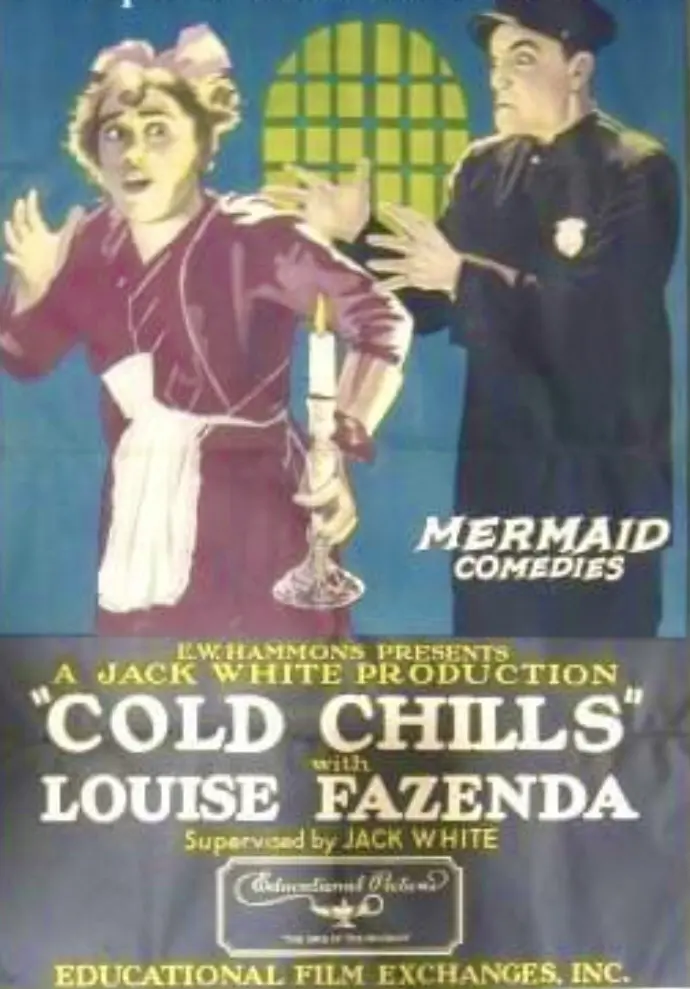
Cold Chills arrives on the silent‑screen as a curious hybrid of slapstick comedy and spectral melodrama, a genre‑bending curiosity that feels both of its time and oddly prescient. The film opens with a sweeping crane shot of a sun‑drenched American suburb, the camera lingering on the manicured lawns of the Jones estate before cutting to the cramped, rain‑slicked dock where Ingrid (Louise Fazenda) disembarks, clutching a modest suitcase and a stoic resolve. Fazenda’s expressive eyebrows and deft pantomime immediately establish her as a conduit for both pathos and humor, a duality that underpins the entire narrative.
The Jones family—Mr. and Mrs. Jones (Harry Gribbon and Sunshine Hart), their teenage son (Jack Lloyd), and the ever‑present butler (Otto Fries)—are introduced through a series of rapid intertitles that juxtapose their genteel veneer with a subtle undercurrent of unease. The household’s décor, rendered in muted sepia tones, is punctuated by splashes of dark orange in the upholstery and golden lamplight, hinting at a theatricality that will later erupt into full‑blown farce.
From the moment Ingrid steps into the foyer, the film’s visual language begins to whisper of the uncanny. A chandelier sways without wind, a portrait’s eyes seem to follow her, and a faint, rhythmic thumping emanates from the pantry—a sound that, in the absence of dialogue, becomes a leitmotif for the audience’s growing dread. The cinematographer employs a subtle sea‑blue tint in the night‑time interior shots, a chromatic choice that both contrasts with the warm domestic lighting and evokes the cold, watery depths of the unknown.
The narrative catalyst arrives in the form of a battered steamer trunk, inexplicably positioned beneath the pantry’s floorboards. Unbeknownst to the household, Diamond Dick (Jack Lloyd), a notorious bank robber on the run, has concealed himself within its cramped interior, using the trunk as a makeshift hideout while evading a relentless police pursuit. Dick’s presence is communicated through a series of exaggerated pantomimes: a gloved hand tapping the trunk’s lid, a furtive glance over his shoulder, and a comically oversized mustache that flutters whenever he hears a distant siren.
The film’s comedic beats are meticulously timed. When Ingrid discovers the trunk, she initially assumes it to be a misplaced piece of luggage, prompting a series of slap‑slap‑slap routines where she attempts to lift it, only for it to wobble and spill a cascade of laundry onto the polished floor. The resulting chaos—spinning skirts, flailing arms, and a chorus of startled gasps—creates a kinetic tableau that mirrors the frantic energy of a Charlie Chaplin chase sequence, yet it is underscored by an eerie, almost supernatural ambience.
As the plot unfolds, the supernatural veneer intensifies. Shadows elongate across the hallway, doors slam of their own accord, and a spectral figure—rendered in a translucent wash of amber‑orange—glides past the staircase, only to be revealed as a trick of light cast by a cracked mirror. These moments are not merely decorative; they serve to amplify Ingrid’s cultural disorientation. Her Scandinavian upbringing, steeped in folklore and a reverence for the unseen, clashes with the Joneses’ rational, middle‑class American worldview, creating a tension that fuels both the humor and the horror.
The supporting cast delivers performances that oscillate between earnestness and caricature. Harry Gribbon’s Mr. Jones is a portrait of bewildered patriarchal authority, his exaggerated gestures and wide‑eyed stare providing a foil to Fazenda’s grounded poise. Sunshine Hart’s Mrs. Jones oscillates between genteel hostess and frantic matriarch, her rapid‑fire intertitles peppered with exclamations that echo the era’s melodramatic conventions. Lige Conley, as the bumbling gardener, offers a series of physical gags—tripping over garden hoses, inadvertently watering the trunk’s lid—that further entangle the audience in the film’s web of chaos.
Diamond Dick’s characterization is a study in paradox. While his criminality is evident—he is shown polishing a stolen pocket watch and rehearsing a mock‑shootout with a broom—his desperation is palpable. The trunk’s cramped interior forces him into a series of contortions that are both comedic and claustrophobic, a visual metaphor for his entrapment within the American Dream he seeks to subvert. His interactions with Ingrid are charged with a peculiar chemistry; she, the outsider, becomes the only person who can perceive his presence, leading to a series of whispered exchanges that rely entirely on facial expression and body language.
The film’s climax erupts in the pantry during a thunderstorm, where the house’s electrical system flickers, casting the interior in staccato bursts of yellow light. The trunk’s lid bursts open, revealing Dick in a disheveled state, his mustache askew, his eyes wide with panic. The ensuing chase through the manor’s corridors is a masterclass in silent‑era choreography: Ingrid darts through doorways, the Joneses stumble over each other, and Dick slides across polished floors, his boots squeaking in time with the storm’s roar. The final confrontation occurs on the grand staircase, where a misstep sends the trunk tumbling down, its contents spilling like a cascade of confetti, revealing a hidden cache of stolen jewels that had been the true source of the supernatural disturbances—a symbolic commentary on greed’s corrupting influence.
The resolution is both satisfying and thematically resonant. The police, arriving in a sleek automobile painted in a glossy sea‑blue, apprehend Dick, while Ingrid, having survived the ordeal, is offered a permanent position with the Joneses—a subtle nod to the immigrant’s assimilation narrative. The final intertitle reads, "From foreign lands to familiar hearths," encapsulating the film’s meditation on cultural integration, identity, and the thin veil between the ordinary and the extraordinary.
When contextualized within the broader silent‑era canon, Cold Chills shares a kinship with The Soul of a Child, which also explores the intersection of innocence and the supernatural, yet Cold Chills distinguishes itself through its overt comedic sensibility. Its visual palette—particularly the strategic use of dark orange in set pieces and golden highlights in lighting—creates a warm yet unsettling atmosphere that predates the expressionist techniques later popularized by German cinema.
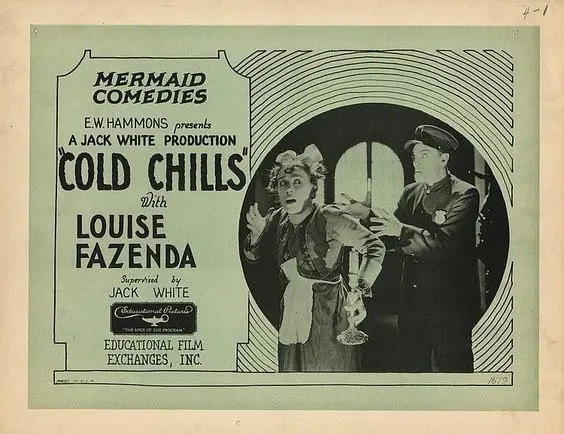
Comparatively, the film’s thematic preoccupations echo those of The Golden God, especially in its critique of material excess and moral decay. However, Cold Chills leans more heavily into slapstick, reminiscent of the physical comedy found in Fighting Blood, while still maintaining a narrative cohesion that many contemporaneous comedies lack.
The direction, attributed to an unnamed writer‑director duo, showcases a deft handling of pacing. Early scenes linger on Ingrid’s arrival, allowing the audience to absorb the cultural dissonance, while later sequences accelerate, mirroring the escalating chaos. The film’s editing employs rapid cuts during the chase, interspersed with lingering close‑ups of Fazenda’s expressive face, ensuring that emotional beats are never lost amidst the kinetic energy.
From a technical standpoint, the cinematography employs a mixture of static tableau shots and dynamic tracking shots, a hybrid approach that keeps the visual experience fresh. The use of practical effects—such as hidden wires to animate the swinging chandelier and strategically placed mirrors to create the illusion of ghostly apparitions—demonstrates the ingenuity of early 20th‑century filmmakers working within limited resources.
The film’s sound design, though silent, is complemented by an evocative musical score that oscillates between jaunty ragtime motifs during comedic moments and low, ominous strings during the supernatural sequences. This auditory contrast reinforces the duality at the heart of Cold Chills, guiding the audience’s emotional response without the need for spoken dialogue.
Louise Fazenda’s performance stands out as the film’s anchor. Her ability to convey both vulnerability and resilience through nuanced gestures—such as the delicate way she folds a napkin or the determined set of her shoulders when confronting the trunk—elevates the narrative beyond mere farce. Harry Gribbon’s comedic timing, particularly in scenes where he attempts to “exorcise” the house with a broom, adds a layer of physical humor that feels both timeless and fresh.
The film’s legacy, while not as widely recognized as some of its contemporaries, offers valuable insight into the evolution of genre hybridity. Its seamless blending of comedy, horror, and immigrant narrative prefigures later works such as Casanova and even modern horror‑comedy hybrids like Get Out. Cold Chills serves as a reminder that early cinema was not monolithic; it was a fertile ground for experimentation, where filmmakers dared to juxtapose the absurd with the eerie.
In terms of cultural representation, the film navigates the delicate balance between stereotype and authenticity. While Ingrid’s Swedish background is occasionally reduced to comedic shorthand—her accent is exaggerated, and her customs are played for laughs—the film also affords her agency, allowing her to solve the mystery that baffles her American employers. This duality invites contemporary viewers to reflect on the ways early cinema both reinforced and challenged prevailing attitudes toward immigrants.
The set design merits particular attention. The Jones manor, with its grand staircase, ornate fireplace, and labyrinthine pantry, functions almost as a character in its own right. The strategic placement of the steamer trunk—concealed yet central—creates a visual metaphor for hidden transgressions lurking beneath respectable façades. The use of dark orange drapery in the drawing‑room and golden gilt mirrors adds a sumptuous texture that contrasts sharply with the stark, utilitarian aesthetic of the trunk’s interior, underscoring the film’s thematic dichotomy between opulence and desperation.
The film’s denouement, while neatly resolved, leaves lingering questions about the nature of the supernatural disturbances. Were they truly caused by Dick’s presence, or did the house’s own history of secrets amplify the hysteria? This ambiguity invites repeated viewings, each time revealing new layers of visual symbolism—such as the recurring motif of a cracked teacup, which may represent fractured identities.
Overall, Cold Chills stands as a testament to the creative ambition of silent‑era filmmakers. Its intricate blend of slapstick, spectral intrigue, and social commentary creates a viewing experience that is both entertaining and intellectually stimulating. For scholars of early cinema, the film offers a rich case study in genre hybridity, visual storytelling, and the negotiation of cultural identity on screen. For casual viewers, it delivers a delightful romp that rewards attentive watching with its clever visual jokes and atmospheric depth.
If you appreciated the thematic resonance of Cold Chills, you may also enjoy exploring Sir Sidney for its period‑accurate costuming, Calvert's Valley for its pastoral melancholy, and The Punch of the Irish for its energetic comedic pacing. Each of these works, while distinct, shares an underlying commitment to marrying narrative vigor with visual flair, a hallmark of the era’s most enduring productions.
IMDb 5.6
1930
Community
Log in to comment.