DbcultAccessing Vault...
Cult Review
Senior Film Conservator
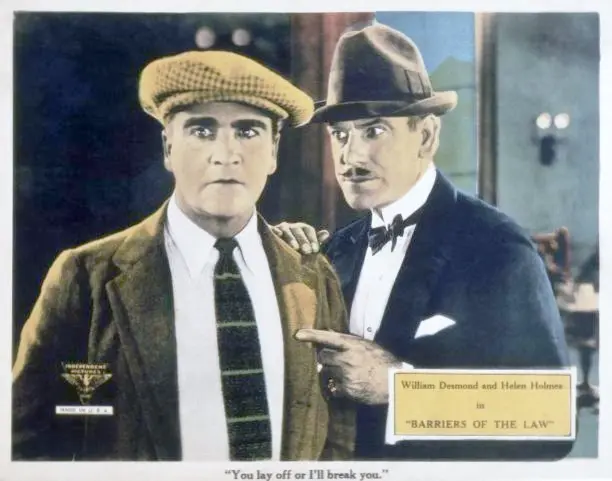
Albert J. Smith stars as the enigmatic and ruthless leader of a bootlegging gang, whose complex relationship with Helen Holmes as a former member of the gang adds depth to the narrative. The film opens with Smith's gang refusing to aid a woman, played by Norma Wills, who appeals for help after her father is arrested. Her decision to leave the gang is swiftly followed by a harrowing situation where she is confined to a brothel, a stark contrast to her past as a free spirit.
The narrative takes a dramatic turn when she manages to escape and seeks refuge in an apartment, only to discover that her sanctuary is the residence of J.P. McGowan, who turns out to be the chief of the government agents pursuing her former gang. The ensuing complications are a testament to the intricate web of allegiances and betrayals that the film masterfully constructs. William Desmond's portrayal of the chief adds a layer of menace and intrigue to the story, heightening the tension.
The screenplay by Travers Vale and William Berke is a meticulously crafted piece that seamlessly blends realism with the stylized elements of the silent film era. The dialogue, though sparse, is deliberately chosen to enhance the mood and underscore the gravity of the situation. The use of silent film techniques, such as expressive facial gestures and body language, is particularly effective in conveying the characters' emotions and the unfolding drama.
One of the most striking aspects of 'Barriers of the Law' is its exploration of the blurred lines between right and wrong. The protagonist's journey is a poignant reflection on the challenges of adhering to one's principles in the face of overwhelming pressure. The film challenges viewers to question their own moral compasses, raising pertinent ethical questions that resonate even in contemporary contexts. The character of the chief, with his dual identity as a law enforcer and a former gang member, serves as a powerful commentary on the systemic issues that underpin such conflicts.
The setting of the film, a mix of gritty urban landscapes and the opulent confines of the brothel, provides a rich visual tapestry that enhances the storytelling. The cinematography, while simplistic by today's standards, effectively captures the mood and atmosphere of the film. The use of shadows and light to convey tension and the juxtaposition of the protagonist's past freedom with her current constrained state are particularly effective.
Comparatively, 'Barriers of the Law' shares thematic similarities with 'The Morals of Hilda' and 'Tainted Money', both of which delve into the darker aspects of human morality. However, 'Barriers of the Law' offers a more nuanced exploration of these themes, with a greater focus on the psychological and emotional turmoil of its protagonist. The film also resonates with 'Sacred Silence', another silent drama that grapples with the moral implications of illegal activities.
The performances are uniformly strong, with Albert J. Smith delivering a compelling portrayal of the gang leader. Helen Holmes' performance as the protagonist is particularly noteworthy, capturing the range of emotions from vulnerability to determination with a subtle yet powerful presence. The supporting cast, including J.P. McGowan and Marguerite Clayton, adds depth to the narrative, contributing to the overall sense of realism and authenticity.
While the plot is tightly constructed, the film occasionally stumbles in its pacing, with some scenes feeling slightly drawn out. However, this is a minor quibble in an otherwise outstanding narrative. The use of intertitles is sparing but effective, providing crucial context and emotional cues. The film's score, though not explicitly mentioned, likely enhances the emotional impact of key scenes, further immersing the audience in the story.
In conclusion, 'Barriers of the Law' is a must-watch for anyone interested in silent films and their exploration of complex moral and legal themes. The film's intricate plot, strong performances, and thoughtful exploration of ethical dilemmas make it a standout in its genre. It is a poignant reminder of the enduring relevance of these themes in modern society, compelling viewers to reflect on their own moral choices.
IMDb —
1920
Community
Log in to comment.