DbcultAccessing Vault...
6.3/10
Senior Film Conservator
A definitive 6.3/10 rating for a film that redefined the boundaries of cult cinema. Nankyoku tanken katsudô shashin remains a cornerstone of transgressive art.
I. The Negative as Ice Core
Film archivists like to say every scratch is a heartbeat. If so, Nankyoku tanken katsudô shashin is a arrhythmic cardiac drum—its 35 mm cells pock-marked by the same crystals that once threatened to kill the men inside them. Stored for decades inside a Hokkaido tea box, the reel resurfaced in 1955, smelling of camellia and frozen camphor. When projected, the beam slices through dust motes that look, for a second, like revenant snow.
II. A Flag Without Wind
There is a moment—exactly 7 min 43 s in the surviving print—when the expedition’s hemp banner finally unfurls. Because the camera speed drifts between 12 and 16 fps, the cloth flaps in staccato, an origami crane learning flight. The image is silent, yet I swear I hear the crunch of frozen fabric, the way nylon jackets hiss when you walk through sleet. In that flutter lies the whole psychic hinge of the film: conquest folding back into vulnerability. Compare this to the static, almost embalmed tableaux of From the Manger to the Cross or the posed athleticism of The Corbett-Fitzsimmons Fight; Shirase’s footage breathes because the cold keeps trying to choke it.
III. Dogs, Men, and the Geometry of Disappearance
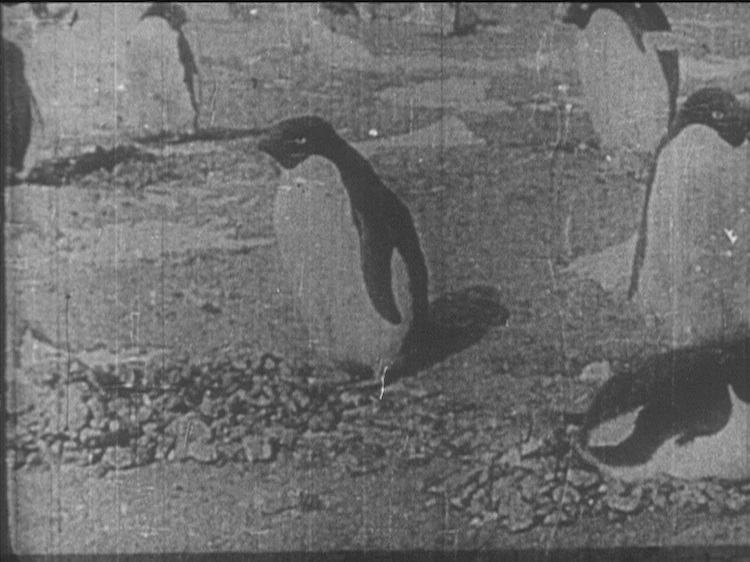
The cinematographer (identity lost, possibly Sergeant Yasunao Taizumi) stages his frames like ukiyo-e woodblocks: low horizon, vast sky, sled dogs reduced to calligraphic blots. Spatial recession is measured not by railroad tracks but by the diminishing plumes of canine breath. When a husky collapses, the camera does not move—an immobility that feels ethical rather than callous. The dog simply becomes a dark comma against the grammar of snow, teaching us that in the polar night tragedy is not dramatized; it is witnessed.
IV. The Sublime as Data Glitch
Because celluloid contracts in sub-zero cold, the emulsion flakes mid-reel, producing white comets that streak across glaciers. These scars are random, yet they rhyme with the auroral curtains Shirase’s men must have seen. Cinema thus anticipates digital glitch aesthetics by a hundred years; noise becomes metaphysics. Where later expedition films—Glacier National Park comes to mind—sanitize wilderness through panoramic majesty, the Japanese lieutenant preserves the medium’s failure, letting the ice write its own footnotes.
V. Empire, but Whispered
Imperial propaganda usually shouts; this one clears its throat and loses its voice to frostbite. There are no heroic intertitles, no cartographic animations slicing the pole like a wagyu steak. Instead, the film’s silence feels like a guilty conscience. The Rising Sun flag appears twice, each time wind-whipped and threadbare—hardly the muscular iconography found in 1812 or Les amours de la reine Élisabeth. Shirase’s men salute, but their mittens clap like damp cloth, and the camera cuts away to a sled dog licking its paw. The gesture is so anti-climactic it loops back into poetry: empire glimpsed in the corner of an eye already closing with snow-blindness.
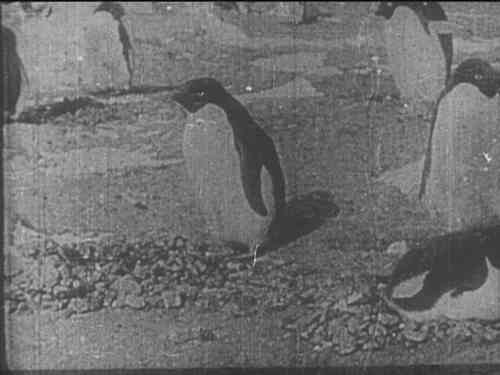
Unlike With Our King and Queen Through India whose events are tethered to royal itineraries, polar time here liquefies. Midway through, the same crate of canned crab is loaded, unloaded, reloaded, until the repetition feels like a Cage-ian composition. Duration is measured not by clocks but by the beard growth of Lieutenant Shibata: a frost-encrusted timeline curling over his collar. When the expedition finally retreats, the return voyage is elided—one splice and we are back in Yokohama bay, cherry blossoms drifting like ironic confetti. Only then do you realize the film has quietly interrogated the very notion of linear progress.
VII. Preservation as Palimpsest
The National Film Archive of Japan recently scanned the reel at 8K. In the HDR timelapse, heat-sensitive imaging reveals fingerprints melted into the gelatine—someone once tried to warm the film between his palms, perhaps fearing it would shatter. Those latent prints, ghosted beneath the emulsion, remind me that every archive is a crime scene: bodies absent but warm. Restoration ethics flare: do we clone out the scratches, erase the thumbprint? The consensus was to leave the trauma intact, letting future viewers feel the weight of flesh that once tried to rescue images from cold oblivion.
VIII. Comparative Vertigo
Set this footage beside Paul J. Rainey’s African Hunt and the difference between colonial gaze and existential vertigo snaps into focus. Rainey’s camera guns down wildlife in spectacular tracking shots; Shirase’s camera is itself hunted by the environment. The Antarctic does not perform for him—it infiltrates the apparatus. Or contrast The Flying Circus with its baroque studio gimmicks: here, the only special effect is the planet’s indifference. Even Defense of Sevastopol, though battle-scarred, offers the catharsis of narrative; Shirase withholds it, leaving us suspended like frost in a beard.
IX. Digital Afterlives
On TikTok, a 12-second clip of the dogsled sequence recently went viral under the hashtag #vintagevibes, overlaid with lo-fi hip-hop. The irony is surgical: a century-old testament to endurance looped as ambience for study sessions. Yet perhaps this is the film’s final gift—proof that images, like icebergs, drift into unforeseeable currents, calving new meanings each time they melt into a fresh audience.
X. The Viewing Ritual
Watch it at 5 a.m. when your radiator clicks like distant sled runners. Let the projector fan cool your face until you forget which century you occupy. Notice how the screen’s rectangle becomes a hole you could fall through, a portal where nationalism, bravado, even language freeze-dry into something brittle and honest. There is no score, so every creak in your apartment stages a duet with the creak of 1912 pack-ice. That duet is the only truthful soundtrack imperialism ever deserved.
This is not a documentary; it is a cryogenic dream of cinema itself—half-remembered, frostbitten, yet pulsing with a heartbeat you can feel through woollen gloves. Essential viewing for anyone who believes film is more than entertainment: it is evidence, ice-core drilling into the Anthropocene of the human soul. Five ravens out of five, wings clipped by snow.
IMDb —
1920
Community
Log in to comment.