DbcultAccessing Vault...
7.6/10
Senior Film Conservator
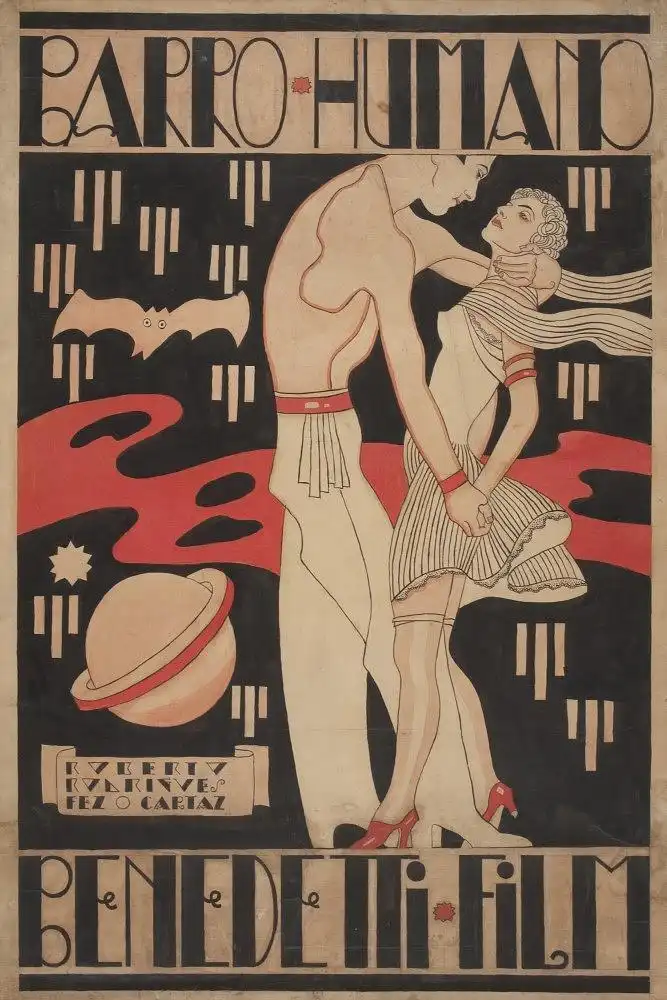
A definitive 7.6/10 rating for a film that redefined the boundaries of cult cinema. Barro Humano remains a cornerstone of transgressive art.
So, I finally sat down with Barro Humano. If you are looking for something fast or flashy, just stop right here and go watch something else. 🎞️
This is a 1929 silent film from Brazil. It is slow. It is grainy. It is very old-fashioned.
But if you are the kind of person who likes digging through film history like a thrift store bin, you might actually get a kick out of this. It feels like looking at a ghost of Rio de Janeiro from a hundred years ago.
The movie is basically about a guy named Carlos. He is trying to make it in the big city and ends up getting caught in the drama of the upper class.
The title translates to 'Human Mud.' Which is a bit of a mood, honestly. 🤨
It was directed by Adhemar Gonzaga. He was the guy who started Cinédia, which was a huge deal for Brazilian movies back then.
You can tell he was trying really hard to make this look like the big Hollywood movies of the time. Sometimes it works, and sometimes it looks a bit... let's say, 'charming' in its effort.
There is this one scene where they are at a big party. Everyone is dressed up and trying to look very sophisticated and rich.
But the way they stand is so stiff. It is like they are all afraid to move and ruin their hair. 💇♂️
Carlos, played by Carlos Modesto, has this very intense way of staring. He looks like he is trying to burn a hole through the other actors with his eyes.
One reaction shot of him just lingers. And lingers. And lingers.
I actually thought the video had frozen for a second. But no, he was just really feeling the moment, I guess.
The cinematography is by Edgar Brasil. For 1929, some of the lighting is actually pretty cool.
There are these shots in the darker rooms where the shadows hit the walls in a way that feels almost like a horror movie. It is way more moody than I expected from a social drama.
It reminded me a little bit of the vibe in The Woman and the Beast. Just that raw, early-cinema energy where they were still figuring out what the camera could do.
The plot gets a bit messy in the middle. There are a lot of characters who show up, look important, and then just kind of vanish.
I forgot who half of them were by the one-hour mark. 🤷♂️
But the main girl, played by Eva Nil, is great. She has this very natural screen presence that makes everyone else look like they are overacting.
There is a specific moment where she is sitting by a window. The light hits her face just right, and for a second, you forget you are watching a scratchy old film from a century ago.
It feels very real and quiet. Those are the parts of the movie that actually stuck with me.
The rest of it can be a bit of a slog. Especially the title cards.
Some of the text stays on the screen for way too long. I could have read the sentence, made a sandwich, and come back before the next shot started.
But I guess people read slower in 1929? Or maybe they just wanted us to really think about the words.
The movie tries to be a big statement about how society ruins people. It’s not subtle. At all.
It treats the 'mud' metaphor like a sledgehammer. You get it within the first ten minutes, but it keeps reminding you.
Still, there is something about the way it's filmed that feels very honest. It doesn't have that polished, fake look that a lot of modern period pieces have.
When you see a street scene, it's a real street. Those are real people in the background who probably had no idea they were being filmed for history.
It made me think of Cleopatra or those other massive silents. Even though this is smaller, it has that same sense of trying to capture a whole world on a tiny bit of flammable film.
The version I saw had some bits missing, which is common for these old Brazilian flicks. Parts of the story just jump forward without explaining much.
Honestly, it didn't bother me that much. The plot isn't exactly a puzzle; you can fill in the gaps pretty easily.
I noticed a weird detail in one of the office scenes. There is a calendar on the wall that is clearly from the wrong month for the scene's timeline.
I don't know why I saw that. It's totally unimportant, but it made me laugh. 😂
The music in the restoration I watched was a bit hit-or-miss. Sometimes it matched the mood, and other times it felt like it was playing for a completely different movie.
But that's the risk you take with silents. The experience depends so much on the score someone picked out decades later.
Is it a masterpiece? Probably not. It's a bit too clunky for that.
But it is a fascinating piece of work. It shows a country trying to find its own voice in a medium that was still pretty new.
I wouldn't recommend this for a 'movie night' with friends unless your friends are film nerds. They will probably fall asleep or start making fun of the dramatic hand gestures.
But if you are alone on a rainy Tuesday and want to travel back in time, give it a go. It has a weirdly haunting quality that stays with you after you turn it off.
The ending is... well, it's an ending. It feels a bit rushed, like they ran out of film or money.
Or maybe they just decided they had said enough about the mud. 🚶♂️
Either way, I'm glad I watched it. It’s not every day you get to see the literal foundations of a whole country's cinema.
It’s definitely better than some of the stuff from that era, like The Marriage Market which just feels like a long chore.
This one has some actual soul behind the camera. Even if the camera was a bit shaky sometimes.
Anyway, it's a piece of history. Take it for what it is.
IMDb —
1927
Community
Log in to comment.