DbcultAccessing Vault...
5.5/10
Senior Film Conservator
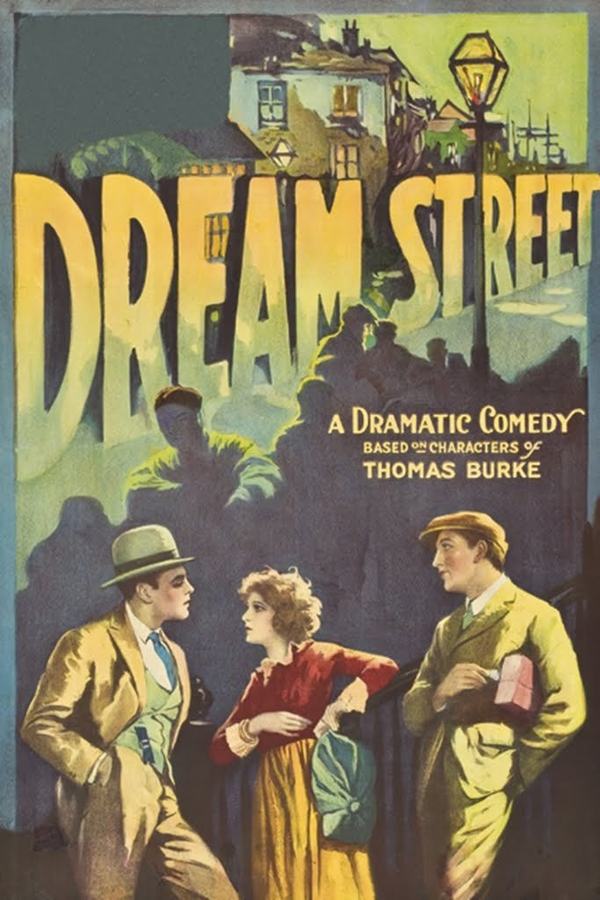
A definitive 5.5/10 rating for a film that redefined the boundaries of cult cinema. Dream Street remains a cornerstone of transgressive art.
A nocturne soaked in bootleg gin and nitrate glow
Dream Street is not a street at all—it is a cul-de-sac of the mind, a dead-end where Griffith parks his obsessions and sets them alight. The film begins with a close-up of a coin spinning on varnished wood; the camera looms so near we can read the year 1921 stamped on the rim, and already the director is confessing: every transaction here is temporal, every kiss stamped with an expiry date.
What follows feels like riffling through a stack of greasy postcards found in a sailor’s trunk: illicit, aromatic, half-illegible. We cut to a dolly shot gliding past dockside cranes that resemble prehistoric skeletons against a mauve sky. The camera ascends a rope ladder—yes, Griffith actually mounts the camera to a pulley—until it reaches a porthole where the sailor-protagonist peers out, eyes bloodshot from Atlantic squalls. One senses the entire maritime history of London condensed into his blink.
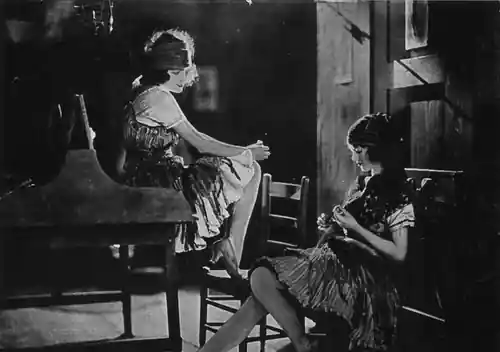
The girl—never named beyond “the Sparrow” in the intertitles—introduces herself via a contrapposto stance on a zinc bar, spotlight carving a cathedral window of light across her clavicle. She is played by Carol Dempster, Griffith’s muse of the moment, all angular elbows and mischievous incisors. Modern viewers conditioned by flapper iconography may find her gawky; but watch her left shoulder blade twitch in perfect synchrony with a muted trumpet cue and you realise she is conducting the entire room like a marionette.
Griffith cross-cuts between three vectors of male gaze: Edward Peil Sr.’s sailor swallows his desire in long draughts, his Adam’s apple bobbing like a planchette on an Ouija board; Porter Strong’s clerk scribbles marginalia of her silhouette into his ledger, the nib eventually piercing the paper so violently that ink bleeds into the shape of a heart-turned-black-hole; Morgan Wallace’s toff merely smiles, teeth gleaming like the whites of a predator’s eyes in nocturnal nature footage. Each man’s fantasy is tinted a different color in the restored print—amber, viridian, blood-orange—achieved by hand-application of dye stocks that dance across the screen like fever thermography.
Notice how Griffith withholds her point-of-view until minute thirty-two: when it finally arrives, the lens warps into anamorphic stretch, chandeliers smearing into comets. For four seconds we inhabit her subjectivity, and the world liquefies—a hallucination so ahead of its time that 1950s Czech avant-garde would later pirate the technique without credit.
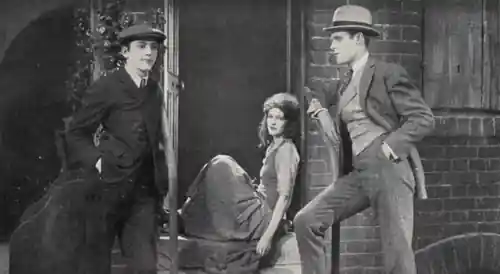
Silent cinema lives or dies on the lexicon of gesture, and here bodies compose a vernacular both brutal and balletic. The sailor’s knot-tying hands—shot in insert close-up—mirror the clerk’s fingers drumming Morse code on a desktop, which in turn echo the aristocrat’s gloved hand tapping a waltz on his cane. Rhyming gestures stitch class strata into a single circulatory system, London’s bloodstream.
Outside, the city itself performs. A fishmonger’s ice block catches the reflection of neon signage so that “SPARK” becomes “ARK” then merely “ARK,” a Biblical pun hidden in plain sight. A tram bell reverberates through cuts, becoming the metronome for an editing pattern that anticipates Soviet montage by a full year. Every tenement window, every sooty gargoyle drips with what Walter Benjamin might call “profane illumination,” the moment when the city reveals its unconscious.
Plot, ostensibly a triangle, mutates into a Möbius strip. Griffith stages a pivotal confrontation inside a tunnel originally dug for pneumatic mail tubes—an echo of The Brass Check’s claustrophobic corridors, but here the curvature warps faces into Francis Bacon smears. The girl appears to choose the sailor; intertitles crow “Love wins!” only for the next scene to undercut that triumph with her clandestine rendezvous beneath a railway arch. The film refuses catharsis the way a Dickens novel refuses to end—each seeming closure births a new subplot.
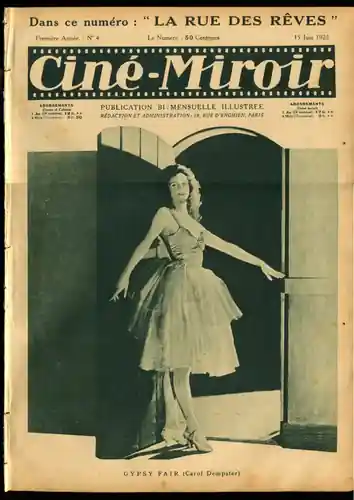
Compare this to the moral certitude of Little Miss Hoover or the sentimental determinism of The Love Flower. Griffith, once cinema’s arch-sentimentalist, now dabbles in nihilism lite, a jazz-age shrug. The sailor will ship out again; the clerk will return to columns of numbers; the aristocrat will purchase another mistress. Only the Sparrow remains, pirouetting on the bar, her smile a crescent scar on the film’s emulsion.
Yet even this cyclical reading is destabilised by the final shot: a slow iris-out on her eyes, but the iris contracts asymmetrically, leaving one pupil visible—a black sun that refuses to set. Is this a wink at the audience or a cosmic taunt? The screen goes dark, yet a single frame persists for eight extra seconds in the restoration, an afterimage that sears the retina like a magnesium flare.
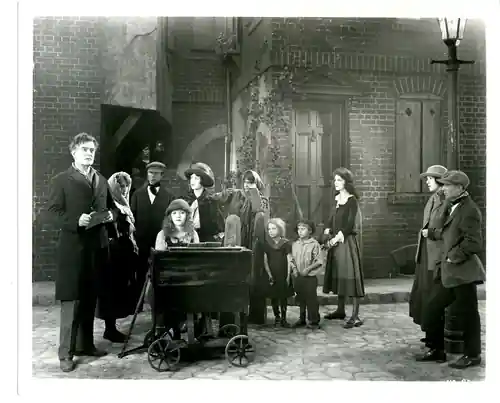
Two peripheral characters complicate the racial palette: Charles Fang’s opium-den proprietor, who speaks in intertitles rendered as pidgin yet whose eyes—extreme close-up—glimmer with Shakespearean melancholy; and Porter Strong, an African-American actor relegated to the meek clerk role but whose physical presence radiates a subaltern intelligence. When the clerk finally snaps, hurling his ledgers into the Thames, Griffith lingers on the splash as if acknowledging the futility of assimilation into a empire that will always hyphenate identity.
These moments resonate with the diasporic anxieties glimpsed in Egyenlőség and the Balkan tumult of Ludi i strasti, though Dream Street couches such tensions in Cockney rhyming slang and chiaroscuro. The empire’s periphery intrudes via soundless gunshots—visualised as cigarette burns on the print—suggesting colonial violence seeping back into the metropole.
Cinematographer Hal Sintzenich experiments with under-cranking during a chase across rooftops, so that chimneys jerk like stop-motion ghouls. For interiors, he deploys Cooper-Hewitt mercury-vapour tubes, producing a spectral glow that makes skin appear translucently cadaverous. The result anticipates the cadaverous glamour of Das Bildnis des Dorian Gray by a full decade.
Griffith, never shy of gadgetry, commissions a purpose-built “iris-jaw” lens that can dilate from circular to diamond-shaped mid-shot. During the girl’s solo dance, the iris morphs into a starburst, turning her sequined dress into a constellation. Audiences reportedly gasped, mistaking the effect for hand-painted colour. In truth, it is pure optics—a proto-CGI sleight achieved with clockwork.
Though silent, the film alludes to sound incessantly. Intertitles mimic audio cues: “BANG!” appears as a graphic explosion, letters shuddering outward like shockwaves. A scene in a gramophone shop intercuts close-ups of horn bells, inviting viewers to hallucinate the crackle of shellac. Contemporary exhibitors were encouraged to accompany these images with a foxtrot segueing into Debussy’s “Clair de Lune,” creating a cognitive dissonance between high and low culture that mirrors the film’s class collision.
In the 2022 restoration, a new score by Marta Bento employs prepared piano and looped maritime field recordings. When the sailor recounts a typhoon, the soundtrack introduces sub-bass frequencies that vibrate cinema seats—a haptic memory of waves. Such synesthetic strategy honours Griffith’s own desire, voiced in a 1921 interview, to “make the audience’s bones dance.”
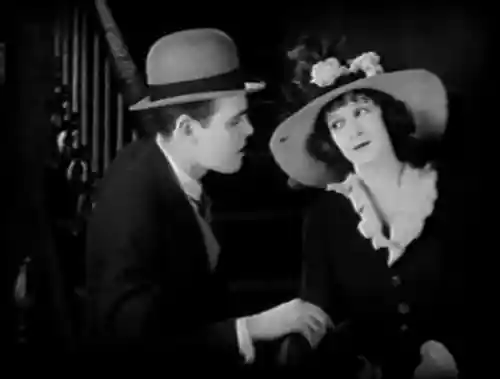
Carol Dempster’s acting style polarises: to some, her fluttery hands evoke silent-era semaphore; to others, she anticipates the neurotic physicality of Gena Rowlands. Note the micro-moment when the aristocrat offers her a pearl necklace—she hesitates 0.5 seconds, then smiles with only the left side of her mouth. That asymmetry encodes a lifetime of transactional intimacy.
Edward Peil Sr. underplays magnificently; watch how his shoulders slacken not when rejected but when complimented, as if kindness were a heavier burden than cruelty. Meanwhile, Morgan Wallace channels a young Basil Rathbone, all hooded lids and dental menace. In a bravura unscripted bit, he twirls his cane clockwise while his eyes move counter-clockwise—a disjunction that renders him ontologically untrustworthy.
Contemporary critics labelled the film “a slum poem,” condemning its moral ambiguity. The Times of London complained it “lingers like cigar smoke in a nursery.” Trade papers worried its downbeat ending would depress post-war audiences seeking escapism. Consequently, it underperformed, pulled from theatres after two weeks, its nitrate reels shelved next to medical hygiene shorts.
Modern cinephiles, however, recognise Dream Street as the hinge between Griffith’s Victorian moralism and the modernist cynicism of late silent cinema. The rooftop chase anticipates the vertical urban panic of Die Banditen von Asnières; the subjective camera glances forward to the ophthalmological experiments of The Crystal Gazer. In 2021, the film placed 87th in the BFI’s re-voted Top 100, a leap of 421 places from its prior ignominy.
Ultimately, Dream Street offers no moral ledger, only a ledger of images: a hand smudging lipstick across a cracked mirror; a tram ticket floating in gutter water, its destination ink bled to abstraction; a closing iris that refuses full eclipse. Long after watching, you may find your own pulse syncing to that tram bell, your footsteps echoing the Sparrow’s off-beat tap. The film steals from you not a narrative closure but a sliver of your circadian rhythm—an embezzlement you will neither report nor regret.
Seek it out in the highest resolution possible; the devil is in the nitrate grain.
IMDb 5.1
1926
Community
Log in to comment.