DbcultAccessing Vault...
6/10
Senior Film Conservator
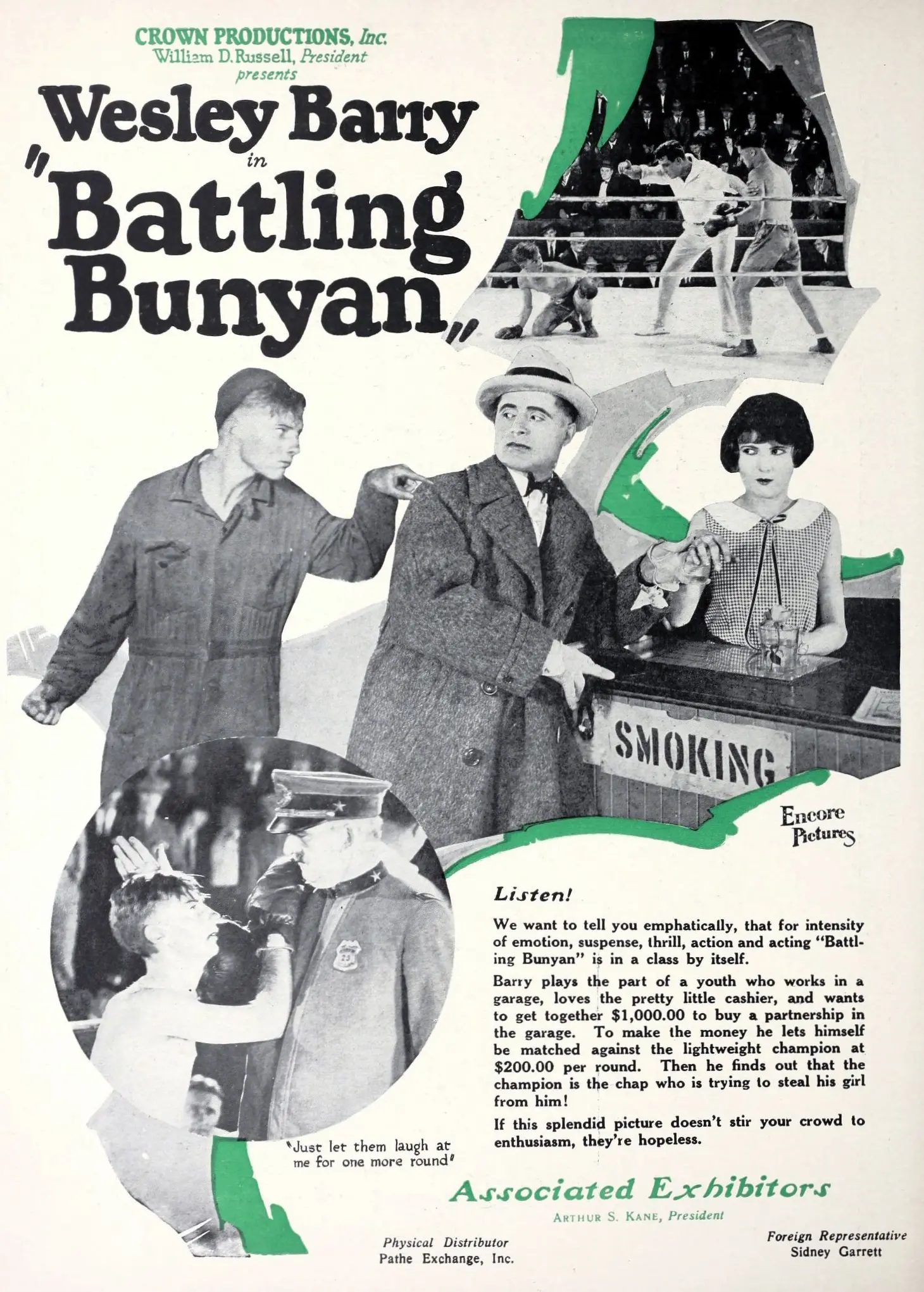
A definitive 6/10 rating for a film that redefined the boundaries of cult cinema. Battling Bunyan remains a cornerstone of transgressive art.
In the bustling, often unforgiving landscape of early 20th-century America, where opportunity often danced tantalizingly out of reach for the common man, the silent film 'Battling Bunyan' emerges as a fascinating cinematic artifact. Released in 1923, this picture delves into a narrative premise as simple as it is audacious: a young man, utterly devoid of athletic grace or pugilistic acumen, decides to don boxing gloves to secure a future. It’s a premise that teeters precariously between slapstick absurdity and genuine pathos, a testament to the era’s fascination with the underdog narrative and the boundless possibilities of physical comedy.
The central figure, portrayed with an endearing blend of naiveté and earnest desperation by Harry Mann, is a man whose aspirations are humble yet profound: a partnership in an auto-repair business. This isn't a grand, sweeping ambition for world domination, but rather the quintessential American dream of self-sufficiency, of owning a piece of the burgeoning industrial landscape. The rub, however, is a familiar one: a lack of capital. This financial impediment, a common catalyst in countless narratives, here propels our hero down an entirely unexpected, and frankly, ill-advised path. To raise the requisite funds, he plunges headfirst into the brutal world of professional boxing, a domain for which he possesses precisely zero qualifications. This fundamental mismatch between ambition and capability forms the comedic and dramatic backbone of the entire film.
What makes 'Battling Bunyan' particularly compelling is its reliance on the visual lexicon of silent cinema to convey both the physical humor and the underlying emotional stakes. The writers, Raymond Leslie Goldman, Jefferson Moffitt, and Ford Beebe, crafted a scenario ripe for visual gags and exaggerated expressions. Mann’s character, as he fumbles through training, attempting to mimic the seasoned pros, provides a rich vein of slapstick. His awkward stances, misjudged punches, and inevitable tumbles are not merely funny; they underscore the sheer improbability of his endeavor. The audience isn't just laughing at his physical ineptitude; they're empathizing with his desperate plight, even as they anticipate his next comical misstep.
The film masterfully employs intertitles not just for dialogue, but for narrative exposition and comedic punctuation, guiding the viewer through the escalating series of challenges our hero faces. The pacing is crucial here; silent comedies often thrived on rapid-fire visual gags interspersed with moments of character development. In 'Battling Bunyan', the slow, agonizing realization of the protagonist's lack of skill is balanced by the quick cuts of his training montages, often culminating in humorous failure. This rhythmic interplay keeps the audience engaged, constantly oscillating between concern for his well-being and amusement at his predicament.
The ensemble cast, featuring names like Al Kaufman, Pat Kemp, Wesley Barry, Jackie Fields, John Ralesco, Landers Stevens, Molly Malone, Frank Campeau, and Chester Conklin, plays a crucial role in bringing this world to life. Harry Mann, as the titular 'Bunyan,' carries the film with his expressive physicality. His wide-eyed innocence, coupled with moments of genuine terror in the ring, makes him a highly sympathetic figure. He isn't a natural comedian in the mold of a Chaplin or a Keaton, but his everyman quality makes his struggle feel more relatable, more grounded.
The supporting players often embody the archetypes necessary for this kind of narrative. Molly Malone, likely playing the love interest or a supportive figure, would have provided the emotional anchor, her concern for Bunyan’s safety contrasting with his reckless ambition. Veteran character actors like Frank Campeau and Chester
IMDb 2.9
1935
Community
Log in to comment.