DbcultAccessing Vault...
Cult Review
Senior Film Conservator
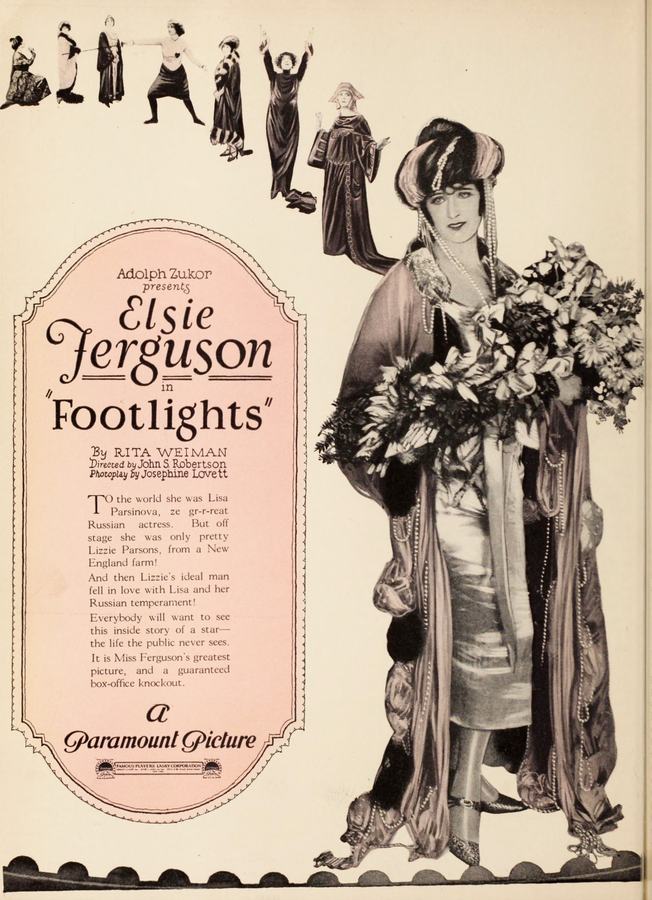
Footlights: A Dance of Shadows and Illusion
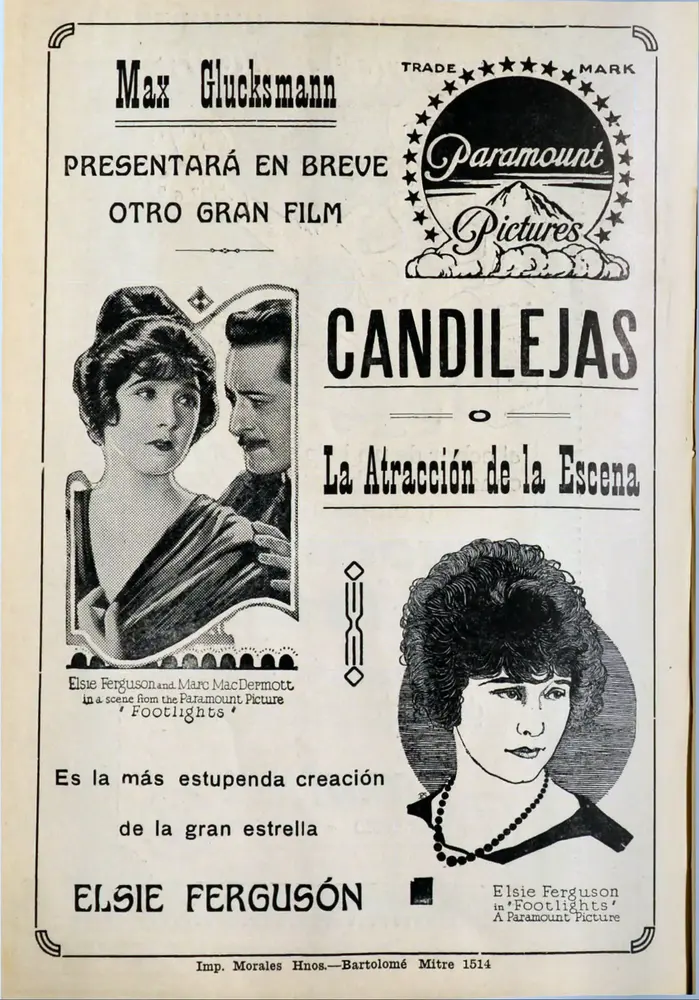
The 1920s film Footlights unfolds like a Russian nesting doll, its layers peeling away to reveal the unsettling core of identity beneath performative artifice. Starring Marc McDermott as the earnest small-town suitor and Octavia Handworth as the conflicted Lizzie Parsons—reborn as the enigmatic Lisa Parsinova—it’s a narrative that thrives on chiaroscuro contrasts. The film opens with Lisa, luminous in a glittering stage costume, her movements a calculated ballet of exoticism, before dissolving into a grainy black-and-white sequence of Lizzie scrubbing floors in her mother’s parlor. This visual dialectic sets the tone for a story where the line between art and life is as thin as the gauze of a theatrical curtain.
Thematic Resonance and Cinematic Craft
Josephine Lovett and Rita Weiman’s screenplay is a masterclass in subtext, weaving motifs of mirrors, masks, and mirrors-into-masks. Consider the pivotal scene where Lizzie, now Lisa, rehearses a monologue for a Broadway-bound play. The camera lingers on her reflection in a cracked mirror—a metaphor for her fractured self—while the sound of a train whistle echoes in the distance. It’s a haunting auditory cue, evoking the inescapability of her past. The editing, abrupt and jarring, mirrors her internal dissonance, a technique that recalls the fragmented narratives of Olli's Apprenticeship, though Footlights retains a more lyrical sensibility.
Performances That Transcend the Screen
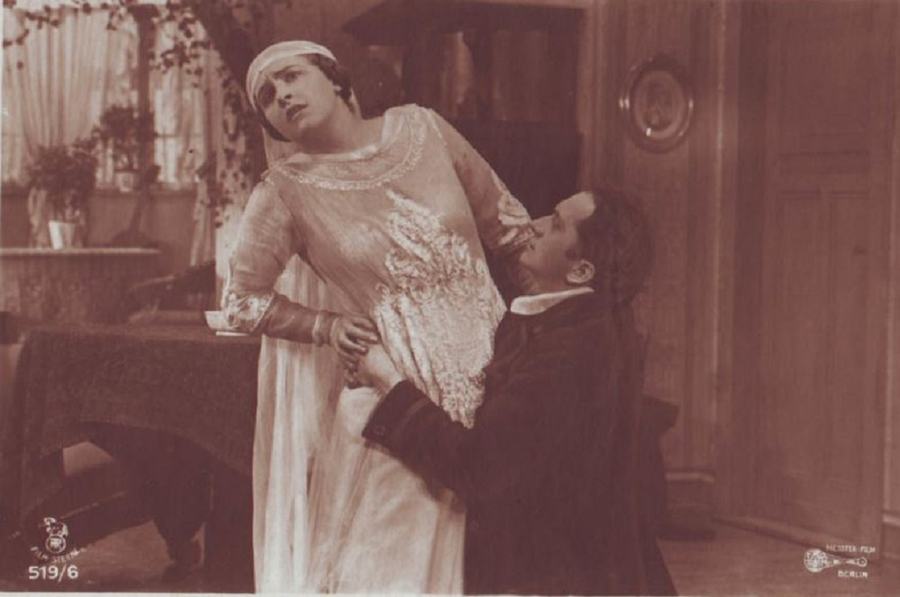
Octavia Handworth delivers a career-defining performance, her physicality shifting seamlessly between Lisa’s languid, almost reptilian grace and Lizzie’s coiled, repressed energy. In one of the film’s most electrifying moments, she confronts her admirer—a young man who idolizes the Lisa persona—to the exclusion of her true self. Handworth’s face becomes a canvas of conflicted emotion: rage, sorrow, and a flicker of pity. The scene is reminiscent of the fraught confrontations in The Scarlet Woman, though here the stakes feel more intimate, more claustrophobic.
Cinematic Landscapes as Character
The New England setting is not merely backdrop but an active participant in the film’s emotional architecture. Wide shots of fog-draped cemeteries and decaying farmhouses underscore the weight of generational expectation pressing down on Lizzie. A standout sequence unfolds during a family dinner, where the clatter of silverware and muted conversations create a soundscape of suffocating normalcy. The camera slowly pulls back, framing the dinner table as a stage of its own, with Lizzie the reluctant protagonist in a play she never wrote. This interplay between domesticity and theatricality echoes the dual worlds explored in Devil McCare, though Footlights elevates the theme with its richer visual palette.
The Tragedy of the Unseen Self
At its heart, Footlights is a tragedy about the impossibility of reinvention. Lizzie’s attempts to shed her Lisa persona are met with resistance not only from her admirer but from the very people who knew her as Lizzie. The film’s most poignant moment arrives when she realizes that even her family views her through the lens of Lisa—the glamorous stranger, not the daughter who once wore homespun dresses. This existential crisis is underscored by a haunting score, blending traditional folk melodies with discordant strings, creating a soundscape that feels both nostalgic and alienating.
Comparative Analysis and Legacy
While the film shares thematic DNA with A Knockout—particularly in its exploration of public versus private selves—it distinguishes itself through its meticulous attention to period detail and its refusal to offer easy resolutions. Unlike the more melodramatic C.O.D., Footlights maintains a restrained tone, allowing its psychological nuances to resonate. The film’s influence can be traced in later works like Le lys du Mont Saint-Michel, though its emotional depth remains unparalleled.
Final Thoughts: A Timeless Exploration of Identity
Footlights endures not merely as a period piece but as a timeless inquiry into the masks we wear to navigate society. Its exploration of identity, performance, and the burden of expectation feels strikingly modern, yet it is anchored in the cinematic language of its era. For cinephiles and newcomers alike, it is a film that rewards careful viewing, offering layers of meaning with each subsequent watch. In an age where the line between authenticity and curation is increasingly blurred, Footlights serves as both a mirror and a warning—a reminder that the stories we tell about ourselves can both liberate and enslave.
IMDb 7.3
1933
Community
Log in to comment.