DbcultAccessing Vault...
Cult Review
Senior Film Conservator
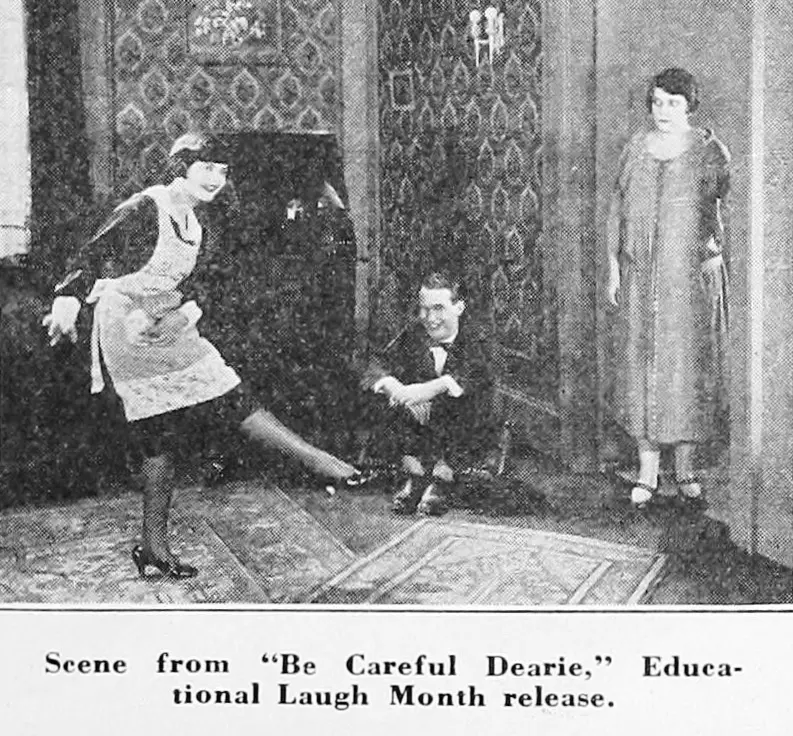
Is 'Be Careful, Dearie!' worth watching today? Short answer: absolutely, especially if you have a fondness for the foundational elements of slapstick and situational comedy. This film is a delightful, if brief, window into early cinematic humor, perfect for classic film enthusiasts and students of comedy, but perhaps less engaging for those seeking modern narrative complexities or high-production values.
It's a film that speaks the universal language of comedic desperation, a testament to how enduring simple, well-executed gags can be. It's a charming, if slight, piece of cinematic history that rewards viewers willing to appreciate its era-specific charms.
At first glance, 'Be Careful, Dearie!' might seem like just another flicker from the silent era, a relic to be studied rather than enjoyed. Yet, beneath its sepia tones and rapid-fire title cards lies a surprisingly robust comedic engine. The film's premise, while straightforward, is executed with a precision that belies its age, showcasing a keen understanding of comedic timing and character archetypes that remain relevant.
This film works because of its relentless commitment to escalating absurdity. Joe Moore's portrayal of the beleaguered husband, caught between the demands of his wife and the mistaken generosity of his boss, is a masterclass in physical comedy and expressive silent acting. The entire narrative hinges on a single, pivotal misunderstanding, which the film then gleefully exploits for every possible laugh.
This film fails because its brevity, while part of its charm, also limits its thematic depth and character development. The resolution, while satisfying in a comedic sense, feels somewhat rushed, leaving little room for emotional resonance beyond the immediate chuckles. It’s a sprint, not a marathon, and while exhilarating, it leaves you wanting just a little more substance.
You should watch it if you appreciate the foundational principles of cinematic comedy, enjoy a good old-fashioned farce, or are simply curious about the evolution of humor on screen. It’s a perfect film for a quick, lighthearted viewing experience.
The narrative of 'Be Careful, Dearie!' is a perfectly constructed comedic contraption. We open on Joe, a man whose domestic tranquility is perpetually threatened by his demanding wife. Her ultimatum – a raise, or else – serves as the catalyst for the entire escalating debacle. It’s a relatable, albeit exaggerated, setup that immediately draws the audience into Joe’s plight.
The arrival of the cook at Joe's office, seeking her final payment, is the moment the gears of farce truly begin to grind. His bachelor boss, a figure of oblivious authority, instantly misidentifies her as Joe's wife. This misinterpretation isn't merely a plot point; it's the film's central comedic engine, a misunderstanding that Joe, in a moment of desperation, seizes upon to secure his much-needed raise.
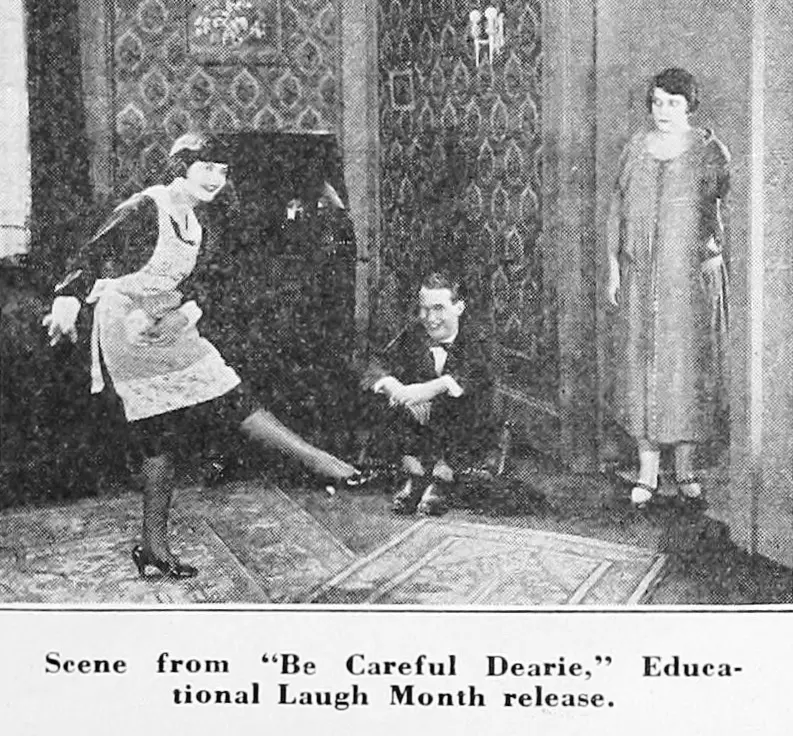
From this point, the film becomes a frantic ballet of near-misses and increasingly desperate improvisations. Joe's attempts to maintain the illusion, particularly when the boss invites himself to lunch, are where the physical comedy truly shines. Imagine the frantic scramble to stage a believable domestic scene, all while his actual wife remains blissfully, or rather, dangerously, unaware.
The genius of the plot lies in its simplicity and the sheer comedic potential extracted from each beat. The cook's sweetheart, a new complication, adds another layer of jeopardy, threatening to expose Joe's carefully constructed house of cards. It’s a classic comedic structure, where one lie begets another, each more precarious than the last, until the inevitable, explosive revelation.
The success of any silent comedy hinges almost entirely on the expressiveness and physicality of its performers. 'Be Careful, Dearie!' is no exception, and its small ensemble cast delivers exactly what's required, often with surprising nuance for such a rapid-fire piece.
Joe Moore, in the central role of the henpecked husband, is the film's emotional and comedic anchor. His performance is a masterclass in reactive comedy. He doesn't drive the plot through grand actions, but rather through his increasingly frantic reactions to the chaos swirling around him. His wide-eyed panic, his furtive glances, and his desperate attempts to juggle multiple conflicting truths are genuinely funny.
Consider the scene where he tries to usher the cook out of his office before the boss arrives, only for the boss to walk in at precisely the wrong moment. Moore's physical comedy in this sequence, a blend of polite urgency and barely contained terror, is a perfect example of his understated brilliance. He communicates volumes without uttering a single word, a hallmark of great silent acting.
Fay Holderness, as the cook, is arguably the film's true comedic catalyst. Her innocent presence sparks the entire deception, and her reactions, often one step behind the frantic pace set by Joe, provide some of the film's most charming moments. She embodies the unwitting participant caught in a whirlwind, her bewilderment adding another layer of humor.
Christine Francis, as Joe's demanding wife, is a formidable presence, even in her limited screen time. Her stern expressions and imperious gestures establish the high stakes for Joe, making his desperate measures entirely understandable. While a more nuanced character might have added depth, her portrayal serves its purpose perfectly within the comedic framework, providing the initial, terrifying impetus for Joe’s actions.
Wallace Lupino's boss is a delightful caricature of well-meaning but utterly blind authority. His genial demeanor and unquestioning acceptance of Joe’s fabricated reality are crucial to the comedic setup. He’s not a villain, but an agent of chaos through his sheer lack of perception. His enthusiasm for Joe’s supposed domestic bliss, especially during the lunch invitation, provides ample opportunity for Joe’s escalating discomfort and the audience’s amusement.
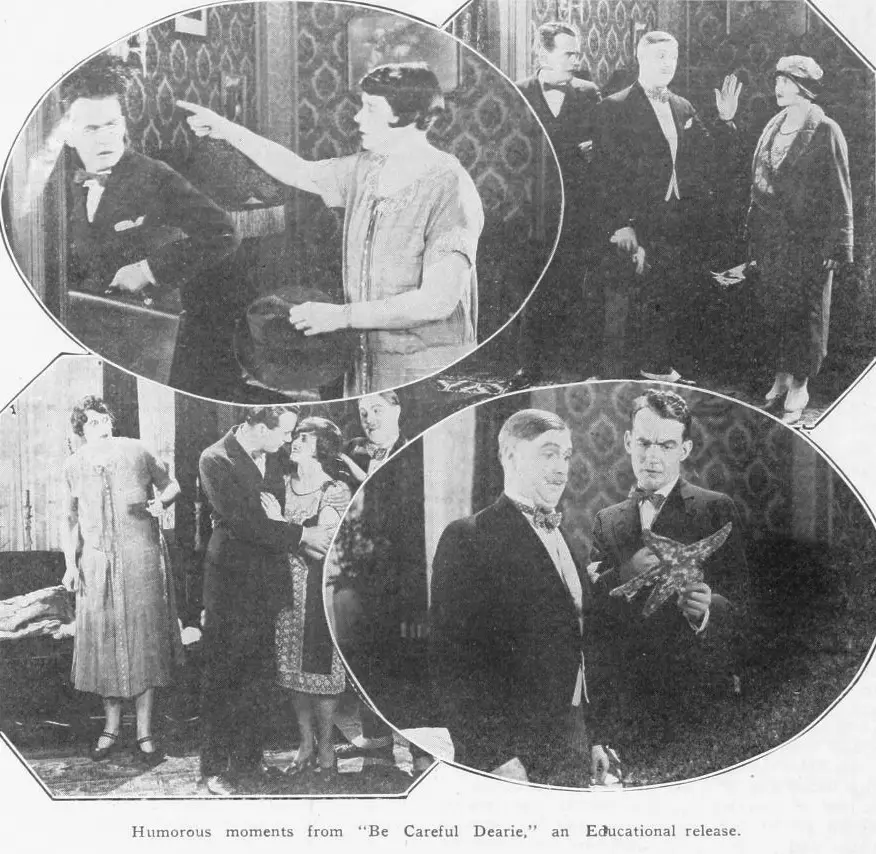
The direction, while uncredited, demonstrates a clear understanding of comedic pacing inherent to the silent era. The film moves with a brisk, almost breathless energy, rarely lingering too long on any single shot, which keeps the farcical momentum high. The rapid cuts and quick scene changes are essential in conveying the frantic nature of Joe's deception, mirroring his internal panic.
Cinematographically, the film is straightforward, employing clear, functional shots that prioritize visibility and comedic action. There are no grand sweeping vistas or experimental angles; instead, the camera is a direct observer, positioning itself to capture the full breadth of the physical comedy. For instance, the framing of Joe’s office, often showing multiple characters entering and exiting, effectively conveys the confined space and the increasing pressure on Joe to maintain his lies.
The use of close-ups, while not extensive, is effective in highlighting key expressions of panic, confusion, or stern resolve, particularly on Moore's face. This simple, direct approach to filmmaking ensures that the humor is always front and center, never obscured by overly complex visual storytelling. It’s a style that prioritizes clarity and immediate comedic impact, a common trait in successful short comedies of the period, much like some of the early works seen in films such as For $5,000 a Year.
The pacing of 'Be Careful, Dearie!' is relentless. From the opening scene, the film establishes a brisk tempo that never lets up. This rapid pace is crucial for a farce, as it prevents the audience from dwelling too long on the implausibility of the situation and instead sweeps them along in the comedic current. Every moment builds on the last, adding another layer of complication to Joe's already precarious position.
The tone is overwhelmingly lighthearted and farcical. Even when Joe is at his most desperate, there's an underlying sense that all will ultimately be well. The stakes, while high for Joe's domestic peace and career, are never truly dire, allowing the audience to fully relax into the humor. This light touch is what makes the film so enjoyable; it's pure escapism, a simple, unadulterated comedic romp.
A surprising observation is how well the film's comedic timing holds up. Despite the absence of dialogue, the visual cues and character reactions are so precisely timed that the gags land with surprising force, often eliciting genuine chuckles. It’s a testament to the universal language of physical comedy, a language that transcends eras and technological limitations.
"The film’s resolution, while tidy, feels a touch too convenient, robbing the comedic build-up of a truly satisfying explosion. One could argue a more chaotic, less forgiving ending might have elevated it to a more memorable, if less purely feel-good, experience."
Absolutely. For fans of early cinema, particularly silent comedies, 'Be Careful, Dearie!' is a delightful discovery. It encapsulates many of the genre's best qualities: simple premise, escalating stakes, and expressive physical performances. It’s a film that doesn’t demand much but gives back plenty in genuine amusement.
It's a perfect example of how effective silent storytelling can be, relying on visual cues and character reactions to build humor. The film is short, sweet, and to the point, making it an excellent choice for a quick viewing
IMDb —
1920
Community
Log in to comment.