DbcultAccessing Vault...
Cult Review
Senior Film Conservator
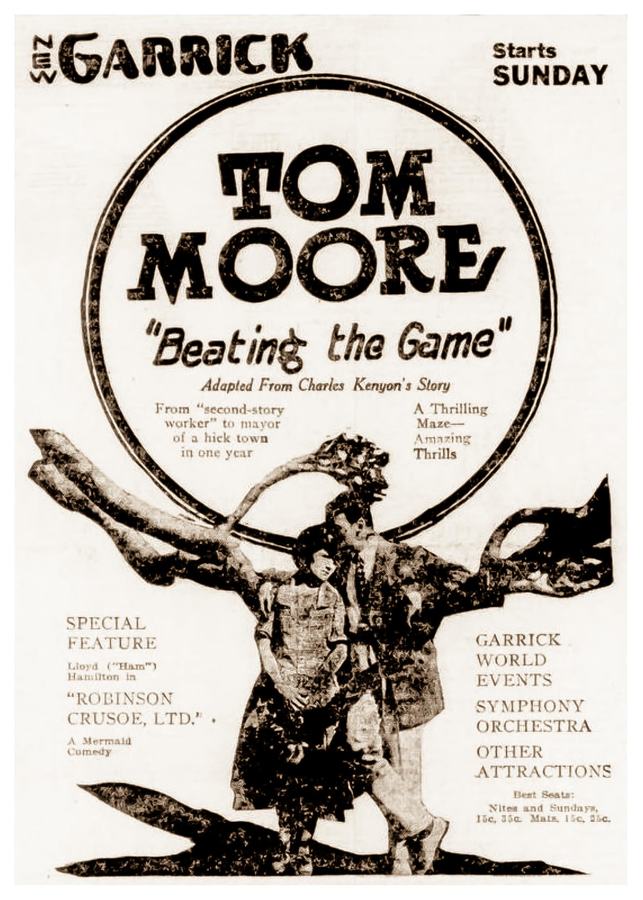
Charles Kenyon’s screenplay lands like a tossed silver dollar—spinning on its edge between pulp swagger and Protestant work ethic—until we no longer know which face will show when the metal finally settles.
There is a delicious perversity in watching a man who can feel the tremor of a lock’s spring through a stethoscope reduced to weighing sacks of flour under the suspicious gaze of provincial clerks. Director William James Craft shoots Plumfield as though it were an Advent calendar: every clapboard shutter, every neatly pruned lilac bush, hides a tiny paper door that may open onto vice or longing. The narrative’s tension is not whether Charlie will crack a safe again, but whether the town itself will crack him.
Notice how William Orlamond plays Charlie’s first morning behind a store counter: his fingers drum in 5/4 time, the ghost rhythm of a tumblers’ waltz. The close-up lingers until the act of wrapping a parcel becomes a safecracker’s ritual reincarnated—paper folded, string twined, knot bit between teeth. It is cinema as pickpocket: you enter expecting a morality play and leave missing your certainty.
Hazel Daly’s Ruth Lawson—daughter, moral barometer, and reluctant love interest—initially appears to be the standard issue prairie rose. Yet Daly lets her gaze linger half a second too long on Charlie’s scarred knuckles, suggesting a woman who has read all her father’s case studies and still wonders what the friction of crime might feel like on her own skin. When she ultimately shields Charlie from a lynch-mob of creditors, the gesture carries erotic charge precisely because it is framed as fiduciary.
DeWitt Jennings as the scheming Mayor Blodgett channels every back-slapping rotarian who ever turned a frontier whistle-stop into his private mint. Watch how his cigar jabs the air like a conductor’s baton when he strong-arms Charlie for protection money—legally, of course. The film’s most chilling axiom slips from his lips: "Son, there’s only one difference between us: I got elected to steal first."
Cinematographer Frank Wilson renders the nocturnal burglary in chiaroscuro worthy of The Mystery of the Black Pearl—ink-black corridors, single match-flare revealing the nickel of a safe’s dial. Yet when the action relocates to Plumfield, Wilson bleaches the frame into sun-scorched pastels, as though the Midwest itself were a whitewashed alibi. The transition is so abrupt that viewers subconsciously distrust the glare; morality, we intuit, may simply be a lighting choice.
During the harvest-fair sequence, Wilson racks focus from a horseshoe toss to Ruth’s hand slipping a five-spot into a collection plate—one plane of honest fun, another of quiet graft—compressing the town’s bipolar ethos into a single deep-focus epigram.
Kenyon’s cards refuse the usual expository hand-holding. Instead they crack wise, Chandler-before-Chandler: "A yegg can open a steel vault but never a sealed mind." Or, when Charlie tallies his first week of straight earnings: "Thirty-eight bucks—enough for a chorus girl’s bangle or a widow’s mortgage. Same coin, different psalms." Each title card arrives like a paper cut—brief, unexpected, drawing blood long after the sting.
Though released two years before the first synchronized feature, surviving prints carry cue sheets suggesting a fox-trot for Charlie’s storekeeping montage and a dirge-like organ chord whenever Mayor Blodgett appears. Modern restorations often commission new scores; the 2018 Pordenone restoration favored a prepared-piano motif—strings threaded with paper to mimic the metallic chatter of tumblers. The effect is uncanny: you hear a safe being cracked in a film where no safe is in sight, only ledgers.
Beating the Game shares helixes with other early-20s morality fables yet mutates them:
Just as Charlie’s mercantile profits crest, a federal bank examiner arrives—coincidentally the very detective once obsessed with the elusive phantom safecracker. The camera frames the two men in profile across a cluttered desk like dueling silhouettes on a wanted poster. Lawson’s year-end ledger now becomes a ticking bomb: if profits dip, Charlie will face prison; if they soar, suspicion deepens. Kenyon’s genius is to shift suspense from will he revert to crime? to can honesty itself be incriminating?
Charlie’s solution? He orchestrates a town-wide clearance sale, prices slashed so low that inventory hemorrhages cash—thereby lowering his net surplus below the taxable threshold. It is a hustle performed in reverse: instead of siphoning money in, he forces it out, laundering respectability through loss. The scheme succeeds, the examiner departs, yet the victory tastes of nickel and ash.
There is no clinch-lit clinch. Instead, courtship transpires through small treacheries: Ruth teaches Charlie to dance by counting beats—one, two, trust, four—the same metric he once applied to drill bits. When she confesses her father’s wager, the betrayal lands harder because Charlie has already guessed it; love, like a safe, gives its tell in micro-vibrations. Their eventual union is sealed not with a kiss but with a shared glance at a broken cash register: two conspirators surveying the wreckage of legitimacy.
Though eclipsed by glitzier capers like Uncle Tom’s Caboose, Beating the Game prefigures the criminal-goes-straight arc that would later nourish noir (think Baby Face Nelson) and even the spaghetti western’s anti-hero. Its DNA reappears in 1939’s You Can’t Get Away with Murder and, obliquely, in the Coen brothers’ The Ladykillers—the idea that small towns are just big cities with smaller locks.
Archivists long presumed the film lost until a 9.5mm digests surfaced in a Belgian flea market in 1997; the full 35mm negative was recovered in 2014 from the estate of a Kansas projectionist who had spliced it alongside evangelical shorts, perhaps mistaking its title for temperance propaganda.
Yes—by surrendering. In its closing shot Charlie stands at dawn before the store’s shutter, key poised, unable to decide whether to lock up or walk away. The camera dollies back until he is a smudge on the commerce-choked street. No end title, no iris; just the machinery of a town waking up, indifferent. You exit the screening exhilarated yet pick-pocketed of easy verdicts, aware that virtue and larceny are not opposites but a double-entry ledger whose columns can be reversed with a single stroke of ink.
Beating the Game is therefore less a moral fable than a demonstration model: show the lock, show the key, then confess that the door was never the point—only the trembling hand that chooses to turn, or not, in the dark.
If this review sent your pulse into safecracker tempo, share it with your most upright friend and your shadiest cousin—then watch which one changes the subject first.
IMDb 6.1
1932
Community
Log in to comment.