DbcultAccessing Vault...
Cult Review
Senior Film Conservator
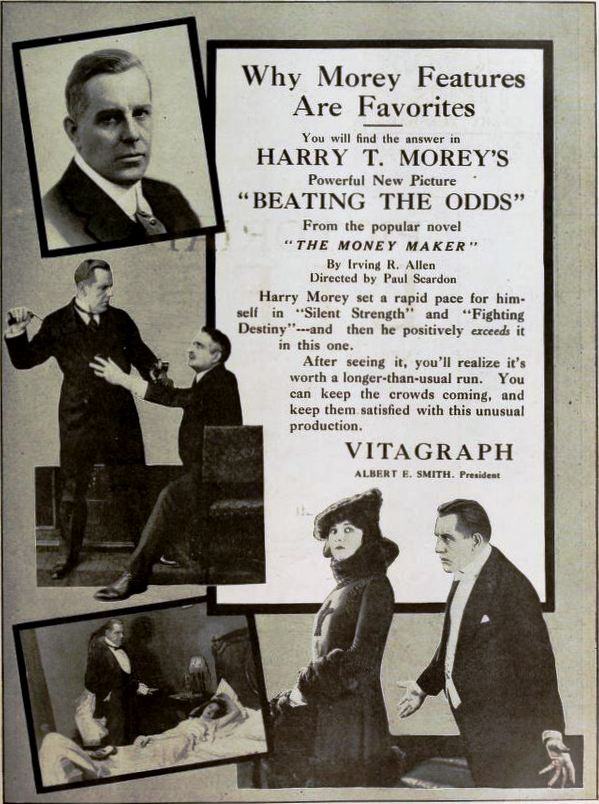
In the shimmering, often tumultuous landscape of early 20th-century American cinema, "Beating the Odds" emerges as a compelling artifact, a silent era melodrama that, despite its age, still pulsates with a raw, almost visceral exploration of human ambition, societal hypocrisy, and the relentless pull of a past meticulously buried. Directed with a keen eye for character drama, this narrative, penned by the collaborative talents of Irving Ross Allen and Edward J. Montagne, doesn't merely recount a story; it dissects the very fabric of the American Dream, revealing its often-corrupt underbelly and the profound personal cost of its pursuit. As a piece of cinematic history, it offers a fascinating window into the moral anxieties and social aspirations of its time, presenting a tapestry woven with threads of scandal, romance, and an enduring quest for redemption.
At the heart of this intricate web is David Power, portrayed with a nuanced blend of charm and ruthlessness by Harry T. Morey. Power is not merely an antagonist or a hero; he is a force of nature, a man sculpted by circumstance and propelled by an insatiable desire to transcend his station. His initial depiction as a political graft collector in the shadowy corridors of New York immediately establishes his moral ambiguity. This isn't a character who shies away from ethical compromise; rather, he embraces it as a tool for survival and advancement. When the district attorney's scrutiny forces his hasty departure, accompanied by the cabaret singer Hebe Norse, it marks not a downfall, but a chrysalis moment. Power, like a chameleon, adapts, swiftly discovering an innate talent for salesmanship, first peddling patent medicines with an almost evangelical fervor. This early pivot reveals a core facet of his character: an uncanny ability to identify and exploit opportunities, transforming adversity into a springboard for upward mobility. His subsequent employment by a shrewd real estate speculator, and then by the formidable steel magnate Gail Rogers, underscores his relentless ascent through the rigid social strata of the era. Power's trajectory is a testament to the era's belief in self-made men, albeit one achieved through a decidedly grey moral palette. His ambition is a double-edged sword, carving a path to success while simultaneously sowing the seeds of future conflict.
Eulalie Jensen's portrayal of Hebe Norse is pivotal, serving as both a catalyst and a constant reminder of Power's origins. Hebe is not simply a romantic interest; she embodies the past Power desperately seeks to outrun. A cabaret singer, her profession itself carries a certain social stigma in the early 20th century, marking her as someone from the fringes, a stark contrast to the refined world Power aims to inhabit. Her presence in Power's initial escape from New York is more than mere companionship; it's an anchor to his former life, a living testament to the compromises he made and the world he left behind. The dramatic re-entry of Hebe into Power's life as Gail Rogers' new wife is a masterstroke of dramatic irony, a narrative device that meticulously unravels the carefully constructed façade Power has built. Jensen imbues Hebe with a certain world-weariness, a silent understanding of her place in a society that judges her. Her return is not an act of malice, but a cruel twist of fate, exposing the fragility of Power's newfound respectability and forcing a confrontation with the very history he believed he had buried. This plot point, while a staple of melodrama, is executed with a precision that elevates it beyond mere contrivance, highlighting the inescapable nature of one's personal history.
The Rogers family represents the pinnacle of the establishment that David Power aspires to join. Gail Rogers, the steel manufacturer, played by Frank Norcross, embodies the industrial titans of the era – powerful, respected, and seemingly impervious to the moral decay that plagues Power's origins. His initial patronage of Power speaks to a certain patriarchal benevolence, a willingness to recognize and foster talent, regardless of its source. However, his eventual marriage to Hebe Norse reveals a deeper complexity, a vulnerability that contrasts sharply with his public persona. This unexpected union sets the stage for the film's central conflict, transforming a mentor-protégé relationship into one fraught with betrayal and animosity.
Rosalie Rogers, Gail's daughter and Power's eventual wife, played by Jean Paige, serves as the moral compass and the innocent victim caught in the crosscurrents of ambition and deceit. Her love for Power is genuine, representing a chance for him to truly shed his past and embrace a life of legitimate respectability. Her heartbreak upon discovering Power's prior entanglement with Hebe is palpable, signifying not just personal betrayal, but the shattering of an idealized world. Rosalie's journey from naive affection to disillusioned repudiation, and ultimately to a nuanced understanding and forgiveness, is crucial for the film's thematic resolution. She embodies the hope for redemption, the possibility that love and family can transcend even the most profound transgressions. Her character arc provides a necessary emotional anchor, preventing the narrative from devolving into mere cynical commentary on social climbing.
"Beating the Odds" is rich with thematic resonance, touching upon universal human struggles that remain pertinent even today. The most prominent theme is, undoubtedly, ambition. David Power's relentless drive to climb the social ladder, to escape his humble and ethically dubious beginnings, mirrors a fundamental aspect of the American ethos. Yet, the film critically examines the cost of such ambition, demonstrating how the pursuit of success can necessitate moral compromises that ultimately threaten to unravel everything gained. This exploration of ambition finds echoes in other silent era narratives of social mobility, though perhaps less overtly cynical than some contemporary works.
Betrayal forms another critical pillar of the narrative. The revelations surrounding Hebe Norse's past and her subsequent marriage to Gail Rogers create a multi-layered betrayal – of trust between Power and Rogers, of marital fidelity, and of Rosalie's innocent faith. This intricate web of deceit forces characters to confront difficult truths about themselves and those they hold dear. The film masterfully uses these betrayals not just for dramatic effect, but to propel character development and explore the consequences of hidden secrets.
The illusion of escape is perhaps the most poignant theme. Power believes he can outrun his past, that a change of scenery and a new identity will erase his former life. However, the narrative powerfully illustrates that the past is an indelible shadow, one that inevitably catches up. Hebe Norse's unexpected return serves as the ultimate manifestation of this inescapable truth, proving that true redemption requires confronting, rather than fleeing, one's history. This concept resonated deeply with audiences grappling with rapid societal changes and the anonymity of burgeoning urban centers, where one might attempt to reinvent themselves. For instance, films like Big Tremaine often played with similar ideas of concealed identities and past transgressions affecting present lives, though "Beating the Odds" gives it a particularly entangled familial twist.
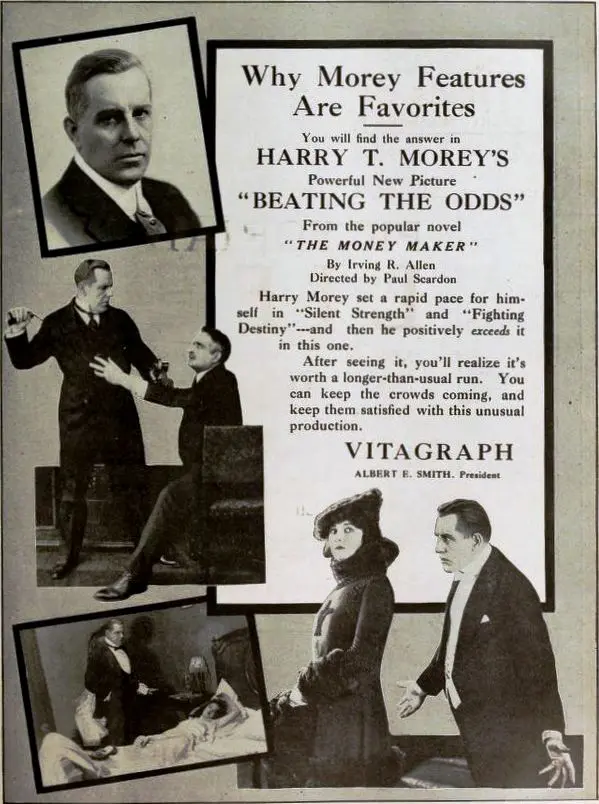
The direction of "Beating the Odds" is characteristic of the silent film era, relying heavily on visual cues, exaggerated expressions, and carefully composed intertitles to convey emotion and narrative progression. While specific directorial credits for this film are often less emphasized in historical records than star power or studio, the execution demonstrates a solid understanding of cinematic storytelling for its time. The use of close-ups to highlight emotional distress or significant revelations, the blocking of actors to emphasize power dynamics (e.g., Power's initial subservience to Rogers, then their confrontational equality), and the pacing of the dramatic reveals are all expertly handled. The film's visual language, while perhaps appearing melodramatic to modern eyes, was the sophisticated shorthand of its day, allowing audiences to immerse themselves in the unfolding drama without spoken dialogue. The contrast between the opulent settings of the Rogers' world and the more modest, even seedy, environments of Power's past is visually striking, reinforcing the class distinctions central to the narrative.
Cinematography, too, played a crucial role in enhancing the mood and conveying information. While specifics of the director of photography are not readily available, one can infer from the surviving prints the prevalent techniques: a reliance on naturalistic lighting where possible, supplemented by artificial light to create dramatic shadows or highlight key figures. The framing often emphasizes the isolation of characters in moments of despair or the burgeoning tension between them. It is in these visual details that the film truly communicates its intricate plot and emotional depth, a testament to the artistry that blossomed during the silent era. Comparing this visual storytelling to other films of its time, such as Carmen (1915), which relied on grander spectacles and more theatrical staging, "Beating the Odds" grounds itself in a more intimate, character-driven visual narrative, despite its melodramatic flourishes.
The ensemble cast delivers performances that are quintessential to the silent film aesthetic, relying on expressive body language, facial contortions, and the precise timing of gestures to convey complex emotions. Harry T. Morey, as David Power, commands the screen with a presence that oscillates between charming ambition and tormented self-preservation. His ability to project both a ruthless pragmatism and a deep-seated desire for legitimate acceptance is commendable, making Power a character who, despite his flaws, elicits a degree of audience empathy.
Eulalie Jensen, as Hebe Norse, provides a compelling counterpoint. Her performance is less about overt histrionics and more about a quiet, knowing resignation, punctuated by moments of defiant strength. She carries the weight of her past with a palpable dignity, making her character far more than a mere plot device. Her scenes with Morey are charged with unspoken history, a testament to both actors' capabilities in conveying intricate relationships without dialogue.
Jean Paige's Rosalie Rogers is the picture of innocent grace and eventual heartbreak. Paige effectively portrays the journey from blissful ignorance to profound disillusionment, and finally, to a mature understanding. Her emotional arc is crucial for the film's resolution, and Paige handles it with sensitivity. The supporting cast, including Frank Norcross as Gail Rogers, Robert Gaillard, Betty Blythe, George Majeroni, and Robert Mowbray, all contribute to the rich tapestry of characters, each fulfilling their roles in propelling the dramatic tension forward. Their collective efforts ensure that the emotional stakes remain high, even in the absence of spoken words, a hallmark of superior silent-era acting.
Irving Ross Allen and Edward J. Montagne, the credited writers, crafted a narrative that, while adhering to the conventions of melodrama, manages to imbue its characters with a degree of psychological complexity often underestimated in silent films. The plot's intricate turns, particularly the dramatic reveal of Hebe's marriage to Rogers, demonstrate a sophisticated understanding of dramatic structure and suspense. They weave together threads of social commentary, moral dilemma, and personal redemption with considerable skill. The character motivations, especially Power's relentless pursuit of status and his struggle with his past, are well-established and consistently explored. The arc from initial moral ambiguity to eventual, albeit hard-won, reconciliation is carefully plotted, ensuring that the audience remains invested in the characters' fates. Their script avoids simplistic good-versus-evil dichotomies, instead presenting characters who are products of their environments and choices, capable of both great ambition and profound error. This nuanced approach to character and plot is what elevates "Beating the Odds" beyond a mere potboiler, securing its place as a thoughtful examination of human nature.
Viewed through a contemporary lens, "Beating the Odds" offers more than just historical curiosity; it presents a narrative that, at its core, remains remarkably resonant. The themes of social climbing, the burden of a hidden past, and the quest for redemption are universal and continue to be explored in modern storytelling across various mediums. While the stylistic conventions of silent film—the grand gestures, the intertitles—might require a momentary adjustment for contemporary viewers, the emotional honesty and dramatic intensity of the story quickly bridge that gap. The film serves as a powerful reminder of the enduring power of narrative to explore complex human experiences.
Its depiction of New York's political underbelly and the ruthless world of early 20th-century industry provides a valuable historical document, reflecting societal anxieties about corruption and the burgeoning power of industrialists. The film's exploration of class distinctions and the challenges faced by individuals attempting to cross those boundaries remains a compelling subject. In an era where personal brands and curated public images are paramount, Power's struggle to escape his past and maintain a veneer of respectability feels acutely modern. The eventual reconciliation, while perhaps a touch idealistic, offers a hopeful counterpoint to the cynicism that often permeates narratives of ambition, suggesting that forgiveness and familial bonds can ultimately prevail over personal failings and past mistakes. This nuanced ending, rather than a clear-cut victory or defeat, adds to its enduring appeal, making it a film that encourages reflection on the complexities of life rather than offering simple answers. It holds its own alongside other compelling silent dramas like As Ye Sow, which also delved into moral choices and their far-reaching consequences, or even The A.B.C. of Love, which explored social conventions and personal desires in a different light.
"Beating the Odds" is more than just a historical curiosity; it is a vibrant, engaging melodrama that holds up surprisingly well, offering a compelling narrative driven by strong characters and universal themes. It is a testament to the storytelling prowess of the silent era, demonstrating how powerful and emotionally resonant cinema could be even without the benefit of synchronized sound. For enthusiasts of early film or anyone interested in the enduring examination of the human condition, this film provides a rich, rewarding experience, reaffirming the timeless appeal of a well-told story, regardless of its technological vintage. Its intricate plot, memorable performances, and thoughtful thematic explorations solidify its position as a noteworthy contribution to the vast and often overlooked canon of silent cinema.
IMDb —
1915
Community
Log in to comment.