DbcultAccessing Vault...
Cult Review
Senior Film Conservator
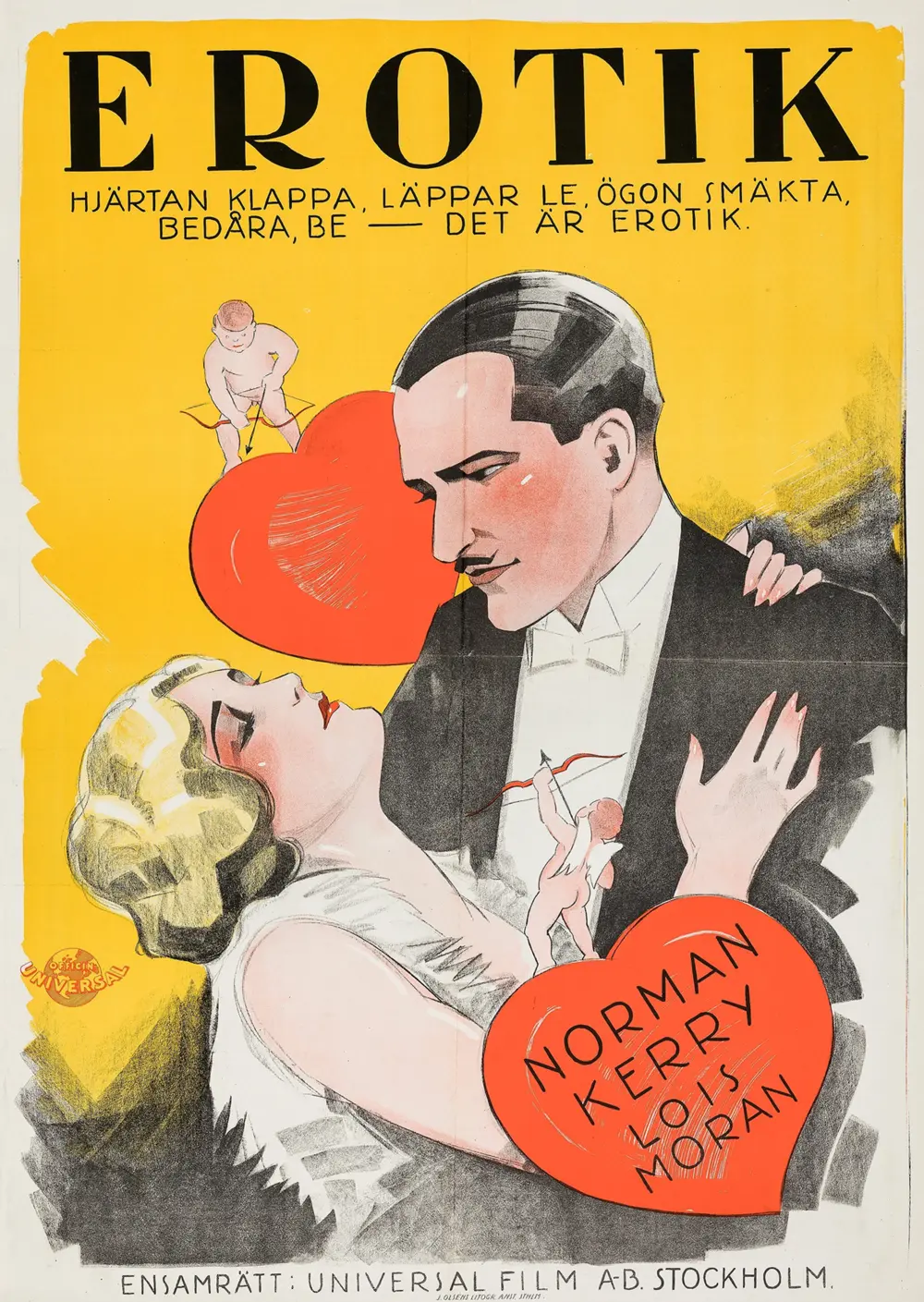
Is 'The Irresistible Lover' worth watching today? Short answer: yes, but with significant caveats that depend entirely on your cinematic palate. This film is primarily for dedicated silent film enthusiasts, cinephiles interested in early romantic comedies, and those curious about Arthur Lake's pre-Dagwood Bumstead career. It is decidedly NOT for viewers seeking fast-paced plots, modern comedic sensibilities, or pristine digital restorations.
Let’s be clear: this isn't a lost masterpiece. But it’s a fascinating window into a particular brand of early Hollywood charm and a testament to the enduring appeal of a chaotic romantic entanglement. It works. But it’s flawed.
This film works because of its central, surprisingly timeless comedic premise: a man’s past indiscretions literally coming back to haunt him at the worst possible moment. Arthur Lake’s performance, while broad, carries a certain earnestness that makes his character’s predicament relatable, even sympathetic, despite his initial cad status.
This film fails because its pacing often drags, relying too heavily on repetitive gags that lose their punch after the first few iterations. The portrayal of women, even for its era, feels particularly one-dimensional, reducing them mostly to either objects of desire or obstacles to the protagonist's happiness.
You should watch it if you appreciate the specific rhythm of silent-era comedies, are a fan of Arthur Lake, or are looking for a historical curiosity that offers a few genuine laughs amidst its more dated elements. It’s a comfortable, if somewhat predictable, viewing experience for a quiet afternoon.
'The Irresistible Lover' attempts to chart the unlikely redemption of J. Harrison Gray, a man whose reputation as a wealthy playboy precedes him in every social circle. Tired, perhaps, of the ephemeral thrill of fleeting romances, Gray embarks on a quest for something more substantial, a genuine connection that will anchor his restless spirit. His chosen target for this newfound earnestness is Betty, a woman whose wholesome demeanor and familial ties to law enforcement represent everything his past life was not.
The irony, of course, is that Gray's past is not so easily shed. Just as he begins his courtship, a vehicular mishap sends him to a hospital bed. This is where the film truly finds its comedic engine, as Gray’s former paramours, a veritable rogues’ gallery of spurned affections and lingering attachments, descend upon his sickroom. Each woman, driven by a mixture of genuine concern, possessiveness, or sheer obligation, inadvertently contributes to the systematic destruction of Gray's carefully constructed image in Betty’s eyes.
The resulting chaos is less a testament to Gray's 'irresistible' charm and more a hilarious, if slightly tragic, indictment of his past choices. Betty, initially intrigued, finds herself increasingly bewildered and appalled by the revolving door of 'caretakers,' each more flamboyant than the last. The film expertly (and sometimes clumsily) uses this premise to explore the notion that true love requires more than just good intentions; it demands a clean slate, or at least a very convincing explanation for the clutter of the past.
“The film’s central premise, while simple, offers a potent comedic mirror to the consequences of a life lived without restraint.”
Arthur Lake, years before he would become synonymous with Dagwood Bumstead in the 'Blondie' series, carries 'The Irresistible Lover' with a youthful exuberance that is both its biggest strength and, at times, its most glaring weakness. Lake's J. Harrison Gray is not a villain, nor is he particularly malicious; he is simply a man who has enjoyed the privileges of wealth and good looks a little too much. His shift from confident philanderer to bumbling, lovestruck suitor is portrayed with an almost puppy-dog earnestness.
Lake's physical comedy, a hallmark of silent film, is evident, particularly in his hospital bed scenes. He uses his expressive face and body language to convey Gray's mounting frustration and embarrassment as his past literally spills into his present. A particular moment stands out when a particularly dramatic ex-girlfriend faints on his bed, causing Lake's eyes to dart frantically between her and the horrified Betty, a silent scream of desperation.
Lois Moran, as Betty, provides a grounding presence. Her performance is more restrained, relying on subtle shifts in expression to convey her initial attraction, growing confusion, and eventual disillusionment. She embodies the 'girl next door' ideal, making Gray's pursuit of her feel genuinely aspirational for his character. Her reactions often serve as the audience's proxy, mirroring our own amusement and occasional exasperation.
The supporting cast, particularly the rotating roster of ex-girlfriends, leans heavily into caricatures, which is fitting for a silent comedy. Each woman is given a distinct, albeit brief, personality – from the overly dramatic to the subtly manipulative. Gertrude Astor, as one of the more flamboyant former flames, delivers a memorable, if brief, turn that perfectly encapsulates the disruptive force of Gray's past.
Edward Ludwig, who would go on to direct a diverse range of films in the sound era, navigates 'The Irresistible Lover' with a straightforward, unpretentious hand. His direction is primarily focused on delivering the comedic beats and advancing the plot through visual storytelling, as was typical for the period. There's a clear emphasis on staging the chaotic hospital scenes to maximize their comedic impact.
Ludwig utilizes simple yet effective camera setups to capture the escalating absurdity. The frequent cuts between Gray's pleading expressions, Betty's shocked reactions, and the oblivious antics of the ex-girlfriends create a rhythmic comedic tension. One notable sequence involves a tight shot on Gray's face as he tries to discreetly shoo away an ex, only for the shot to widen to reveal Betty entering the room, perfectly framing his caught-in-the-act panic.
The film's cinematography, while not groundbreaking, is competent. The lighting is functional, designed to highlight the performers and their expressions rather than to create complex moods. It’s a practical approach that serves the narrative without drawing undue attention to itself. There are no grand, sweeping vistas or experimental angles; the focus remains squarely on the human element and its comedic potential.
Pacing in silent films can be a divisive topic for modern audiences, and 'The Irresistible Lover' is no exception. At times, the film moves with a brisk, almost farcical energy, particularly during the initial setup of Gray's predicament and the arrival of his various ex-lovers. The speed with which new characters are introduced and new complications arise keeps the early parts engaging.
However, there are stretches where the comedic gags, particularly those involving the repetitive visits of the ex-girlfriends, begin to wear thin. The film occasionally lingers too long on a single gag, stretching a moment that could have been punchy into something more drawn out. This can lead to moments of audience fatigue, especially for those less accustomed to the conventions of silent cinema.
The tone is consistently lighthearted, aiming for romantic comedy rather than biting satire. Even Gray’s past womanizing is presented more as a charming flaw than a moral failing, which reflects the more forgiving sensibilities of romantic comedies from this era. The film never delves into dark territory, preferring to maintain a buoyant, if occasionally predictable, atmosphere. It’s a film designed to entertain, not provoke deep thought, much like its contemporary, A Full House.
Yes, for specific audiences.
It offers a glimpse into early Hollywood romantic comedy.
Arthur Lake's performance is genuinely charming.
The central premise remains amusing.
It is not a film for those seeking modern pacing or sophisticated humor.
Expect broad comedy and dated sensibilities.
'The Irresistible Lover' is a peculiar, charming, and undeniably flawed artifact from the silent era. It won't convert skeptics of early cinema, nor will it redefine the romantic comedy genre. What it does offer is a pleasant, if somewhat undemanding, viewing experience for those already attuned to its particular frequency. It's a film that asks little of its audience beyond a willingness to embrace its lighthearted absurdity and forgive its structural shortcomings.
For silent film enthusiasts, it’s a worthwhile addition to your viewing list, particularly for its central performance by Arthur Lake, who, despite the film's title, never truly convinces us of Gray's 'irresistibility' as much as his sheer, exasperated charm. It’s a reminder that even in an era of grand epics, there was always room for a simple, chaotic love story. Don't expect a revelation, but do expect a chuckle or two.
IMDb —
1933
Community
Log in to comment.