DbcultAccessing Vault...
5.9/10
Senior Film Conservator
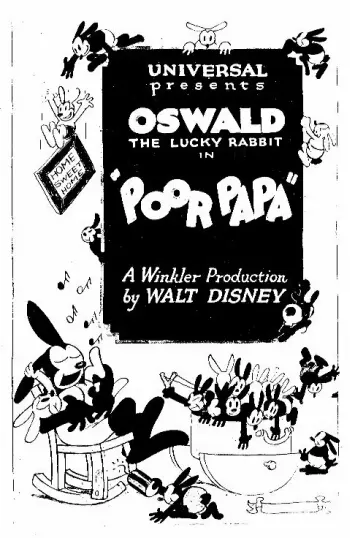
A definitive 5.9/10 rating for a film that redefined the boundaries of cult cinema. Poor Papa remains a cornerstone of transgressive art.
Is Poor Papa a forgotten gem or a rough draft for a mouse that would eventually conquer the world? Short answer: It is an essential, albeit exhausting, piece of animation history that prioritizes frantic energy over narrative grace.
This film is for animation purists, historians, and those who enjoy the unhinged, darker humor of the pre-code 1920s. It is definitely NOT for those looking for the cuddly, moralizing tone of modern Disney or anyone who finds repetitive slapstick more annoying than amusing.
1) This film works because it captures a raw, unpolished energy that Walt Disney and Ub Iwerks eventually traded for corporate perfection and mass-market appeal.
2) This film fails because its single-joke premise—the relentless arrival of babies—is stretched to its absolute breaking point, leading to a middle act that feels like it’s running in place.
3) You should watch it if you want to see the DNA of Mickey Mouse before he became a sanitized mascot, or if you want to see how 1920s cinema handled the 'domestic horror' of parenthood.
Poor Papa is worth watching because it represents the moment Walt Disney truly found his voice, even if that voice was shouting in a crowded room. In 1927, the animation world was still finding its feet, and this short shows a level of technical ambition that was rare for the time. It isn't just a cartoon; it's a window into the frantic pace of the Roaring Twenties.
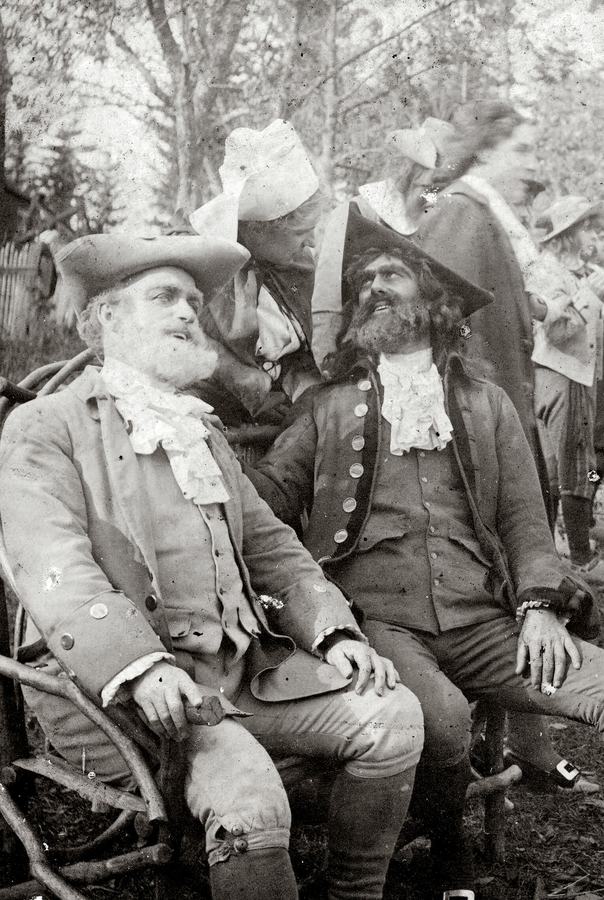
While it lacks the epic scale of something like The Covered Wagon, it shares that film's interest in the struggle against overwhelming odds. For Oswald, the 'frontier' is simply his own living room, and the 'invaders' are his own children.
Poor Papa was actually the first Oswald short produced, though Universal executives initially rejected it for being too 'old' and 'rough.' When you watch it today, you can see what they meant. This isn't the cute, round Oswald of later shorts. This is a lankier, grittier rabbit who looks like he hasn't slept in three days. He's a blue-collar worker in a world that doesn't care about his overtime hours.
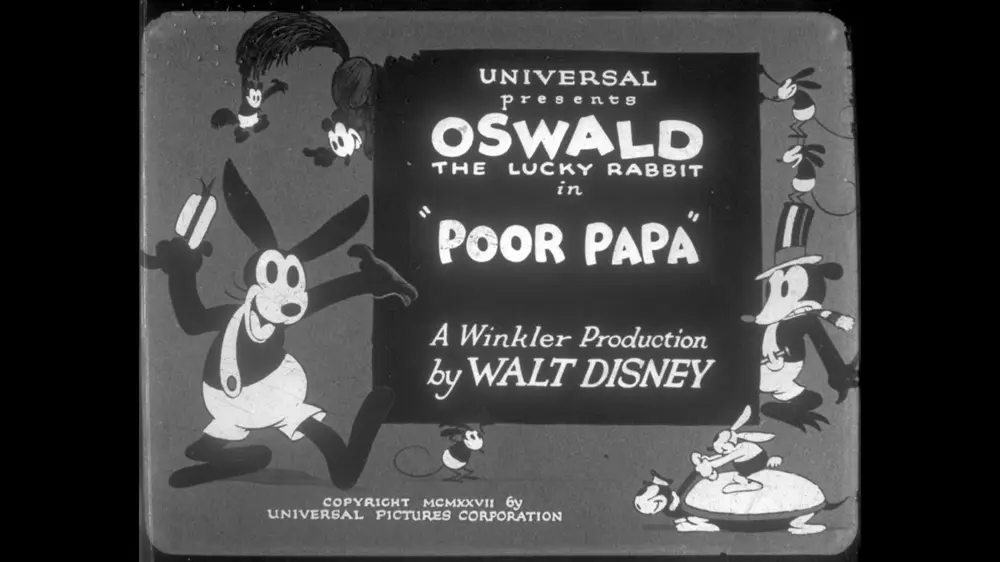
The animation, led by the legendary Ub Iwerks, is a masterclass in 'rubber hose' physics. When Oswald tries to block the chimney to stop the stork, his body contorts in ways that feel both impossible and perfectly logical within the film's internal reality. There is a scene where the bunnies use Oswald's ears as a clothesline that perfectly encapsulates the film's philosophy: everything is a tool, and everyone is a victim of the gag.
Compare this to the domestic drama found in Remodeling Her Husband. While that film deals with the social nuances of marriage, Poor Papa strips domesticity down to its most primal, chaotic elements. There is no room for social grace when forty rabbits are eating your furniture.
The film’s greatest strength is its pacing, but that strength is also its greatest weakness. The action is non-stop. From the moment the first stork appears, the screen is a whirlwind of motion. This was a direct response to the slower, more stage-bound films of the early 20s. Disney wanted speed. He got it.
However, the speed masks a lack of variety. The joke is always 'here come more rabbits.' After the tenth rabbit enters through a window, a chimney, or a crack in the floor, the novelty begins to wear thin. It lacks the inventive escalation found in later masterpieces. It’s a blunt instrument of a film. It hits hard, but it only has one note.
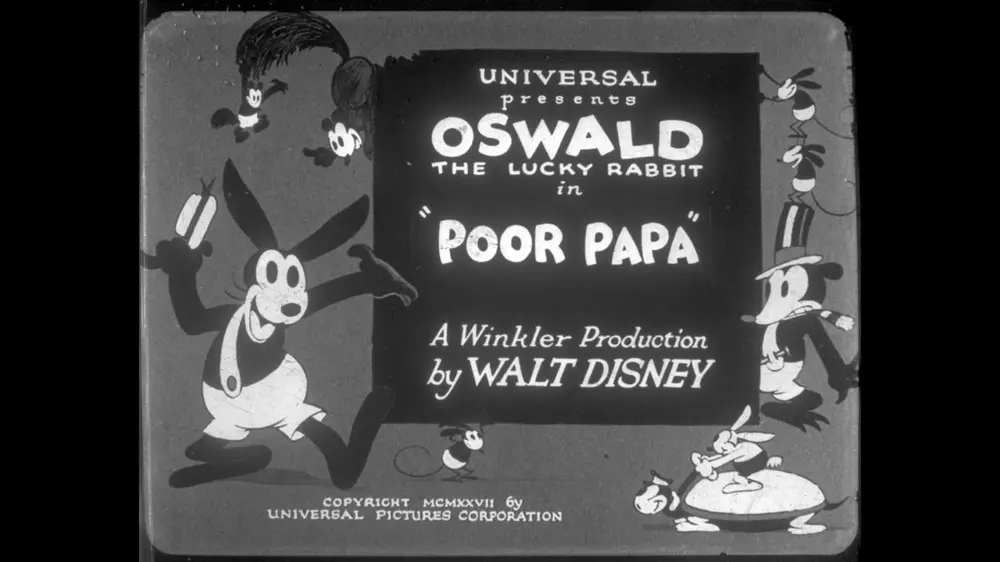
Yet, there is something fascinating about the violence. At one point, Oswald literally takes a shotgun to the storks. It’s a moment of dark comedy that you would never see in a Mickey Mouse short ten years later. It’s punchy. It’s mean. It works.
To truly appreciate Poor Papa, you have to understand the landscape of 1927. This was the year of *The Jazz Singer*. Sound was coming, but animation was still silent, relying entirely on visual language. Disney was competing with the likes of Felix the Cat, and he needed a character with more personality. Oswald was that character.
While films like Scars of Jealousy or My Husband's Other Wife were exploring the complexities of adult relationships through melodrama, Disney was doing it through slapstick. Poor Papa is, in its own weird way, a film about the fear of the 'replacement'—the idea that a man's life is no longer his own once he becomes a father. It’s a theme that resonates even today, albeit in a much more literal and fur-covered way.
Watching Poor Papa after seeing later Oswald shorts like Dancing Daddy or the tragic Poor Innocent reveals a character in flux. In Poor Papa, Oswald is a victim of his circumstances. He isn't the 'lucky' rabbit yet; he's the 'unlucky' father. This version of the character feels more human because he is so clearly out of his depth.
The film also serves as a bridge between the Alice Comedies and the Mickey era. You can see the experiments with perspective and depth that would later define Disney's style. When the storks fly toward the camera, it’s a primitive but effective use of the Z-axis that must have been thrilling for audiences used to flat, two-dimensional planes.
Poor Papa is not a masterpiece, but it is a vital document. It’s a loud, messy, and occasionally brilliant look at the birth of an icon. It lacks the polish of Disney’s later work, but it makes up for it with a raw, anarchic spirit that is missing from modern animation. It’s a reminder that before Disney was a brand, it was just a few guys in a studio trying to make people laugh with a shotgun and a rabbit. It works. But it’s flawed. And that’s exactly why it’s worth your time.
"Poor Papa is a domestic nightmare dressed in the skin of a Sunday comic strip, offering a glimpse into a version of Disney that was more interested in chaos than magic."
IMDb —
1917
Community
Log in to comment.