DbcultAccessing Vault...
Cult Review
Senior Film Conservator
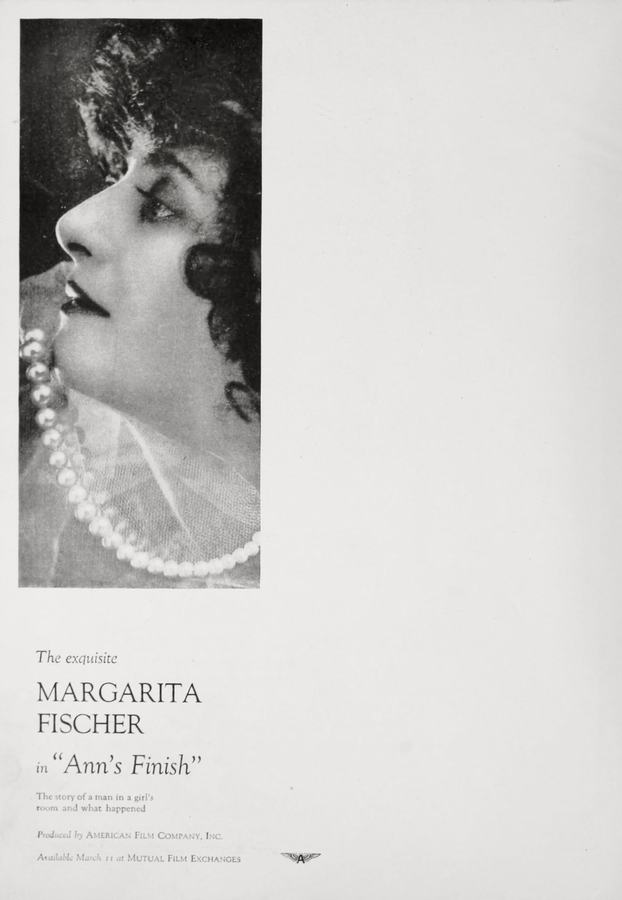
Ann Anderson, that incandescent pest, storms through the opening reel like a comet trailing satin mayhem. The camera—hungry, flirtatious—catches her ankle as she vaults a dormitory railing, petticoats flashing semaphore against the night. Director Elizabeth Mahoney understands that mischief is choreography: every custard pie arcs in balletic slo-mo, every firecracker fizzles in rhyming counterpoint to the headmistress’s shriek. Silent cinema lives or dies on such visual couplets, and Mahoney, herself once expelled from a Swiss academy, weaponizes autobiography into slapstick haiku.
Beatrice Van’s intertitles, calligraphed like love-letters from a tipsy poet, announce each new catastrophe with wicked glee: “Expulsion Number Three—or How I Taught the Chaplain to Tango.” The wit bites because the stakes feel real; beneath the lace is the persistent ache of abandonment. Adelaide Elliot’s Ann carries that ache in the tremor of her lower lip, even while tipping a jug of pond-water onto the Latin tutor. She is the first truly modern flapper captured on celluloid—half holy terror, half open wound.
Enter Robert—John Gough channeling Valentino’s smolder but with a pickpocket’s twitch. The first burglary sequence is lit like a Caravaggio: a single candle carves gold from darkness, revealing the trembling blade of a sleeve-knife. Mahoney withholds his face for a full forty-seven seconds; we know him first by the haptic rustle of gloves, the glint of a skeleton key. When the close-up finally lands—cheekbones, lie-flecked eyes—it feels indecent, as though we’ve stolen something too.
Ann’s pity arrives not as maidenly swoon but as entrepreneurial spark: she invents a husband because fiction is cheaper than charity. The scam is flimsy—one look at Robert’s calloused palms betrays no officer’s pedigree—yet the school’s faculty swallows it, proof that patriarchal institutions will believe any story that keeps the power structure intact. The gag collapses, as gags must, and the subsequent expulsion montage—trunk, umbrella, petticoat cascading down stone steps—unfurls with Eisensteinian rhythm, cuts accelerating like a heart palpitating.
Just when the narrative appears to settle into melodrama, Van’s script yanks the rug. A second prowler—face obscured by a burlap sack stitched with crude button eyes—chloroforms Ann and drags her into a hansom cab. The city becomes an Expressionist fever-dream: streetlights elongate into pendulous fangs, cobblestones ripple like black water. Cinematographer David Howard tilts the camera fifteen degrees off-axis, a subtle jolt that infects every subsequent frame with unreality.
The hideout is an abandoned rum distillery, its copper vats green with verdigris. Here, identities proliferate like fungi. Robert reappears in top-hat and waxed mustache, affectation of a boulevardier; he is revealed as con artist “Reginald Dove,” wanted across three colonies for matrimonial fraud. Ann counters by unveiling her own fabrication: she is not, in fact, the railroad-heir Anderson but a foundling swapped in infancy, a lie concocted on the spot yet delivered with such tremulous conviction we half believe it. Each revelation ricochets off corrugated iron walls, duplicating in broken windowpanes until the viewer inhabits a vertiginous danse macabre of selves.
Where The Last Sentence used amnesia to question culpability, Ann’s Finish weaponizes reinvention as economic survival. Identity is currency; swap it fast enough and the world can’t pin you down long enough to invoice your crimes.
In 1923, flappers were still shorthand for sexual panic, yet Ann’s pranks feel less libidinal than ontological. Each escort of custard, each frog in the finger-bowl, is a dare: do you see me or the label you stitched on my blouse? Compare her to Margarita Fischer’s Cenci in Beatrice Cenci; both women weaponize innocence, but while Cenci’s eyes telegraph vengeance, Ann’s glitter with curiosity—what happens if I pull this particular thread?
The film’s most subversive gesture arrives when Ann, tied to a distillery chair, talks her way free not by seduction but by threatening to expose the forged ancestry of her captor’s business partner. She wields information, not allure, a distinction rare in silent-era heroines. Even today, in an age of hyper-competent superspies, the scene feels electric because it is sloppy—she mispronounces the Dutch shipping magnate’s surname, flubs the year of the Jakarta merger, yet bulldozes ahead on sheer bravado.
Notice the wallpaper in Madame D’Arcy parlor: fleur-de-lis gradually devoured by creeping ivy motif, a visual prophecy of Ann’s unruly tendrils subsuming decorum. When the camera glides past a mirror, you can glimpse, for a single frame, the cinematographer’s own reflection—an accidental Brechtian rupture that turns viewers into co-conspirators.
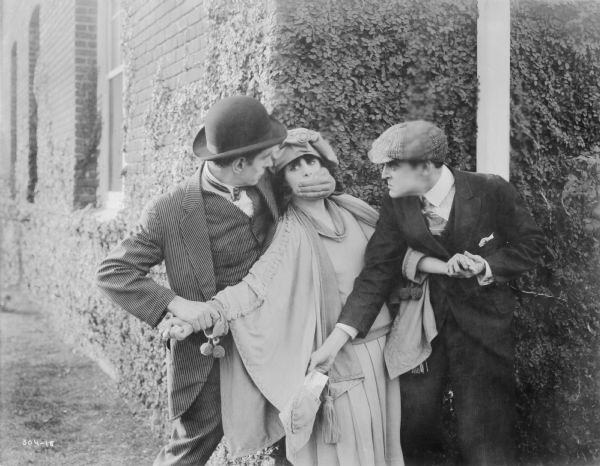
Howard’s tinting strategy deserves monograph-length praise. Night sequences are bathed in nocturnal blue, but each lie is tinted amber—Robert’s first false alibi glows like a hearth, Ann’s fabricated parentage flickers candle-orange. Over the course of the film the amber encroaches on the blue until the final reel is a bruised sunrise, implying that mendacity, not night, is the film’s true medium.
Adelaide Elliot’s eyebrows deserve separate billing; they oscillate between insolence and invitation with semaphore precision. In the kidnapping scene she acts primarily with her bound hands—fingers splayed in feigned terror, then coiled like a gambler palming dice. It is a masterclass in constrained virtuosity.
John Gough’s Robert/Reginald toggles between registers without visible apparatus. Watch the moment he learns Ann may be an heiress: his pupils dilate a millimeter, vocalized in silence by a barely perceptible lean forward—predatory yet puppyish. Compare that to Money Madness, where the anti-hero’s greed is telegraphed through grandiose hand-rubbing. Gough understands that film, even silent film, is a medium of micro-movements.
Spoilers orbit the finale like moths. Suffice it to say that Ann does not marry her captor, does not die tragically, does not inherit a fortune—three narrative rails the era considered compulsory. Instead she strides out of the distillery at dawn, coat borrowed, pockets empty, to board a steamship whose destination even she does not know. Robert/Reginald is last seen in a police line-up, but the camera lingers on his shoes—scuffed, down-at-heel—hinting that release, not justice, may await him.
The final intertitle, superimposed over churning propellers, reads: “Finishing school is wherever you learn to finish your own sentence.” It sounds like a feminist manifesto, yet the grammar wobbles—shouldn’t it be “one’s” sentence? That wobble is deliberate, reminding us that Ann’s education remains deliciously incomplete. She exits the film as she entered: mid-prank, mid-sentence, mid-flight.
Critics often lump Ann’s Finish with When Broadway Was a Trail under the flimsy banner of “comedies of errors,” yet the film’s DNA shares more with Unjustly Accused’s paranoid doubles and Satyavan Savitri’s metaphysical tests of identity. Where Savitri tricks Death through moral constancy, Ann tricks Society through narrative fluidity—both heroines re-script cosmic laws, one through piety, the other through perjury.
Financially, the picture cost a reported $87,000—chump change against High Play’s half-million, yet recouped triple via regional roadshows thanks to shrewd barn-storming. Exhibitors sold “Ann-archy” buttons and cardboard masks of Robert’s mustache, turning viewers into walking billboards. One Ohio theater reportedly paired screenings with custard-pie throwing contests; local pastors protested, receipts soared.
For decades only a 9-minute fragment survived in the BFI’s “Orphan reels” bin. Then, in 2018, a 35mm nitrate print surfaced in a Slovenian monastery—apparently shipped there in 1924 for a girls’ reformatory screening deemed “morally instructive.” The irony could power a turbine. The print, shrunken and vinegar-syndromed, underwent 4K wet-gate scanning; missing scenes were interpolated from an original continuity script discovered in Beatrice Van’s attic. The restoration premiered at Pordenone, accompanied by a Slovenian girls’ choir humming a foxtrot, an anachronism Ann herself would have applauded.
Streaming rights are currently held by a boutique label; you can rent HD for $4.99 on most platforms, but hunt the Blu-ray for the tinting to breathe properly. Avoid the YouTube rip with Russian intertitles machine-translated into cryptic verse (“She invents spouse, receives dismissal” reads one unintentional Dada gem).
Does the film have flaws? Assuredly. The subplot of a second burglar evaporates without residue, and a comic relief maid drifts in and out like a vaudeville ghost. Yet these loose threads feel consonant with a story that insists identity itself is a fraying tapestry. What lingers is the after-image of Adelaide Elliot’s grin—half imp, half guillotine—challenging us to pull our own prank on the status quo.
In the taxonomy of silent cinema, Ann’s Finish occupies the liminal shelf where screwball bleeds into noir, where the flapper’s wink foreshadows femme fatale’s stiletto. It is less a finished portrait than a half-sketched dare, inviting every generation of viewers to pick up the charcoal and scrawl their own ending. Watch it once for the twists, again for the visual puns, a third time to remember that growing up, for women especially, has always required a mask or three—and the real education begins the moment you discard them.
IMDb 7.4
1934
Community
Log in to comment.