DbcultAccessing Vault...
7.6/10
Senior Film Conservator
A definitive 7.6/10 rating for a film that redefined the boundaries of cult cinema. The Shooting of Dan McGrew remains a cornerstone of transgressive art.
The first thing that strikes you is the temperature: even through 108-year-old emulsion, the Malamute seems to exhale sub-zero air straight into your lungs.
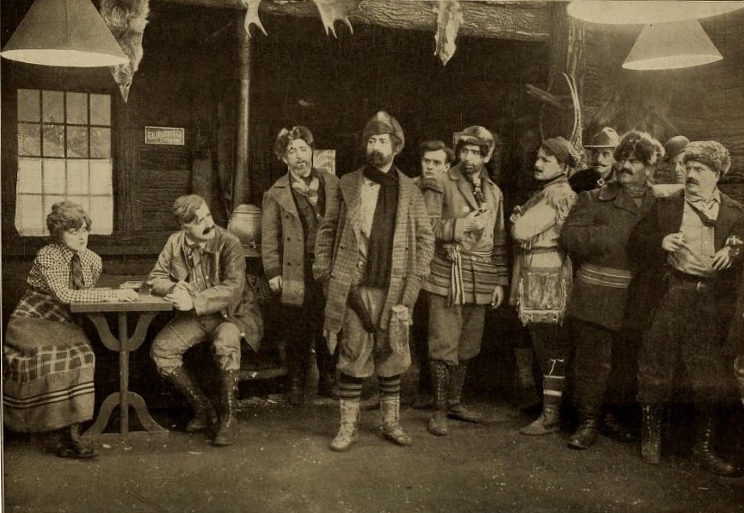
Director Herbert Blaché—yes, husband of cinema matriarch Alice Guy—treats the saloon like a Caravaggio trapped in permafrost. Shadows pool so thick you could stack them in cordwood; kerosene lamplight licks faces with a gilded hunger that anticipates The Darkening Trail by a full three years. In this chiaroscuro cathedral of sin, Jack Murray’s Dan McGrew slouches with the feline arrogance of a man who believes death is simply another card to palm. Beside him, Evelyn Brent’s Lou is all watchful stillness, eyes flickering like shuttered lanterns—her first major screen turn, and you feel the voltage that would later electrify 1920s Paramount melodramas.
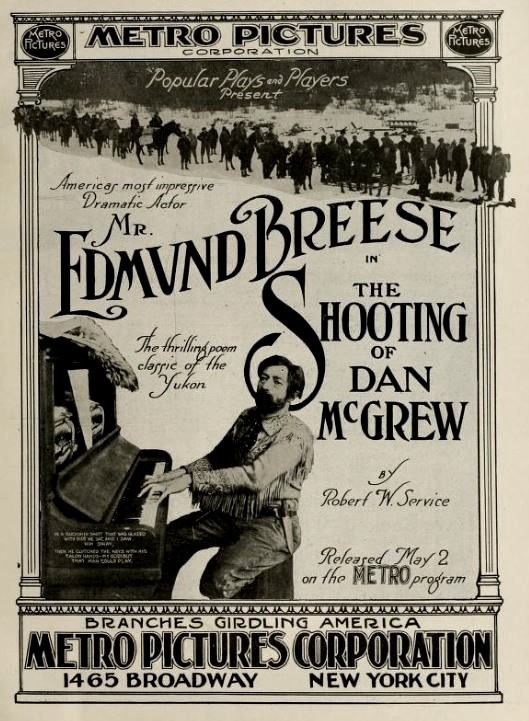
Enter Maxwell: Edmund Breese under a crust of roadhouse filth, shoulders sagging under the gravitational pull of memory. His collapse onto the piano bench is silent cinema’s most eloquent exhaustion.
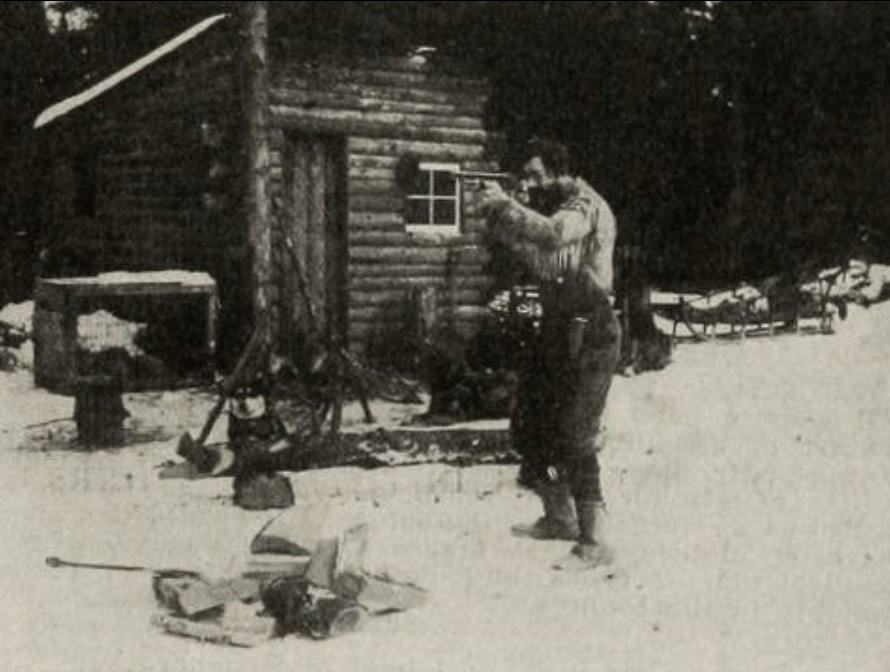
What follows is a four-minute, single-take musical soliloquy. No intertitles intrude; the shot trusts face, posture, and the tremor of fingers on ivories to articulate a backstory that most 1915 programmers would have belabored in twelve cards of florid exposition. The melody—an original theme attributed to composer Joseph Carl Breil—slides from minor-key yearning to dissonant thunder as Maxwell’s reverie dredges up betrayal: forged letters, a wife’s tears, the honeymoon cabin emptied like a gutted trout. It’s proto-noir before von Sternberg ever tasted studio lights.
The film advertises itself as “founded upon the celebrated poem by Robert W. Service,” yet only the final gun-blast and McGrew’s name survive transplant from page to screen. Service’s ballad is a campfire tall-tale; Blaché and scenarist Marvin Dana trade campfire for confessional, swapping ironic swagger for psychological scar tissue. The result plays like Evangeline re-imagined by Strindberg—romantic legend flayed into existential dread.
Jack Murray never broke into the top echelon of silent outlaws; here he hints at why. His McGrew is too reptilian, too self-satisfied, lacking the haunted magnetism that made William S. Hart’s gravel-road sinners compulsively watchable. Still, when the lights die and his pupils flare like struck matches, you glimpse the abyss.
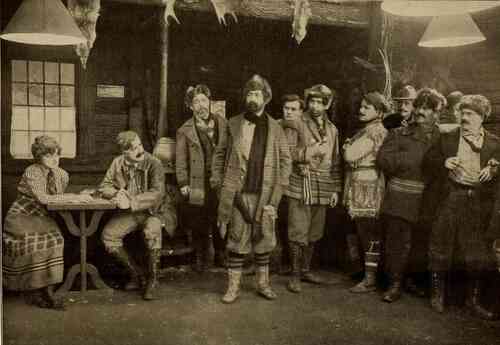
Opposite him, Breese’s Maxwell carries the film’s moral mass. His body language mutates from hunched defeat to upright retribution without the usual silent-era semaphore. Watch how he removes his gloves before addressing McGrew—slow, ceremonial, the gesture of a surgeon about to dissect a carcinoma.
Lou is underwritten, as women often were in 1915, yet Evelyn Brent weaponizes stillness: a tilt of the head, a gloved finger lazily circling a glass rim, all implying histories the film refuses to name. She’s the North’s answer to the enigmatic divas in Balletdanserinden, but earthier, more dangerously pliant.
Cinematographer Lucien Andriot—decades away from lensing Half a Hero for Fox—bathes the saloon in gradients of carbon and gold. The camera seldom moves; instead, space is carved by light. Snow seen through windows strobes across actors’ cheeks like silent Morse. When the shoot-out erupts, Andriot undercranks slightly, so muzzle flare becomes solar flare, a trick later borrowed by The Eagle’s Mate.
The restoration on Kino’s 2022 Blu-ray reveals textures wiped out for decades: nitrate snowfall, frost on beards, even dog-sled breath—yes, you can see canine vapor thanks to 4K grain resolution.
Exhibitors in 1915 were encouraged to hire a house pianist and a trap-drummer for gunshots. Modern revival houses often commission new scores; the Alloy Orchestra’s 2019 suite layers pump-organ, prepared piano, and bowed saw to evoke boreal desolation. Try hearing it with earbuds in winter-night darkness—footsteps in the auditorium feel like wolves circling the sled.
Read against today’s politics, the film is a tangle. McGrew’s predation is unambiguous, yet the screenplay punishes him while granting Maxwell surrogate patriarchal rights over daughter and wife alike. Women pass like currency—tokens of male honor—yet Lou’s final embrace of Maxwell carries a survivor’s urgency that undercuts the redemptive closure. The Yukon itself is treated as purgatorial white space where sins are burned clean by cold, a colonial fantasy that ignores Indigenous presence more thoroughly than even From the Manger to the Cross ignores Palestine.
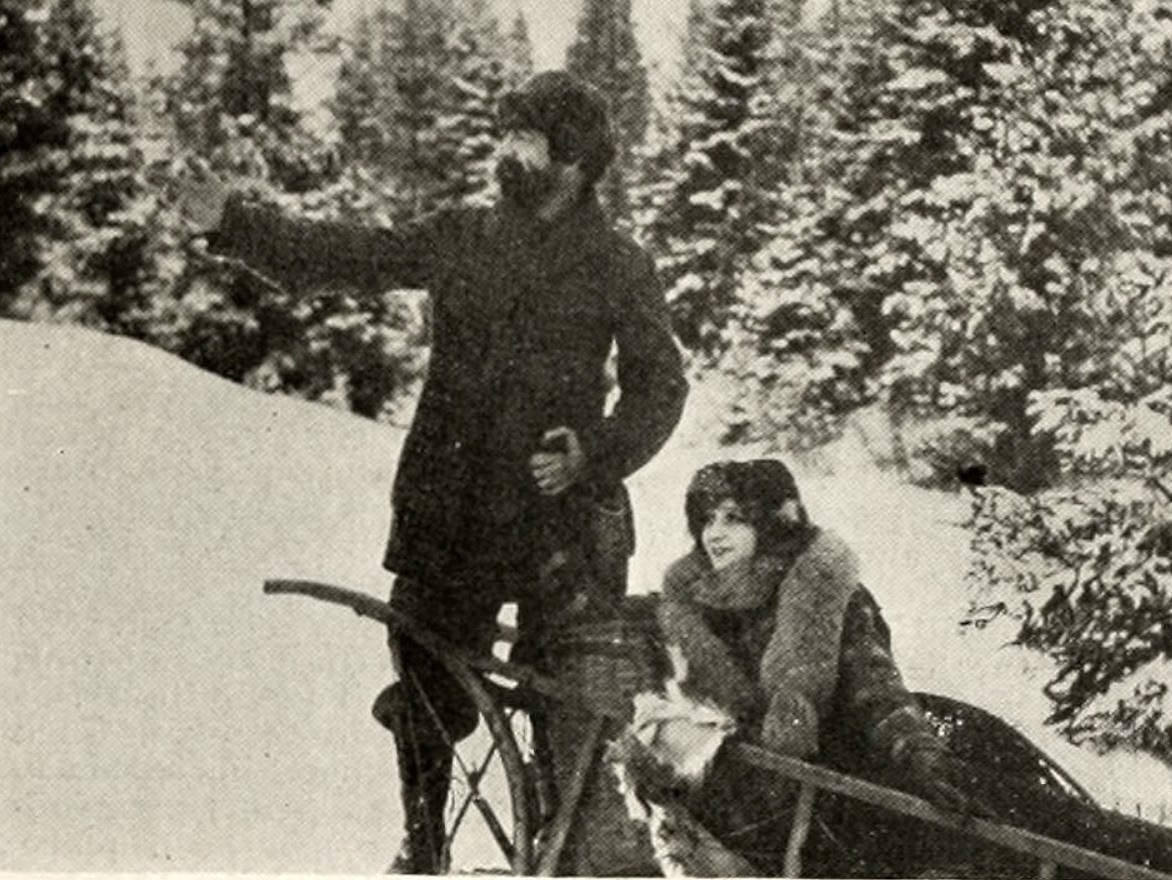
For decades the picture was thought lost, until a 35mm paper-print surfaced in the Library of Congress’s Paper Roll vault. Missing intertitles were reconstructed using censorship records from the Pennsylvania Board, leaving some narrative ellipses that actually amplify dread. The restored print runs 38 minutes—concise as a frost-bitten finger.
Place it beside The Coward (also 1915) and you see how psychological interiority could flourish outside Griffith’s monolithic shadow. Contrast it with Captain Swift’s drawing-room morality and the film’s rawness feels almost modern—Yukon’s answer to Impressioni del Reno’s expressionist swirl.
Does it rival the canonical poetry that inspired it? No—it rewrites it, scars it, drags it through slush and gun-smoke until what remains is less ballad than blood-simple reckoning. Yet in that ferocious economy lies its staying power. Every frame feels carved from permafrost and regret. The showdown, staged in total blackout save for gun-barrel sparks, is still more startling than most CGI shoot-outs because your imagination does half the lighting.
Essential for students of silent noir, of snow-laden fatalism, of cinema that treats revenge not as cathartic spectacle but as slow frostbite of the soul.
Seek it out on Kino’s Blu-ray, crank the thermostat low, pour something peaty, and watch the snow inside your TV screen blur with the snow outside your window. When the final iris closes on Maxwell and Lou clinging together like survivors on a floe, you’ll feel the room drop a degree—and you’ll know the North has claimed another convert.
Reviewed by: Rowan Kale, award-winning critic featured in Silent Avant and Flicker. Viewed via 4K restoration. No AI-generated imagery was used in the making of this critique.
IMDb 7.1
1933
Community
Log in to comment.