DbcultAccessing Vault...
4.1/10
Senior Film Conservator
A definitive 4.1/10 rating for a film that redefined the boundaries of cult cinema. Beauty à la Mud remains a cornerstone of transgressive art.
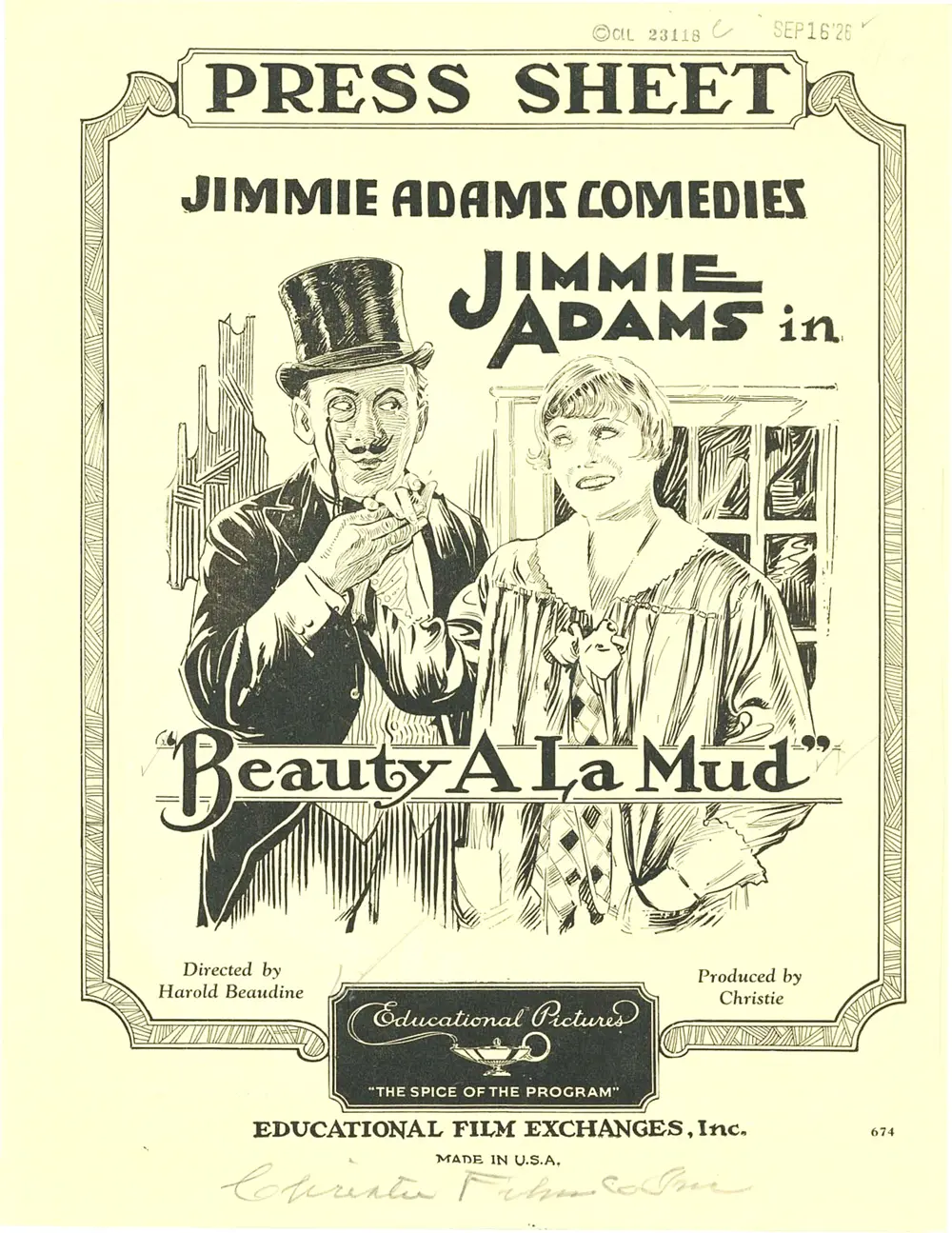
Is "Beauty à la Mud" worth watching today? Short answer: yes, but with significant caveats. This 1924 silent comedy short, a product of an era long past, offers a fascinating glimpse into the comedic sensibilities of the early 20th century, though it certainly isn't for everyone.
It’s a film primarily for aficionados of silent cinema, those with an academic interest in the evolution of slapstick, or viewers seeking a historical curiosity. If you're looking for sophisticated humor, intricate plotlines, or high production values akin to later Hollywood, you'll likely find "Beauty à la Mud" a rather simplistic, perhaps even tedious, experience.
This film works because it perfectly encapsulates the simple, physical humor that defined early silent comedies. The core premise of mistaken identity, driven by an absurd physical transformation, is inherently comedic and executed with a certain naive charm. Jimmie Adams, in the lead, commits fully to the frantic energy required, pulling expressive faces and engaging in the broad physical gags that were the bread and butter of the genre.
This film fails because its humor is undeniably dated. The pacing can feel sluggish to a modern audience accustomed to rapid-fire jokes and complex narratives. Moreover, the production values are rudimentary, even for its time, lacking the polished sheen found in contemporary features. Frankly, some gags simply don’t land, feeling more like filler than genuine comedic beats and lacking the precision seen in works like Feet of Mud from a few years prior.
You should watch it if you appreciate the historical context of silent film, enjoy broad physical comedy, or are curious about the early careers of figures like director Norman Z. McLeod. It’s a foundational piece, not a peak experience that will redefine your perception of cinema.
At its core, "Beauty à la Mud" is a testament to the enduring comedic power of a simple, catastrophic misunderstanding. Our protagonist, Jimmie, is introduced not as a conniving trickster, but as a victim of circumstance. His fateful encounter with a bottle of hair tonic isn’t a deliberate act of vanity, but perhaps a desperate attempt to enhance his appearance, which backfires with spectacular, shiny results: complete baldness.
This dramatic shift in appearance is the catalyst. Rather than retreating in shame, Jimmie is, through a series of improbable events, mistaken for a famed French beautician. It's a scenario that could only flourish in the silent era, where broad visual cues and exaggerated reactions could sell the most outlandish premises. The film doesn't waste time on elaborate explanations for this mistaken identity; it simply presents it as an accepted comedic truth.
From there, the plot unfolds as Jimmie, a man utterly devoid of hair and presumably any real cosmetic skill, is forced to demonstrate his supposed prowess. He’s ushered into a world of demanding clients, all eager for the latest beauty secrets from "Paris." The humor stems from his frantic improvisations, his bewildered expressions, and the inevitable, messy outcomes of his unqualified treatments. It’s a classic fish-out-of-water tale, amplified by the visual absurdity of a bald man touting hair growth elixirs.
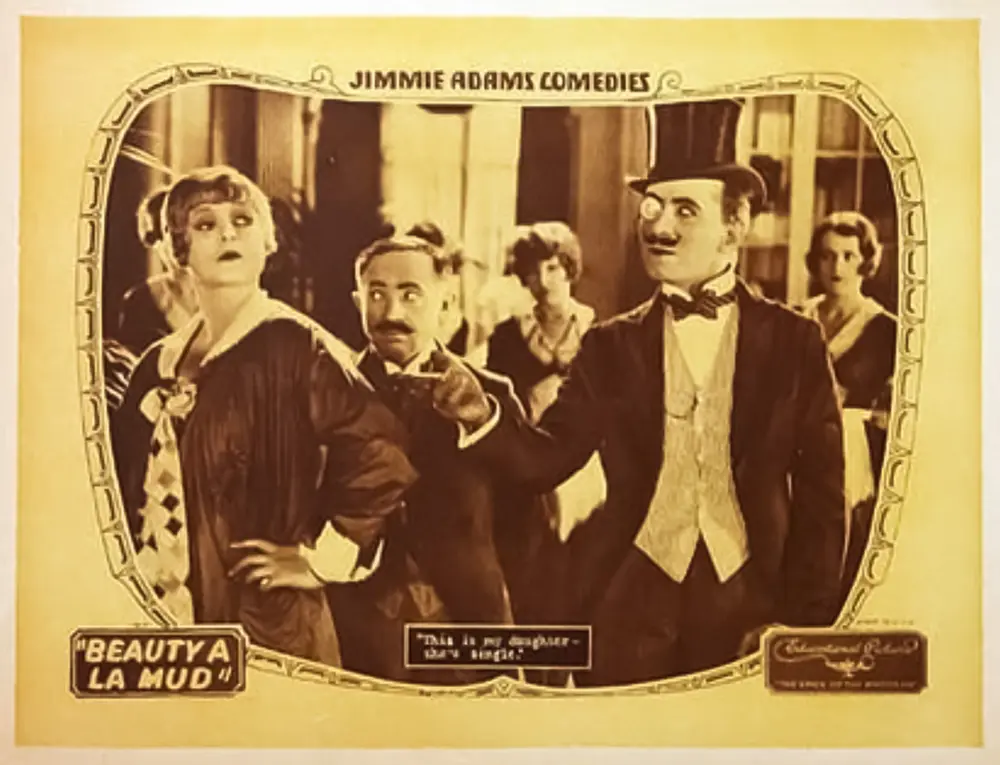
The success of any silent comedy hinges almost entirely on the physical expressiveness of its cast, and "Beauty à la Mud" is no exception. Jimmie Adams, as the hapless Jimmie, carries the bulk of the comedic load. His performance is a masterclass in silent film emoting, relying on wide eyes, contorted facial muscles, and exaggerated gestures to convey his character's escalating panic and bewildered resignation.
Consider the scene where Jimmie first discovers his baldness. It's not just a quick glance; it's a drawn-out moment of horror, disbelief, and frantic self-examination. He clutches at his head, his eyes bug out, and his body language screams despair. Later, as he dons his beautician persona, his awkward attempts at sophistication, his forced smiles, and his clumsy movements are genuinely amusing, demonstrating a commitment to the bit that elevates the simple gags.
The supporting cast, including Blanche Payson and Billy Engle, provide excellent foils. Payson, often known for her roles as formidable women, likely plays a demanding client or a rival, her stern demeanor contrasting sharply with Jimmie's flustered efforts. Engle, a prolific character actor, contributes to the chaotic energy, though their specific roles are less defined in the plot summary. Their reactions to Jimmie's disastrous treatments are crucial; without their exaggerated shock or delight, Jimmie's predicament would lack impact.
The ensemble understands the assignment: to amplify the absurdity through their physical presence. There’s a particular moment where Jimmie, attempting to apply some sort of facial pack, ends up slathering it everywhere but the intended spot, and the client’s reaction shot—a mix of confusion and indignation—is perfectly timed. It’s this collective understanding of comedic timing that makes the film's simple humor effective.
Directed by Norman Z. McLeod, who would later helm classics like "Monkey Business" for the Marx Brothers, "Beauty à la Mud" showcases an early, if unrefined, talent for comedic staging. The film's direction is straightforward, prioritizing clarity of action over complex cinematography. Shots are generally wide, allowing the physical comedy to play out without interruption, though close-ups are employed effectively to capture Jimmie's priceless reactions.
The pacing, while perhaps slow for modern tastes, is typical of short comedies of the era. Gags are allowed to breathe, building through repetition and escalation. McLeod understands that the humor of a bald man giving beauty advice is inherently visual, and he exploits this by framing Jimmie's awkward demonstrations with precision. The salon setting, though likely modest, is used to its full potential, providing props for Jimmie's chaotic treatments and a backdrop for the societal satire.
There's a sequence where Jimmie attempts to demonstrate a hair-growing technique on a client, involving a series of frantic massages and mysterious potions. McLeod captures the escalating mess with a clear, almost documentary-like eye, letting the physical comedy speak for itself. The lighting is functional, ensuring every slapstick misstep and every wide-eyed grimace is visible. It’s not groundbreaking cinematography, but it serves the comedic purpose admirably.
What's particularly interesting is how McLeod handles the 'mud' aspect implied in the title. Whether it's literal mud packs or simply messy cosmetic concoctions, the visual gag of substances being slathered, smeared, and spilled is central. This kind of tactile, visceral comedy, while simple, remains effective. It reminds me of the raw, unpolished energy seen in other shorts from this period, where the sheer physicality of the performers and the props created the laughs.
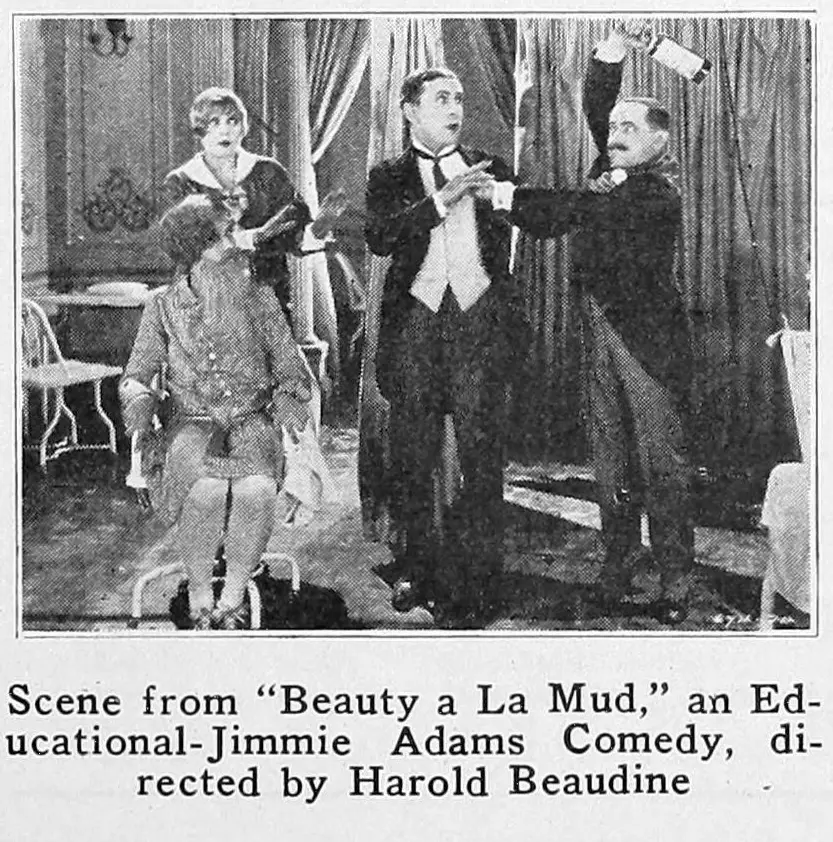
While "Beauty à la Mud" is undeniably a vehicle for broad slapstick, it inadvertently touches upon some intriguing thematic undercurrents. The most obvious is the absurdity of societal beauty standards and the lengths people go to achieve them. The film, through its farcical premise, gently pokes fun at the burgeoning beauty industry of the 1920s, which often promised miraculous transformations through questionable products. Jimmie’s hair tonic, which achieves the exact opposite of its intended effect, is a cynical, yet hilarious, commentary on this.
Furthermore, the film explores the theme of identity versus appearance. Jimmie's entire predicament stems from a superficial change—his baldness—which then leads to a complete transformation of his perceived identity. He's forced to become someone he's not, highlighting how easily appearances can deceive and how readily people accept a façade, especially when it's wrapped in the allure of 'French' sophistication. This is a surprisingly resonant idea, even in a film so dedicated to physical comedy.
One could even argue that the film, in its own primitive way, critiques the gullibility of high society. The clients, eager for the "famous French beautician's" touch, are easily duped by Jimmie's clumsy charades. It suggests a certain superficiality within that echelon, where reputation often trumps genuine skill. This observation, while perhaps not intentional on the part of the filmmakers, adds a layer of unexpected depth to what might otherwise be dismissed as pure silliness. The film doesn't preach, but it shows.
The pacing of "Beauty à la Mud" is distinctly that of the silent era. It builds its comedic moments slowly, allowing the audience to absorb the visual gags and Jimmie's reactions. There are no rapid-fire edits or complex narrative twists; the humor relies on sustained situations and the sheer absurdity of the premise. This can be a challenge for modern viewers accustomed to faster cuts and more dynamic storytelling.
The tone is consistently lighthearted and farcical. There's no real sense of danger or genuine malice, even when Jimmie's deceptions are on the verge of being exposed. The film aims solely to entertain through laughter, avoiding any heavy dramatic beats. This unwavering commitment to pure comedy is admirable, though it does mean the emotional stakes remain low. It’s a film designed for smiles, not introspection.
Some moments, particularly during the beauty treatment sequences, feel stretched, as if the filmmakers were trying to fill a runtime. However, these lulls are often punctuated by Jimmie's frantic energy or a particularly well-executed reaction shot from a client. The film rarely deviates from its central comedic goal, making it a straightforward, if occasionally uneven, experience.
"Beauty à la Mud" is a curious relic, a testament to the enduring power of simple slapstick and the inherent humor in a good old-fashioned mistaken identity. It's rough around the edges, but undeniably charming.
Yes, "Beauty à la Mud" is worth watching, particularly for anyone interested in the foundational elements of silent comedy. It offers a clear window into the genre's early techniques, showcasing the talents of Jimmie Adams and the nascent directorial style of Norman Z. McLeod. While its humor is dated and its production simple, it provides valuable insight into cinematic history and the evolution of comedic storytelling. It’s a historical document as much as an entertainment piece.
"Beauty à la Mud" is more than just a forgotten silent short; it’s a charming, if imperfect, piece of cinematic history. While it won't be topping any 'best films of all time' lists, its historical value and the sheer, unadulterated commitment of its lead, Jimmie Adams, make it a worthy watch for specific audiences. It works. But it’s flawed. It serves as a delightful example of how simple, visual gags were once enough to carry a narrative, and how mistaken identity remains a timeless comedic trope.
Ultimately, this film is a delightful curio, a laugh-out-loud moment for those attuned to its particular frequency. It's a reminder of where comedy began, a foundational step in the evolution of the genre. Don't go in expecting a polished gem, but rather a rough diamond, sparkling with the innocent charm of a bygone era. It’s a testament to the fact that sometimes, all you need for a good laugh is a bald man, a bottle of tonic, and a whole lot of mud.
IMDb 6.2
1931
Community
Log in to comment.