DbcultAccessing Vault...
Cult Review
Senior Film Conservator
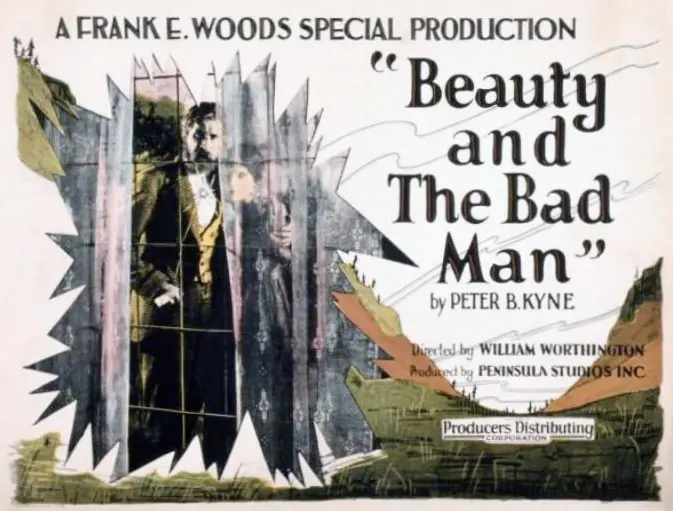
Short answer: yes, but with significant caveats. Is 'Beauty and the Bad Man' a silent film worth seeking out today? Absolutely, if you approach it with an appreciation for the expressive power of early cinema and a tolerance for grand melodrama. This film is unequivocally for silent film enthusiasts, those interested in early feminist narratives, and anyone who enjoys a story that gleefully subverts conventional morality. However, it is decidedly NOT for viewers seeking modern pacing, clear-cut ethical frameworks, or dialogue-driven storytelling that defines contemporary cinema.
It demands a particular kind of engagement, a willingness to lean into its dramatic flourishes and understand the visual language of its era. For the right audience, it offers a rich, compelling experience that transcends its age. For others, it might feel like an intriguing historical artifact rather than a gripping narrative.
The silent era, often dismissed as primitive, was a period of incredible innovation in visual storytelling. Films like 'Beauty and the Bad Man' stand as powerful reminders of how much could be conveyed without a single spoken word. The medium demanded a different kind of artistry – exaggerated expressions, symbolic gestures, and meticulously crafted intertitles became the lexicon of emotion and plot.
This film, in particular, leverages these tools to paint a vivid picture of ambition, moral ambiguity, and unexpected devotion. It’s a testament to the era’s filmmakers that such complex emotional landscapes could be navigated with such clarity, relying solely on the visual and musical score (which, sadly, is often lost to time or reimagined). The challenge, and indeed the beauty, lies in how these narratives were constructed, forcing the audience to actively participate in interpreting the nuanced performances.
Consider the sheer impact of a well-placed intertitle, revealing a character's inner turmoil or a pivotal plot twist. It’s a stark contrast to today's dialogue-heavy productions, demanding that every frame, every gesture, every set piece contribute meaningfully to the narrative. The silence itself becomes a character, amplifying the drama and allowing moments of quiet reflection to resonate with profound weight.
At the heart of 'Beauty and the Bad Man' lies Cassie’s remarkable transformation. She begins as a naive orphan, her angelic voice a pure, untapped resource, her ambition a simple desire for lessons. Her initial marriage to L. I. B. Bell is a transaction, a naive bargain for opportunity. The speed with which she abandons him upon discovering his 'low nature' in San Francisco speaks volumes about her innate strength and burgeoning self-awareness.
This isn't merely a plot point; it's a critical moment of agency. Cassie refuses to be a victim, choosing a precarious independence over a morally compromised union. Her subsequent rise from a mining town dance-hall singer to a celebrated opera diva in Moscow is a grand, sweeping arc, likely depicted through a montage of increasingly opulent costumes and grander stages. This visual progression is crucial, conveying her ascent not just professionally, but socially and personally.
Madoc Bill, the titular 'Bad Man,' undergoes his own fascinating journey. He's introduced as a gambler, a man of quick fortune and violent impulses, yet he becomes Cassie's most steadfast benefactor. His act of funding her education, a gesture of almost unbelievable generosity, frames him not just as a rogue but as a patron of the arts, a man capable of profound, if unconventional, loyalty. Even his four years in jail for murder don't diminish his commitment; upon release, his first priority is to build a home for her. This duality makes him a far more compelling figure than a simple villain.
L.I.B. Bell, on the other hand, serves as a tragic counterpoint. His initial deceit and later decline into consumption, culminating in a desperate, vengeful act, underscores the film's exploration of morality. His character arc, though less central, provides a stark contrast to Madoc Bill's redemptive journey. This film works because it masterfully crafts a compelling, if morally ambiguous, narrative of female ambition and the complex nature of patronage in an era where women had limited avenues for independence.
While specific directorial credits for such early films can sometimes be elusive or shared, the narrative structure and dramatic beats suggest a keen understanding of visual storytelling by writers Peter B. Kyne, Frank E. Woods, and Richard Schayer. The film likely employed stark contrasts in its settings to reflect character journeys and emotional states.
Imagine the visual juxtaposition: the humble, perhaps even austere, small-town church where Cassie first sings, set against the bustling, slightly menacing streets of San Francisco, followed by the rough-hewn charm of the mining town dance-hall. These early settings would then give way to the grandeur of European opera houses, perhaps with sweeping camera movements (or what passed for them at the time) and lavish sets designed to convey Cassie’s newfound status.
The climax, with the confrontation between Bell and Madoc, would undoubtedly have been staged for maximum dramatic impact. Close-ups would have emphasized the raw emotion of the characters – Bell’s desperation, Madoc’s protective resolve, and Cassie’s anguish. The use of lighting would have been critical, perhaps casting long shadows to heighten suspense or illuminating key figures to symbolize their moral standing or emotional transparency. This film fails because its melodramatic peaks occasionally verge on the absurd, demanding a suspension of disbelief that modern audiences might find challenging without appreciation for the silent era's specific dramatic conventions.
One of the most striking aspects of 'Beauty and the Bad Man' is its exploration of an unconventional romance. Cassie and Madoc Bill's relationship defies easy categorization. It's not a fairy tale; it's a bond forged in ambition, sacrifice, and a shared understanding that transcends societal judgments. Madoc Bill, a murderer, becomes her steadfast protector and benefactor, while her first husband, ostensibly 'good,' proves to be deeply flawed.
This is where the film offers an unexpected observation: it subtly critiques the superficial promises of traditional marriage, juxtaposing Bell's empty vows with Madoc Bill's tangible, if illicit, support for Cassie's dreams. Madoc’s initial act of writing a $10,000 check isn't just a plot device; it's a declaration of a different kind of devotion, a belief in Cassie's talent that Bell never truly possessed. Their love story is less about passion and more about loyalty and mutual respect, built on a foundation of his belief in her potential and her eventual deep gratitude and affection for his unwavering support.
The film dares to suggest that true partnership can exist outside the bounds of conventional morality, that a 'bad man' can offer more genuine support and love than a 'respectable' one. This is a strong, debatable opinion embedded within the narrative: does Madoc Bill's redemption truly absolve his past, or does Cassie's choice to marry him simply highlight her pragmatic understanding of who truly values her? The ending, with them settling into the house he built, feels both earned and deeply unsettling, implying that wealth and protection from a 'bad man' are, for Cassie, preferable to a life constrained by conventional morality.
The plot of 'Beauty and the Bad Man' is a masterclass in melodramatic pacing. It moves swiftly, almost breathlessly, through significant life events: a quick marriage, an immediate abandonment, a discovery of talent, a grand patronage, a rise to fame, a prison sentence, and a violent climax. This rapid progression is characteristic of silent films, which often packed immense narrative into shorter runtimes than modern features.
The tone shifts dramatically, from the initial naiveté of Cassie's small-town life to the gritty realism of the mining town, the glamour of the opera stage, and the dark undercurrents of crime and revenge. This emotional rollercoaster keeps the audience engaged, even as it demands a certain suspension of disbelief. The filmmakers understood the power of contrast, using these shifts to heighten the emotional stakes. For instance, the serene beauty of Cassie's operatic triumph is punctuated by the harsh reality of Madoc Bill's incarceration, creating a poignant juxtaposition that deepens the audience's investment in their story.
The final confrontation, for example, would have been paced with increasing tension, perhaps through rapid cuts or accelerated action, culminating in the swift, decisive violence that resolves the central conflict. This kind of dramatic economy is a hallmark of effective silent film storytelling, ensuring that every scene serves a clear purpose in advancing the plot and developing character.
In the absence of dialogue, the burden of conveying emotion and character falls squarely on the actors' shoulders. Mabel Ballin, as Cassie, would have been central to the film's success. Her performance would need to navigate Cassie's journey from innocent vulnerability to confident diva, conveying both her inner strength and her capacity for deep affection through subtle facial expressions and expansive gestures.
Imagine Ballin's portrayal of Cassie's disillusionment with Bell, perhaps a subtle hardening of her gaze, a slight recoiling of her body. Then, her transformation on stage, her eyes alight with passion, her posture radiating confidence. Forrest Stanley, as Madoc Bill, would have had the challenging task of making a 'bad man' sympathetic and ultimately heroic. His performance would require a careful balance of ruggedness, generosity, and a simmering intensity, particularly in scenes where his protective instincts emerge.
Even supporting roles, such as Bell played by George Beranger, would demand a level of expressive acting to convey their motivations and emotional states. Beranger’s portrayal of Bell’s decline and final, desperate act would require conveying a complex mix of resentment, jealousy, and perhaps even a twisted sense of entitlement, all without uttering a word. This focus on physical and emotional clarity in acting is a strength of the silent era, making the performances incredibly impactful when viewed with the right lens.
Yes, 'Beauty and the Bad Man' holds significant value for contemporary audiences, particularly those with an interest in film history and the evolution of narrative. It's a fascinating artifact that showcases the dramatic capabilities of silent cinema, offering a story that, despite its age, grapples with themes that remain relevant: ambition, social mobility, the complexities of love, and the blurred lines between good and evil. You should watch it if you're fascinated by the social dynamics of the early 20th century, appreciate the expressive power of silent film acting, or enjoy a story where the lines between hero and villain are delightfully blurred.
However, be prepared for a viewing experience that requires a different kind of engagement. The pacing, the acting styles, and the reliance on visual cues rather than dialogue can be jarring for those accustomed to modern filmmaking. It's best approached not just as entertainment, but as a window into a bygone era of storytelling, where innovation was born out of perceived limitation. For the right viewer, it's a rewarding journey.
'Beauty and the Bad Man' is more than just a historical curiosity; it's a compelling piece of early cinema that deserves re-evaluation. While its melodramatic style and silent presentation might not appeal to every modern palate, for those willing to immerse themselves in its unique charms, it offers a rich and thought-provoking experience. The film's willingness to explore complex morality, particularly through the lens of Cassie's journey and her unconventional relationship with Madoc Bill, makes it surprisingly relevant. It challenges us to look beyond surface appearances and consider where true support and devotion truly lie. This is a film that, despite its age, still has much to say about human nature, ambition, and the enduring power of a singular voice, both literally and figuratively.
IMDb 5.7
1930
Community
Log in to comment.