DbcultAccessing Vault...
Cult Review
Senior Film Conservator
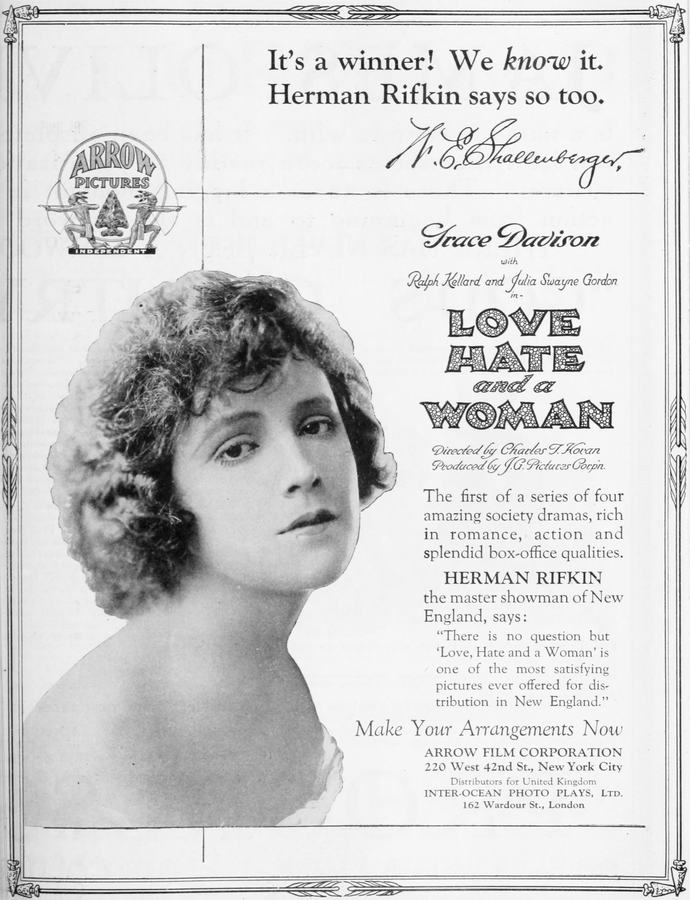
The reels unwind like exhale of frost on velvet: Charles Horan’s screenplay knots society-page gossip with bohemian pigment, yielding a film that feels perpetually halfway between kiss and slap. Robert Frazer’s Lockwood sports the hollow cheeks of a man who paints because speech costs too much; when Daryl—Grace Davison at her most mercury—admires his canvas, the glance is surgical, as if she’s pricing the frame more than the oils. Their courtship montage—ice-skating shadows captured in side-lit silhouette—prefigures the kinetic lyricism later perfected in Der Herr der Liebe, yet here the glide is treacherous: every pirouette could crack the lake of class pretense beneath.
Julia Swayne Gordon’s Mrs. Ramsey enters each scene trailing ostrich-plume boas that look recently torn from angel wings. She embodies the parasite chic that silent cinema adored: half Gentleman of Quality dowager, half When Men Desire siren. Her exposure of Daryl’s wage labor is filmed not in overwrought close-up but via a letter—white sheet dropped on marble floor like a gauntlet; the camera lingers on the paper longer than any visage, letting shame seep into the grout. Silent-film semiotics 101: text as wound.
The pivot—Daryl’s impromptu claim that Lockwood is her husband—lands with the clang of a iron gate. Suddenly the resort’s baroque hallways compress; doors slam like metallic chords, and the editing cadence switches from languid iris-in/iris-out to staccato cross-cuts reminiscent of The Hand Invisible’s panic grammar. Yet Horan refuses to luxuriate in humiliation; instead he engineers a redemption arc whose engine is mistaken identity, that perennial fuel of early ’20s melodrama. One thinks of La forza della coscienza where conscience also ricochets among masks, though here the stakes feel pricklier—women’s livelihoods hinge on marital status the way men’s hinge on stock futures.
Director (uncredited, common for 1923 FBO releases) leverages location footage from Lake Placid spliced with studio sets whose papier-mâché Alps still exhude menace. Interiors are gas-lit umber, exteriors blinding alabaster—high-contrast symbolism that prefigures later noir binaries. When Lockwood trudges across a moon-field to clear his name, the snow registers not as purity but as erasure: every footstep annihilates evidence, a visual thesis on how quickly reputations are swallowed. Intertitles, tinted amber, appear with the punctuality of Greek choruses: “The mountain confesses nothing—it forgets in white.”
Davison’s Daryl is silent-era dynamite: brows like circumflexes, smile that clocks in a hair too late—she lets you feel the calculation. Compare her to Lila Peck’s ingenue turn in Panna Meri; both actresses weaponize demure posture, but Davison adds a seamstress’s precision, as though every pleat in her borrowed couture were numbered. Frazer, meanwhile, channels a languid bruise; his eyes carry the resignation of a man who already sees himself framed. Their chemistry is less embrace than collision—kinetic mistrust magnetized.
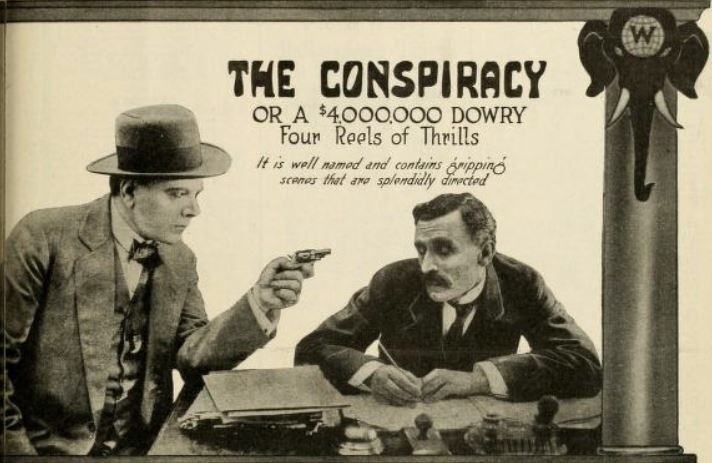
Charles McDonald as Ramsey—cuckolded industrialist—has a voiceless fury conveyed via jaw muscles and the repetitive crushing of a Panama hat. It is he who provides the pistol that will, of course, jam at altitude, a trope reused in mountain-climbing thrillers for decades. Yet within the jam lies the film’s moral: mechanisms—like marriages—fail when exposed to cold truth.
Modern viewers, marinated on post-Mankiewicz cynicism, may scoff at the deus-ex-machina that exonerates Lockwood. A chance bank-ledger, a dying nun’s affidavit, a sled-dog that arrives exactly when footprints fade—plot devices tumble like dominos carved by Fate herself. Still, within the 1923 ecosystem such contrivance read as divine punctuation. World War I’s cadavers still littered memory; audiences craved assurance that chaos resolves, that the cosmos keeps receipts. Thus the film’s avalanche isn’t spectacle—it’s absolution, burying lies so love can sprout on fresh snow.
Daryl’s masquerade dramatizes the era’s garment industry—where working-class women stitched the silk their bodies could never legally inhabit. When her livelihood is unmasked, the scandal isn’t moral but economic: a seamstress dared ascend to consumer. The film sidesteps full revolution; instead it offers marital incorporation as safety valve. Yet the image of a model baptizing herself in borrowed satin lingers longer than the conservative resolution, foreshadowing the flapper’s forthcoming insurgence. One sees proto-Dietrich defiance in Davison’s lifted chin; she will not apologize for hunger.
Conversely, Mrs. Ramsey’s patronage economy—sex for cultural capital—parallels The Beautiful Mrs. Reynolds, though here the older woman loses, punished not for desire but for indiscretion. The film thus double-binds its heroines: working girl must marry up; aristocrat must stay veiled. Progress paces in petticoats.
No original cue sheets survive; contemporary exhibitors likely mashed Grieg’s “Winter” with generic photoplay mood-music. Yet the film’s rhythm suggests something more avant-garde: imagine pianissimo tremolo during snow-field pursuit, erupting into Stravinskian polyrhythms at avalanche climax. The absence of authoritative score invites each iteration to be re-composed, making every screening a palimpsest—Love, Hate and a Woman as perpetual work-in-progress.
Set the film beside The Social Highwayman and you notice both pivot on fraudulent identity, yet where Highwayman treats disguise as playful lark, Love, Hate wields it as existential tightrope. Align it with With Neatness and Dispatch and observe identical tropes of compromised letters, though Dispatch resolves via courtroom, Love via alpine providence. The diptych reveals how melodrama mutates to fit its ecosystem: urban procedurals crave judiciary; mountain fables demand avalanche.
The existing print—held by EYE Filmmuseum—suffers from nitrate creep along the margins, causing the frame’s right side to undulate like heat haze. Digital 4K scans stabilize motion but cannot resurrect lost footage; approximately 7 minutes remain missing, accounting for abrupt cuts during Lockwood’s sleigh exit. Even mutilated, the artifact mesmerizes: scratches become snowfall, emulsion cracks resemble distant lantern light. Damage morphs into aesthetic, a reminder that decay writes its own intertitles.
Love, Hate and a Woman does not reach the hallucinatory apex of Revolutionens datter’s historical fresco, nor the proto-feminist ferocity of Our Mrs. McChesney. What it offers is more delicate: a glacier-lit pas de trois where identity is both costume and currency, where absolution arrives wearing skis. Its politics are muddled, its resolution pat, yet its after-image—Davison’s triumphant grin against endless white—burns retina-long after curtains fall. For archivists, it is a call to rediscover FBO’s scattered oeuvre; for cinephiles, a snow-globe shaken, letting faux-crystal taboo swirl in slow, hypnotic storm.
Watch it if you revere Frank Borzage’s street-lamps, if you wish Tarzan of the Apes had more petticoat tension, if you believe snow can absolve sin better than scripture. The film survives as flawed icicle—jagged, gleaming, capable of cutting and reflecting in same glint. Thaw carefully.
IMDb —
1914
Community
Log in to comment.