DbcultAccessing Vault...
Cult Review
Senior Film Conservator
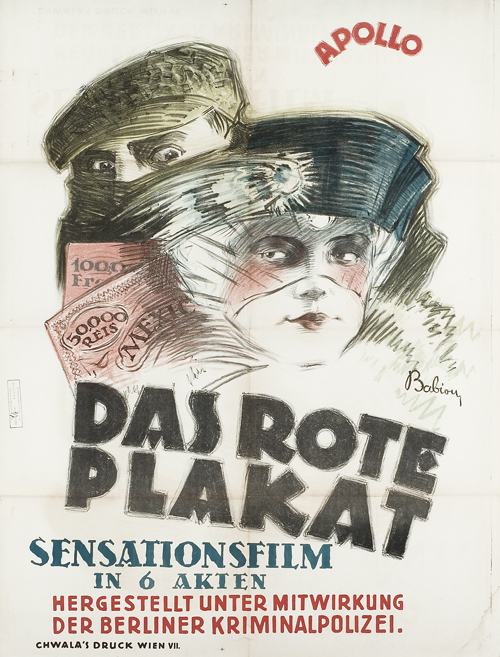
In an era brimming with cinematic innovation, yet often overshadowed by the cacophony of later, more vociferous works, certain silent films emerge from the historical haze with a potency that defies the passage of time. Among these, Das rote Plakat, 2. Teil - Die eiserne Acht stands as a testament to the profound narrative capabilities of early cinema. This second installment, building upon the foundations of its predecessor, plunges viewers into a world teetering on the brink, where the shadows of post-war anxiety coalesce with the burgeoning threat of technological warfare and clandestine societies. It is a film that, even a century later, retains its chilling relevance, demonstrating a sophisticated understanding of suspense and human frailty that belies its vintage.
Leo Heller’s screenplay, a masterclass in intricate plotting, unfurls a tapestry of intrigue centered on the enigmatic disappearance of Professor Eldridge, whose scientific breakthroughs are as revolutionary as they are perilous. His legacy, a cryptic 'Red Poster' and the whispered legend of 'The Iron Eight,' forms the nucleus of a global conspiracy. This isn't merely a chase; it's a cerebral battle, a psychological labyrinth where trust is a luxury few can afford. The very fabric of society, still mending from the scars of global conflict, is threatened by a cabal whose ambitions know no bounds. The film’s genius lies in its ability to personify these abstract threats, grounding them in the visceral performances of its stellar cast.
At the heart of this maelstrom is Georg H. Schnell as Detective Klemens, a figure of compelling internal conflict. Schnell imbues Klemens with a weary gravitas, his sharp intellect perpetually at odds with a past marred by professional and personal disappointments. His portrayal is a nuanced study in stoicism, punctuated by flashes of an almost desperate determination. We witness his character's journey not through dialogue, but through the subtle shifts in his posture, the intensity in his gaze, and the almost imperceptible tremor of his hands – a masterclass in silent film acting that conveys a universe of unspoken thoughts and emotions. His Klemens is no infallible hero, but a man burdened by the weight of a world on the precipice, making his eventual triumphs all the more resonant.
Opposite Schnell, Tatjana Irrah shines as Lena, the enigmatic spy whose reappearance ignites both Klemens’s dormant affections and his professional alarm. Irrah’s performance is a captivating blend of vulnerability and steely resolve. She navigates the treacherous waters of espionage with an alluring grace, her eyes conveying a depth of experience and a hint of tragic romance. Lena is not merely a femme fatale; she is a complex individual, caught between loyalties and driven by a moral compass that, while perhaps skewed by circumstance, ultimately points towards justice. Her chemistry with Schnell is palpable, adding a layer of poignant human drama to the high-stakes thriller, reminiscent of the intricate relationships explored in films like Transgression, where personal desires clash with societal expectations.
The antagonists are equally formidable. Ludwig Rex, as the ruthless Baron von Stauffen, personifies the chilling ambition of 'The Iron Eight.' Rex’s imposing physical presence and menacing expressions create a villain of truly memorable proportions. He is not a caricature, but a man driven by a cold, calculating ideology, making his confrontations with Klemens fraught with genuine tension. His performance could draw parallels with the shadowy figures found in other early thrillers, perhaps even hinting at the kind of organized crime elements seen in Gambler's Gold, though with a far more sinister, global reach. Meanwhile, Adolf E. Licho, despite his character Professor Eldridge’s initial absence, casts a long shadow over the proceedings. His brief, yet impactful, appearances in flashbacks and through photographic evidence establish the intellectual gravitas and the scientific genius that set the entire plot in motion. The supporting cast, including Alfred Haase, Ida Perry, Carl Grünwald, and Joe Schoene, contributes significantly to the film’s rich tapestry, each bringing distinct characterizations that enhance the sense of a world teeming with hidden agendas and desperate individuals.
While Leo Heller is credited solely as the writer, the visual execution of his intricate plot suggests a directorial hand deeply attuned to the nuances of suspense. The film’s visual language is consistently striking, employing stark contrasts of light and shadow to heighten the pervasive sense of paranoia and danger. Cinematography masterfully utilizes deep focus and dynamic camera angles to immerse the audience in Klemens’s perilous journey. From the claustrophobic confines of Eldridge's booby-trapped laboratory to the grand, yet equally menacing, ballrooms where spies exchange coded glances, every setting is imbued with a palpable atmosphere. The pacing is relentless, a continuous build-up of tension that rarely allows for respite, drawing the viewer deeper into the unfolding mystery. This sustained intensity is a hallmark of truly effective thrillers, a quality one might observe in the taut narratives of films like The Phantom's Secret, which similarly leverages atmosphere to create a sense of impending dread.
The use of visual motifs, particularly the recurring image of the 'Red Poster,' is exceptionally clever. It serves not just as a plot device but as a symbolic representation of the pervasive threat, a constant reminder of the unseen forces at play. The meticulous set design and art direction further elevate the film, creating a believable, albeit heightened, reality for its characters to inhabit. The attention to detail in the costumes, the architecture, and even the smallest props speaks volumes about the dedication to crafting an immersive experience. This commitment to visual storytelling ensures that even without spoken dialogue, the narrative remains crystal clear and emotionally impactful. The subtle gestures, the dramatic close-ups on faces contorted by fear or cunning, and the sweeping long shots that establish the scale of the conspiracy all contribute to a rich, immersive viewing experience.
Beyond its immediate thrills, Das rote Plakat, 2. Teil - Die eiserne Acht delves into profound themes that resonate even today. The fear of unchecked technological advancement, the fragility of international peace, and the ever-present threat of clandestine organizations seeking to manipulate global events are as pertinent now as they were a century ago. The film acts as a chilling commentary on the anxieties of its time, a post-Great War world grappling with the potential for even greater destruction. It explores the moral ambiguities inherent in espionage, where lines between hero and villain blur, and where loyalty is a commodity often bought and sold. This exploration of complex ethical landscapes is far more sophisticated than many of its contemporaries, placing it alongside more thoughtful dramas of the era, rather than mere escapist entertainment.
The narrative’s focus on a hidden, all-powerful cabal, 'The Iron Eight,' taps into a primal human fear of unseen forces controlling our destinies. This trope, while common, is handled with a gravitas that elevates it beyond simple sensationalism. The film suggests that true power lies not in overt displays of force, but in the subtle manipulation of information and the strategic application of terror. It asks uncomfortable questions about accountability and the lengths to which individuals and nations will go to secure dominance. In this sense, it is a precursor to many modern spy thrillers, laying the groundwork for the genre's enduring fascination with global conspiracies and the lone hero fighting against overwhelming odds. One might even see echoes of the complex political machinations depicted in historical analyses like Allies' Official War Review, No. 25, though fictionalized and dramatized to a thrilling degree.
In conclusion, Das rote Plakat, 2. Teil - Die eiserne Acht is far more than a historical curiosity; it is a vital piece of cinematic heritage that showcases the immense storytelling potential of the silent era. Its intricate plot, compelling performances, and masterful direction combine to create a film that is both thrilling and thought-provoking. It challenges viewers to consider the nature of power, the price of secrets, and the resilience of the human spirit in the face of overwhelming adversity. For enthusiasts of early cinema, particularly those drawn to the nascent espionage genre, this film is an absolute must-see. It serves as a powerful reminder that the art of captivating an audience through visual narrative and emotive performance was perfected long before the advent of synchronized sound. Its influence can be felt in the DNA of countless thrillers that followed, proving that a well-crafted story, executed with vision and passion, truly transcends time and technological limitations.
While other films of the period might have opted for more overt comedy, like the delightful antics in The Goat or High and Dizzy, Das rote Plakat, 2. Teil - Die eiserne Acht leans into the darker, more serious implications of its subject matter, delivering a consistent tone of high-stakes drama. Its narrative complexity and character depth position it as a benchmark for the genre, demonstrating that silent cinema was capable of far more than simple spectacle. It's a film that demands attention, rewards contemplation, and ultimately leaves an indelible mark on the viewer, much like a cryptic red poster, forever etched in the mind's eye. This is not just a film; it is an experience, a journey into the heart of a bygone era's deepest fears and most thrilling adventures.
Community
Log in to comment.