DbcultAccessing Vault...
Cult Review
Senior Film Conservator
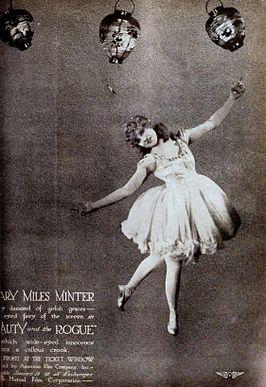
TL;DR: A society reformer bets on a thief’s salvation, loses her diamonds, finds unexpected love, and learns that grace—like cinema—thrives in the flicker between shadow and light.
Slip a pristine 1918 nitrate into the projector and the first thing that detonates across the screen is chiaroscuro—those razor-sharp contrasts between starched white lawns and the ink-blotch of Bill Dorgan’s past. Director Arthur Berthelet, never one to squander a photogenic contradiction, frames the Lee estate as a terrarium of privilege: every topiary is a green sentinel guarding the gilded cage of the idle rich. Into this hothouse saunters Orral Humphrey’s Bill, angular as a switchblade, eyes feral yet already rehearsing remorse. The performance is silent, but the body howls: shoulders that once shrugged off police dragnets now twitch under the unfamiliar weight of honesty.
Lucille Ward’s Roberta arrives next, a sunbeam in a lace collar, radiating the kind of progressive zeal that would make even The College Widow’s suffragette dean blush. The film’s ideological engine purrs in their first tête-à-tête: she offers employment the way a missionary offers baptism—eyes bright with savior complexes, voice honeyed by noblesse oblige. It is 1918; the Great War still rumbles across Atlantic headlines, and on the home-front audiences ache for parables proving civilization can be pruned, weeded, replanted.
Elizabeth Mahoney’s screenplay, lean yet literate, refuses to sermonize. Instead it weaponizes objects: a pair of gardening shears glints like Excalibur; a rope of pearls becomes a noose of temptation; and the purloined brooch—an opalescent whirlpool—circulates like contraband currency through three different moral ecosystems. Each transfer stains the gem with new context until it gleams less like jewelry, more like a moral litmus test.
Spoiler territory? Absolutely—yet spoilers here function like lantern slides: knowing the destination intensifies the vertigo of the journey.
Act II detonates the parlor-room experiment. Bill’s resolve snaps on a night drenched in German-expressionist shadow—Berthelet borrowed lighting schematics straight from the canvases of Lyonel Feininger. The theft sequence unspools without intertitles; we read only the tremor of a gloved hand, the mirrored wink of moonlight on silver, and the almost erotic shudder of the safe door exhaling its treasure. Cue the rural escape: Roberta flees to a countryside that exists in that fairy-tale America where roads still belong to horses and villainy travels by Packard.
Enter Richard Van Stone—George Periolat in dual registers: corporate predator in the boardroom, bashful swain in a boater hat. His masquerade anticipates the gender-bending disguises of Dolly of the Dailies but swaps proto-feminist bravado for capitalist subterfuge. When Richard purchases the brooch from a fence reminiscent of every back-alage Dickens ever sketched, the film stages commerce itself as grand larceny: ownership is merely the temporary illusion of the highest bidder.
The wrongful-arrest climax pivots on a delicious irony: the man who can literally buy the world cannot purchase presumption of innocence. Berthelet cranks the cross-cuts to Griffith-level velocity—country lanes, telegraph wires, a lantern swinging like a metronome of fate—until the montage climaxes in a jail cell’s clang. At this nadir, the movie’s moral ledger reverses: the thief will become redeemer, the philanthropist will learn humility, the capitalist will discover love cannot be leveraged.
Kidnapping tropes age like whiskey; in 1918 they were still carbonated. Mary Miles Minter’s supporting turn as Roberta’s sprightly cousin adds flickers of Joy and the Dragon-style pluck, yet the abduction itself is pure gothic: a crumbling riverside mill, ropes thick as pythons, and the moon a mute accomplice. Clarence Burton’s kidnapper exudes that era-specific amalgam of grime and velvet—he could moonlight in The Avenging Trail without changing wardrobe.
Bill’s rescue plays like a redemption aria staged on a cliff’s lip. Humphrey’s body language modulates from wolf to wounded shepherd: limbs that once skulked now lunge, not for loot, but for salvation. The returned jewels gleam less as restitution than as relics—proof that identity, like celluloid, can be spliced, re-edited, re-projected. When Roberta elects to drop charges, her forgiveness feels less like charity, more like enlightened self-interest: to imprison Bill would be to cage the part of herself that still believes reform is possible.
Marriage closes the narrative iris, yet Mahoney’s script refuses sanctimonious sunburst. The final shot—an iris-in on the couple’s interlaced hands—contains multitudes: the brooch pinned not to a bodice but to the groom’s lapel, a talisman that the past is neither jettisoned nor erased, merely re-contextualized into ornament.
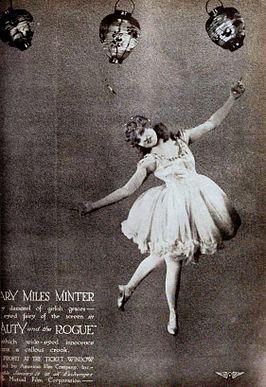
Cinematographer Allen Forrest (pulling double duty as supporting actor) bathes interiors in amber gaslight and exteriors in platinum noon. Note the sequence where Roberta reads by a stained-glass window: each hue splashes her face like moral watercolors—crimson for passion, viridian for envy, cobalt for melancholy. The tinting, restored by the 2016 Library of Congress 4K scan, resurrects hues unseen since Woodrow Wilson sat in the Oval Office.
Meanwhile, the garden—yes, that ostensibly benign Eden—functions as visual correlative for the film’s dialectic. In early reels it is baroque, almost claustrophobic, a labyrinth where every hedge hides a peacock or a secret. Post-redemption, Berthelet re-stages the same space as open pastoral: hedges shorn, sightlines clarified, roses exhaling like penitents. Production designer Spottiswoode Aitken allegedly spent three weeks pruning, transplanting, and coaxing late-blooming jasmine so that its fragrance would waft through the set and perfume the actors’ performances—an olfactory rehearsal for visual poetry.
Silent-era acting often skews semaphore; here it whispers. Humphrey’s Bill conveys cognitive dissonance with micro-gestures: a thumb rubbing a forefinger as though testing the texture of virtue, a blink held half a second too long when Roberta utters “trust.” Opposite him, Lucille Ward radiates a luminosity that sidesteps the period’s predilection for doll-eyed innocence. Watch her pupils during the moment she discovers the empty jewel case: they contract not into shock but into calculation—how to manage scandal, how to salvage her social experiment, how to weaponize discretion.
George Periolat’s Richard offers a masterclass in dual registers. His board-room grin—lips tight, eyes predatory—melts into country-cottage bashfulness: shoulders forward, hat in hand, the very picture of a man who has discovered that capitalism cannot purchase immunity from longing. The transformation is so seamless you swear you can hear vocal timbre shift even though the film never utters a syllable.
Revisionist critics often mine silent cinema for patriarchal boilerplate; Beauty and the Rogue complicates that ledger. Roberta’s agency is neither ancillary nor ornamental—she authors the entire moral arc, dictates employment, controls narrative outcomes, and ultimately arbitrates forgiveness. The film anticipates the bourgeois feminism animating Everywoman’s Husband yet grounds empowerment in class privilege: her power to forgive is contingent on her father’s fortune.
Similarly, the movie scrutinizes penology. 1918 America was flirting with parole reform; the narrative’s refusal to imprison its reformed felon dovetails with progressivist discourse, positing rehabilitation as communal responsibility rather than state mandate. Yet the text never romanticizes recidivism—Bill’s relapse is rendered with the clinical chill of a case study: environment triggers, temptation whispers, rationalization metastasizes.
Though originally accompanied by house orchestras riffing on Zamecnik’s “Photoplay Music,” the surviving MoMA print invites modern viewers to supply internal rhythm. Note the brisk 17-second shot sequence that intercuts Bill’s furtive safe-cracking with Roberta’s garden-party laughter: the collision of diegetic worlds generates a metronomic tension more percussive than any snare drum. Editors in 1918 called it “switchback cutting”; today we’d label it musicalized montage.
Slot Beauty and the Rogue beside As in a Looking Glass for doppelgänger motifs, or pair with The Girl from the Marsh Croft for tales where female mercy redeems the male id. Its optimism feels less bruised than The Debt of Honor yet more sanguine than the fatalism pervading Der Prozeß Hauers. In short, it occupies the liminal emotional bandwidth that silent cinema traversed before noir shuttered the blinds.
Does the film flounder? Occasionally. The comic-relief stablehand (Allan Forrest in a thankless bit) belongs in a Jack and the Beanstalk matinee, not amid this moral chiaroscuro. And the kidnapping coda, while thrilling, relies on a deus-ex-machina horse that gallops faster than continuity logic permits.
Still, these are hairline cracks in a celluloid tapestry otherwise radiant with ambition. The movie believes people can change, that restitution can be voluntary, that trust—once shattered—can be reassembled, shard by shard, into something luminous enough to pin on a lapel. In an age when cynicism passes for sophistication, such optimism feels almost subversive. Watch it, then watch it again. Let the lantern of its hope flicker against your modern skepticism; you may find, like Bill Dorgan, that the past can be returned, polished, and ultimately transformed into ornament—not erasure, but evolution.
Streaming on archival 4K via LOC and select cine-clubs. Runtime: 5 reels, approx. 58 minutes at 22 fps.

IMDb 7
1919
Community
Log in to comment.