DbcultAccessing Vault...
Cult Review
Senior Film Conservator
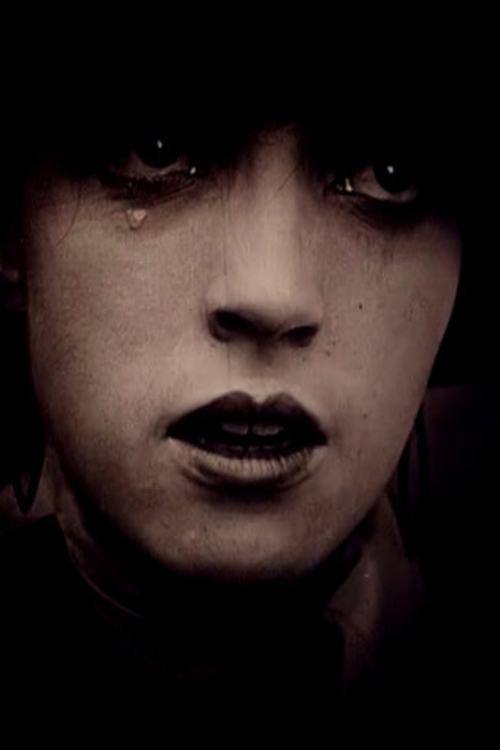
Gossip in Insinuation behaves like kudzu—at first merely decorative, then suddenly strangling every beam and balustrade of a town that imagines itself genteel. Director-writer Margery Wilson, doubling as auteur and moral referee, lets the camera loiter in parlors where lace curtains twitch and tongues sharpen against whetstones of boredom. The result is a silent film that sounds loud: title cards crack like buggy whips, and the absence of spoken dialogue only amplifies the hiss of insinuation.
Wilson’s screenplay folds time like origami. We open on a rickety performance wagon whose axles groan toward a nameless county seat—think tobacco-stained streets, a single gas lamp flickering like a faulty conscience. The troupe’s repertoire is Shakespeare-lite: truncated melodramas that rural audiences swallow like patent medicine. Yet the real performance begins offstage when Clara Vale (Virginia Rumrill, equal parts firefly and bruised peach) steps down from the wagon and into the crosshairs.
Rumrill’s Clara carries the wary elegance of a woman who has learned that applause and approbation are not synonyms. Her carriage is erect but never rigid; when she listens, the tilt of her chin suggests someone translating a foreign insult into self-protective poise. It is the kind of performance that makes you conscious of vertebrae—every slight bend registers as capitulation or defiance.
Enter Mrs. Darnell (Agnes Neilson), a widow whose mourning clothes have yellowed into habitual spite. Neilson plays her like a vinegar-soaked doily: ornamental acidity. She gathers tidbits the way other women gather eggs—gingerly, lest they crack and soil her apron. In one blistering sequence, she relays to the town barber that Clara has been “seen” exiting the apothecary at an unseemly hour. The barber, whose pole is already striped with arterial red, passes the rumor as though snipping bangs—swift, casual, irreversible.
Wilson intercuts this with Clara alone in the theatre, rehearsing Desdemona’s willow song. The juxtaposition is surgical: as the虚构的 infidelity metastasizes, Clara’s voice (via intertitle) grows more tremulous, her clasped hands more bridal. The montage anticipates Hitchcock’s easy virtue suspense by nearly a decade, proving that silence can be more gossipy than dialogue.
Clara’s brother Jack (Bradley Barker) is introduced in a dissolve that melts his boyish grin into the leer of a cardsharp. Barker’s physicality—shoulders too eager, tie askew—embodies the moment when gangly youth pivots toward delinquency. The local saloon, all spittoons and sawdust, becomes his graduate school; Al K. Hall’s whiskey-soaked mentor teaches curricula in graft and grift. Their scenes pulse with homoerotic undercurrents: cigarette tips glowing like shared secrets, fingers brushing while stacking chips.
Jack’s crimes start as nickel-and-dime—short-changing farmers, palming ace-king—but escalate when he forges Clara’s endorsement on a promissory note. The forgery is the film’s hinge: suddenly gossip graduates to evidence, speculation to litigable fact. Wilson stages the discovery in a granary whose dust motes swirl like suspended verdicts. When Clara’s signature is held to the light, the scene could pass for a sacrament gone demonic.
Dr. Meredith Hayes (Percy Helton) enters midway, descending from a brougham with the measured gait of a man who trusts science because he has seen sin. Helton, often typecast as pop-eyed comic relief, here modulates into something closer to William Hartley nobility. His cheeks are less pouchy, eyes more telescope than carnival. When he first treats Clara for a stress-induced fainting spell, the examination scene is filmed in chiaroscuro: her face lunar against the coal-black backdrop, his stethoscope a silver snake charmed by empathy.
The courtship is refreshingly devoid of hokum. He admires her copy of Faust—she retorts that every actress trades her soul for fleeting applause. Their banter, conveyed via flourished intertitles, suggests minds rather than glands at work. When he proposes, the camera stays on Clara’s hands: they flutter like trapped sparrows before settling into his palm—a miniature mime of trust.
Cinematographer J. Roy Hunt (unconfirmed but stylistically likely) renders the town as a series of obstructed sightlines: shutters half-closed, mirrors cracked, windows fogged by breath. In one bravura shot, Clara’s reflection is split by a fracture in the glass—an unsubtle but haunting emblem of identity fissured by rumor. Shadows are employed as moral accounting: characters literally step from umbra into light when confessing or absolving.
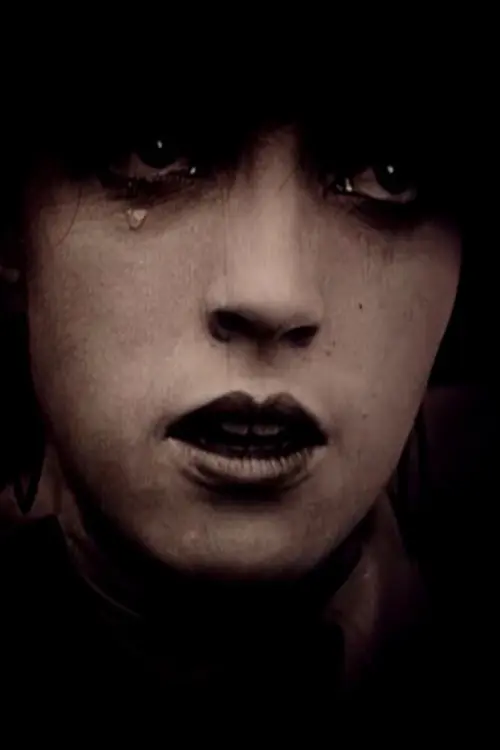
The colour palette—grayscale by necessity but tonal by intent—leans toward bruised indigos during night scenes, while day-for-night sequences glow sulphuric, as though the sun itself has jaundice. Wilson’s blocking often places Clara at the vanishing point of corridors, diminishing her figure until she becomes a cautionary punctuation mark.
Against Whom the Gods Would Destroy, whose moral binaries arrive pre-assembled, Insinuation traffics in moral quicksand: the virtuous physician can afford rectitude only because society grants him institutional armor. Compared to Rent Free, where urban bohemia romanticizes poverty, Wilson’s film refuses to aestheticize destitution; Clara’s troupe sleeps in haylofts smelling of ammonia and regret.
Meanwhile, At the Stage Door treats backstage life as a cupcake of camaraderie; Insinuation shows greasepaint chipping off to reveal raw epidermis. And unlike Philip Holden - Waster, whose titular prodigal enjoys redemption without collateral damage, Clara’s salvation feels contingent upon a man’s medical diploma—an irony Wilson neither celebrates nor condemns, merely documents.
Surviving prints are accompanied by a recomposed score heavy on tremolo strings and celesta. Each insinuation is underscored by a minor-second ostinato—an auditory itch. When the doctor first touches Clara’s wrist, the celesta strikes a major seventh that hangs unresolved, mirroring clinical curiosity blooming into tenderness. The final chord, a plagal cadence in C-major, feels almost ecclesiastical, suggesting redemption is less erasure than absolution.
Virginia Rumrill’s eyes perform micro-ballets: a half-second sideways glance equals paragraphs of internal monologue. Watch her pupils in the scene where townsfolk boycott her performance—dilation followed by contraction, like a camera aperture snapping shut on hope. Percy Helton, usually a human exclamation mark, instead wields stillness; when he learns of Clara’s forged signature, his jawline tenses without theatrical flexing—anatomy as emotional semaphore.
Agnes Neilson’s Mrs. Darnell deserves a study in villainy’s banality. She never twirls a mustache; rather, her fingers worry a cameo brooch while venom drips, the jewelry becoming a metronome of malice. Margery Wilson, directing herself in a cameo as a sympathetic dresser, gifts her alter-ego a single tear that clings like sap—an auteur’s signature.
The film’s hurried denouement—Jack’s repentance achieved via off-screen jailhouse conversion—feels grafted by censors. One senses reels missing, perhaps sacrificed to distributor whims. The racial homogeneity, typical for 1922, nonetheless grates: African-American characters appear only as backdrop stablehands, mute and nameless. Wilson’s feminism, progressive for its era, still frames marital rescue as the optimal epilogue.
Replace apothecary with algorithm, telegram with Twitter, and Insinuation becomes eerily contemporary. Clara’s scandal unfolds without evidence, propelled by retweet-equivalent whispers. The film anticipates cancel culture’s velocity: reputations shredded faster than sackcloth. Wilson’s prescription—an ethical community willing to verify before vilify—remains tragically utopian.
A 4K restoration by an unnamed European archive premiered at Pordenone in 2019, featuring tinting that cycles from lavender (interiors) to ochre (exteriors). Kino Lorber currently lists it as "coming soon," while a murky 480p rip haunts YouTube—watchable only if you squint through ethical discomfort. The accurate aspect ratio is 1.33:1; beware cropped versions that amputate Wilson’s meticulous head-room.
Insinuation is a cautionary relic that refuses to behave like one. It thrums with the same cardiac rhythm that powers today’s doom-scrolls: the lurch from curiosity to condemnation, from empathy to exhibitionism. Wilson’s masterpiece—yes, masterpiece—reminds us that every era believes its outrage is unprecedented, yet malice wears vintage clothes. To watch Clara Vale ascend the depot steps, train steam haloing her hair, is to witness the fragile miracle of mercy trumping mob. In the flicker of nitrate, we are implicated; in the hush after the finale, we are potentially redeemed.
IMDb 5.7
1934
Community
Log in to comment.