DbcultAccessing Vault...
7.1/10
Senior Film Conservator
A definitive 7.1/10 rating for a film that redefined the boundaries of cult cinema. To lavaro tou '21 remains a cornerstone of transgressive art.
You should probably only watch this if you are a history nerd or if you really like seeing how movies looked when they were basically brand new. It is very loud for a movie that doesn't actually have sound, if that makes sense.
People who want fast action or high-definition faces will absolutely hate this. It feels like looking at a dream someone had about a history book.
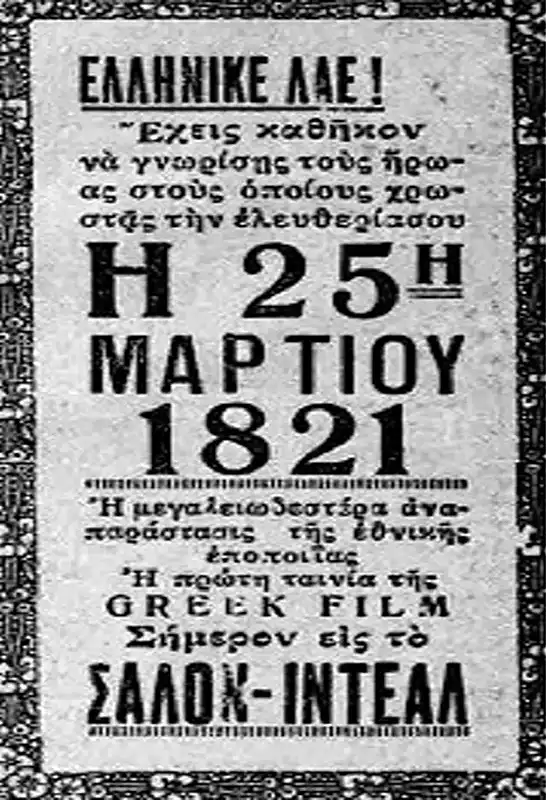
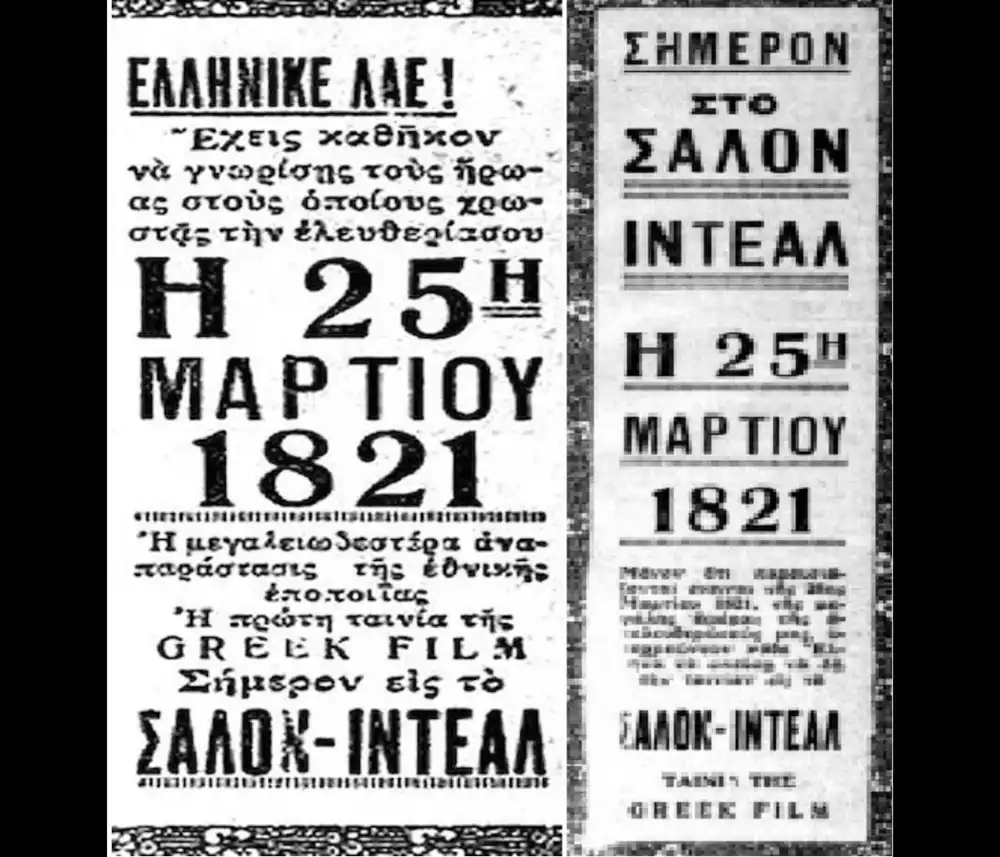
The movie starts in March 1821. You see these brave guys getting ready to fight the Ottoman Empire.
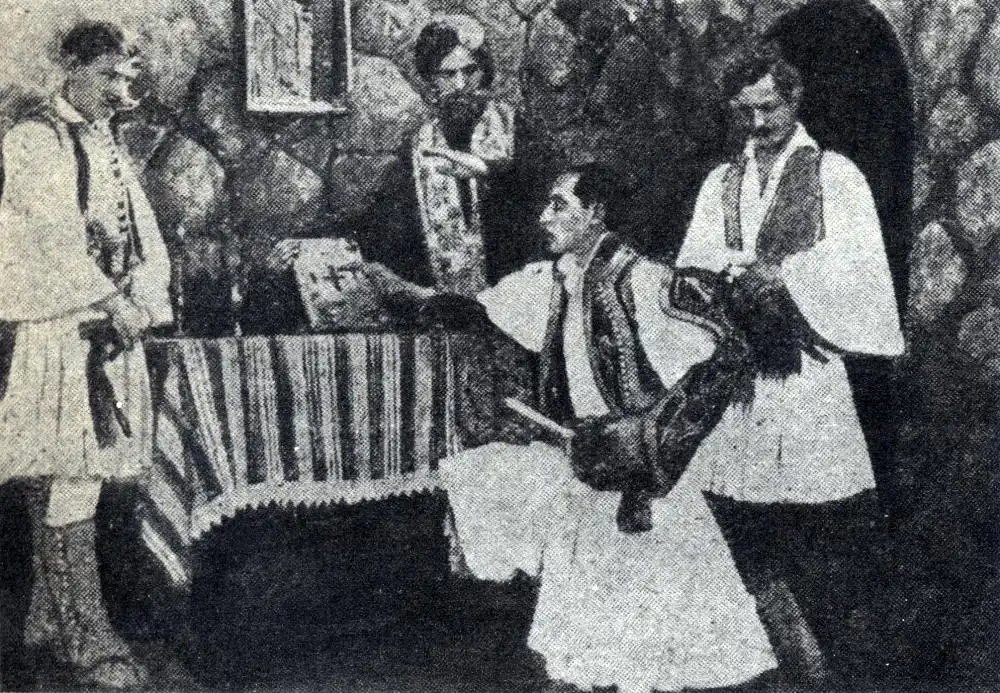
It is all about the monastery of Agia Lavra. That is where they lift the sacred banner.
The way they hold the flag is so dramatic. It is like they are holding the most fragile thing in the world, but also a giant weapon.
Panagiotis Papadopoulos has this stare that feels like it could burn a hole through the screen. He spends a lot of time looking off into the distance like he sees the future.
I noticed the beards right away. Some of them look very real, but others look like they were glued on five minutes before the camera started rolling.
There is a young Manos Katrakis in this! He is a legend later on, but here he is just a kid in the middle of a revolution.
The movie reminds me a bit of The King of Kings because everything feels so heavy and important. Every movement is a BIG DEAL.
Sometimes the actors wave their arms so much I thought they might fly away. It is that old-school style where you have to move your whole body to show you are sad or angry.
The scenery is actually pretty cool though. You get these rocky hills and old stone buildings that feel very authentic.
It is much more grounded than something like Pa's Trip to Mars, which is obviously a totally different vibe. This one wants you to feel the dirt and the struggle.
One scene with the monks gathered around just goes on and on. I think I counted three different guys doing the exact same prayer gesture in the background.
The film quality is pretty rough in spots. There are these little black lines and scratches that dance all over the faces of the heroes.
It actually adds to the feeling. Like you are watching something that was buried in the ground for a hundred years.
I wondered if the extras knew what they were doing half the time. In the big crowd shots, there is always one guy in the back just kind of looking around confused.
The pacing is... well, it is slow. It is a movie that takes its time to let you look at the costumes and the flags.
If you have seen Night Life, this is the exact opposite of that energy. There is no partying here, just a lot of serious men making serious choices.
I liked the part where they finally decide to go for it. You can feel the energy pick up even if the film is skipping frames.
It is a bit like Speed King but with horses and swords instead of cars. Everyone is rushing toward a destiny they keep talking about in the title cards.
Is it a masterpiece? Probably not by today's rules. But it has a soul that you don't see in modern stuff.
The writers, like Kostas Leloudas, clearly wanted to make people feel proud. They didn't care about being subtle.
Subtlety wasn't really a thing back then. You either felt it or you didn't.
I honestly fell asleep for about two minutes in the middle. When I woke up, they were still in the same room talking about the same revolution.
But the ending makes up for the slow parts. The banner goes up and the music (in my head, anyway) starts swelling.
It is a weird, dusty piece of Greek history. Glad I saw it, but I don't need to see it again until 2021 rolls around again.
IMDb 5.8
1921
Community
Log in to comment.